Age Of Wonders

We truly do live in a time of wonders. The ancient Chinese proverb CURSE is “May you live in interesting times.” We do. Everything from disappearing glaciers, record drought, vanishing honeybees, to fantastic medical advances that mimic the natural effects of good diet, while costing a small fortune–interesting times, indeed.

This from the New York Times:

Dr. Joshua W. Knowles, a Stanford cardiologist, called the medicines “a triumph of the modern genetic revolution.”

He is talking about the new ‘wonder drug’ that the FDA has just recommended be approved for all uses–even before the human drug trials are completed, which is expected in two years.  Wonder of wonders, the FDA is approving a medicine without human trials. They already do that for all food additives, taking the industry’s word for the safety of the artificial ingredients. Apparently that model works so well that they are going to begin doing it for prescription drugs. All that needs to be claimed is that the effects are ‘revolutionary’.

An expert group recommended on Tuesday that the Food and Drug Administration approve a powerful new drug to protect against heart attacks. If approved, it would be the first in a major new class of medicines in a generation that significantly lower levels of cholesterol, the leading cause of heart disease.

Did you know that cholesterol is a CAUSE of heart disease? That’s because it is not. It may be a symptom of heard disease, like angina, shortness of breath, but cholesterol is not a cause. Just this year, dietary cholesterol was removed from the list of dietary nutrients of concern as far as heart health was concerned. LDL chlolesterol can be controlled by diet, but the way you control it is by not eating any carbohydrates. Controlling the amount of carbohydrates you consume is a heart disease preventer, too, but it has a disadvantage. Nobody gets rich if you just change your diet.

Then there is the question of cost. The new drugs, like many new cancerdrugs, are monoclonal antibodies, produced from living cells at great expense. The companies will not say what they plan to charge. But Dr. William Shrank, chief scientific officer at CVS Health, estimates they will cost $7,000 to $12,000 a year.

If drugs were restricted to people with dangerously high cholesterol levels who cannot get their LDL low enough with statins, the cost would be $16 billion, he estimated. If people who are intolerant to statins are included, that would add another $20 billion. If people with a history of heart disease are included, the bill for the drugs rises another $150 billion.

We can pay 12,000 a year per person to do something that we could also do by breaking our addiction to sweets. Alternatively, we can continue to eat foods that are killing us, but temporarily correct one symptom of the damage we are doing, by taking a drug that will cost us one thousand dollars per month. The grand total per year for the nation for this drug–that has unknown side effects because drug trials are ongoing–of 186 billion dollars. In budget-deficit-speak that is a cost of 1.86 TRILLION dollars over a ten year period.

One–why do we keep not curing curable illnesses, never electing to fight root causes?

Two–why do we allow a drug company to set the price for a drug at such stupidly expensive levels? Insurance companies should say we will buy it when the prices is below one hundred dollars per month, and the price would immediately fall to that number. Canada will get this same drug for about 1/3 what we will pay because that is exactly what they will do.

Three–when will we quit hearing about cholesterol? It is known to not be a cause of anything, but I suppose because that is what statin drugs are sold to correct we will keep hearing about cholesterol until the money is all gone.

Let me list the wonders. Wonder drug. Wonder Price. Wonder why.
Posted in Health, Living | Tagged , , | Leave a comment

Show’s Over, Move Along

Unknown

Yesterday at three we concluded our very first live workshop on the why’s and how’s of fermenting foods at the Dew Yahs shop in Parkville, MO. It was really nice to be in the front of so many people that wanted to know more about living the life natural.

As the kickoff presenter I was tasked with setting the stage for change. I followed the basic outline of the two pieces that I did last week on fermentation and pickling, “Live Show” and “Living with Rot“.

My general impression from the questions that we got is that people are very curious about probiotics. Everyone knew how you make kombucha. Few were aware that fermenting cabbage and cucumbers involves only salt and water. The general impression of the people that I met yesterday seemed to be that you have to add a ‘starter’ to your new sauerkraut batch just like you have to add a mother to your kombucha or kefir.

I think I adequately conveyed why there is such a major difference between fermenting vegetables and fermenting any other thing…the bacteria are already living on the vegetables. When you make a pitcher of tea you boil the water and immerse the tea bags in boiling water. That kills anything that might have been living there. Without a starter culture, your just-made tea is free and open fertile territory for every wild yeast that is flying around in your kitchen. The same goes for your beer batch.

Vegetables that are going to be fermented are already carrying all of the probiotics that they need to make a perfect kraut or pickle. They also happen to be carrying the bacteria that will turn them into slimy mush, and which one wins the fight is influenced by the brine we put them in.

The bacteria that will create acid and turn our cabbage into super-food will happily carry on it’s mission in life without oxygen or light and in the presence of salt water. The bad guys are stunted by any of these things. The good guys can then turn all of the carbs in your cabbage into acid and vitamins, like vitamin C, that don’t occur in the cabbage naturally, but are born from the actions of fermentation. If you have ever eaten cabbage and gotten a gas attack from it, it’s because the bacteria in your intestines are doing this same job–except they don’t have a week to work, like your fermenting vegetables do. Your intestines only give the bacteria one day to do it’s job, then “out with the trash.”

Giving the bacteria an entire week (or more) to react with the complex carbs in vegetables makes it very easy for them to complete the digestion in a day’s time. Pre-digesting foods is the most important reason we should eat more fermented produce. I failed to say this yesterday. Next time!

An issue that I wish I had emphasized more yesterday is the key difference between pickling and fermenting–pickling doesn’t pre-digest anything. Pickled foods are blanched (quickly submerged in boiling liquid and then cooled) to kill all of the bacteria onboard the fruit, good and bad. Then they are immersed in a spiced vinegar, which makes sure that nothing can subsequently grow on them. It’s good for preserving foods, but you don’t get any of the manufactured vitamins, you still get all of the sugars that they might contain. It’s a totally different food, as far as your digestive system is concerned.

If you eat commercial ‘sauerkraut’ this is what you are getting:

  • Cabbage, Water, Distilled Vinegar, Salt, Sodium Benzoate (Preservative), Sodium Metabisulfite (Preservative), Natural Flavors, Polysorbate 80.

If you eat commercial cucumber ‘pickles’ the ingredients are virtually identical:

  • Cucumbers, Water, Distilled Vinegar, Salt, Calcium Chloride, Sodium Benzoate (Preservatives), Polysorbate 80, Natural Flavor, Yellow 5.

Lastly, when you eat cooked food you are not getting any live bacteria. When you eat raw food you are eating both the good and bad bacteria that are on the food. These germs will not be killed by the fact that you ate them. Your body is a perfect breeding ground for bacteria. You will get a small dose of probiotics by eating raw vegetables. If you ferment them then you will get a massive dose, adding to the army of bacteria in you that will be waiting for a meal of raw vegetables for them to digest when you eat them. It makes it easier for you to get more out of your vegetables when you only give the bacteria one day to work, instead of seven.

If you can, you would be well served to eat some raw fermented foods every week. The probiotics you get from doing it would be one hundred times more potent than the same thing in a capsule. If you cook your fermented foods then you will be killing the germs. Not a totally bad thing, but if you can eat some raw just once a week you will notice a difference in your digestion.

Posted in Health, Living | Tagged , , , , | Leave a comment

Want Not, Waste Not

Have you ever heard of Vaclav Smil? He is a thinker of thoughts, and I first ran into his ideas watching the fascinating documentary “Surviving Progress“, where he was one of many philosophizing about progress and talking about how people might survive into the future. He is once again peaking my interest in a paper he wrote in 2014 “Eating Meat:Constants and Changes.”

Eating meat has been an important component of human evolution and rising meat consumption has made a major contribution to improved nutrition. Expanding the current practices of meat production would worsen its already considerable environmental consequences but more environmentally sensitive ways of meat production are possible. Although they could not match the current levels of meat supply, they could provide nutritionally adequate levels worldwide. This would mean a break with historical trends but such a shift is already underway in many affluent countries and demographic and economic factors are likely to strengthen it in decades ahead.

In the paper he lays out the known quantities of meat being produced in the world, he notes the damage being done by expanding meat production by so much, and by raising the meat on crops grown specifically for that purpose (corn and soy) instead of letting the animals forage naturally like has been done for all of history. He says that expected increases in meat consumption will not be possible using the current methods, and after analyzing the situation he estimates that we will all have to actually eat less meat going forward in order to reduce the rate of climate changing gasses being produced to raise meat the way that we do in the US.

I am not as smart as Dr. Smil, but having read the entire piece he misses a couple of very important details about meat and America.

We waste one third of it. By ‘we’ I do not mean me, but our society. I waste almost zero meat in my household. I will bet that you waste almost zero meat in your household as well. If one third of all of the meat produced in the US is being thrown away, my guess is that it is happening in the McDonalds of the world. When I say McDonalds I mean all of the restaurants that will cook food for people that have not yet arrived, and when the crowds don’t materialize, will throw that prepared food in the trash.

Here are some statistics, provided by the Washington Post, that try to quantify our food waste in dollars:

Each year, about 40 percent of all food in the United States goes uneaten. It’s just tossed out or left to rot. And that’s a fairly large waste of resources. All that freshwater and land, all that fertilizer and energy — for nothing. By one recent estimate, Americans are squandering the equivalent of $165 billion each year by rubbishing so much food.

The portion of that 40% uneaten statistic that is restaurant waste:

In restaurants, a good chunk of food is lost in the kitchen. And, on average, diners leave about 17 percent of their food uneaten. The report notes that portion sizes are a big reason for this, as portions have ballooned in the past 30 years. Restaurants also try to keep more food than they need on hand to make sure that everything on the menu is available. What’s more, chain restaurants have inflexible rules that require perfectly good food to be tossed. McDonald’s, for instance, requires fries to be thrown out after seven minutes. About one-tenth of fast food gets junked this way.

Good for you that you don’t try to ‘clean your plate’ when you buy a super-size meal…but having all of that food ready for you to buy it, and then throwing it away the second you don’t, is obviously very wasteful in every resource that is involved, meat, vegetable and energy.

The explosion of meat production has direct proportionality to the explosion of fast food eateries. McDonalds created the market for fast meat, for grain fed meat, for industrial meat. The food production system has warped to meet this demand.

When Smil opines that we may all need to curb our meat consumption, in my opinion it would be a fabulous place to start if we curbed our wasteful habits. It would literally be like cutting our eating in half if we just stopped throwing it all away.

Here are the things that are wasted when we make meat that is destined for the landfill:

1. All of the land that is currently being used for no other purpose than to raise corn and soy to be fed to beef could be cut 50%, thus cutting all of the waste inherent in the farming of these crops. There are huge piles of corn all over Iowa that will not fit in the silos, left to rot each year. That would be cut in half if we cut the need for cattle feed.

2. Not having so much land dedicated to one crop would restore the habitat for the use of crops that actually would sustain butterflies and bees.

3. The oil and energy to put the crop in, harvest it, transport it, mill it for silage.

4. The animals…

5. Energy preparing food just to have it wasted.

6. The energy carrying it to the landfill

7. The biomass that is now rotting in a landfill instead of being returned to the soil where we could use it again to make crops.

The point of the paper was that the only practical way that we can produce meat going forward is for the developed nations to eat less of it. We can’t shift from industrial meat production to local meat production and keep on eating at the current rate. This is true, but if we all started eating local meats then the waste drops to almost nothing. The grocer would be getting meat locally, or we would once again go to a local butcher (more likely) and there would not be as much waste.

There is a very uneven distribution of desirable parts on a food animal. Each chicken has two wings, two drumsticks, two thighs, two breast, one neck, one back. When you buy a bag of five pounds of wings that leaves a whole bunch of chicken. When you buy tenderloin of beef there is a lot of hearts and lungs and tongues that are not used. A local butcher can actually help a great deal in selling and using all of the pieces and parts of the animal. It is the way it was done before we went to industrial production and distribution.

In the end, though, I don’t see any reason for me to eat anything but meat. I can get it locally, I can prepare it, I don’t waste it. If it is more expensive up front, it will save me on my co-pay for diabetes drugs, statins, and blood pressure medicine in the future. If the whole world can’t do that instantly it doesn’t affect my situation. My family is eating fat and protein. We aren’t supplementing our diet with empty carbs or processed foods. Our health is excellent and will stay that way. We waste very little food. I think if you started doing it, too, there is room on this here bandwagon for you and yours. If people get on gradually, then we can get off of industrial meats at a rate that will enhance the system, making it correspond with the needs of the planet and the people. A fella can dream…

Posted in Health, Living | Tagged , , | Leave a comment

Dietician Debates Professor

I listened to a fifteen minute debate on South African television between a dietitian and a professor. Marthie Leach is a sports diet dietician in South Africa, and Professor Tim Noakes is a professor of sports science, he is the namesake of the “Noakes Diet” which is a paleo diet.

They are both trained regarding what people eat, they are both recommending that people eat one way or the other. I can’t adequately paraphrase the things that are conveyed by them. I feel that the ‘eat meat’ argument wins the day, exhibiting my own confirmation bias. See if your bias is confirmed by her arguments, let me know.


Posted in Health, Living | Tagged , | 3 Comments

Who Knew

Needs work, might make a good song:

Blue Sky Lightning

Blue Sky Lightning

From a pale blue sky
Thunder
You know that nothing
Comes from nothing
Makes you wonder
What’d I ever do to you

I didn’t see this coming
Rain
Its gonna clean off
Dirt I couldn’t see
Now Ill see what clean is
Living without you

It comes from friction
Sparks
Things moving to fast
For things to stay the same
Now the time is come
For me to get past you

Posted in Poetry | Tagged | Leave a comment

Living With Rot

fer·men·ta·tion
ˌfərmənˈtāSH(ə)n/
noun
  1. the chemical breakdown of a substance by bacteria, yeasts, or other microorganisms, typically involving effervescence and the giving off of heat.

Fermentation has been used since before man could write. There is evidence that neolithic people were taking advantage of fermentation. So, for over seven or eight thousand years people have been using the natural process of rot to save foods for later. You see, there is not any significant difference between rotting food and fermenting food. Fermentation is controlled rot.

When you leave vegetables in your refrigerator crisper for any extensive length of time uncontrolled fermentation will occur and before you know it the fruit or vegetable will become a mass of slimy goo. The wild bacteria that make this happen live on the fruit when it is alive in the field, but just like your body can protect itself from all of the germs that live on and in it, the fruit, when alive, can do the same. Remove it from the plant and the process of degradation begins in earnest, the fruit can no longer utilize the defenses of the plant and the bacteria turns it back into raw materials for future life.

When you eat certain foods fermentation even occurs in your body. The gasses that come out of you after eating a dinner of ham and beans are a good example. There are starches that you can’t use in beans, but they are used by a strain of bacteria that lives within your intestines, and as they eat the starch they produce methane. We all know methane by it’s smell.

Controlling fermentation and forcing a fruit or vegetable to rot in just the right way is also and ancient art. The tools, likewise, are ancient. The method is simple and requires not a single modern convenience. You will need a vessel, a food, water, salt, a way to keep out bugs, and time. It must be warm enough to promote growth, but not so warm as to halt it.

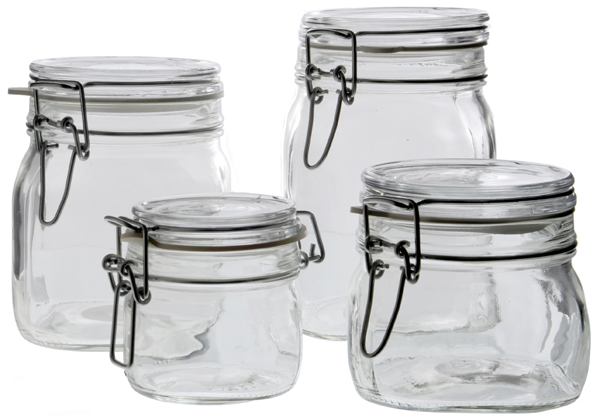
The vessel you use can be any waterproof vessel, but if you use metal the acid that the fermentation makes will leach metal into it, harming the vessel and changing the taste of the food. Don’t use a metal vessel. You can use plastic, but I hate plastic–which is a topic for another post. Don’t use plastic. You can use pottery–it is good because it blocks the light. Trying to ferment in the sunshine will be futile, because good fermentation occurs in the shadows. You can use glass, I use a very large (3 gallon) glass jar to make kombucha. I have also used quart or half gallon mason jars–which are nice because when you are done fermenting you can just pop a mason jar lid on them for long term storage. My new favorite is the fido jar with a swing top lid.

Steelite-Fido-Jars-Item-No.-68689

Basically, any jar that you can put a light cover on to keep bugs out can be used to ferment in. You don’t need anything fancy, new or expensive.

You can ferment any food. Cheese, yogurt, cream cheese are all fermented milk. Kombucha is fermented tea. Sauerkraut is fermented cabbage. Kimchee is fermented salad. Vinegar is fermented wine or cider. Pickles are fermented cucumbers. Fruit, eggs, beans, and meats may all be fermented. Pepperoni is fermented meat, for instance. The basic process we are discussing is best for vegetables and beverages.

The water you use has a couple of special requirements. It can’t be tap water. Tap water will contain chemicals that your water supplier puts in it to keep it from containing harmful bacteria. The chlorine and other chemicals can’t tell the difference between a bad or good germ, it will kill our fermentation bacteria, too. If you take water out of the tap, leave it on the counter for an hour or so. The chlorine will evaporate. If you want to speed the process up, boil the water, which also drives all of the other gasses off of your tap water. The water cannot be too hot when you use it though, because heat kills bacteria. Putting water over 100 degrees on your cabbage will ensure that you will never get sauerkraut.

Salt is added to our ferment because the bacteria we will be harnessing doesn’t mind a slight briny solution, but the bacteria that would turn our vegetables into goo can’t live in brine. We can’t use just any old salt, though. Table salt is not pure salt. Morton salt pours in the rain because they add starches to it to absorb water and keep the salt from clumping. We don’t need any of that in our ferment, so we use coarser salts, like kosher salt (what I use) or sea salt. People like sea salts because they contain other minerals besides sodium chloride. It doesn’t help us ferment, so other minerals are optional.

One thing that is not hindered by our brine is the insect. Bugs will invade your vinegar crock or kombucha jar and must be kept at bay. I use cheesecloth for this purpose to keep bugs out of my big jars. I use a tight fitting lid and a brewers airlock to keep them out of my sauerkraut or pickle fermenters. The airlock will allow the gasses produced when fermenting to escape but there is a small water barrier to keep critters out. Here is an example of a large sauerkraut fermenter that has a water seal:

41ryJnKERhL._AA160_

Another ‘bug’ that can invade, even past our cheesecloth seal is mold. If there is food riding above the surface of the brine then mold will take hold. Sometimes mold will just grow on the surface of the water. You can just scoop this mold off. If it doesn’t change the color of the water then it hasn’t gotten beyond the point of no return. If it doesn’t stink you can save your batch–and by stink you will know it when you smell it. Kraut has an odor as it ferments, and it is not unpleasant. Rot smells like it sounds, rotten. If you use an airlock or water seal jar mold cannot get in, either. I have found it easiest to make kraut and vegetable ferments is easiest in quart jars that have been modified to use a brewer’s airlock.

41nPknlas+L._AA160_

That is a one dollar mason jar, with a 7 dollar ReCap, a fifty cent plug and a fifty cent airlock. If we double the expense it is eighteen dollars worth of materials, that you can get right now on Amazon.com for 25 dollars. Must be buying convenience.

Mix up a batch of brine, the recipe is this: into four cups of chlorine free water dissolve 2 tablespoons of sea salt. Mix until dissolved.

Load a mason jar with small cucumbers that you have cut the blossom end off of. Pack them in there so they won’t float so easily. Fill the jar with your brine. Leave some room for bubbles that will form on the fruit as it ferments or it will overflow into your airlock. If you aren’t using an airlock put a glass or stone weight on the fruit to hold it under the surface. Such weights are sold online. Seal your vessel against bugs. If you are using a giant pickle crock you can just put a towel over it. Cheesecloth works on smaller vessels, and a mason jar with a cap loosely affixed will be sufficient for canning jars. I use a tight lid and and airlock for vegetables.

Now you wait. In three days you will be able to taste the sourness of good bacteria eating the starches and sugars in your vegetables. In a week, if its warm enough in your house, your ferment will be done. Now you can move the food into it’s permanent storage. The water will be alive with probiotics. If you pressure or bath can at this point you kill the bacteria, but the ferment will keep then indefinitely without spoiling. If you do not pressure can then you have to keep your ferment cool. Root cellars would work, or you refrigerate them. I have canned my kraut and fermented peppers. They retain all of the wonderful tastiness and nutrition, all they lose is the probiotic.

Posted in Health, Living | Tagged , , | 1 Comment

Laws of Physics

It is not possible to ‘lose’ weight. It’s a shame that the language is so easy to misunderstand. When you weigh less than you did last week, you must actually give off something that weighs something. Every day you take in food and water, and you breathe in air. Between these three inputs there must be all of the essential elements of sustaining life. All of these things have weight. At the end of the day you might weigh more or less than you did at the beginning–if you ate five pounds of food, and you urinated, defecated and exhaled a total of five pounds of matter then you will not have gained or lost weight.

The only way you can trend down on weight is if you can find a way to consume less than you expel. Science has already been conducted that shows that most of the weight you ‘lose’ when your weight goes down leaves your body in the form of carbon dioxide. The process of consuming your fatty acids and your glucoses ends up creating carbon dioxide. This is why when you hold your breath the carbon dioxide builds up in your blood, because moment by moment every cell in your body is converting fatty acids or sugars in your blood into carbon dioxide as a byproduct of the chemistry that changes carbohydrate, fat, and protein into whatever your cells need for life.

The thought that the phrase ‘losing’ weight equals ‘burning fat’–that when you lose weight it is lost during physical activity, is just a consequence of the limited language that is used. Nobody ever thinks about exhaling weight, even though that is where it is going. In physics there is only one process that converts mass (weight) into energy–a nuclear reaction. The sun loses tons of weight per second as it converts hydrogen into helium. A uranium reactor converts mass into energy as it splits the uranium atom into smaller atoms. You have no process in your body that converts mass into energy. You convert mass into mass, as all chemical reactions do. All of the products of your chemistry exactly equal all of the inputs to it. Losing weight must mean giving off more weight than you take in.

So, exercise does not lose weight. Running uses 124 calories per hour for a man. The net calories of running are 105. That is because even when you sleep you must consume stored energy, and for the average man that is 19 calories. Most of us don’t run every day for an hour, I know that I don’t. Running or any other exercise don’t just result in more energy consumed, they have the side effect of increasing your hunger. Ever heard of ‘working up an appetite?” Increase your physical activity and you will increase your need for food. Trying to exercise while trying to reduce your weight operates at cross-purposes. If you are trying to lose weight you should not change your physical routine, but you should change the types of fuel you put into your body.

I lose weight, and I don’t change the number of calories I eat, or the amount of physical activity that I undertake. How do I do it? I stop eating carbohydrates when I want my weight to go down. That is all I do, and while I eat no carbs (except those incidental to the green veggies I eat) my weight very slowly descends to my natural weight, which I think is around 138 pounds. (I am 5 foot 6 inch) If I weigh myself at night before bed at around 10PM, I usually weigh about 1.5 pounds more than I do at 6AM after eight hours of using energy all night and exhaling nothing but CO2, drinking no water, and exhaling evaporated water in my breath. Water weighs quite a bit, so I don’t want to do the chemistry and figure out how much fat I must have consumed and turned into water and CO2 after using 152 ‘calories’ while I slept. The point I am trying to make is that I can lose weight (and so can you) by eating something that does not add to my fat stores while I am awake.

Carbohydrates are turned into blood sugar. Your blood sugar is tightly regulated by a well-functioning metabolism. If it begins to go up your body instantly responds by creating insulin. The insulin commands your cells to accept blood sugar to lower it, and it commands your fat cells to let it in, and it commands your liver to metabolize it into fats as well. All of this is to get the sugar out of your blood as quickly as possible. If you eat a big starchy meal then you will have a big insulin reaction and will end up with low blood sugar and a resulting loss of energy–you feel tired, then you feel hungry again as a result of the low sugar. We all know this crash. For this discussion we are concerned with the shunting to fat of the sugars that we eat that are not consumed in the instant. If our resting consumption of energy is 19 calories per hour, then if we eat a starchy meal that has 500 calories of carbohydrate, our pancreas and liver respond to turn 480 of those calories into fat, to clean our bloodstream of excess, toxic blood sugar. Then, when we are not eating, our bodies release some of it back into the system for us to live on for all of those hours that we are not eating.

If you eat foods that do not cause insulin to be released, then you don’t add to fat stores. You don’t get hungry because your blood sugar level does not dip after a flood of it at meal time. Your weight very gradually lowers as you eat and drink and partake in your normal daily activities. Eventually you get to a point where your mass in equals exactly your mass out, and you are neither gaining or losing weight. It is at this point that you can eat a dessert a couple of nights a week and it won’t cause you to ‘gain weight’. Your system will be able to handle the occasional deviation from your ideal diet of very limited carbohydrate without it causing you any concern. You can continue to eat as much fat and protein as you want and you will not gain weight.

Posted in Health, Living | Tagged , , | 2 Comments

Live Show

Life feeds on life. There is no way to live by eating things that have never lived, it’s too bad for the eaten. In a perfect world even your own mortal flesh will be consumed by something, returning your borrowed matter to the cycle of life. I say “In a perfect world…” because if you add enough of the proper chemicals to once-living matter you can make it unavailable to living creatures to eat. In your corpse it will be formaldehyde to keep you pristine for the second coming, in other things it is added chemicals that prevent foods from rotting.

Next weekend I will be performing in a team of three presenters to present a workshop on fermenting foods. My bit of the show will be to lay the case for fermentation. The people that we expect to attend will be expecting the basic knowledge on fermentation.

I happen to know quite a bit about fermented foods and the causes and effects of controlled rot on our foods. All of the best fresh foods, once they have passed their prime fresh, are best as fermented foods. Preservation of the summer and fall harvests is an ancient art, and is performed with ancient tools and chemicals. We humans have evolved to take advantage of all of the products of fermentation. We are omnivores and scavengers and creatures well suited to take advantage of foods we hunt and gather, including the kills and finds from lesser animals that we would be competing with for food. I will be presenting the most basic of tools and chemicals needed to conduct your own ‘laying away’ of foods for the winter.

We will begin with a discussion of what fermentation is, and what it is not. Fermentation does not equal pickling. In pickling you take a fresh fruit and you cook it to the point that you have killed the naturally occurring bacteria in and on the food to be preserved, then you submerge it in a liquid that will contain vinegar. Vinegar itself is a product of fermentation, a waste product of bacteria that are consuming the alcohols and proteins in a food, say wine. The alcohol is a waste product of yeast eating the sugar from a living food, say grapes. You cannot pickle a food without something having been fermented before it. When you pickle a food you are preventing fermentation or rot from occurring. Pickled foods can be kept on the shelf, at room temperature, because they are dead and floating in a solution that does not promote life. When you eat pickled foods they do not kill you because you are big enough to dilute the deadly acids in vinegar by diluting them with your own juices. The sugars and proteins in the pickled foods will be processed by you.

So what is vinegar, then? To make your own vinegar you take a bottle of red or white wine and dilute it by one-third with water, to lessen the concentration of alcohol in the solution. You add a dose of bacteria to the solution, so that your beneficial bacteria get a significant head start in the competition for food from the wine. The acetobacter bacteria begin consuming the alcohol, increasing the acidity of the liquid which kills the chances of any other bacteria from taking hold. Just like when you make sourdough bread, adding a pinch of your last batch of dough to the new batch to get the process started in the right direction, if you add a vinegar “mother” to the wine you will get exactly the same kind of vinegar out of your batch as you intend.

If you take a gallon of apple cider and dilute it, cover it loosely to keep the fruit flies out of it and to let in bacteria from the air, after a few months you will have apple cider. The process works like this…there are yeast floating in the air of your home. You can’t do anything about it, it’s what will turn your sourdough bread sour if you just leave the dough out without adding any yeast to it. The yeast will begin eating the sugar in the cider and giving off alcohol as a byproduct. As the alcohol level rises it prevents any other yeast from gaining a foothold. They cider will smell yeasty as this all happens. Next the acetobacter in the air will begin to eat the yeast and alcohol. Acetobacter will form a layer of matter floating on the top of the liquid. It gets very thick if you wait long enough, it feels like flesh, it will be the color of the liquid, red for red wine, tan for kombucha, white for white wine…this is the ‘mother’ of vinegar. You can purchase already formed mothers for different end uses. In this case, you are making a mother of your own for use making vinegars. As the acid is made it renders the liquid uninhabitable for any other living thing, except the bacteria that made it. The final liquid can be used to pickle any living thing…meat, fruit, vegetable.

The process that I just described all happens at room temperature, it is all automatic and pretty much foolproof. The only things that can screw it up involve not keeping the fermenting vessel protected agains insects. Fruit flies will accumulate near your fermenting vessel, looking for a way in. If they get in they will lay eggs in your cider or wine. The eggs will quickly hatch and your liquid will be full of a floating mass of eggs, maggots and dead fruit flies. Not good eats, and not conducive to making a tasty vinegar, or kombucha.

Fermenting foods differs from making vinegar by allowing the food to ferment itself. The only thing you need to ferment any food is clean, ripe, unblemished food, unchlorinated water, salt, a clean fermenting vessel, and a way to keep the air off of your food. During the workshop we will show all of the ways that you keep the air off of the food, as that is the only difference between different fermenting methods.

More on this tomorrow…

Posted in Health, Living | Tagged , , , | 1 Comment

Anecdotal Evidence

At the outset of this article I need to say that this is one man’s story. It is not my story, but it is so well told by the subject of it that I will pass on the link to his blog right away, without further ado…

Eat Meat. Drink Water.

Anecdotal evidence is used a lot to promote things that work sometimes, or are attributed to the relief of some ailment but that may in fact just be coincidental. The power of prayer immediately comes to mind as I write this.

This story falls in the anecdotal category with one large exception:there are scientific theories to explain the effects of eating just animal proteins and fats on neurological health. There are scientific theories to explain the damage that artificial foods and carbohydrates are known to cause in the human anatomy.

There are studies cited in both “The Big Fat Surprise” and “Why We Get Fat” that indicate that it has been long known that low carbohydrate ketogenic diets are known associations with low cancer rate and overall lower mortality for subjects. Causation of the associations are notoriously difficult to determine because of the complexity of the relationship between food and health. There are too many variables, from where the food comes from and how it was raised, to what the subject REALLY eats, not what they report to eat.

This man’s story is one more association between the relationship between food and cancer. It isn’t proof that carbs are the cause of anything, or that even this man’s cancer might have acted exactly like it did for no other reason but time. No disease has a one hundred percent mortality, only life itself has proven to be one hundred percent fatal. That being said, what are the benefits of eating carbs and shunning animal fats? The benefits are mostly moral. You aren’t contributing to the killing of an animal. The defects of eating carbohydrates are documented in the four hundred pages of this blog. One possible defect is outlined in this blog post that I link to. One benefit of eating meat and animal fat may be documented here as well. I don’t know for sure, but I am betting my life on it.

Posted in Health | Leave a comment

Healing Brain Cancer with a Zero Carb Ketogenic Diet by Andrew Scarborough

This is a reblog of an article about curing cancer with diet. At the outset of this article I need to say that this is one man’s story. It is not my story, but it is so well told by the subject of it that I will pass on the link to his blog right away, without further ado…

Anecdotal evidence is used a lot to promote things that work sometimes, or are attributed to the relief of some ailment but that may in fact just be coincidental. The power of prayer immediately comes to mind as I write this.

This story falls in the anecdotal category with one large exception:there are scientific theories to explain the effects of eating just animal proteins and fats on neurological health. There are scientific theories to explain the damage that artificial foods and carbohydrates are known to cause in the human anatomy.

There are studies cited in both “The Big Fat Surprise” and “Why We Get Fat” that indicate that it has been long known that low carbohydrate ketogenic diets are known associations with low cancer rate and overall lower mortality for subjects. Causation of the associations are notoriously difficult to determine because of the complexity of the relationship between food and health. There are too many variables, from where the food comes from and how it was raised, to what the subject REALLY eats, not what they report to eat.

This man’s story is one more association between the relationship between food and cancer. It isn’t proof that carbs are the cause of anything, or that even this man’s cancer might have acted exactly like it did for no other reason but time. No disease has a one hundred percent mortality, only life itself has proven to be one hundred percent fatal. That being said, what are the benefits of eating carbs and shunning animal fats? The benefits are mostly moral. You aren’t contributing to the killing of an animal. The defects of eating carbohydrates are documented in the four hundred pages of this blog. One possible defect is outlined in this blog post that I link to. One benefit of eating meat and animal fat may be documented here as well. I don’t know for sure, but I am betting my life on it.

rabebm's avatarZero Carb Zen

Andrew Scarborough 3 May 2015

Two and a half years ago, at the age of 27, I was working as a personal trainer and was physically very active. However, I was forced to stop working towards the end of 2012 because I was experiencing debilitating fatigue and severe migraine headaches. The doctors I consulted told me that my symptoms were most likely due to excessive stress.

At that time, I was eating a high carbohydrate, high protein, low fat diet, and I had a very low percentage of body fat. I ran and lifted weights, and for all intents and purposes appeared to be in great shape. I felt like I was doing everything right for good health based on what I had studied while working on my undergraduate degree in Sports Nutrition a few years earlier. But looking back, I probably wasn’t all that healthy internally.

Andrew Scarborough 12_edited November 2011

After quitting my job…

View original post 1,962 more words

Posted in Health | Leave a comment