Modern Day Slavery

If you want to make a one hundred percent sure-fire contribution to a better world, buy local. I constantly sing the praises of local food suppliers and I have listed the good, compelling reasons to get to know your local farmer and your local farmer’s market.

Here is a place to find your local resources, Eat Wild. Here are the farmer’s markets and local farmers in the Liberty, Missouri area, LocalHarvest. It is not hard to find the market in season. In the winter the pickings are slimmer, AS THEY SHOULD BE. Purchasing foods in season and preparing them for the winter is what we should be doing, how we should be eating. I do not want to discourage you, however, from eating good and pure foods. Eating produce trucked from Mexico or California or Peru (half way round the world), is still hundreds of times better for you than eating boxed, bagged, or processed foods. I don’t think that the perfect should be the enemy of the good. The fact that you have to buy vegetables at the market, and that that produce has ethical or chemical defects is no reason to keep eating Lunchables instead.

HOWEVER, today we read in the Los Angeles times, in a special report that will be four parts when complete, that there are gross ethical violations at Mexican farms for the workers that toil on the fields to get you plenty of your out of season vegetables.

  • Many farm laborers are essentially trapped for months at a time in rat-infested camps, often without beds and sometimes without functioning toilets or a reliable water supply.
  • Some camp bosses illegally withhold wages to prevent workers from leaving during peak harvest periods.
  • Laborers often go deep in debt paying inflated prices for necessities at company stores. Some are reduced to scavenging for food when their credit is cut off. It’s common for laborers to head home penniless at the end of a harvest.
  • Those who seek to escape their debts and miserable living conditions have to contend with guards, barbed-wire fences and sometimes threats of violence from camp supervisors.
  • Major U.S. companies have done little to enforce social responsibility guidelines that call for basic worker protections such as clean housing and fair pay practices.

These work conditions closely resemble the work conditions of 1900 US cities. Back then, and before Upton Sinclair woke the nation up to lousy food production and horrific worker conditions in the US, the worker bore all of the expense in keeping the company owners rich. The customer bore all of the expense at keeping the products cheap.

Money isn’t everything. It will definitely cost you more per tomato to buy from a local farm. It will cost you time, convenience and effort. You will get real food, picked at the height of freshness, grown in real soil, containing real nutrients in the exact proportions that nature intended. There will be no taint of slave-like labor conditions to plant, produce, or pick your foods. Call this food sin-free food. If I could label my farm-stand vegetables I would put in big, huge font letters “Sin-Free, No-Added-Sugar, No-Artificial-Ingredients”

Think about what you are really promoting when you pay way less than you should for foods shipped halfway around the planet to get to you so cheaply at Walmart. What kind of world are you encouraging? Even if you don’t care about the peons in the labor camps in South America and Mexico, what you are buying only resembles the foods grown by your neighbors.

You–every individual you–are the only one with the power to compel Mexican ranch owners to treat their labor the way that you would want to be treated. You won’t do it thru your government which cares even less about Mexican farm hands than it does American ones. You won’t do it by writing letters to Del Monte or Best Choice. Price Chopper supermarket can’t make it happen. Only by switching your buying dollars to your local farmer will you help the poor Mexican peasant. Shining light on their nineteenth century labor practices will help, but turning off the cash will help even more.

Buy Local.

THIS AINT LOCAL
THIS AINT LOCAL

Posted in Health, Living | Tagged , , , , , | Leave a comment

Add It All Up

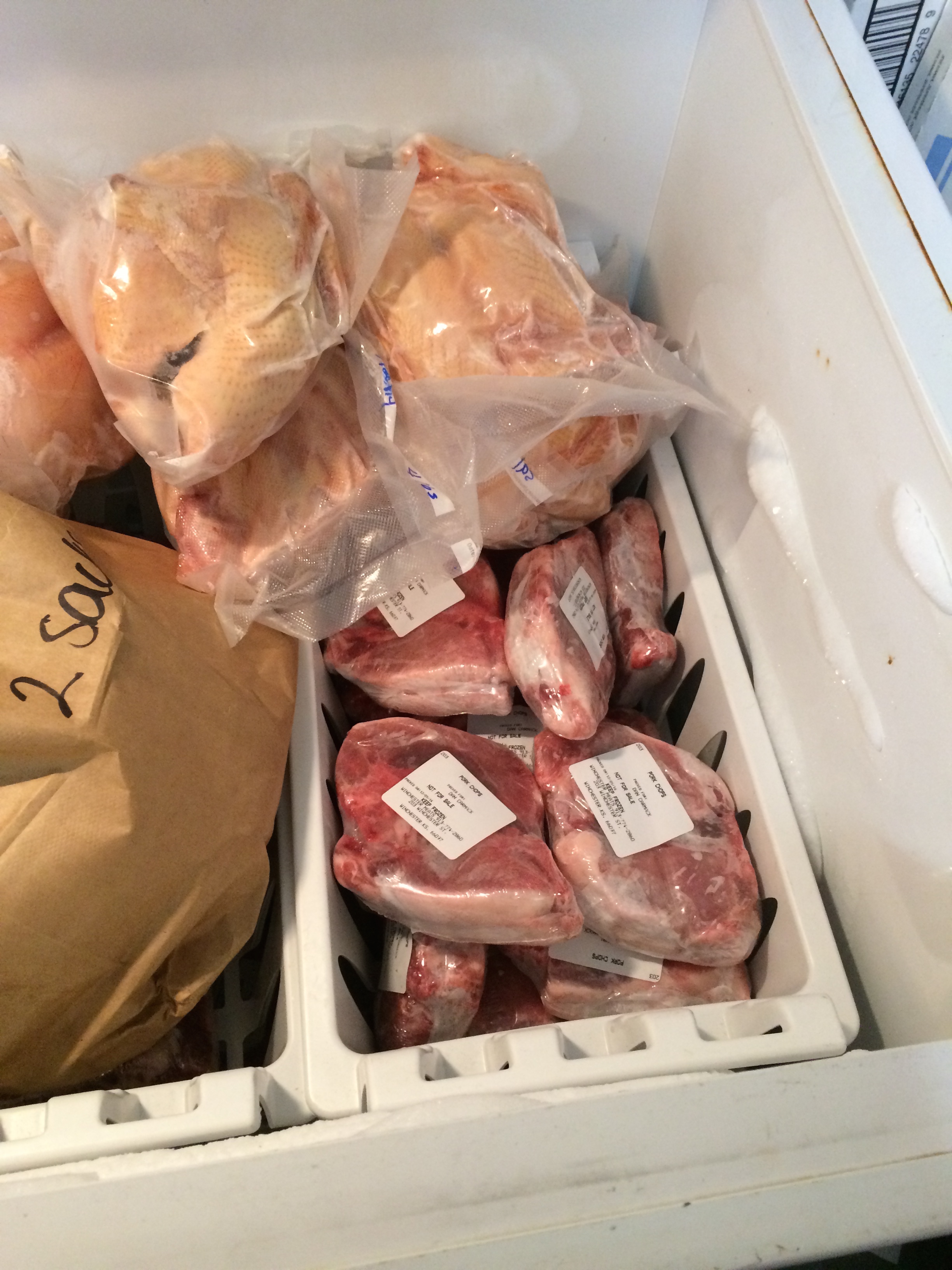
In a world where value is only calculated in dollars, let’s do some calculating. I purchased a hog grown locally, by a farmer that I know and trust. I paid the farmer five dollars per pound for one hundred forty pounds of pork. I paid the processor one dollar per pound to cut the meat up just the way that I wanted it. I wanted ground pork for home made sausage and wursts. I wanted a slab of belly meat to cure and make my own bacon. I wanted roasts instead of pork steaks, because we like pulled pork and carnitas. I wanted the rest in chops, and I wanted my fat for lard. I got all of these things in abundance. I have spent 840 dollars on pork, my freezer is happy. I have many dozens of pork chops.

IMG_3080

A bin of pork chops, a pile of chicken

It has been a while since I bought a head of beef for my freezer, and until I put the pork in it I could once again see the bottom of it. When I get another head this spring I expect to pay around the same amount per pound as I did for the pork. I will be getting meats that are cut to my exact orders. My beef will be free of antibiotics and will be grass fed right up to the moment it gets on the truck to go to the locker. Processing meats this way takes a little bit of planning and patience. If I want it I have to plan ahead a couple of months, get in the processing line at the locker. After the beef is delivered it has to hang for ten days. The pork processing waits on the ten days that it takes to cure hams. An uncured ham is just a pork roast, the curing and smoking are what make that cut so good. Good takes time and good costs dollars. You also have to have a freezer, and mine is a big old chest freezer from Montgomery Wards. Just that name should tell you how many years it has been in service. They don’t make ’em like they used to.

I got chickens yesterday, five frozen birds, fresh from the farm. I pay ten dollars per chicken. Mine are not the bionic birds you find in the grocery with the gigantic Dolly Parton breasts. Mine never have broken leg or wing bones. Have you noticed how many of your chickens get to you and have compound fractures of the leg or wing? That is not normal, folks, I don’t remember ever finding that in my younger days. Broken bones in your meat show at the very least rough handling and probably are an indication of unhealthiness in your poor food animal in other, harder to spot ways.

I got three dozen eggs that are from happy, healthy, actual pastured hens. I am not certain what they are fed every day, but they are free to eat things that they find in the yard, too. When I eat the eggs from these birds the shells are stout, the yolks stand up tall and are a brilliant orange yellow. I know that what I pay for a dozen, three dollars, is an absolute steal. I am getting a full dose of natural cholesterol, omega 3 essential oils, and whatever else nature has in mind for natural consumers of chicken eggs. I feel good that I am contributing my small share to encourage a world where we don’t have to buy foods from he soulless machine of modern industry. These animals are no more cogs for a machine than we are, and to encourage them to be treated as such is something that I consciously choose not to do.

I paid 56 dollars for five chickens and my eggs. I paid way less than the total cost to the universe that the same quantity of factory meats and eggs would cost me. I know that me doing this is not going to make any difference to Tyson or Perdue. IBP will continue to make money hand over fist off of doing things the way they do it, treating their workers the same way they treat their raw materials. Let them profit, but I am out of that system for good.

Posted in Health | Leave a comment

Omega-6 and Heart Disease

Omega 6 and 3 are essential oils that our bodies cannot make. We must get them from diet. Neither one is bad unless the ratio between the two is out of balance. Omega 6 occurs too much in Western diets because it shows up in foods made from corn, and from foods fed corn in their diets, instead of grass.

E. M. Lores, Ph.D.'s avatarOil-Change Diet

The correlation between omega-6 and heart disease is very obvious when you look at the Dr Lands graph of the relationship between heart disease rates in various countries vs the percent omega-6 in the tissues of people in those countries. The US leads the world in heart disease death rates with nearly 200 deaths per year per 100,000 population (age adjusted) and the percent omega-6 in our tissues with an average near 80% and with many having over 90% omega-6.

As I have said before, correlation does not prove cause–making that mistake is what got us to where we are. Correlation gives us a place to start looking for mechanisms. It is finding and understanding the mechanisms that proves cause. With heart disease, there are many different factors that contribute to heart disease, heart attacks and sudden heart death.

Clogged or hardened arteries are one of the major factors in heart…

View original post 279 more words

Posted in Health | Leave a comment

“Caveat Emptor!”–Buyer Beware

Industrially produced sounds clean. In many people it evokes an image of sparkling, sanitized efficiency. Food producers, fearing extinction by litigation are going to every possible expense to deliver to the world the safe, healthy products that we demand, at ever cheaper competitive prices. This industry that I have described exists only in the minds of food industry CEOs and about half of the Congressmen in Washington.

The reality of the food industry is that, while it is true they will spare no expense, the expense is not on producing ever cleaner meats for us. The expense that they gladly bear is whatever expense is necessary to get government meat inspectors out of the business of checking whether the meat that they are producing is, in fact, untainted and without disease.

In today’s New York Times we find that a pilot meat ‘inspection’ program that does not rely on inspectors to actually inspect every pork carcass that is coming off of the line has been declared a ‘success’ by meat companies and the head of the USDA. This is what the USDA inspector had to say about the same program…

Then, last year, the U.S.D.A. inspector general reported on the hazard analysis project. The findings were damning. Enforcement of food safety protocols was so lacking at the five plants participating that between 2008 and 2011, three of the five were among the 10 worst violators nationwide (of 616 pork processors).

Despite the risk of passing poisoned or diseased meats to you, dear eating public, this is why Hormel loves the new semi-automated system of checking whether or not the meat is clean and healthy:

 The new inspection system allowed Hormel to increase the speed of its cut lines, just before demand for cheap pork products like Spam soared during the recession. My reporting revealed that Hormel went from processing about 7,000 hogs per shift to as many as 11,000.

Faith may be able to move mountains, but it does not produce healthy meats. Speed does not produce a perfect product, either, and contributes to missing things that would have been rejected if only we could spare the time to check them. Meat producers must know that by almost doubling the speed of the lines slaughtering meats that it makes it easier to do dirty work AND it makes it harder to find dirty meat before it is packed for shipment. For some reason, though, that doesn’t matter to the industry. It matters to you, but you are busy living your life and do not have time to keep track of how your foods are maintained safe. They know that there is a great deal of money to be made between the time that they get regulations lifted and the time that there is a public outcry at the flood of food related illnesses and ever-increasing numbers of meat recalls.

Once again, I urge you to NOT complain to your government representatives. The best way to protest against industrial corner cutting on food safety, the way food is raised, the antibiotics and hormones in it, the inhumane living conditions of our food animals is to get your meat from another source. If people buy their pork from farmers then more farmers will produce meats to sell to you directly. The distribution system makes it hard to buy this way, but it is far from impossible. I just bought a hog this week. It was raised in Kansas and spent it’s entire life roaming the lot, being fed standard hog foods and foraging when it wanted to. I paid, after processing and delivery, only six dollars per pound for the meat and lard fat. While that may seem like a great deal more than you can get breakfast sausage for, or pork shoulder, or ham, if you compare what I am getting to what you are getting then I think the price is actually reasonable. I will gladly pay it again as soon as I need to.

I now have a reliable source for beef, pork and chicken and eggs. I will not be buying any more of these things from unreliable meat producers. They do not have my best interests as their best interests. I need to eat meats and natural fats to keep me and my family healthy and I will. When they decide that inspection and slowing down is in their best financial interests then maybe some day I will come back to eating what they make. Until then, me and my appetite will help cultivate food production systems that more closely coincide.

IMG_2980

My new regular Dinner Guest

IMG_2981

All Natural trotters from Kansas

IMG_5278

Our farmer, Matthew Dunning

Posted in Health, Living | Tagged , , , , , | 1 Comment

Sewing Up Flavor

21apeFMpXmL

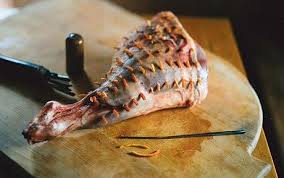
The picture above is for pulling lardoons through cuts of meat that have very little fat of their own…

The flavor of lean and dry meat is much improved by larding; tenderloin of beef (filet), grouse, partridge, pigeon, and liver are best prepared this way. Pig pork being firm, is best for larding.

–1896 Boston Cooking School Cookbook

Strips of pork fat about two and a half inches long and a quarter inch square are called ‘lardons’ and are easily threaded into your dry and tasteless meats to greatly improve the flavor and texture. Lard with the grain of the meat, not across it. Lard about one third inch deep and the stitch should be about three fourths inch wide. Lardoon rows should be one inch apart. This is how they used to do it, in 1896.

Unknown-2

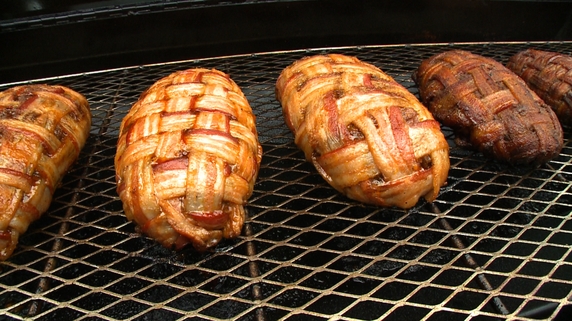
Now, of course people are weaving slabs of bacon all over the surface of their foods to get the same effect. Bacon bombs are all the rage in the backyard BBQ scene.

Bacon-Explosion-on-the-Grill

Here is a recipe from the Pit Boys, complete with video. Personally, I think that the ground pork used would be more than juicy enough to not need the bacon treatment. Having tried this recipe, though, I have to admit that it came out very impressive, not to mention tasty!

If you are going to be, like me, upping the percentage of your daily calories that you get from good, natural, dietary fats, then you need to know things like, larding, and lardoon. I will be purchasing myself a couple of larding needles to make the work easier. I will be larding turkey breasts, chicken breasts, both of which I currently hate, due to their lack of flavor (fat). I will try larding a beef tenderloin roast (london broil). I have never had partridge, but they sound cute and cuddly so I may be eating some of that soon!

Posted in Health | Leave a comment

Fat of the Land

In 1910 you couldn’t find any home in the USA that didn’t cook with animal fats. Suet, Lard, Tallow were found in every region and were universally loved and trusted. Heart disease was not yet even on the radar of the medical community, people just didn’t yet die of heart attacks. When I was born in 1960 things were beginning to change. Heart disease was now in the forefront of problems afflicting aging men, even the President of the USA, Dwight Eisenhower had had a heart attack, terrifying the nation at the thought of a Nixon Presidency, but I digress.

Through many years of mangled science and horrible advice we now live fifty years later in the health debacle of an epidemic of high blood pressure, high blood sugar, diabetes, liver disease, cancer, and heart disease. Heart attack may not be the number one killer any more, but only because so many new chronic diseases are killing us off earlier. What the Hell happened, right?

It is now a scientific certainty that we should never have trusted partially hydrogenated vegetable oils, or Trans Fats. Any vegetable oil that would normally be a liquid, like corn or soybean oil, if it has extra hydrogen atoms fused into it’s molecular structure, takes on a solid form. It is how margarine is made, it is how Crisco is made. It is so dangerous that the FDA now requires it’s presence in foods to be labeled as such. The Mayo Clinic says avoid it like the plague.

My grandma and yours used lard and butter for the most part to cook with. Natural animal fats were used at a rate of one hundred percent. Nobody had ever heard of using oils to cook with. Isn’t that amazing? Who cooks with anything else now? We have been so thoroughly conditioned to think that oils are healthy by the supermarket, doctor’s advice, television commercials, government information that it is hard to get your mind around the fact that animal fats are actually better for you than what you have been feeding your family for your whole life. Here is proof. Bucking this tide is vital.

If you can find fats from animals that have been fed grass for their entire life, you will have found the best fat you can possibly eat. Not only will it be high in Omega 3 essential oils, it will cook your food better than what you are using. It does not need to be stored in any special way, like in the refrigerator or freezer. For eons people would actually preserve foods that could spoil in fats. Whereas vegetable oils go rancid in fairly short order unless stored properly, your lard can set covered in your cupboard.

$_57

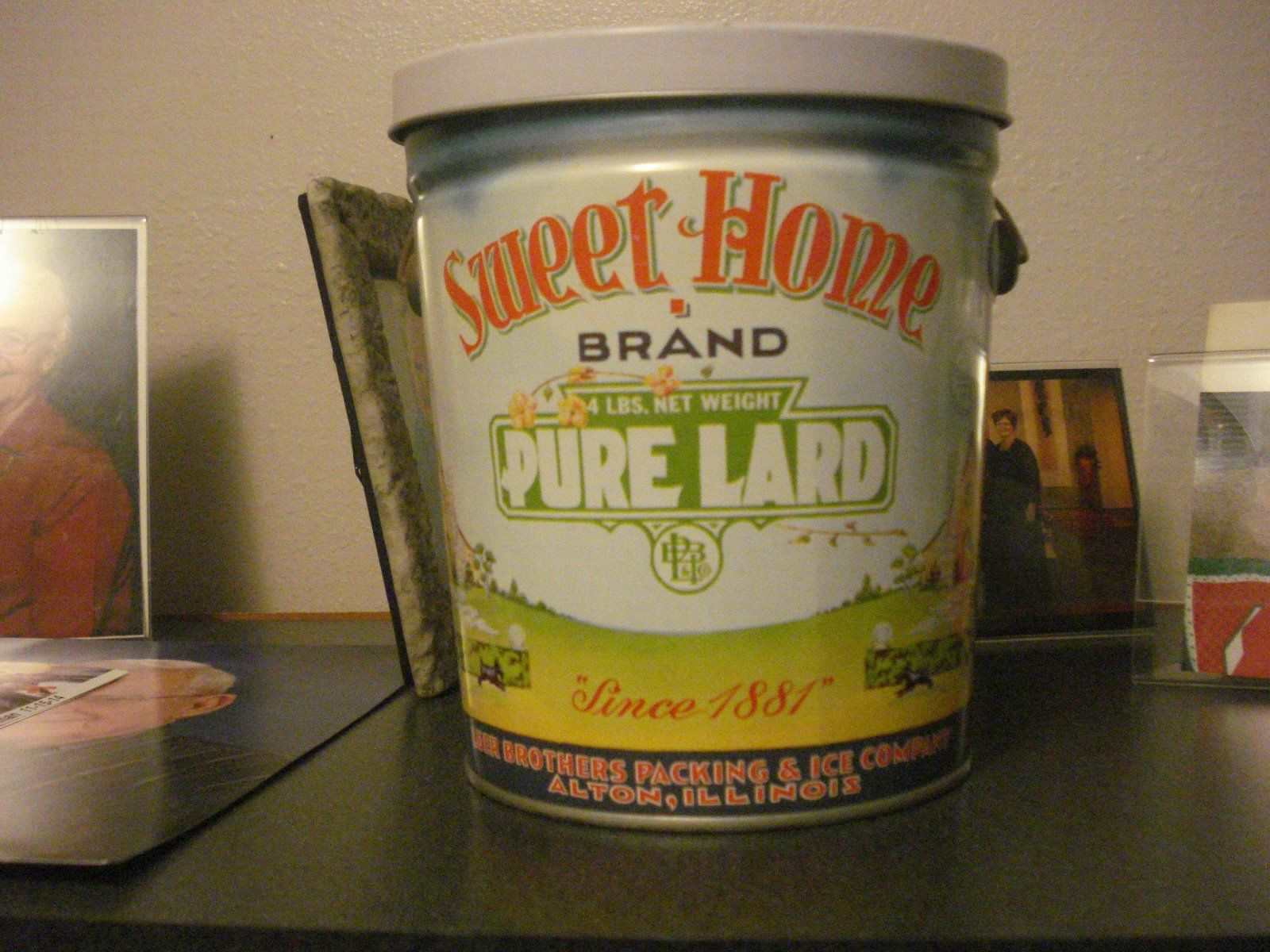
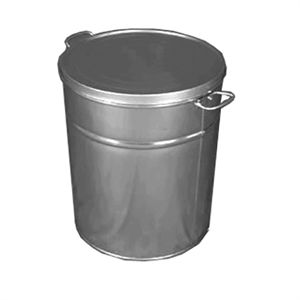
This is a sight that for generations graced every kitchen in the nation. A four pound lard can. There are lard cans to hold all of the lard that would come from a whole hog. Here is a six and a half gallon can, guaranteed to be rodent proof, made of metal so as not to leech plastics into your lard.

57213

I just got one of these from AgriSupply online. It cost just under thirty dollars. Having just purchased a hog for my freezer I guarantee you that I will get all of the fat from my hog. I will render that fat into lard, I will store all of that lard in this six gallon tin in my storage room in the basement. It will never go bad, and I will never again use cooking oil in my foods. I am going to get a four pound tin that I can keep in the kitchen pantry, and I will fill it from the six gallon tin, as required.

Do you want to know how to render hog fat into lard? Here it is, pay attention, take notes! Cut the fat into one or two inch cubes. Put the cubes in your crock pot, turn it on high, put a cup of water in. Cook uncovered until the crock is full of fat. Ladle the fat into mason jars, through a reusable coffee filter. Let it cool. Keep it covered until you use it. It’s really that easy. There is absolutely no magic involved, there is no special precaution you must take to keep from poisoning yourself if you don’t do it right. No need to freeze or can, this stuff is so easy, even ancient civilizations could do it. It’s also the healthiest fat you can use, and that is not just my opinion. 

Cooking with lard could not be easier, you use it just as you would Crisco or any other shortening. It keeps the same, too. Used lard can easily be strained and put into a grease container, like the one you might be using now to store bacon grease. As long as there is no  water in your lard (and there shouldn’t be) it will keep well until it has picked up too much flavor from the foods you have cooked in it. Dispose of it by putting it in the trash. Washing lard down the drain is asking for a visit from the plumber.

Posted in Health, Living | Tagged , , , , , , , | 4 Comments

The High Priest of Nutritionism

This is how science, in it’s purest and most effective form works. A researcher comes up with an idea of what might be causing a problem. For instance, let us say that the scientist thinks that saturated fats in our diets might be CAUSING heart disease. This scientist puts forth his existing research that illustrates where he gets the idea that one thing may be causing another thing. He spells out in great detail where his facts come from. He supports his contention with all of the evidence he can, he presents this information to a waiting world, and then–a good scientist–makes every attempt to help the world destroy his hypothesis. If evidence arises, collected just as he collected his, that lies contrary to his conclusions, then this hypothetical pure scientist must account for new data, find a way to make these results fit into his hypothesis, or he must GIVE up his conclusions and admit to himself that his cause is not the only cause.

In the case of dietary fats causing heart disease, this was never done. The scientist that established the theory was it’s chief sales person. He refused to question his own conclusions or to even share the doubts harbored by his own researchers. In this case, the man, Ancel Keys, was not a scientist, but a High Priest. He acted as though his mission was not to find the truth, but to defend The Truth. His conclusions were never questioned by him. All of the studies that showed contrary findings had to prove their truth to him. This is the polar opposite of the scientific method, and in fact is the very definition of pseudo-science.

It is only now that finally the health situation in America is so dire that nutrition high priests are unable to stomp out the incipient fires of doubt about the connection between dietary fats and heart disease. The science was never pure, the case never closed, but the fix was in from early on. Billions have been made, and now billions are to be lost trying to recover from the damage that bad science has wrought.

The real cause of heart disease was and is carbohydrate. Carbohydrate includes sugar but is not limited to sugar. It is an entire class of foods that, when we began to restrict our fat intake, was used to replace fats in our diet. As the original cause, increasing it’s consumption never reduced the incidence of heart disease. Even worse, increasing our carb loading had the effect of also making us fat, making us sick with high blood pressure and liver disease. By now the idea that low fat is the answer to the ballooning weight of our grandchildren is causing very many innocent parents to further poison them with low-fat foods. Low fat foods are high carb foods. Carbs are the problem, they always were the problem. Carbs in your diet mean triglycerides in your blood. Carbs kill.

Maybe the future will be a place where pseudo science cannot cloud the results of real science. In that future tobacco companies won’t be able to point to ‘scientific’ reports that show that cigarettes cure athsma and are a health care product. In that future, climate ‘scientists’ won’t be able to point to snow on our lawns and report that the science is still out on global climate change. In that future, oil and gas ‘scientists’ won’t be able to claim that the greenhouse gases from wild animals are greater than from their products. Maybe the future will be a place where there will be penalties from such behavior that don’t fall uniformly on the rest of us, like they do now.

Posted in Health, Living | Tagged , , , , , | Leave a comment

It’s Always Been Like This

At about five years old we start to remember things on a pretty regular basis, and that is the dawn of the world for us, as adults. It is so easy to look around you and search your memory and assume innocently that the world has always been thus. The first time that I ever really questioned my world view was when my Dad told me about Polio scares. Polio is a nerve disease caused by a virus that had a vaccine deleloped for it in 1952. I was born in 1960 and at that time there still was Polio in my world. In 1961 there were only 161 cases of Polio reported in the entire US. However, in my world, the one that began forming in my memory starting around 1965, there have always been vaccines, we have always been free from the fear of mass-contagion. I never in my life feared Polio.

This function of our memory limiting our world view makes it easy for us to see things from the view of the mass of us. For instance, we now live in a world where there is heart disease and heart attack. Unless you research it, you would never know that before the year 1900 there was no reason to have a word for it, because nobody ever got heart attacks.

The hypothesis that saturated fat causes heart disease was developed in the early 1950s by Ancel Benjamin Keys, a biologist and pathologist at the University of Minnesota. At his lab, he ran experiments looking for early indications of disease, and in the 1950s, no health issue seemed more urgent than the problem of heart disease. Americans felt themselves to be in the midst of a terrible epidemic. A sudden tightening of the chest would strike men in their prime on the golf course or at the office, and doctors didn’t know why. The disease had appeared seemingly out of nowhere and had grown quickly to become the nation’s leading cause of death.

Teicholz, Nina (2014-05-13). The Big Fat Surprise: Why Butter, Meat and Cheese Belong in a Healthy Diet (Kindle Locations 390-395). Simon & Schuster. Kindle Edition.

Early researchers, in a panic to find a solution to a new problem came up with one, based on incomplete science. The way to keep cholesterol plaques from forming in your arteries is to not eat fats. In a way, there is a certain beauty to this knee-jerk logic. If I pour bacon grease down a sink drain enough times I will certainly cause a grease plug in my piping–therefore–if I pour enough bacon grease into my throat, over time I should expect to find grease plugs in my piping too! Easy Peasey!

Except that nothing like that happens in your body. The grease you pour in your throat does not turn into bloodstream grease. Eating cholesterol in your diet is not going to lead to cholesterol in your blood, because your body does not work that way. The old saying ‘you are what you eat’ is a gross over-simplification and not a basis for a scientific hypothesis.

We are at a very similar crossroad of national awareness at this very moment. We missed the call on heart disease from fats, and the solution we settled on, replacing fats in our foods with carbohydrates in our foods, has made the national health report card grade a big fat F. Now we are about to figure out, finally, what the real true culprits were in the heart disease epidemic. In addition to that, we are about to find that the thing we replaced the ‘evil’ fat with, was the original evil, and that if you ate even more of it, (sugar) that when you do die of heart disease it will only be after you have went blind and had your feet cut off as a result of your type two diabetes. The diabetes will only kill you, though, if the liver disease doesn’t get you first, or the high blood pressure-induced stroke.

Getting off of sugar will be a huge job, though. It will be much tougher than getting off of fat was. By now there are huge amounts of money being made in the current system. The corn producers are raking it in making sweeteners. The soda producers are raking it in making ever larger portions of their syrups. The pharmaceutical companies are raking it in dealing with the chronic illnesses. The hospitals are raking it in on the bariatric surgeries. Everyone is just fine with the way that it ‘has always been’. We don’t realize that it hasn’t always been like this. Your kids look around in school and just about everyone is as heavy as they are. You look around at work and all the men have beer bellies. It’s common knowledge that all we have to do to turn it around is stop eating fat. It’s always been like this, right?

images-2

Posted in Health, Living | Tagged , , , , , | 1 Comment

Big Fat Surprise

slider1-2

I just ordered a new book from Amazon for my Kindle Reader, “The Big Fat Surprise: Why Butter, Meat and Cheese Belong in a Healthy Diet“. It is written by investigative reporter, Nina Teicholz and I understand from reading a review of it that she is going to show me how come we have spent the last fifty years being lead to believe that fat was bad for us.

Earlier today I read a great Facebook post that linked to a new poster, found on Upworthy, detailing how come so many people think that vaccinations cause problems for people that get them, and the issues of fat and vaccines are closely related. The big difference between the two is that when the original report blaming dietary fats for heart disease was sprung upon the world, powerful groups saw a chance to make money from that news. I am hoping that at the time these powerful groups could not anticipate the health care tsunami that going to low fat or artificial fats was going to cause in our nation. I would hope that if the margarine or crisco people could have seen that low fat was going to make us fat, or that trans fat was going to cause the heart disease it was meant to avoid, then surely they would never have sold these snake-oils so hard. The only thing that makes me think that I might be wrong about this is that now they know, yet they are fighting the science as hard as their money will allow!

The anti-vaxxers are all already fighting a rear-guard action against every powerful information sales outlet and the whole movement now has a kind of conspiracy-theorist aroma to it. That’s a good thing, too, because vaccines are too beneficial to mankind to allow the pseudo-science anti-vaccine thing to gain any more traction than it already has. Man-made fats, though are every bit as dangerous as the anti-vaxxers think the flu shot is. It is even the same kind of danger, because man made fats won’t kill you instantly and the problems don’t affect everyone the same way.

The main problem with vaccines and vaccine science, and diet and health science is the same problem that climate science is having. Powerful groups are keeping the science controversy meme alive. The idea being that someone somewhere is pulling the strings to keep their gravy train on the tracks. Nuclear power has powerful enemies in the coal and oil industry. Dairy has a powerful enemy in the low-fat marketplace. Bread has a powerful enemy in the low-carb marketplace. Science has a powerful enemy in the marketplace of ideas, and it is science and scientific integrity that suffer when ‘researchers’ sell their good name in exchange for money.

I keep coming back to the idea that money is a lousy means of determining worth. There are scientists that make their fortune by exchanging money for putting their names on a research paper that link, falsely, the idea that saturated fats plate out in your coronary arteries. They trade money–an investment for the source of the money–for elevating a lie that we are now having trouble killing–in exchange for lending the good reputation of science to their bad science. The science has no value to society and is not true. The science has been debunked, but the lie now has ‘value’, but not to society. To society this false science has anti-value, but our media cannot report truth as truth as long as there is one group that provides cover to the lie. Once again money in the sale of papers and magazines thrives on the ‘controversy’ that one outlying scientist provides. If I told you six out of ten scientists believe that there is no man made global climate change, you might read that article and think that there is a legitimate controversy. However, if I told you that there were also six out of one hundred scientists that believe this , and also six out of a thousand, you might come to realize that there are ONLY SIX scientists in the entire world that hold that view, which makes the controversy only a way for papers and polluters to continue to make money from the lie.

Unfortunately this dynamic only serves to tarnish the good name of good science. It serves to make us doubt even the science that says that the past was wrong to turn us towards man-made fats and added sugars. Lots of people wonder, when I say, “butter is good for you”, how long I will be saying that before I change back to “butter is bad for you”. If science and the media were operating for the good of mankind instead of for the good of cash flow, we would need not have that worry.

Fortunately for me I know–KNOW– that I feel far better when I do not eat added sugar. Science good or bad does not affect that knowledge. I know that butter cooks better, tastes better, works better in my life than margarine. I don’t need to wait for the science to come in on artificial ingredients, because I do not need them in my life. I can watch with amusement as the ‘debate’ unfolds and the pseudo-scientists can finally die off and allow the facts to speak for themselves, money be damned!

Posted in Health, Living | Tagged , , , , , , , | 2 Comments

Rare Sunday

It’s the rare Sunday that I get to post. This Sunday I am not working, and this morning I am having the pleasure of converting videos from last night’s big Holiday Open House that we hosted. We had music, and what music!

I will see if I can upload a sample, we had two different acts set up, but by chance they were in the same room at the same time and played a few songs together. The instruments are Viola de Gamba, played by Gerald Trimble, violin, played by Michael Turnbow, and classical guitar, played by Benjamin Warner. Benjamin also plays piano, but not in this clip, sorry!


Posted in Health, Living, Poetry | Tagged , , , , | 1 Comment