The Science is Still Out!

When writing about scientific progress, one of history’s greatest physicists, Max Planck wrote in 1950, “An important scientific innovation rarely makes its way by gradually winning over and converting its opponents. What does happen is that its opponents gradually die out, and that the growing generation is familiarized with the ideas from the beginning.” There is one opponent of scientific innovation that can never die, though. A corporation, that deathless, soulless entity whose only purpose in ‘life’ is to generate and protect it’s profits can be counted on to resist science that would restrict it’s profitability in  perpetuity.

The tobacco industry showed us how long a corporation can muddy the waters. For decades everyone knew that tobacco was a dangerous product, that it’s designed use would cause heart disease, pulmonary problems, cancer of the lung and mouth. Learning how it was done, the sugar industry has done exactly the same thing for it’s profits. For decades we have all known that eating sugar makes you fat. Today in Mother Jones (one of my favorite sources for dirt on food corporations) they diagram the history of the scientific obfuscation that the sweetener industry has conducted to defend itself from competition and good science…please read the entire linked article–your blood will boil.

…the sugar industry had doled out more than $600,000 (about $4 million today) to study every conceivable harmful effect of cyclamate sweeteners, which are still sold around the world under names like Sugar Twin and Sucaryl. In 1969, the FDA banned cyclamates in the United States based on a study suggesting they could cause bladder cancer in rats. Not long after, Hickson left the ISRF to work for the Cigar Research Council. He was described in a confidential tobacco industry memo as a “supreme scientific politician who had been successful in condemning cyclamates, on behalf of the [sugar industry], on somewhat shaky evidence.” It later emerged that the evidence suggesting that cyclamates caused cancer in rodents was not relevant to humans, but by then the case was officially closed. In 1977, saccharin, too, was nearly banned on the basis of animal results that would turn out to be meaningless in people.

Science is the enemy and the ally of sugar industry profits. Because no true scientist will ever be definitive in his declarations, every study is full of correlation and causations, and words that leave room for new science in the future to refine the results of today’s science, sugar industry ‘scientists’–men who make their money performing pseudo science to give the client the results he is paying for–can muddy the water and truthfully say that there is need for more evidence before conclusions are drawn. In legislative hearings the CEO of big sugar can wave papers around and claim, honestly, that ‘scientists’ suppose that not only is sugar not harmful, it is a health food. This CEO is not an evil-genius liar, he is the head of a soulless, deathless entity whose only purpose in existence is the creation and protection of the profits in selling a product that, when used as designed, causes heart disease, diabetes, fatty liver disease, high blood pressure and obesity.

The only entity that can fight this industry is our government. It can fund actual science, it’s purpose in existence is to promote a better society. We are close to the tipping point where the cost of letting the sugar industry lie, cheat, and confuse are so great that even a nation as corrupt as our own cannot let it continue any longer. Even tobacco in it’s worst year had not damaged the heath of 66% of all Americans, including elementary school children. The Sugar Industry is guilty of a high crime. Their lies are killing babies, who have no choice in the matter.

At the very least, sugar must be removed from all processed foods. Until this happens, we must all quit eating processed foods. I have. Here is why you have to go it alone on this…

By the early 1990s, the USDA’s research into sugar’s health effects had ceased, and the FDA’s take on sugar had become conventional wisdom, influencing a generation’s worth of key publications on diet and health. Reports from the surgeon general and the National Academy of Sciences repeated the mantra that the evidence linking sugar to chronic disease was inconclusive, and then went on to equate “inconclusive” with “nonexistent.” They also ignored a crucial caveat: The FDA reviewers had deemed added sugars—those in excess of what occurs naturally in our diets—safe at “current” 1986 consumption levels. But the FDA’s consumption estimate was 43 percent lower than that of its sister agency, the USDA. By 1999, the average American would be eating more than double the amount the FDA had deemed safe­—although we have cut back by 13 percent since then.

In your lifetime, you can count on no help from your government on reigning in the manufactured poisons industry. When the tobacco companies were being sued into reality in the seventies and eighties, it was by real people who had been damaged by one company, smoking it’s product until it killed them. Big Sugar is protected from this fate by the fact that every bite of processed food you eat is loaded with this deadly ingredient. You can not sue one company, because they all are contributing to your poor health. Only the states could sue sugar companies for selling a product that is causing them to spend so much more than they should be for our health care. In the nineties that is how all of the states ended up getting big settlements from the tobacco companies for health care costs. This is in Big Sugar’s future. But we don’t live in the future. We live in the here-and-now, where we must eat foods that are not loaded with sugar.

Those products are the real foods found on the outside walls of your grocer. Eat all the fruits, vegetables, meats and full fat dairy that you want. Eat zero products that are delivered to you in bags or boxes, with eye-catching health claims on the labels. The labels are lies, the health claims are bogus, the sugar in these products is killing you and your family. Wonder why that baby weight won’t come off? It has nothing whatsoever to do with you, blame those processed foods.

sweet_graphic

Nobody has any idea why this is true

Posted in Health, Living | Tagged , , , , , , , , , | 3 Comments

Modern Day Alchemy

It is possible to turn trash into treasure. Consider the case of Coca Cola’s Vitamin Waters.

According vitaminwater’s website, the Power -C flavor of vitaminwater delivers “zinc and vitamin C to power your immune system”; while the XXX offers “antioxidant vitamins to help fight free radicals and help support your body.”–Mother Jones, Jan 18, 2013

This is a product that contains, in addition to the ‘healthy’ ingredients cited above, reverse osmosis water, crystalline fructose, cane sugar. Guess what crystalline fructose is. Yep, sugar, so sugar gets mentioned two times in this ‘health drink’ called Glaceau vitamin water.

I wonder how they make vitamins in China, where just about all of the vitamins used in our foods and probably all of the vitamins in vitamin water come from.

Vitamin C production is a convoluted operation consisting of about ten steps, within which there are substeps. It starts not with corn kernels or even cornstarch, but sorbitol, a sugar alcohol found naturally in fruit and made commercially by cleaving apart and rearranging corn molecules with enzymes and a hydrogenation process. Once you have sorbitol, fermentation starts, a process that tends to muck up surrounding air less than chemical synthesis (although it’s been known to cause problems with water pollution). The fermentation is done with bacteria, which enable more molecular rearrangement, turning sorbitol into sorbose. Then another fermentation step, this one usually with a genetically modified bacteria, turns sorbose into something called 2-ketogluconic acid. After that , 2-ketogluconic acid is treated with hydrochloric acid to form crude ascorbic acid. Once this is filtered, purified, and milled into a fine white powder , it’s ready to be shipped off as finished ascorbic acid , mixed with other nutrients, and added to your Corn Flakes.

Warner, Melanie (2013-02-26). Pandora’s Lunchbox: How Processed Food Took Over the American Meal (pp. 83-84). Scribner. Kindle Edition.

Without this process and these genetically modified bacteria, there would be no added vitamin C in your processed foods. It doesn’t sound like a very healthy way to make vitamins, especially when you consider how nature does it, and why. Getting your vitamins from real food ensures that you don’t get too much or too little. Unless you are a sailor in the nineteenth century, and your diet is limited to gruel and grog for six months at a time, chances are that you get every vitamin you need from eating real food. Of course, if you live in Missouri, in the middle of the richest nation on the planet and get most of your nourishment from items found on the Quick Trip shelves, then you must count on the generous addition of artificial vitamins to get any at all. But what if everything you eat has extra vitamins in it. Can you get too much?

Those bran flakes with “original antioxidants” or “extra vitamin A”? You might be better off without the added nutrients. A report released on Tuesday by the Environmental Working Group (EWG) found that cereals and snack bars that have been fortified with extra vitamins and minerals to appear healthy may actually be harmful—particularly for kids.

The report, “How Much is Too Much?”, explains that there are some nutrients that most Americans don’t get enough of, like calcium, vitamin D, and vitamin E. But it turns out that kids are eating too much of other nutrients, and overconsuming certain vitamins and minerals for a long period of time can have negative health implications in the long run.–Mother Jones, June 24, 2014

Well, at least we have labels to read to clue us into the deceptive tricks played by marketers to get us to think products are full of healthy ingredients. The FDA is CONSIDERING making changes to what information will be required on the labels of all of your packaged foods.

Some of the proposed changes should be helpful. For example, instead of listing sugar as a single entry, the new label would separately list “added sugars” to distinguish those naturally present and not.

Also, the proposed label will highlight the number of calories in the amounts of food most people consume at a sitting. Though an official “serving” of a soft drink might be eight ounces, for example, people may habitually consume the entire 12-ounce can or 20-ounce bottle; if so, the calories in that amount would be featured on the label. —Mother Jones, Oct 26, 2014

These very modest, and most people might say helpful, changes would go a long way toward making food labeling useful by the greatest number of people that need the help in deciding which processed food to buy.  In addition to these changes, why not also change the units of measure from grams, which none of us know, to teaspoons which we all know?

Here is another really good idea that I just read about for the first time this morning, also from the same Mother Jones article:

Given the high cost of changing hundreds of thousands of food labels, I and many health professionals believe the revisions, though positive over all, do not go nearly far enough.

For one thing, they fail to give harried shoppers a fast and easy way to distinguish among similar products, perhaps by using front-of-package traffic light signals to highlight the good, bad or neutral health value of a food.

“Ecuador is already doing this because they’re so worried about obesity,” Marion Nestle, a professor of nutrition, food studies and public health at New York University, said in an interview. “In Great Britain, it was shown that when people saw red dots on a package, they didn’t buy it.”

Remember the Mr Yuck for putting on dangerous kitchen chemicals so that children would no be fooled by pretty packaging into drinking or eating it? Well, we could have a “Mr Yuck” for all junk foods so that when you pick up a bottle of vitamin water you could see right away that it’s just junk food. Same would go for chocolate milk, which has as more sugar in it than a serving of Coca Cola–bet you didn’t know that! Yuck! Kids won’t drink their milk, here give them this candy instead! The bad thing is that this label would go on such a high percentage of processed food as to be almost universal. Then what would we eat? Oh yeah, vegetables, because they don’t need labels or lists of ingredients.

Unknown

Posted in Health, Living | Tagged , , , , , , , , , | Leave a comment

Buzz-Word Bingo!

When I was in the Navy, half a lifetime ago, we had a game we called Buzzword Bingo. It went like this, during a lecture, every time the proctor would say one of our buzzwords, you would mark it off of your buzzword card. It never took too long to get a winner in this kind of bingo.

Our dietary media is also full of buzzwords, and buzz-concepts if you will. Yesterday’s trendy topic stays on the list and as science can isolate a new item, the buzzword for it goes on the card. Low-fat, Low-calorie, vitamin enriched, probitotic, Gluten-Free are all worthy buzzwords. The concepts are buzzy concepts too. Nobody needs to understand the actual science, just hearing the word is enough to get you to buy this one over that one, and for no other reason than there is a buzz word on the box.

images

this is a gluten molecule

Gluten Free is a really, really good example of this. Who out there really knows what gluten is? When you were a child, think back-way back. Did you eat biscuits, cakes, cookies? If so, you ate gluten. There are now millions of people that think suddenly gluten is a problem in their lives, and for no other reason than there are now all of these articles and trendy new foods that have made them aware that there is a thing called gluten, which for some people causes vague, general, common dietary symptoms. Gluten has not changed. Foods have changed, but gluten remains as it has been for ten thousand years. Of course, you have changed, as well. You are older and more aware than you were when you could eat gluten filled products. Back then you didn’t realize that it was possible that the tightness you were feeling in your stomach after having seconds of biscuits and gravy might not be from overeating, but might be from gluten. Perhaps eating gluten free biscuits and gravy will allow you to have a THIRD helping.

In the New Yorker magazine, Michael Specter takes on the gluten craze culture. He explains to us exactly what gluten is:

Gluten, one of the most heavily consumed proteins on earth, is created when two molecules, glutenin and gliadin, come into contact and form a bond. When bakers knead dough, that bond creates an elastic membrane, which is what gives bread its chewy texture and permits pizza chefs to toss and twirl the dough into the air. Gluten also traps carbon dioxide, which, as it ferments, adds volume to the loaf. Humans have been eating wheat, and the gluten in it, for at least ten thousand years.

There is an entire industry now of people enriching themselves on the newest food buzzword boogieman in the US. Nobody in the US had ever heard of gluten unless they watched a lot of cooking shows. Alton Brown informed us that gluten is what gave bread and cakes their fluffiness by making the carbon dioxide bubble in the leavening become trapped in the batter. That was the sum total of gluten knowledge that I had until just recently.

Nearly twenty million people contend that they regularly experience distress after eating products that contain gluten, and a third of American adults say that they are trying to eliminate it from their diets. One study that tracks American restaurant trends found that customers ordered more than two hundred million dishes last year that were gluten- or wheat-free. (Gluten is also found in rye and barley; a gluten-free diet contains neither these grains nor wheat.) The syndrome has even acquired a name: non-celiac gluten sensitivity. “I’ve been gluten-free these last four years, and it has changed my life,’’ Marie Papp, a photographer, told me at the expo. “I would have headaches, nausea, trouble sleeping. I know that I’m intolerant because I gave it up and I felt better. That explanation is probably not scientific enough for you. But I know how I felt, how I feel, and what I did to make it change.” She went on, “I’m a foodie. It’s been five years since I had biscotti. And I just had one here, gluten-free. And it rocks.”

No, Marie, that is not nearly scientific enough for me. “I gave it up and I feel better” is the very definition of pseudo science. A conclusion that is looking for proof.

Wheat has it’s problems in the modern western diet. I feel that there is sufficient proof already–scientific proof– that eating white bread which contains flour in it’s highly processed form is causing many of the same problems as processed sugars are causing, namely, hypertension, diabetes, and obesity. In my mind the problem isn’t the wheat, it’s the process. By diluting all of the protein containing components of wheat and just delivering in flour the starch–the sugar if you will–the food industry is producing a food that is bound to cause problems. Wheat’s problem is the industrial food production system. In third world countries there is no such thing as “non-celiac gluten sensitivity” and to suggest that people there find another way to survive without wheat or grains would be asking them to starve to death instead.

See, the thing is that here in America we know we are eating something that we shouldn’t be eating. We keep casting about looking for what it is that is making us feel awful, gain weight, get diabetes. This month it is gluten. Last month it was fat. Next month it will be some other new thing–perhaps a germ that can be combatted with this new probiotic that you take before every meal. In fact, we will find, if we ever dare to look at the truth, that the problem is processed foods. The problem is artificial ingredients. It was never fat or gluten, but MSG and HFCS.

Nobody can say for sure why the rise in celiac disease has been so rapid. The modern diet may be to blame. And there is also growing evidence, in animal studies and in humans, that our microbiome—the many bacterial species inhabiting our gut—can have a significant impact on a range of diseases. None of that, however, explains why so many people who don’t have celiac disease feel the need to give up gluten.

Why do so many people feel the need to give up gluten? In the advertising industry they call it “The Bandwagon Effect”. It’s the same reason why so many people here in Kansas City suddenly feel the need to watch the Royals play–because so many people are doing it.

I really recommend that you read the entire New Yorker article. In it there seems to be real scientific research that shows where your “non-celiac gluten sensitivity” may be coming from, but the quote is just too lengthy to copy into here. Suffice it to say that the culprit may be another chemical, but one whose scientific name is way too long to ever look good on the label. It will never be a health claim. “Fermentable oligosaccharides, disaccharides, monosaccharides, and polyols.” However, I may be underestimating the current crop of Don Drapers in the world to come up with a cute way to make FODMAP free foods the in-thing to buy next year.

This next quote, while long, explains very well the gluten-free craze as I see it.

“When I was a kid, I would watch National Geographic specials all the time,’’ Nathan Myhrvold, told me. “Often, they would travel to remote places and talk to shamans about evil spirits. It was an era of true condescension; the idea was that we know better and these poor people are noble, but they think that spirits are everywhere. That is exactly what this gluten-free thing is all about.” He stressed that he was not referring to people with celiac disease or questioning the possibility that some others might also have trouble eating gluten. “For most people, this is in no way different from saying, ‘Oh, my God, we are cursed.’ We have undergone what amounts to an attack of evil spirits: gluten will destroy your brain, it will give you cancer, it will kill you. We are the same people who talk to shamans.

“To find out the effect something like gluten has on people’s diets is complicated,’’ he said. “We’ll need long-term studies, and there won’t be a useful answer for years. So, instead of telling everyone you are going on a gluten-free diet, what if you said, ‘Hey, I am going on an experimental regimen, and it will be years before we know what effect it might have.’ I don’t know about you, but instead of saying ‘Eat this because it will be good for you,’ I would say, ‘Good luck.’ ’’

As depressing as it is, this is still true:

While there are no scientific data to demonstrate that millions of people have become allergic or intolerant to gluten (or to other wheat proteins), there is convincing and repeated evidence that dietary self-diagnoses are almost always wrong, particularly when the diagnosis extends to most of society. We still feel more comfortable relying on anecdotes and intuition than on statistics or data.

Read the article. Eat real food, don’t worry about gluten. If you quit eating added sugar, artificial ingredients, processed foods your “non-celiac gluten sensitivity” will go away as if by magic. Nature will take care of itself if given half a chance.

Posted in Health, Living | Tagged , , , , , , | Leave a comment

Candy Is Dandy

im_hero

There are certain circles that are getting more and more active on the ‘regulate sugar’ front. The Washington Post had a lengthy article this week on the industry and the actions being contemplated to curb the nation’s current overconsumption of sugar.

In addition to improving the standards of food served in schools and increasing fruit and vegetable servings, a portion of the [Healthy, Hunger-Free Kids Act] that went into effect last month required that all candy, sugary drinks and non-nutritional snacks be removed from school cafeterias and vending machines. “By taking candy out of schools we’re saying candy is not an everyday food, and it’s something you should be eating a lot less of,” Wootan says.

Victories against candy, though, are not really victories at all in the war against obesity. Most people don’t overeat sugar by eating candy. In modern day America you over eat sugar by eating processed foods, since processed foods almost universally contain added sugar. Candy is not the enemy, because candy is a known quantity. Yogurt is the enemy, and foods like it, that have a healthy reputation, but these days contain enormous quantities of added sweeteners, unbeknownst to the consumer.

John Oliver, on his HBO program “This Week Tonight” had quite a bit to say about hidden sugars. One of the points he made was that the labeling of foods puts sugar amounts in a unit that the consumer cannot understand. Grams. Hardly nobody knows that a four grams is a teaspoon. He recommended putting sugar amounts in ‘candy circus peanuts’ which is a unit that is better than the gram, but not as good as the teaspoon…

If you really want to educate the public then just do two things to the ingredient label. Combine all sugar carbs into one ingredient, quantify it in teaspoons, and put on the label what percentage of the recommended daily allowance that is. This is how that label would read for something like a Dannon Low Fat Yogurt. It has 7 grams of sugar, which would be 2 teaspoons of sugar. 7 grams of sugar would be 25% of your recommended daily allowance. The average US citizen is overweight and eats about 110 grams of sugar a day. If you are the average citizen, you consume 22 teaspoons of sugar per day. You consume 400% of the recommended daily allowance of sugar. You do this, because sugar’s quantity in every bite and drink you take is cleverly hidden from you in a fog of mysterious measurements and the failure to put the RDA on the label. It’s intentional, of course.

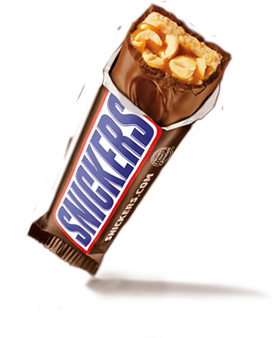
As long as added sugar is treated this way, candy is nobody’s enemy. You can eat candy if that is the only sugar you eat all day. A Snickers bar has 27 grams (seven teaspoons) of sugar, which is your recommended daily allowance. If you don’t eat added sugar, you can have one of these, or any other candy. You know what you are getting.

Food additives are all a problem. Sugar is just one of them. It just so happens that sugar is also highly addictive and leads to cravings for more and more sugar. The easiest way to cut down on your sugar intake is to stop drinking any sweetened beverage, and to quit eating any processed foods. There, now you are over your sugar problem, and you can now eat the occasional candy.

We all like candy, we all feel that candy has a rightful place in the food pyramid. I don’t think we all feel the same way about sugar in our low fat products. Hidden sugar has no place in our rightful diet. Of course the government could regulate this someday, if they ever regulate anything ever again, maybe they will. I am betting not. In the meantime, stop buying your foods in bags and boxes. Stop drinking artificial ingredients and sugar in every sip you take.

Posted in Health, Living | Tagged , , , , , , | Leave a comment

Cue Up Scary Music!

Right on time, the competing science is showing up where your gut microbes are concerned.

Sorry, Your Gut Bacteria Are Not the Answer to All Your Health Problems

This article from Mother Jones online starts with this line:

We’re told that tweaks to the microbiome can cure everything from allergies to Ebola. Not exactly, say experts.

I would have to agree that a claim that ‘tweaks’ to the micro biome can cure Ebola would be an extreme claim. I had not heard that, so it would seem to be a bit of a straw man argument. I had heard that it might be the fix for food allergies, though, so I had to read on to see what ‘experts’ have to say about that. If what the ‘experts’ say is that they are not convinced that “tweaks to the microbiome can cure everything” I would agree without any reservation.

In the article we read that all of the big food players are looking at what they can add to their products so that someday they can put a giant font health claim of ‘contains vital probiotic’ on every package.

The hype has kicked off a gold rush. Big food companies—including Nestle, PepsiCo, Monsanto, and General Mills—have funded gut bacteria studies[3], and some have even opened[4] centers to develop foods that interact with the microbiome, such as probiotics[5]. According to Transparency Market Research[6] the global probiotics market is expected to reach an astonishing $45 billion by 2018.

Apparently getting us to bite on foods is a lot like fishing. If they don’t take the red and white striped bait, switch to the black and green one. We might be fooled into continuing to eat processed foods if they can make us think that doing so will allow us to keep eating just like we always have. We will be fooled if they just add one more thing to the recipe. Vitamins, minerals, low fat, no gluten, no calorie, and now–“CONTAINS PROBIOTICS” will keep us purchasing the mystery-ingredient processed foods.

images

The gold rush will include medicines you can take, that will enhance your digestive system’s ability to handle the continuous stream of poisons and ‘enhancements’ contained in your three-times-a-day exposure to the Western Diet of artificial foods. Just take this one pill and you can drink all the Mexican Coke you can handle. Not a care in the world, if you just drink this probiotic Monster Energy Drink!

At a 2012 Institute of Medicine forum[3] called The Human Microbiome, Diet, and Health, Susan Crockett, former vice president for health and nutrition at General Mills, spoke about the “amazing things” the food industry could do to help people maintain a healthy microbiome, in the same way cereals helped Americans increase their fiber consumption. Baby formula, other industry reps suggested, could be enhanced to more closely match the bacterial profile of breast milk and weight-loss products could harness the microbiome to speed up metabolism.

Amazing, indeed, in fact, practically hypnotic! You will never have to eat a real food again, if you get your dietary fiber in your coco puffs, and your probiotics in your ‘germ enhanced’ skim milk. Sugar will be a problem of the past in this brave new world!

Actual non-money-based science is on the scene, though. The caution mentioned in the top of the piece is actually a caution against thinking there will be a pill or supplement to processed foods that can deliver on any claim. The actual science is coming to realize that none of the ‘germs’ works in isolation, but that the entire organism of your micro biome acts only in concert with the other inhabitants of your gut, indeed even with your gut itself as they cooperate to strengthen one another.

The goal of the first phase of the HMP was to identify the microbial makeup of a “healthy” microbiome. And, in a study published earlier this year[15], researchers made an important discovery—that there is no such thing.  Even among people who were examined and found to be perfectly healthy, each person’s microbiome was unique.

“We were going about it all wrong,” Proctor explains. “It is not the makeup—these communities come together and they actually become bigger than the sum of their parts…It almost doesn’t matter who is present, it just matters what they are doing.”

What Proctor is saying here is that you cannot change the community by bussing in a certain type of resident. They are going to find, I predict, that the only really effective way to maintain a healthy gut is to eat real foods. Eating chemicals produces a gut that lives best on chemicals. A gut that lives best on chemicals is going to be a gut that produces hypertension, diabetes, fatty liver disease, heart disease and early death from ten thousand lousy dinners. Eat quick, eat convenient, die young.

Eisen says that one of the most common errors in studies is confusion between correlation and causation. “The microbiome has 400 million different variables that you can measure about it,” Eisen explains. “The different sites, the different species, the relative abundance of those species, the variation—if you have that many variables, I can guarantee statistically that some of them will be perfectly correlated with Chron’s disease and have nothing to do with it.”

Four Hundred Million Variables that you can measure. Sounds complicated. Could take science a very long time to figure out how it all actually works together. In the meantime, you can eat real food that you prepare yourself, that has no artificial ingredients in it and just see for yourself if it changes the way that you feel. Do your own experiment for a month. I predict (unscientifically) that the results will be so incredibly positive that you will want to blog about it every day for the rest of your life, like I am! That is science you can believe in.

I am not on a diet. I no longer live like I used to and I am never going back to eating that way. Big food has lost this fish.

Posted in Health, Living | Tagged , , , | 2 Comments

You Gotta Start Somewhere

Unknown-3

Learn to cook.

For instance, if you need to know more, go to a site like StartCooking.com:

Are you a busy person who just never got around to learning the basics of cooking? We built startcooking.com just for you. You’ll learn how to make quick and tasty meals, plus learn the basic cooking skills you’ll need. Get ready to start cooking!

Then, go to the store, buy some vegetables and fruits. When you get them home, chop them up and peel them. Get them ready to use, so that when you need to use them you are just measuring and putting it in the food. It make cooking so easy that you can do it in no time flat.

Try these tips from craftsy.com on what to do with your food you just got at the store. It adds a few more minutes to the shopping trip, but you have to put the food away anyway, and usually doing it like this saves you room in your pantry and refrigerator.

Lettuce, spinach and similar greens

In the refrigerator: Cut or tear the leaves from the end of the head, if applicable. Wash and dry the leaves thoroughly (such as in a salad spinner). Remove any dead or wilted leaves. Once dry, place in one or two thin layers on top of paper towels. Gently roll the towels, so that you have almost like a jelly roll cake, but the cake is the paper towel and the filling is the greens. Secure with a rubber band.

In the freezer: Freezing leafy greens is not suggested, as they will soften too much and won’t retain their crispy texture.

“Wilted” greens, such as cooked kale, spinach or beet greens, can be frozen once cooked; drain thoroughly and store in freezer bags for up to a year.

If you think you don’t have time for cooking, or you don’t want to learn how to feed yourself, keep on eating processed and additive-laden foods “for convenience”. I have mountains of proof here in the archives that you are killing yourself and your family doing it. But, like they say, time is money. Then again, they say “When you got your health you have everything”. Everything sounds like it’s more valuable than money, to me.

Posted in Health, Living | Tagged , , , , | Leave a comment

Live Long, And Prosper

Pasteurized Processed Cheese Food Product

Pasteurized Processed Cheese Food Product

A quick recommendation from me for a wonderful book. This book is full of information about the artificial ingredients in our American processed foods. You will find details about the FDA approval process, the industry that makes it’s living dreaming up new ways to impart flavor into flavorless foods, the current state of the industrial food production system. I recommend that you read “Pandora’s Lunchbox” by Melanie Warner as soon as you can. Here is a link to Amazon’s kindle version, which is what I own.

Along the way, she finally comes to recommendations that can restore balance and safety to the foods you eat, that you feed your family. One of the more important, but harder ones is that you buy real food at the store and cook it yourself. Chapter 11, Sit and Chew, is the best chapter of the book, and I excerpt from it here:

Eating well is in no way a luxury of the rich. We certainly can’t all eat at fancy restaurants, but affordable nutritious food is more available today than it’s ever been. Eggs, fresh meat, real cheese, plain yogurt, wholesome grains, half a dozen different kinds of beans and nuts, dozens of different fruits and vegetables— they’re are all available pretty much any time we want them. The modern supermarket shimmers with a perplexing array of complex pseudo-foods, but it also holds the keys to the most nutritious and varied diet Americans have ever had access to. (Imagine our turn-of-the-twentieth-century ancestors contemplating the colorful bounty of supermarket salad and sushi bars.) The only trade-off (yes, there is always a trade-off, with real food as with processed food) is that we have to carve out a little more time and energy— though not much more— to do some of our own food processing. As Barbara Kingsolver wrote in Animal, Vegetable, Miracle: “Cooking is the great divide between good and bad eating.”

Warner, Melanie (2013-02-26). Pandora’s Lunchbox: How Processed Food Took Over the American Meal (pp. 219-220). Scribner. Kindle Edition.

It is incredibly important that you stop eating processed foods. Many of the health problems in your family are directly related to untested chemicals that you are eating at every meal. Sure, they are tested to see if they kill animals outright, but none of them are tested far and wide to see if they make you fat, or anxious, or tired, or react with your real medicines. Artificial ingredients are not real, they are meant to simulate real, but once inside of you they become very real, and are changed by the machinery inside of you into real things, with real effects. NOBODY knows how this will turn out in you. If you cook your own real food you won’t have to count on someone, some day, to figure any of this out.

I spoke with a middle-aged woman named Laura in New Hampshire, who was also amazed at how switching from sugary, refined, prefabbed meals to fresh ones had transformed her life. She’d overhauled her diet after hearing about a workplace program offering health coaches, cooking advice, and nutritious foods served at her corporate cafeteria. Like Darcy embarking on the ten-day-challenge, Laura needed a push and a little support to do it. The more people I talked to, the clearer it became that this is something we all need. In truth, it’s hard to see how America gets off its suicidal diet without interventions emphasizing the importance of real food.

Warner, Melanie (2013-02-26). Pandora’s Lunchbox: How Processed Food Took Over the American Meal (p. 216). Scribner. Kindle Edition.

Posted in Health, Living, Reviews | Tagged , , , , , , , | Leave a comment

You Just Never Know

Unknown-1

Great Food, Eat around the additives

Last night we went out to Longhorn Steakhouse in Liberty. We really enjoy one of the starter items, Wild West Shrimp. Comes with a side of ‘ranch’ dressing and is accompanied by some hot peppers. They are tiny breaded shrimps, you just dip em and eat em like popcorn. We ate a salad each, and both had ‘ranch’ dressing on it, too.

We split a T-Bone steak that was about 30 ounces, cooked medium, and ate just about half of it between the two of us. It was seasoned with salt and pepper, probably, but You Just Never Know. They produce a steak sauce there at the table for you by mixing some spices with some sauces. Karen had some of that, not much, I had none. She had unsweetened tea, I had ice water.

Soon after dinner, but before the box came out to put the leftovers in, Karen began to complain that she was getting a headache and her heart was racing. Mine was too, but no headache for me. By the time I got home my heart was pounding pretty good. I went to bed at ten and by three I was wide awake in bed. Karen was tossing and turning too, and I think the restlessness was related to some added ingredient in our dinner. I guarantee you that if I had made that same steak at home, and ate a salad with my own home made real ‘ranch’ dressing, we would have had no symptoms or trouble sleeping.

I would think that eating a steak dinner at a good steak house would give one the best possible chance to avoid food additives that are disagreeable. I guess, if that is true, then eating at any corporate eatery is probably not a good idea any more. I kind of hate knowing that, but it will save me a small fortune going forward.

Posted in Health, Living | Tagged , , , | Leave a comment

100 Trillion Hitchhikers

It’s time to revisit one of the best and most informative articles that I have read since April 1, 2014. April 1 was the day we started in on our 21 Day Sugar Detox, and it was the day that I started this blog. Writing about food and health issues every day led me to begin scouring the papers and internet for interesting information to pass on. Nothing was more interesting than this article, by Michael Pollan.

It was probably 1968 when we conducted an experiment in my grade school. We had four white mice, two in one cage, two in another. Us students got to feed the mice every day, and one group got vegetables and fruits, the other group got corn chips and potato chips and soda, instead of water. After about three weeks, the difference was striking in their appearance. The fur of the junk food mice was greasy and the mice were definitely not doing as well as the vegetable mice. At the time our teacher told us the difference was due to vitamins and nutrients. I now believe it was due to the effects that real food had on the micro biome of those mice. Just the same as the effect those processed foods have on your own micro biome.

Your new best friends

Your new best friends

100 trillion is the number of microscopic entities that call you home. That is ten times more microbes than there are cells in your body. You are only ten percent you. Many of these microbes perform vital roles in maintaining your health and the normal function of your body. Science is slowly beginning to realize that maintaining your microbe health is probably the most important way to maintain your own health.

Our resident microbes also appear to play a critical role in training and modulating our immune system, helping it to accurately distinguish between friend and foe and not go nuts on, well, nuts and all sorts of other potential allergens. Some researchers believe that the alarming increase in autoimmune diseases in the West may owe to a disruption in the ancient relationship between our bodies and their “old friends” — the microbial symbionts with whom we coevolved.

The microbes in you have been carried by you since the weeks after your birth. When born, a baby has a sterile digestive tract, and it does not have the adult type of bacteria until the age of three. Your mother’s milk even contains a carbohydrate that is undigestible by the human gut, but is there to nourish a bacteria that, when well established, prevents less desirable bacteria from being established and promotes the health of the lining of the intestines. Nature obviously expects both the bacteria and the carbohydrate to be present in infancy. I don’t know if this carb is in baby formula, but one would hope that it is. If not, then the effect would be felt for the rest of a person’s life.

We can do lots of things during our lives to change the types of bacteria living in us for better or for worse:

Your microbial community seems to stabilize by age 3, by which time most of the various niches in the gut ecosystem are occupied. That doesn’t mean it can’t change after that; it can, but not as readily. A change of diet or a course of antibiotics, for example, may bring shifts in the relative population of the various resident species, helping some kinds of bacteria to thrive and others to languish. Can new species be introduced? Yes, but probably only when a niche is opened after a significant disturbance, like an antibiotic storm. Just like any other mature ecosystem, the one in our gut tends to resist invasion by newcomers.

Obviously, the storm does not have to come from antibiotics. Any thing you eat will pass through and over your bacteria. Just this last month researchers discovered that artificial sweeteners, while having no calories for you, have an effect on your blood chemistry through promoting certain microbes. Artificial sweeteners actually promote insulin resistance, and lead to type two diabetes. In my opinion all of the artificial ingredients that we eat in processed foods undoubtedly will have an effect on our micro biome.

Our gut bacteria also play a role in the manufacture of substances like neurotransmitters (including serotonin); enzymes and vitamins (notably Bs and K) and other essential nutrients (including important amino acid and short-chain fatty acids); and a suite of other signaling molecules that talk to, and influence, the immune and the metabolic systems. Some of these compounds may play a role in regulating our stress levels and even temperament: when gut microbes from easygoing, adventurous mice are transplanted into the guts of anxious and timid mice, they become more adventurous. The expression “thinking with your gut” may contain a larger kernel of truth than we thought.

I believe this, because I have different reactions to environmental stimulus when I am on sugar that when I have been off of it for a while. I am calmer, less jittery, less prone to anger. The difference between my sugar reaction and the similar effects that alcohol produces is that the sugar effect is long lasting, while the alcohol one goes away when the alcohol does.

If our microbes can create something that makes us feel satisfied, then that would explain why eating sugar would cause you to crave sugar. The microbe that wants it knows how to make you deliver it. The only way to get rid of the craving for sugar is to starve the microbe that lives on it. Perhaps the craving for alcohol comes from a similar mechanism.

The gut microbes are looking after their own interests, chief among them getting enough to eat and regulating the passage of food through their environment. The bacteria themselves appear to help manage these functions by producing signaling chemicals that regulate our appetite, satiety and digestion.

And then, there is the effect of antibiotics. Antibiotics are basically insecticide. It doesn’t take much insecticide to kill insects, it doesn’t take much antibiotic to harm some or all of our microbe helpers. We all know that when we take antibiotics this is going to happen, but these days all of our meats are routinely fed antibiotics in sub-therapeutic doses. These chemicals are then passed on to us when we eat the meat and fat of these animals. We are constantly exposing our friendly bacteria to unfriendly chemicals.

These days Blaser is most concerned about the damage that antibiotics, even in tiny doses, are doing to the microbiome — and particularly to our immune system and weight. “Farmers have been performing a great experiment for more than 60 years,” Blaser says, “by giving subtherapeutic doses of antibiotics to their animals to make them gain weight.” Scientists aren’t sure exactly why this practice works, but the drugs may favor bacteria that are more efficient at harvesting energy from the diet. “Are we doing the same thing to our kids?” he asks. Children in the West receive, on average, between 10 and 20 courses of antibiotics before they turn 18. And those prescribed drugs aren’t the only antimicrobials finding their way to the microbiota; scientists have found antibiotic residues in meat, milk and surface water as well. Blaser is also concerned about the use of antimicrobial compounds in our diet and everyday lives — everything from chlorine washes for lettuce to hand sanitizers. “We’re using these chemicals precisely because they’re antimicrobial,” Blaser says. “And of course they do us some good. But we need to ask, what are they doing to our microbiota?” No one is questioning the value of antibiotics to civilization — they have helped us to conquer a great many infectious diseases and increased our life expectancy. But, as in any war, the war on bacteria appears to have had some unintended consequences.

But as good as our biome is for us, can we enhance it with a pill that contains more of the good ones? There is already a marketplace for these ‘probiotics’. Can it be that easy? Chances are, no. However, the makeup of your gut bacteria can be changed by a new procedure called a fecal transplant, where a sample of good microbes are inserted into a new host in great enough numbers to establish them. Even this procedure must sometimes be repeated more than one time to actually have a beneficial effect. Currently it is done for debilitating cases of irritable bowel, and other debilitating digestive conditions. So chances of changing your microbiome with a tiny dose in a capsule is vanishingly small.

What do these researchers do for their own good? Knowing what they know about the importance of diet and the micro biome what they do would be a good indicator of what we could do that would have the best effect:

They were slower to take, or give their children, antibiotics. (I should emphasize that in no way is this an argument for the rejection of antibiotics when they are medically called for.) Some spoke of relaxing the sanitary regime in their homes, encouraging their children to play outside in the dirt and with animals — deliberately increasing their exposure to the great patina. Many researchers told me they had eliminated or cut back on processed foods, either because of its lack of fiber or out of concern about additives. In general they seemed to place less faith in probiotics (which few of them used) than in prebiotics — foods likely to encourage the growth of “good bacteria” already present. Several, including Justin Sonnenburg, said they had added fermented foods to their diet: yogurt, kimchi, sauerkraut.

Just as I have been saying for the past several months! No processed foods–meats that were raised by people you know–no sugar or artificial sweeteners–just eat real food and real fermented foods prepared by yourself. Just quitting sugar is the first huge step. Eating naturally raised vegetables and meat is the next big step. These two things done together will revolutionize your health and attitude. Your weight will gradually come down to where nature wants it, if you give nature half a chance.

Finally, from Pollan:

Viewed from this perspective, the foods in the markets appear in a new light, and I began to see how you might begin to shop and cook with the microbiome in mind, the better to feed the fermentation in our guts. The less a food is processed, the more of it that gets safely through the gastrointestinal tract and into the eager clutches of the microbiota. Al dente pasta, for example, feeds the bugs better than soft pasta does; steel-cut oats better than rolled; raw or lightly cooked vegetables offer the bugs more to chomp on than overcooked, etc. This is at once a very old and a very new way of thinking about food: it suggests that all calories are not created equal and that the structure of a food and how it is prepared may matter as much as its nutrient composition.

I would like to paraphrase and bring out EXACTLY  the point he makes here. A smoothie is very different to your digestive system than eating the individual fruits, vegetables and liquids that go into it. It matters to your body that your foods enter you in the state that nature delivered them for you. It makes sense. When we put coal into the power plant boiler, it is broken up into the tiniest possible pieces, so that the combustion is practically instant, releasing the energy all at once. If we shoveled the coal into it in the chunks that come off of the train, some of the coal would burn, but lots of it would pass down into the bottom of the boiler, delivering energy potential to the areas where right now we have no energy. Your gut operates much the same way, I am sure. Pulverized fruits and vegetables will be consumed very quickly in your body, leaving little energy for the microbes further down in the system, changing the effect that those fruits and vegetables are having on your health.

Eat Real Food, in as close to the natural state as is practical to your daily life. Obviously not raw meats, but definitely raw vegetables–definitely raw fruits. When stored, try to ferment them for storage, which increases the number and type of bacteria you are delivering to your digestive system. Sterile and dead foods do not promote life.

Posted in Health, Living | Tagged , , , | Leave a comment

Is It Soup Yet?

One thing I definitely love about soup season is that the internet comes alive with great new soup recipes that you have never heard of. I look at a few wordpress blogs every day and sometimes they are there, I look at the cooking sections of the NY Times and Washington Post every day, and they have good soups this time of year.

20recipeforhealthtrahana-articleLarge

Here is a new find from the NY Times, trahana. I had never heard of it and had to google it to find out how it was even used. The Times piece told you that it was used as a food ingredient after you make it, but not what you turn it into. I was intrigued. Google took me to ‘CookingWithKarl‘ where I learned that trahana is a soup base. Wikipedia calls it Tarhana.

Basically, you use your prepared Trahana in your soup recipes just as you would rice or any other thickener. It brings a nutty, sour note from the wheat and yogurt. Or so I hear.

Here is a recipe using trahana base. 

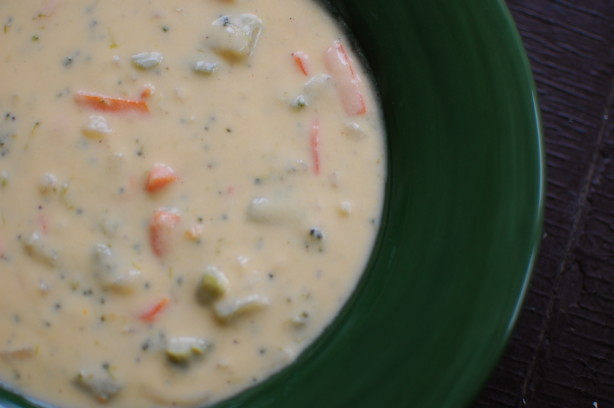
Now for a creamy vegetable soup that popped onto my radar yesterday. Panera Broccoli Cheese Soup.

picBQE1vG

Why use 1000 words to describe this, when the picture above looks so good! Crazy easy to make, and you can make it ahead and keep it warm in the crock pot. Broccoli, Carrots, Onions, NUTMEG. Make it as creamy as you can stand. I would use cream instead of half and half because I am a nut for creamy soups.

Put your favorite fall soup go-to recipe in the comments, one of these might be my new favorite, I will let you know!

Posted in Health, Living | Tagged , , , , , | Leave a comment