Hitchhiker’s Guide

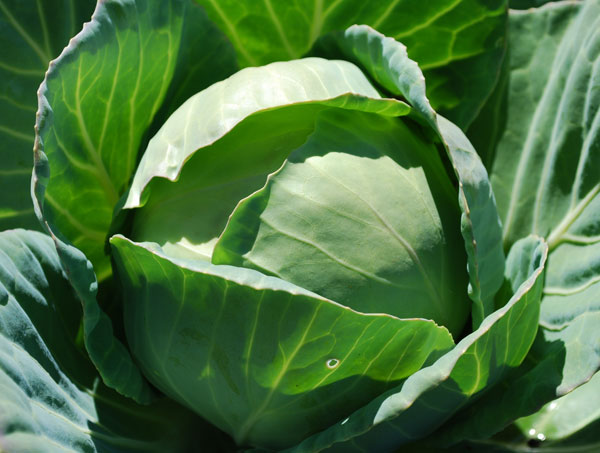
growing-cabbage-cls02-lg

Every plant growing in the field is absolutely filthy with bacteria. A study of coleslaw spoilage in the 70s came up with this…

Cabbage, it’s principal ingredient, had a total bacterial count of about 10,000/gram. Microbial growth in cabbage was prevented by storage at 1 C but not at 10 C or above. In coleslaw, the cabbage flora died and was replaced by the flora of the cultured sour cream contained in the dressing.

You are absolutely filthy with bacteria. No amount of anti-bacterial soaps or deodorants will clean you, because every exposed surface, both external and internal is the terrain of the microscopic life that covers the Earth. This is not a problem, of course. You evolved, all the way back to the point that your ancestor was also a single cell, in this environment. All of your processes are tuned to cooperate with our microbe partners, we feed them and they feed us. It behooves us to care for our allies, because they defend us from our enemies.

Cabbage happens to host a bacteria that, when assisted by immersing it in briny water, will create sauerkraut. The bacteria begins to digest the indigestible starches that cabbage contains, and the salt water impedes all of the bacteria that are in competition for those starches. The good bacteria changes cabbage starches from carbohydrate to Vitamin C–for free. All Vitamin C is created by fermentation, including the multi-vitamin kind.

Eating your cabbage raw puts the indigestible starches inside you, where the good and bad bacteria can fight over it, in addition to the resident bacteria in your mouth, stomach, and intestines. If you belch or fart after eating a raw cabbage salad then you are experiencing the gentle side effect of your bacteria converting those starches. Eating vegetables raw not only feeds you but it brings your bacterial allies into you to reinforce those you already host. Think of eating raw fruit or vegetables as taking a probiotic where you know for certain there is probiotic present. Without knowing with scientific certainty, I can safely say that each edible vegetable in your pantry carries beneficial bacteria for you. That is why they spoil.

Cooking your food for later canning kills every living thing. The food goes into you in a neutral state, carrying only the nutrients themselves. This is not a bad thing, but is truly neutral. Cooking food is a way to combine ingredients that are not worth eating by themselves. I dare say that bacon and spinach are made for one another, and not worth eating uncooked. You can quote me on that.

The second best way to eat your vegetables is fermented. Fermented foods have been processed, but not cooked. We give them a week, at least, for the good bacteria to completely ‘pre-digest’ them for us, converting fully the food nutrients for the bacteria into vitamins. If we eat the ferments raw then we get the products of fermentation, and a full dose of the bacteria of fermentation. Win Win. Fermented vegetables won’t contain carbohydrates either. Win Win Win.

If you cannot ferment your own vegetables, then you should purchase them. Fermented sauerkraut will not have vinegar listed on its ingredient Lable. Other fermented vegetables include cucumber pickles and peppers. It is possible to ferment any vegetable but you would be hard pressed to find many of them on your store shelves. It is just too easy to add vinegar and call it a pickle. Actual fermented foods in the store will be found in the refrigerator cases, so that the foods don’t finally decay. Refrigeration retards the process and extends the edibility of the product for a time. It is a feature of fermented foods that they don’t last forever in your refrigerator.

If you feel like you just have to eat vegetables for your diet to be healthy, then eat them raw. If you can’t stomach eating raw vegetables all the time or you want to keep them longer than they will last on the shelf, then ferment them and eat them fermented. As a last option eat canned and cooked vegetables.

With the exception of the vitamins that you get eating fermented foods, you can get everything that is obtained from eating vegetables from eating properly raised and prepared meats. At the top of the food chain we get whatever was eaten by all of the plants and animals that are lower on the food chain than we are. Given a choice, your beef cattle will eat only things that provide the most nutrition to themselves. Once processed, these same animals provide all of that nutrition and health to you, as though you could eat grasses grown on good soils. The chain of life is strongest when it is the one designed by nature. It is only corrupted when we confine the animals and make their choices for them, based on what is cheapest or easiest. Nature doesn’t go cheap.
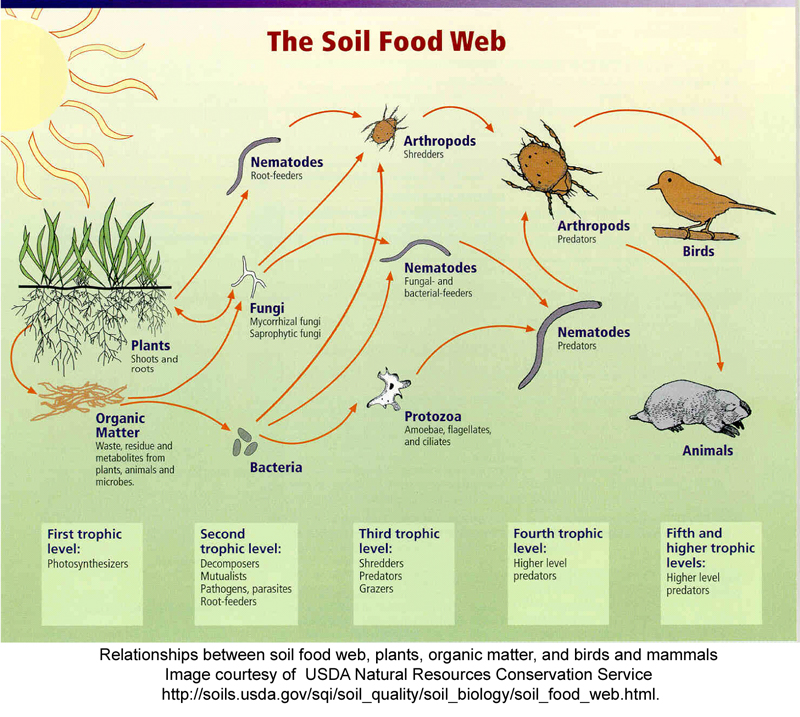
Soil_food_webUSDA

Posted in Health, Living | Tagged , , | 1 Comment

How Do You Volunteer?

It happens all of the time, I overhear someone that needs to lose weight talking about what they are doing about it. Sometimes they are exercising more, sometimes they are trying to just eat fruits and vegetables, their plans are all utilizing the advice you hear most often–“Reduce calories and exercise more.” I happen to know that this type of diet does not work in 95% of the overweight people that try it.

I want to pipe up, I want to tell them that I have learned the way it’s really done, that there is a way to lose weight that does not involve counting calories and joining a fitness club. Sometimes I do find a way to get into the conversation. Sometimes I do offer my advice, but what I have to say is so foreign to the average listener–“eat more fat, eat less fruit.” I try to tell them about the fantastic new literature on the subject:

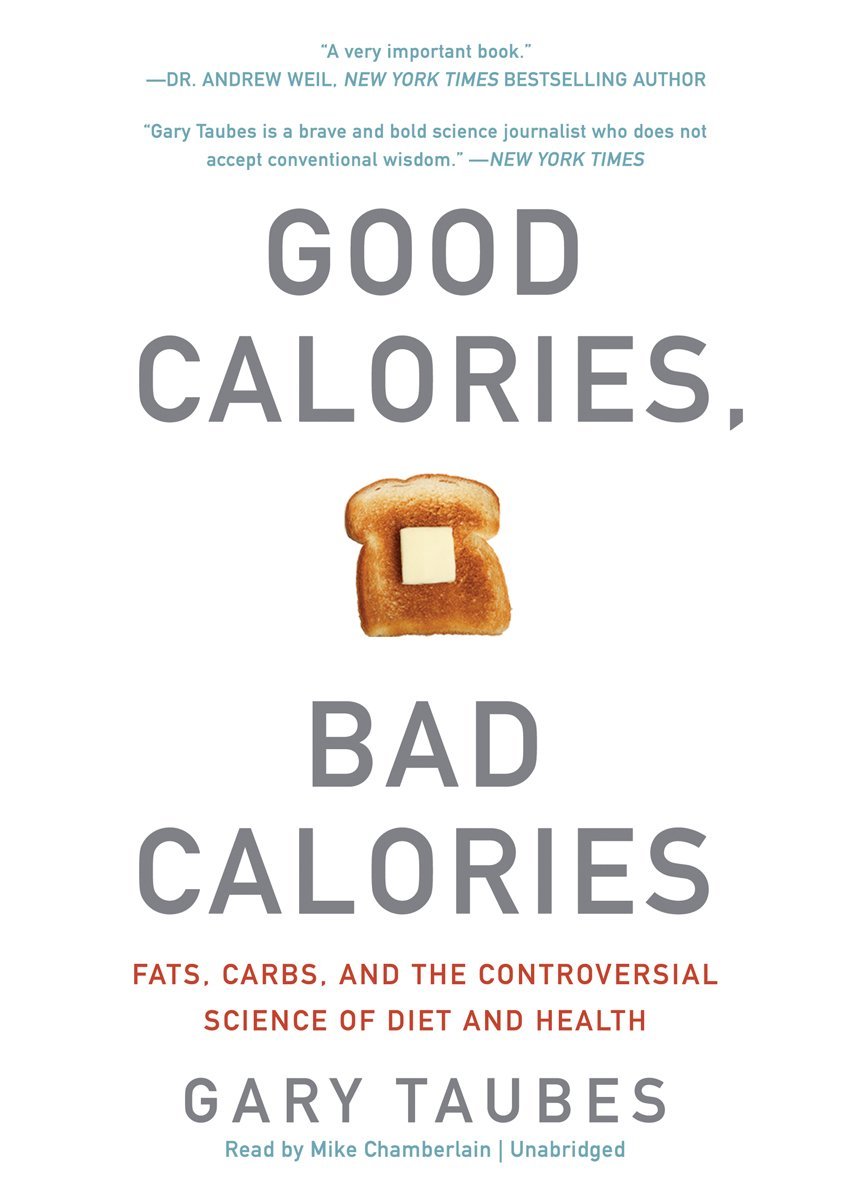
“Good Calories, Bad Calories,” by Gary Taubes

good-calories-bad-calories-gary-taubes-la-route-de-la-forme-nutrition

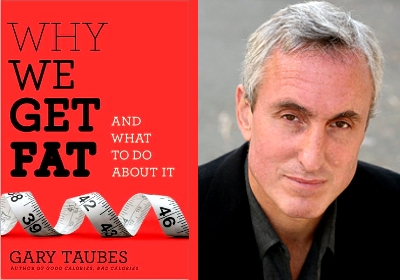
“Why We Get Fat,” by Gary Taubes

why_we_get_fat

“The Big Fat Surprise,” by Nina Teicholz

BEST-SELLER-cover-image

The objections you get from someone that has tried and failed many times to lose weight are very disheartening. “My doctor says…”, “I just can’t give up my…”, “My metabolism…”, “It’s my fault…”

The idea that all you have to do is cut calories, or work out, or a positive combination of the two is so simple. The fact that it’s impossible to cut calories forever, and that as soon as the dieter quits the weight comes roaring back is always considered a personal failure. The fact that almost nobody can successfully lose weight permanently by cutting calories and working out is never considered evidence that the whole idea of ‘energy balance’ as a reason that people gain weight is flawed.

How would you answer if I asked you what results you would expect if you ate 1800 calories of cocoa puffs cereal and milk, while I ate 1800 calories of t-bone steak for a month? What if I asked you which one of us would put on weight and which of us would lose weight? The simple fact is that I would lose weight because I ate no carbohydrate by eating t-bone. You would gain weight because all of your calories were from carbohydrate. You would get the same results if you ate 2000 calories at McDonalds by eating what is left of the hamburger after giving me the meat and cheese in it. I could eat at McDonalds every day and lose weight. You would blow up like a Thanksgiving float.

It’s all in the books. I can talk to you for hours about the ins and outs. People I talk to always have their reasons. They all think that their past failures are personal failures. Everybody thinks they know how it works, even when it doesn’t work. What can I do? How do I effectively spread the word when I see an opening? Help me find out how it is done…

Posted in Health, Living | Tagged , , | Leave a comment

Should I Care?

The New York Times says that Monsanto is paying scientists to find that there is nothing dangerous about eating genetically modified crops.

Corporations have poured money into universities to fund research for decades, but now, the debate over bioengineered foods has escalated into a billion-dollar food industry war. Companies like Monsanto are squaring off against major organic firms like Stonyfield Farm, the yogurt company, and both sides have aggressively recruited academic researchers, emails obtained through open records laws show.

Both sides are doing it! I can hear it now from all of my friends that think there is nothing to be done. Your side is doing it just like mine, why vote! Right. Well, the issue is not whether or not there is sin, but whether or not the sin is corrupting the process. In this case just funding something is not really a problem, as scientists are quick to point out. If all the big companies were doing was paying for whatever science emerged then nobody could have a problem with that.

…the biotech industry has published dozens of articles, under the names of prominent academics, that in some cases were drafted by industry consultants.

Historically, though, that is not how their pure science is used by the paymasters. They will cherry pick hypothesis to be studied. They will pose the results in the most favorable language before lawmakers, who themselves have been paid to hear the results in the most favorable way. Laws will be passed, like the recent law that forbids anyone anywhere to label a food as GMO. Missouri recently passed a law “The Freedom To Farm” that forbids any city from restricting any modern ways of farming.

There is no evidence that academic work was compromised, but the emails show how academics have shifted from researchers to actors in lobbying and corporate public relations campaigns.

Tobacco companies, sugar companies, chemical companies…they all want to be loved by everyone. Sugar is actually a health food. Tobacco is a remedy for asthma. Monsanto is only looking out for the food sources of the future. All they want, in common, is a better world for us all to live in. Oh, and profit, they would like to defend their profit as well but…they all do it!

The victim here is not Monsanto or you. The victim is science. The ability to actually determine what the effects of all of these causes are will require some actual scientific-method science. Forcing our universities to go, hat in hand, to the masters of the universe will degrade our research machinery to the point where the only things being learned lead us straight into the world of Idiocracy. Soon the common knowledge will be that you water your crops with Brawndo, because they have electrolytes! If it’s good for you, it must be good for crops too!

Back in the day, in the 1970s, Congress and the States funded public universities. Back then it was understood that an inexpensive college education was good for society. Smart kids should be able to continue their education even if they aren’t rich. Only letting rich kids go to university would not make the average intelligence there go up. They also funded public university research departments.

When science from universities started getting results that hurt the bottom line of pharmaceutical companies, tobacco companies, sugar companies, then something had to change. Cut funding to ‘save money’ and let the research be paid for using ‘private donors’. Same thing, right, private donors will save the tax payer (the wealthy) money. Private donors will make sure the scientific results are what they want or they will kill the research or not publish the results, which is the same thing.

Dr. Folta, the emails show, soon became part of an inner circle of industry consultants, lobbyists and executives who devised strategy on how to block state efforts to mandate G.M.O. labeling and, most recently, on how to get Congress to pass legislation that would pre-empt any state from taking such a step.

What is the answer to this problem? I hate to say it, but quit electing politicians that won’t fund public universities fully. Universities would much rather get science funding from an entity that will let them go where the science takes them, I am sure. This is a single issue that would be worth deciding a vote on. One question “Where are you on public funding of university research?” If the word private comes up as a solution, the answer is vote for the other guy.

The answer is I should care. Not so much about GMO or sugar or tobacco, but about science. The world moves forward by thinking, not wishing.

Posted in Health | Tagged , | 1 Comment

The Only Processed Food I Recommend

There is one, and only one processed food that I can recommend without reservation. It’s preparation is strictly watched and the standards for it are well-established. If anything goes wrong in the delivery system you are warned, and you will not be recommended to consume it until it is proven safe again.

Tap water.

Water out of a water fountain.

Publicly regulated water is something that we take for granted, and in places where water is not public, but a private commodity the people are miserable. Publicly regulated water is continuously monitored for purity at the water works, and they sample at the ends of the pipes that deliver it to your home. The second that something falls out of compliance you are warned in the paper and on the nightly news.

Think of how many times you have been warned that your water quality is out of bounds. I have been warned one time in fifteen years where I live in Missouri. Your record is probably similar, but it’s more likely that you have never been warned. Your public water is pure and inexpensive. The comparison between it and bottled water as far as cost is concerned is a no-brainer.

So, why do people make the choice to get water in a plastic bottle, and pay a thousand times more per gallon for it? Marketing. They have led you to believe that your tap water is impure. It’s a clever little lie. Sometimes it is. You will be warned if it is, and if it’s bad enough your water department may give you gallons of water to tide you over. Never had them give you water? Thats because there has never been anything wrong with your drinking water.

Do you avoid drinking fountains? Read this article from this morning’s NY Times…

What diseases can you catch from a water fountain?

Many people seem to be nervous about drinking from water fountains, even though it is well known that the municipal water of all major American cities is nearly always carefully monitored for germs and is safe to drink. In most cities, the water that comes out of home taps, park fountains and sidewalk fire hydrants is exactly the same.

They don’t mention it, but I will…the water found in a bottle of water bottled by Pepsi or Coke is also no different than the water from your tap. Filtering pure water is a thing, but it is not going to improve on the water in your tap.

This is not to say that you can’t find unsafe water fountains, but they are the kind you sit by, not drink from….

But Legionnaire’s bacteria have grown in decorative fountains. In one famous 2010 case, a “wall of water” feature in the lobby of a hospital in Wisconsin infected eight patients. It was growing in the foam material that was supporting the fountain’s decorative rocks. A study of the outbreak suggested that all hospital fountains be permanently shut down because of the threat to immunocompromised patients.

There you have it, a processed food I love. However, it doesn’t come in a bottle, or need a label. It is also incredibly inexpensive, and happens to be the very best unsweetened drink you can buy.

15330-a-glass-of-cold-water-with-ice-cubes-pv

Salud!

Posted in Health, Living | Tagged , , | 1 Comment

I Know What Is Healthy

People Don’t Know What’s Healthy

How is that for an eye-catching headline? In the Atlantic online magazine back in April there was an article topped with this true sentiment. People, meaning the teeming masses of the public, are unsure about what is healthy and what is not healthy.

If they write ‘Gluten-free’ on a box of candy bars, are the candy bars health food? Most people realize right away that you can’t make junk food into health food by changing the label.

PepsiCo announced last week that it’s replacing the aspartame in Diet Pepsi with sucralose, the sweetener marketed under the brand name Splenda.

The reason for the change? “Customer worries” that aspartame isn’t safe.

“Aspartame is the number-one reason consumers are dropping diet soda,” Seth Kaufman, a vice president at Pepsi, said.

Will Diet Pepsi now be healthier for you because it no longer contains aspartame? It will be in one way, but it won’t be as healthy as pure water. It will still be a processed food, containing ingredients that will have varying effects on the population that ingest it. Splenda is an approved ingredient for addition to foods by the FDA, but they don’t do their own testing on these things, they rely on industry first, and then they rely on your actual physical reactions before they will go against the industry’s word on safety.

Amid declining soda sales, Pepsi has already introduced a line of sodas made with sugar rather than high-fructose corn syrup. As the Motley Fool‘s Daniel Kline explained, “According to a survey done by NPD Food Safety Monitor in 2008, high-fructose corn syrup was a top food-safety concern for 58 percent of Americans. Only Salmonella, E. Coli, trans fatty acids, mercury in fish, and Mad Cow disease scared more people.” Meanwhile, high-fructose corn syrup has not been linked to either fatty-liver disease or obesity, and there’s currently no evidence that it’s more harmful than regular sugar.

Does using regular sugar instead of High Fructose Corn Sweetener make Pepsi healthier food? I happen to think that it does, but not by enough to warrant a health label on each bottle. Regular sugar, sucrose, is 50% glucose and 50% fructose. HFCS is 45% glucose and 55% fructose. Not a huge difference, but it is not nothing, either. I take issue with the statement in here that HFCS has not been linked to fatty-liver disease (NASH). In fact, the study linked to draws no conclusion at all, because the studies are all confounded by high-energy diet intakes. They can’t tell if its HFCS or just plain old sugar that is causing the problem. For me the take-away point is that eating sugar is bad, and should be an occasional treat.

They conclude the article on why consumers are confused about healthy food choices like this:

If consumers really wanted to make packaged food healthier, they could pressure snack companies to produce smaller portions, or to not market so aggressively to children.

Hmmm. Consumers are currently pressuring food companies. Cola companies are trying to find ways to keep us drinking these foods. Food companies are trying to find ways to keep us eating breads and starches by making ‘gluten free’ versions. None of these changes makes the food healthier in any way, really. They are still highly processed or total laboratory creations.

It is unhelpful, though, when a magazine like “The Atlantic” writes an article about consumer confusion and then puts confusing information in it. Sugar and HFCS are both ingredients that we get way to much of on average. The World Health Organization says we should eat no more than ten teaspoons of sugar per day, which is about 30% of the sugar found in ONE COKE. Sugar is in every bite of processed food, just about, its in 80% of all of them. Saying that HFCS is not a problem is not the same thing as saying its not “A” problem.

Finding something to like about processed foods is impossible. I refuse to stand in the grocery aisle and try to decide which adulterated yogurt is least bad for me. Yogurt is a marvelous fermented food, only made bad by the food industry. I will make my own. Bread is the same way. Make your own, if you can, it will be a thousand times better for your family.

If you want the best current solution for avoiding healthy-sounding foods, if you want to always pick the best foods, don’t buy processed foods. If it has a label, if it comes in a box or bag, it is artificial. Try to buy food that is single-ingredient. If it looks like something your great-grandma cooked with it is what you should purchase. That one change will change your family’s health the very most. It gets rid of pop, crackers and bread, pasta, and every artificial ingredient that is currently on your menu.

Posted in Health, Living | Tagged , , | Leave a comment

Starvation Diets, Epic Failure

My nephew has asked me for help. I love being helpful, I love being the knowledgable one, but it can be frustrating. The problem with recommending dietary changes is that it involves change. My nephew is a very large man, and by large I mean that his frame would be suited very well for an NFL lineman. He gets it from his dad. Also like his dad, he is very heavy. I haven’t asked him to calculate his body mass index, but I am sure that it would be a high number, if not obese then close to it.

The advice I gave him is simple. Eat bacon and eggs for breakfast. Eat fatty meats and leafy greens. Don’t eat any carbs. His objections were typical:

“Why am I eating bacon to get healthy? And eggs are Ok?”

“That’s so backwards to the typical line of thinking to me. The whole butter, lard and bacon thing.”

“So what’s the big deal with fruit? Tropical primates who eat fruit year round live very long lives.”

The really good diet advice out there is fighting upstream against all of the really bad advice out there. Yesterday in the New York Times my dietary hero, Gary Taubes, has an op-ed piece about scientific studies and hasty conclusions drawn from them. Hastily conducted studies are used to extrapolate their results, which has led to the bad advice we are given on what foods are healthy.

The bad advice is to cut calories and cut fat. There are only three classes of food your body can use–fat, carbs and protein. The normal restricted diet advice is to cut the calories you eat. Barnes and Noble shelves are lined with ideas on how to do it…”Smoothies for Weight Loss”, “The Mayo Clinic Diet”, the “South Beach Diet.” Almost all diets begin by telling you that you gain weight by eating more calories than you need. Some tell you that eating fat is more potent than eating carbs because there is more energy in an ounce of fat than in an ounce of carbohydrate. All of the fad diets assume that all a person has to do to lose weight is reduce the energy input to below the daily energy output level, and the weight will just peel off.

It is bad advice because the human organism is not a mechanical device, it is a chemical process. Most of the levels of hormones and critical statistics are tightly regulated by your body. Your blood sugar must stay between 70 and 130 mg/dl. If it spikes after you eat carbohydrates your systems all kick in to get it back in range. Hormones are created that force sugar into your muscles, organs and fat cells. If your sugar stays too high for too long it causes damage–it’s what is wrong with having diabetes. If you starve yourself, likewise your body does not just run along as though nothing is happening, it makes changes to compensate…

TOWARD the end of the Second World War, researchers at the University of Minnesota began a legendary experiment on the psychology and physiology of human starvation — and, thus, on hunger. The subjects were 36 conscientious objectors, some lean, some not. For 24 weeks, these men were semi-starved, fed not quite 1,600 calories a day of foods chosen to represent the fare of European famine areas: “whole-wheat bread, potatoes, cereals and considerable amounts of turnips and cabbage” with “token amounts” of meat and dairy.

It’s not new science that if starved animals will lose weight. After 6 months of being given not enough food there will be lost weight, but the whole 6 months would be torture…

The men lost an average of a pound of body fat a week over the first 12 weeks, but averaged only a quarter-pound per week over the next 12, despite the continued deprivation. And this was not their only physiological reaction. Their extremities swelled; their hair fell out; wounds healed slowly. They felt continually cold; their metabolism slowed.

The body reacts poorly to starvation. Weight loss slows because the organism defends it’s target weight. The metabolism and lethargy are effected so that energy can be used to keep the weight up.

More troubling were the psychological effects. The men became depressed, lethargic and irritable. They threw tantrums. They lost their libido. They thought obsessively about food, day and night. The Minnesota researchers called this “semi-starvation neurosis.” Four developed “character neurosis.” Two had breakdowns, one with “weeping, talk of suicide and threats of violence.” He was committed to the psychiatric ward. The “personality deterioration” of the other “culminated in two attempts at self-mutilation.” He nearly detached the tip of one finger and later chopped off three with an ax.

I can’t imagine what it would be like to think about food day and night. Read the reviews of dieters for their favorite fad diet books “great for the determined dieter.” This kind of dieting, restricting calories and fats, is a masochistic endeavor. Either you enjoy the torture or you quit early. Failing to lose weight is all your fault, you are defective, not determined, insufficiently motivated.

Not really. The advice is awful. It is possible to cut all of the carbs out of your diet and replace them with fats, resulting in no hunger. People eating like carnivores are not hungry all the time–hardly ever, in fact. They don’t suffer from loss of energy, foggy brains, loss of hair. They aren’t miserable, because they aren’t hungry. Hunger is a symptom that you aren’t eating right, even if you aren’t on a diet.

I sit here now more than twelve hours since dinner, having had two cups of coffee and I am not yet hungry. In a few minutes I will make myself two slices of bacon and two fried eggs. That small breakfast will take me safely to lunch without snacking. Dinner will be six hours or more after that, and I will not be hungry for the whole six hours. I won’t be hitting the chips. I won’t have any idea how many calories I eat today, because that number doesn’t matter if you just eat meat.

I refuse to torture myself to lose weight, not because I am not motivated to lose weight, but because it wouldn’t work anyway. As soon as semi-starvation is over, people who try it go back to eating to combat hunger and the weight comes back quickly. It’s because that is the way your chemical body is designed. If a dieter were to instead only eat fat and protein when they can eat all they want they would find that the weight does not roar back.

Much of the obesity research for the past century has focused on elucidating behavioral techniques that could induce the obese to eat less, tolerate hunger better, and so, by this logic, lose weight. The obesity epidemic suggests that it has failed.

The obesity, diabetes, fatty liver disease, high blood pressure and heart disease epidemics prove that it has failed. We are a hungry nation, made worse by the ever-present horrible advice we are getting about what to do about it…”take your medicine just lose weight”.

Posted in Health, Living | Tagged , , , , | Leave a comment

When It Becomes a Lie

If you say something that isn’t true it’s only a lie if you knew it wasn’t true when you said it. Most of the lies in modern diet advice fall into this category. The people telling them mean well, they are repeating what they have heard over and over for their lives. Retelling something that isn’t true does not make it true.

Today in the Washington Post I am reading about a lie that is oft repeated in dietician textbooks.

There’s a popular rule you’ve probably heard before about losing weight: for every 3,500 calories you shed from your diet, you’ll lose a pound.

This is the foundation of the ‘eat less, lose weight’ myth. This is how many calories that you must not eat, according to the lie, in order to obtain one pound of fat gone from your frame. If you cut your daily caloric intake by 200 calories per day, not easy, then the thinking goes that you will lose one pound after just over 17 days. This myth is based on the amount of energy contained in one pound of your fat.

Think of your fat stores as a candle…you are burning the top, but at the same time you are adding fat at the bottom. The simple line of logic is that if you decrease the fat coming in, then the candle will grow smaller. I refer to this line of logic as simple, because it is–over simple.

“Over time, the more weight you lose, the more your metabolic rate drops,” explained John Peters, a leading researcher at the Anschutz Health and Wellness Center at the University of Colorado. “In order to keep losing weight at the rate you started losing weight, you’re going to have to eat even fewer calories. A month in, you might have to eat another hundred fewer; a month after that you might have to drop it another hundred.”

To take this back to our candle example, as we put less fat onto the bottom of the candle, somehow the flame knows this, and begins to burn less brightly. The candle attempts to keep it’s length exactly the same. Starving is a waste of misery. Your fat body is going to try and stay fat. The second you return to eating normally, and by normally I don’t mean to say that heavy people overeat, your candle immediately begins the job of restoring the lost length to your candle.

The disappointing reality dieters face is that our bodies work tirelessly to defend our weight, even when that weight isn’t ideal. The metabolic changes are actually only one of three biological adjustments that follow severe cuts in calories—there are neurological and hormonal changes that happen too, both of which make losing weight and keeping it off a significant challenge. In fact, it can be nearly impossible. For these reasons some researchers say diets don’t actually work.

Nine out of ten people who diet by trying to semi-starve themselves fail to keep lost weight off for a year. With a ninety percent failure rate you would think the people who write text books for dietician school would wonder why they are giving the same advice over and over. If two out of three Americans are overweight the problem with our diets must not be chronic ‘over eating’. There must be an explanation for why, suddenly, we are all putting way more fat on our candles than we are burning. Turns out that there is–we are eating too much sugar.

These days if you eat any processed foods, then eight out of ten of them will contain sugar that is added to replace the natural flavors of fats. When food science figured out how to lower the fat content of food, they discovered that there was no flavor. In order to get you to buy the product again they added starches and sugars to the recipe. Starches and sugars must be converted to fat in order to keep your blood sugar within the tight band that is safe for your circulatory system. This adds to the length of your candle.

Eating fat does not end up lengthening your candle. If you routinely eat no carbs, then the sugars in your bloodstream do not rise above or fall below the band that they must stay in to be safe. If you eat fat then your cells use the fats in your blood for energy, and during times when you are not eating, like when you sleep, it draws down on the fats in your storage. You burn the candle but do not add to the bottom of it. This process is not fast. You will very slowly fall in weight, month after month, until your weight is at your natural level. Your friends will be amazed, and they will ask you how you did it. You can tell them that you did not starve, you never went hungry. All you did was quit eating carbohydrate.

You can tell everyone that cutting calories is a lie.

Posted in Health, Living | Tagged , , | Leave a comment

I love the River Market

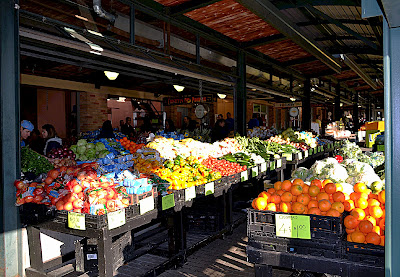
Sunday morning in Kansas City, it’s a mild 75 degrees, overcast…and the River Market is humming with life. I love going down there, whether it is crowded or not. There are probably 25 flea market tables set up, trash and treasure piled up on and under them. Two thirds of the available covered space for the more permanent sellers were occupied, and maybe two thirds of them were selling fresh vegetables.

I have missed the tomato boom, last week must have been the last week, and I fortunately got 20 pounds. This week there wasn’t too much out that I felt like I could save for winter, but I got one quart of green beans and one quart of pickling cucumbers.

The cucumbers looked really good, the beans looked like they were about a day old. I treated them both the same way when I got them home. We are fermenting beans and cucumbers.

Three tablespoons of pickling salt in one quart of water, one tablespoon of pickling spices in each quart jar. The jars I am using are swing-top fido glass jars, specially modified to accept an airlock to let out fermenting gasses, but that keep bugs and mold out. Ask me where you can get these jars, I make them. Now, time and bacteria will make the raw beans and squash into a vitamin-packed health food. The acid content will rise, adding a tasty zip. They are pre-salted in the brine. In a few days we can eat them raw from the bottle, just like a pickle, or we can cook them in another dish, where they will be an exotic tasty ingredient.

IMG_3808

Posted in Health, Living | Tagged , , | Leave a comment

The Farmer’s Market

Farmers_unload_produce_at_City_Market

For the longest running farmer’s market in Kansas City, you go to the River Market, right off of Grand Avenue. This photo from the 50s shows local farmers peddling local produce from local farms, in season. The food does not get any fresher than this unless you grow it in your own back yard.

1280px-River_Market_KCMO2

Today’s modern farmers are still making the trip every weekend day, rain or shine, to sell their food and avoid the middle man. You have to celebrate the brave farmer that is avoiding the corn and soybean production line. Trying to eke out a living during the spring and summer months without being able to count on Federal agriculture subsidies is a brave and dangerous path to take. It is probably much easier to put in and harvest corn and soy, and not have to worry at all about market prices, because the subsidy alone will keep you in business.

a184b377bfd3037248e1bab507eedaf3

This is just a small sample of what is going on at the market. Our day at the market involves browsing through table after table of open air flea market junk and antiques, filling our little red wagon up with tomatoes that are at the peak of ripeness, having just been picked in season. They don’t look perfect, but they have never been gassed to make them red. There might be blemishes and they will be odd shapes and sizes, but they taste exactly like the tomato of my youth.

Local food is grown in local soil. The health of that soil makes the product, and that health is passed up the food chain to you. Without fertilizer, herbicides and pesticides to support them the grocery store produce would die on the vine. Your local produce is hearty, and can fend for itself. The things these foods create within them to defend them from disease and predations can be expected to defend you, too, when you consume them. Your body is evolved to expect certain things from you eating natural foods in season.

So, how do you extend the shelf life of your fresh foods? Two ways, you can your fruits and vegetables, adding sugar as a preservative in the case of fruit, add vinegar in the case of vegetables, and you ferment everything else.

Canning kills all of the bacteria and prevents rot, fermenting controls the rot, and makes sure that the bacteria that flourish are those that improve the food instead of spoiling it. I have written post after post on fermenting, search this blog for those articles, or read on next week as I go over canning and fermenting again.

This is the season of bounty. Now is the time to plan for a winter filled with healthy food packed away at the height of freshness. Eating the bounty of the harvest in the depths of winter can give your family something you can’t get at your local grocery store, eating trucked in fruits and vegetables from half a continent, or even half a world away.

Posted in Health, Living | Tagged , , , | 1 Comment

When Mayo is not Mayo

images

Apparently, we all think that when you say mayo, you mean mayonnaise. So the product beneath the label containing the shorthand name for the egg-based condiment, therefore, must contain eggs, or it can’t be called mayo. Calling it mayo if it contains no egg will mislead the consumer into thinking that they are eating a product containing eggs, oil and a vinegar-like acid.

I can actually see that a person who were to buy a product that was labelled ‘Just Mayo’ and couldn’t tell the difference between it and the product from Kraft labeled ‘Mayo’ has been deceived. Just like a person who were to purchase a ‘steak’ that is actually a reconstituted mish-mash of meat cuts formed into a ‘strip steak’ and labeled as a ‘strip steak’ has been deceived.

The FDA has informed the ‘mayo’ maker Hampton Creek that their label is deceptive. The product is Just Mayo and it contains no eggs. Who knew that there was a federal regulation for what you could call mayonnaise? Well there is. Who knew that calling something mayo was effectively the same as calling it mayonnaise? All Hampton has to do to fall in line with these infractions is to put the word ‘Like’ in between Just and Mayo. They could also put an apostrophe in-between the y and the o–Just May’o.  For some, the fact that it contains no eggs is a plus. Those people have not yet heard that the cholesterol in eggs is no longer a dietary ingredient of concern. Eating cholesterol is not bad for your heart.

The FDA also let them know that they cannot claim that their product is ‘heart healthy’, apparently still adhering to the out-dated dogma that eating fats is bad for your heart. That warning is over-broad. Eating trans-fats is bad for your heart. Eating natural fats, like olive oil, lard, butter are actually not bad for you.

I would be interested in seeing how well some of the other ‘artificial mayo’ products out there fare in the newly discovered definition of mayonnaise. A low-fat mayo must contain something that is like fat, since mayonnaise is more than 90% oil, so what they are using instead would be very interesting to see. The mayonnaise standard requires that there be at least 65% oil. From the Washington Post:

“It’s one thing to enjoy some of the halo for mayonnaise, but it’s another to dupe consumers,” said Parke Wilde, who is an associate professor at the Friedman School of Nutrition Science and Policy. “I think they’re probably a little over that line with ‘Just Mayo.’ I can definitely see how it’s a bit misleading.”

WAY back in the day, any food that was not the actual thing had to bear the name ‘artificial’ or ‘imitation’.  Now they sell all kinds of foods that are depicting ingredients on the label that are not in the food. No product that has ‘blueberries’ in it actually contains blueberries. There is a convincing artificial substitute that is in your pancakes, muffins and breakfast foods. The only thing blue is the food coloring. Bac’n Bits have no meat in them, but by leaving out the ‘O’ in bacon, you would be a fool to think that it means bacon. Just like leaving out the ‘ayonnaise’ means you are a fool to think that that is what your ‘mayo’ is…unless you are a little company that is hurting egg sales…then that is exactly what it means.

I always go back to the same message. Eating processed foods is going to give you a healthy dose of deception. Most of the ingredients are products of the laboratory. Many, many of them are tested for safety by the maker, who informs the FDA that they are safe. The actual safety testing is done in your family’s body, where food allergies are rampant, where kids are having reactions that we then medicate with ritalin.

Eat single ingredient foods. Real foods don’t need labels, you can tell what they are by looking. Get caught up on the new dietary recommendations. You can eat butter now. You can eat bacon now, you can eat eggs. The toast is a question mark. Its going to contain dough conditioners, artificial ingredients, laboratory products.

If it is in a box, bag or bottle and it is a processed food, you are better off avoiding it. Other foods may be more expensive, but they have the benefit of being exactly what you think they are.

Posted in Health, Living | Tagged , , | 3 Comments