Least Expensive Is Best, Right?

OSCARBaconHicko1602086_CF___EPS_3

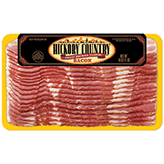
I can get this bacon on sale this week for 1.99 per pound. At my local meat processing locker I can get smoked sugar cured bacon for 6.49 per pound. I can get a fresh pork belly from the locker for 4 dollars per pound and cure and smoke it myself. Which one of these is the best value, you might reasonably ask.

$1.99 is a pretty good deal money-wise for any kind of meat. You can’t buy any variety of pork at the grocery store for $1.99 except for maybe a tub of livers. The closest you can get to this price is the pork steak, which is the cheap cousin to the pork chop. This is impressive when you consider that this bacon must have started off as fresh pork belly, then had to be cured for a week, then smoked, and then sliced and wrapped. All of that work and raw material plus shipping and handling to get it to you, and it only costs $1.99. Corners must be cut somewhere to make that possible.

For $4 you can get a piece of fresh pork. It will be frozen and wrapped in cryovac plastic to prevent burning. When you unwrap and thaw it you will be able to clean it off and make certain of the condition. If you carefully cure and smoke it, for four dollars per pound you are getting exactly what you expect, wholesome and delicious smoked bacon. The quality of the base meat is entirely under your control. You can get something that was raised on a pasture it’s whole life, was never subjected to the stress of living cheek to jowl with hundreds of other inmates, being fed the least cost option in foods for its entire miserable life.

So for $4 plus my time and some inexpensive spices I can get bacon and that isn’t even the best I can do price-wise. $4 is a great deal, but there is no way I could do it myself for $1.99. The only way I could justify doing it myself, or paying the locker $6.50 per pound to have the locker do it for me would be if there were something I can’t see, some hidden thing that makes that store-bought pork worth less than my home-made bacon. Wonder what that could be?

USDA Whistleblowers Tell All–and You May Never Eat Bacon Again

So, tell the truth, you knew that was coming, didn’t you? All of my regular readers know that I don’t trust industrial meats for a whole lot of reasons, which we will go into again, but now we also have all of this new information to hate on pork-for-profit for.

Apparently, the pork producers in the United States have convinced the USDA, the arm of our government that is tasked with ensuring the safety and wholesomeness of our meat supply, that it would be good for everybody if they could privatize the inspection of our meat production facilities, and speed up the line by twenty percent. The meat packers have generously offered to conduct their own meat inspections. Meat inspectors make certain that the dirty side of the plant, from the point where live animals come in, right up to the point where the vital organs have been removed, is not allowed to contaminate the clean side of the plant, where the carcass is broken down into it’s cuts that will show up on your grocery store meat shelf. Previously, meat inspectors who are paid and employed by the USDA itself, were empowered to stop production if serious problems were found, were able to pull carcasses from production if feces was found on meat. The new system puts these powers in the hands of employees of the company. I don’t need to point out that having the authority to stop production is different than doing it, if it means that your employer will lose money because of your integrity. Am I wrong to see that these mixed incentives, combined with speeding up the line that moves meat from the hoof to the package are going to result in more contaminated meat at the dinner table? No, I am not…

  • “Not only are plant supervisors not trained, the employees taking over USDA’s inspection duties have no idea what they are doing. Most of them come into the plant with no knowledge of pathology or the industry in general.
  • “Food safety has gone down the drain under HIMP. Even though fecal contamination has increased under the program (though the company does a good job of hiding it), USDA inspectors are encouraged not to stop the line for fecal contamination.
  • “HIMP was initially designed for the kill of young, healthy animals. This hasn’t always been the case. A lot of the animals the plant has killed were too old. Some also had different diseases. They didn’t even slow down the line for the diseased carcasses.
  • The company threatens plant employees with terminations if they see them condemning too many carcasses or carcass parts.”

Wow, this is good news for our food production system, right? Now that this information is in the public eye surely the USDA will abandon the idea of allowing company employees perform the food safety inspections and resume doing it themselves for us.

The USDA’s Food Safety and Inspection Service, the agency that runs the inspection program, is standing behind HIMP (short for Hazard Analysis and Critical Control Points-based Inspection Models Project) too. USDA spokesperson Aaron Lavallee pointed to a November 2014 FSIS report that, he said, “shows that the food safety outcomes at the pilot facilities are on par with those operating under other inspection systems.” The report concluded that there’s “no reason to discontinue HIMP in market hog establishments.”

However, the USDA’s and Hormel’s rosy assessment of HIMP presents a stark contrast to a scathing 2013 report from yet another USDA agency, the Office of the Inspector General, which found HIMP plants—which it did not name—made up three of the top 10 US hog plants earning the most food safety and animal welfare citations in the period of fiscal years 2008 to 2011. Moreover, by far the most-cited slaughterhouse in the United States over that period was in the program—it drew “nearly 50 percent more [citations] than the plant with the next highest number.” The OIG also concluded that that the Food Safety and Inspection Service “did not provide adequate oversight” of HIMP over its first 15 years, and as a result,  “HIMP plants may have a higher potential for food safety risks.”

Well, the USDA says “No Problems (yet)” but the Office of the Inspector General says “The USDA doesn’t provide adequate oversight of production”. I guess proper inspection is a mixed blessing. On the one hand not inspecting the meat at all would probably make the meat even cheaper than it is now, but on the other hand eating that meat would be a genuine risk to your health. Money or life, decisions, decisions. Maybe someday industrial meat will be perfectly safe. Maybe someday the USDA will make food safety a higher priority that food industry profits. Maybe we should not eat industrial meats until they get it all figured out.

Posted in Health, Living | Tagged , , , , , , , | Leave a comment

Sometimes going back takes you forward

An anecdotal confirmation of what I know to be true concerning how sugar makes you feel once you have broken it’s chemical grip on your life. I read this blog from time to time and have enjoyed the transition this blogger is making from the Western Diet victim to master of her fate..

Mich's avatarBreaking The Yo-Yo

So the projected start of the eat good meat and dairy and barely any carbs plan has had a delay. Firstly because the organic meat delivery was not placed on time and wasn’t  received on time. Secondly because we had a couple of celebrations going on so it wasn’t the best time to tighten any belts. So it starts tomorrow.

BUT, I can attest to something and this involves a horrific confession of over indulgence which I am never ashamed to make. I have little to no ADDED sugar in my diet and I’m already eating very little carbohydrate, why the transition to a low carb lifestyle is going to be slightly easier for me. I do however eat a lot of naturally sugar laden foods, which I didn’t realise before. I eat copious amounts of berries, seeds, nuts and a few grains. I didn’t even know some of these contained…

View original post 1,457 more words

Posted in Health | Leave a comment

Great News Everywhere You Look

I was reading Forbes Magazine this morning. It is a business and Wall Street magazine and normally not something that I would look at, but this morning there was this headline:

Yes, Processed Food ‘Makes’ Us Fat — But Science Provides Two New Clues As To Why

Made me instantly wonder what the Masters of the Universe were thinking about how the poor are getting fat. It turns out that they are finding out now what we have been discussing here for the last eleven months. Processed foods contain artificial ingredients that disturb the gut microbes. Even foods that contain no ‘calories’ are doing things in the human gut that create fat.

To make matters worse, processed foods often have additives that can themselves cause weight gain from another angle: Gut microbes. Another new study, in Nature, found that emulsifiers – “detergent-like” compounds used to keep foods like mayonnaise from separating into its separate parts, oil and water – even at low doses caused massive disruption to the gut bacteria of lab mice. The two common emulsifiers used in the study, polysorbate 80 and carboxymethylcellulsos, also triggered obesity, metabolic syndrome, and inflammatory bowel disease. Since more research has suggested that our gut bacteria are critical to our health and body weight (earlier this month a woman with a fecal transplant reported a huge weight gain in the months following), the new study adds an interesting piece to the puzzle, suggesting that certain food additives may also play a role in their health.

Clicking the link above takes us to this headline:

Dietary emulsifiers impact the mouse gut microbiota promoting colitis and metabolic syndrome

The intestinal tract is inhabited by a large and diverse community of microbes collectively referred to as the gut microbiota. While the gut microbiota provides important benefits to its host, especially in metabolism and immune development, disturbance of the microbiota–host relationship is associated with numerous chronic inflammatory diseases, including inflammatory bowel disease and the group of obesity-associated diseases collectively referred to as metabolic syndrome.

Metabolic syndrome is the presence of any of three out of five of the following medical conditions: abdominal obesity (beer gut), elevated blood pressure, elevated fasting plasma glucose (high blood sugar), high serum triglycerides, and low high-density cholesterol (HDL) levels. Something that disturbs the composition of the germs living in your intestines will cause you to get fat, diabetic, or at risk for heart disease.

This report implicates two emulsifiers, which are in foods to make things that normally want to separate, like oil and water, stay together. I looked up one of the emulsifiers, Polysorbate 80, and found a good article at WiseGeek.org

One of the most common uses for Polysorbate 80 is as a stabilizer in ice cream and other frozen desserts. Not only will it help the foods stay frozen, it will also help prevent them from completely disintegrating during the melting process. As things warm up, their natural tendency is to separate, which in the case of ice cream could result in pools of cream, water, and gelatinous flavoring or coloring additives. The compound helps make sure that everything melts together and remains cohesive.

Looks like the sugar in your processed food ice cream is not the only thing that will make you fat, diabetic, and lead to a heart attack. One of the artificial ingredients will have that unintended consequence. There will certainly be other artificial ingredients in that ice cream, and none of them will have been adequately proven safe before the maker informed the FDA that they are safe, or Generally Regarded as Safe (GRAS) ingredients that everyone just knows is safe.

If you want all the disgusting information about the process by which your food additives are ‘proven’ to be safe and approved for use in foods, I recommend the excellent book “Pandora’s Lunchbox”, by Melanie Warner. Long story short, they aren’t tested for side effects like they would be if they were drugs. I suppose they are tested to make sure that they don’t kill you right away in low doses, but they certainly aren’t tested to see if they screw up the biology of your guts with regard to the effect on beneficial bacteria that live there.

I mention all of this so that I can remind you that if you eat processed foods with artificial ingredients you are taking an uncalculated risk with your health, and the health of your family. You will find foods with artificial ingredients in your vegan store, your health food store, your grocery store. No matter where you shop, if you buy foods in bags or boxes you are going to be getting processed foods. They will be dead, and they will last forever on the shelf, because they contain chemicals to make sure that microbes can’t live in or on them. Do I need to tell you that these chemical adders will have a similar effect on the microbes in your body?

I know that every added chemical is not dangerous. I know that every added chemical will not harm every diner. I don’t know which is which, though–nobody does. So I just avoid them all, because the convenience they provide is not worth the risk. I am not calling for better testing, I am calling for real foods that are raised on nothing but real food. GMO corn and soy are not real, so that rules out industrial meats. Artificially fertilized vegetables are not fed real food, so they are out.

I still haven’t figured out how to eat only foods in season. Meats are always in season, but if I want to eat vegetables in February, which ones are those. I continue to research and by this time next year I will know how it is done. For now I still stick to my own advice to only shop the exterior walls of the grocery store. I will go down and aisle to get coffee and tea. I still buy dog food down one aisle but I am looking for pet food that doesn’t contain grain now, too. I think that’s why my pet is gaining weight.

Posted in Health, Living | Tagged , , , , , , , | 2 Comments

Carbon Footprints

Not True!

Today in the online magazine Slate I read this:

“Current evidence shows that the average U.S. diet has a larger environmental impact in terms of increased [greenhouse gas] emissions, land use, water use, and energy use,” reads the Dietary Guidelines Advisory Committee report. “This is because the current U.S. population intake of animal-based foods is higher and plant-based foods are lower.” The chapter goes on to conclude that Americans should eat a diet that “is higher in plant-based foods” and “lower in animal-based foods.” Translation: Eat less meat.

We should not eat less meat, unless we want to grow ever fatter and ever sicker. Over the last few days I have said on these pages, over and over, that we need to eat meat and fat instead of carbohydrate. There is not enough meat and fat in fruits and vegetables to allow us to keep our proper distance from carbohydrates. If we take the advice above we will continue to get our energy from carbs, which will keep on putting more and more fat on us. Why are they recommending we keep getting fatter? According to the ‘science’ coming down to us from on high, growing meat for our ever-expanding meat appetite is causing our national carbon emissions to go up, thus leading to melting arctic ice, etc.

However:

Livestock is responsible for 14.5 percent of the world’s human-caused emissions, nearly half of that coming from the resources needed to grow and ship the corn and soy that most of the animals eat, according to the U.N. Food and Agriculture Organization. (bold not in original)

So, I can contribute a great deal to lowering the national carbon footprint if I stop eating meat OR IF I STOP EATING CONFINEMENT MEATS. I am getting my meats from two local meat lockers. I take the meat on the hoof from a local heritage pork producer and from a friend that hobby farms cattle, to my local meat processor, where they cut up the meat any way I like. These animals are foraging naturally for their entire lives. Zero BTUs of energy are consumed bringing these happy animals corn or soy. God provides the grass for the cattle. The hogs eat whatever hogs eat, but its not corn or soy.

There is a very simple solution to corn fed meats and the environmental damage–remove the subsidy on corn prices that farmers get for farming it. If feeding corn and soy cost the feed lot what it should, based on the amount of land, energy, and water that is required to raise those crops, then suddenly it wouldn’t make economic sense to confine them or poison them with corn. (Feeding cattle corn for more than 180 days would be fatal.) Just don’t tell me that I should be feeding my kids and grandkids nothing but vegetables. That diet is new to the world, the effects on kids are untested. I also don’t think that eating vegetables instead of the animals that are created to eat vegetables makes much sense. Couldn’t I save even more energy if I ate soil directly and stood out in the sun all day? Or maybe even save another step and eat rocks and water? From the books I have read recently it is apparent to me that the advice to eat vegetables is not based on any biological science that has already been conducted. The advice to get most of our calories from carbs is based on pseudoscience and ‘conventional’ wisdom that is only about fifty years old. Someday, soon, when the medical bills start coming due, real science will finally win out, the grain subsidies will cease, and the advice will line up with reality. I am not waiting, you shouldn’t either.

Find a local meat source. Purchase a deep freeze. Learn how to cook your own meals. It’s just that easy.

Posted in Health, Living | Tagged , , , , , , , | Leave a comment

If It’s Easy, You’re Probably Doing It Right

Life is perpetuated by the energy of the sun. Every living thing, even creatures that dwell in deep caves in the bowels of the Earth rely on something coming into that cave from the outside, thus bringing the energy to them. The sun’s energy is then bound to the earth and stored.

A calorie is how much energy is released from anything that will burn when you burn it. A calorie is a measurement of sensible energy. The energy from burning is radiated in the form of light, and convected by air or molecular motion to adjacent objects. Food calories are determined by burning foods in a calorimeter. The process of burning, of course is different than the process of digesting. It is totally different. Both are chemical reactions, both produce both solid and gaseous wastes, each may produce heat and light. Burning can be closely observed and all of the reactions can be documented. Digesting takes place in a location that is, so far, impossible to observe or document. There are many things that happen between something going in your mouth and your taking a stride on a treadmill to produce heat and motion that are unknown. The basics are known, but there are undoubtedly very important details still hidden from our view.

The entire process of energy transfer in our foods is likewise not known. By that I mean from the very beginning of the food chain we are still at the infancy of our knowledge of what parts of it are truly important to us at the far end of the same chain.

Everything in the world that burns was once a living thing. Water and rocks don’t burn, but both are contained in things that do. The simplest life forms can absorb the energy of the sun or geothermal energy and utilize that energy to turn simple elements into more complex ones. The simplest life forms can live off of rocks. As they consume inert matter, they are consumed by more complex creatures. After a thousand steps from the beginning of the chain, plants whose roots and leaves magically transform soil and sunlight and air into products that an animal can eat create foods that we can eat. An animal eating a plant is getting the energy of the sun in a way that it has no other way of obtaining. It is easy to see that the sun’s energy is captured by the plant, stored by the plant for it’s own uses at a later time, and then used either by an animal in it’s diet, or by bacteria in the decay process if the plant is never eaten. The energy captured by the sun is never lost from the planet, it is recycled over and over until it is burned. Once it is burned the energy of the sun is then released back into the universe.

These relationships are easy to see, but there are others that are not so easy to see. We cannot live by eating soil. If you tried to eat the things that plants do you would live for a few more weeks and die of starvation. Plants have a process for turning soil into life, and that process is at least as complex as the mysterious process that takes place in our roots, or intestines. The relationship between all of the living things in soil and the roots of the plants are mostly unknown. We can see though what happens to one end of the food chain if the other end is eking a pathetic living. A study was done by a British agricultural scientist, Sir Albert Howard, where the young men drafted for World War I into the Army of the US from Northwestern and Southeastern Missouri were compared. It was a good time to conduct this comparison, because in 1918 people in the US ate foods from their neighborhoods. Back then fresh foods were not carted all over the planet, you ate what was raised near you. In the study they looked at the draft physical results and it was noticed that men living in the Ozarks, where the soil is poor, were smaller and more prone to deficiencies that prevented them from being physically qualified for the Army. In the Northwest of the state, where the rich bottom lands of the Missouri river maintained a healthy soil, the men at the top of that food chain were also healthier. It makes sense that if the food chain starts from a weak foundation that the entire chain will be weak.

Back in the 40s there was a lively debate about what effect fertilizing plants would have on the soil, and thus on us, at the other end of the food chain. Artificial fertilizers contain some of the essential ingredients that a plant would need to thrive. By boosting these ingredients in the soil plants are enticed to grow quickly, which would seem to be a good thing with no downside. If you think about it though, if this were the obvious good thing that it seems, then why, after billions of years of evolution isn’t nature already doing this? Well, it turns out after decades of experience we can see some of the disadvantages. One disadvantage is that for some reason plants that grow very quickly are more prone to diseases and pests than plants raised with natural fertilizers only. Plants that are fertilized require pesticide and herbicide. They require more water than natural plants. The nutrient composition (of nutrients we know how to see) is better in a naturally raised plant than a fertilized one. It looks as though, perhaps, the soil is damaged by the use of fertilizer. On up the food chain, animals that eat fertilized plants are not going to be getting all of the nutrition that they would be getting from a good, healthy soil. Cattle that graze on pasture grass, for instance, are able to pass on to us the healthy omega 3 oil, instead of the unhealthy omega 6 oil that corn fed beef do.

There are those who say that it takes seventeen pounds of vegetable matter to create a pound of meat or eggs. I would say to that, “It is true that it takes seventeen pounds of vegetables to create the meats that I eat, but for the most part if they are left to their own choices, these animals will eat vegetables that I cannot eat myself. This process passes to me at the top of the food chain nutrients that I otherwise have no way of obtaining from my diet.” Grasses eat things that I need but cannot eat. Meat producing animals eat things that give me things that are good for me that I cannot get any other way.

Knowing as little as we do what the things are in our foods that are beneficial to us, it is the height of folly to think that we can process natural foods into foods that are anywhere near as good for us. Even as unnatural as modern corn is for us, we harvest it, process it into scores of different ingredients to put back into processed foods. Most of the corn we eat isn’t even in the form of corn grains, but perhaps in a sweetener or an emulsifier. The closest you will get to eating the corn raised on the bulk of farms in the US will be that which is passed up to you in your factory chickens or pork.

I guess the moral of this meandering story is that you, when you are choosing what to consume, you should choose foods that are from the most natural of environments. Obviously, using this criteria eating the dead products of the processed foods industry would be last on the list. Eating meats that are fed unnatural diets, and that from fields of unnatural grains which are living in soil of unnaturally enhanced composition would be next on the list to go. This leaves us with naturally grown meats and vegetables. Since naturally grown meats would be eating vegetables, too, even the vegetables would not be required in the ideal diet.

Posted in Health, Living | Tagged , | Leave a comment

I Was So Misled

For most of my life, right up until I started reading “Why We Get Fat” by Gary Taubes, I believed like most people that a person had to eat fruit and vegetables in order to stay healthy. Now that I have read that book, and the previous book that Mr Taubes wrote, “Good Calories, Bad Calories”, I no longer hold that notion sacred.

If you had a pig and you fed that pig all of the fruit and vegetables that you think you should be eating, when you slaughtered and then ate that pig, all of the vital nutrients in that meat would be passed up the food chain to you. If, instead, you ate the fruits and vegetables yourself, you would get things in your diet that you do not need. One thing that you would get would be carbohydrates. Carbohydrates–sugar, starch, flour, rice–are something that humans have been eating in any quantity for only a few thousand years.

Agriculture has been estimated to only be about ten thousand years old. Farming was developed at different times in the different geographic areas where people could find enough to eat that they could stay in one place long enough to realize how plants can be planted where you want them to grow. Prior to farming all of the nutrition would have been obtained by taking advantage of the food chain. Animals forage, we hunt. We gather foods that are convenient, fruit that falls from the tree, grains that are growing around us, roots in their season. This is how we ate, and what we ate, since the first man stood erect–for millions of years.

Then we discovered that we could save foods, and the foods that were easiest to save were starchy foods. Dried grains and their pulverized forms of meals and flours were easy to keep for later. Eating these things is something that our bodies are still not used to doing. When you eat a carbohydrate it forces your body to secrete insulin to bring those carbs to your muscles in the instant and to fat cells when your muscles are full. Fructose (fruit sugar) forces your liver to secrete triglyceride and fatty acids, and it restricts the ability of your liver to deal with blood sugar, which results in your body having to secrete even more insulin than normal to deal with elevated blood sugar. It is a spiral of insulin. A person that eats carbohydrate and fructose as often as we do in these modern times will become resistant to the beneficial effects of their own insulin, eventually having to supplement it to maintain their ability to lower their blood sugar from dangerous levels.

Eating carbohydrate will necessarily lead to putting on fat. There are only two ways to reduce this body fat load. One way to do it is to eat far less food than you need to live, starving. This is the diet we all know and hate. Any starvation period will lead to lower weight, if it can be maintained in earnest, if it can be maintained long enough. It is a long miserable road. The other way is to stop eating carbohydrates. A person who is living off of the fats in their foods will not be putting on fat, because body chemistry does not work that way. Excess fats and proteins in your diet do not end up in your fat stores. Fats are put away from carbohydrates, and that through the action of insulin. If you don’t eat carbohydrate you do not secrete insulin, you do not put anything into fat. When you are not eating, say when you are sleeping, you will live off of your own stored fats.

Eating meat–natural meat–will lead to a lot less eating. A person that eats meats instead of carbs does not get hunger pangs as frequently between meals. The fats we eat are slowly absorbed into the body. This time-release energy is sufficient to take a person all the way from breakfast to lunch without any food anxiety.

Discovering nutrients did mankind a great disservice, too. Figuring out that some elements are vital has led to concentrating on those little things that we can identify, even though there are a billion things in our foods, and in the interaction between our foods and our bodies that we don’t understand. You instinctively know that you cannot eat a vitamin every meal instead of food. You know without me telling you that everything you need to live cannot be included in a daily man made pill. If I told you though, that eating white bread that contains next to zero natural ingredients is only a little bit different that eating that vitamin pill, would you argue the point? Man cannot live by bread alone, right? What about all of the other man-made processed foods that you are trying to live on? None of those foods contain their original natural ingredients. They all are reconstituted, containing supplemental vitamins so that they are ‘healthy’. How are these ‘foods’ any different than the phony vitamins that you know would kill you if you tried to live on them?

So to recap, eating fruits and vegetables is an optional menu item, if you can get your meats from a natural source. I mean meats raised and fed their natural diets, so that they can pass on their good diet to you higher up on the food chain. Eating vegetables is a good idea for us to do directly if they contain few or no carbohydrates, because carbohydrate in any quantity has unhealthy effects on our body chemistry and causes us to put away excess energy as fat. Eating processed food is never a good idea, because these foods don’t contain any of the exotic things that nature has put in there, things that we are evolved to expect from our foods. They only contain those things that man has discovered how to take apart and put back together in a factory environment.

Posted in Health, Living | Tagged , , , , , , | Leave a comment

Cooking Vacation

It never occurred to me that I could take a vacation and learn how to cook something. This morning in the Washington Post I read about a day camp for smokers–beef and pork smokers. Smoking meats was the second thing that I fell in love with doing as far as cooking goes. First I learned to grill meats, like we discussed yesterday. I loved eating smoked ribs and decided I wanted to see if I could do that well at home. The short answer is “Yes!” In fact, the ribs have to be really really good at a restaurant or it’s not worth even the drive to go out for smoked meats.  I can do such a good job on ribs, brisket, ham or poultry that I have to be in a really bad way to not do it at home instead of going to a restaurant.

In the beginning, though, there was a learning curve. First I tried smoking on my charcoal grill. While this is possible, it is hardly care-free cooking. To smoke food on the grill, first off, it has to be something that doesn’t take too long to cook, like ribs or cut up chicken. The basic procedure is make two piles of charcoal and put a water pan in the middle. You will put the meat over the water, so that there isn’t any radiant heat getting to the meat. If that happens it will burn. You put the wood chips on one or both piles of charcoal. This makes a pretty hot grill and it only works if your grill has a lid that you can control the airflow with. The best way to get good ribs with this rig is to take the meat off when the fire starts to die out, double wrap them in heavy duty aluminum foil, and finish cooking them in a 325 degree oven. The foil keeps the wood smoke aroma in the meat, if you heat up your ribs bare in the oven it scares away the smoky flavors, and they will dry up on you.

Lots can go wrong smoking on your grill. Like I said, you can get the meat too close to the fire and you will lose some to radiant heat burning or drying. It’s possible to not cook the ribs long enough (if the bones are starting to poke out of the shrinking meat they are about right), and then the meat is still stuck to the bone, makes them not as fun to eat. If your grill is too cool they take a long time, if your grill is too hot the smoky flavor will not be as strong when you take them off. Since your meat is confined to the middle of the grill you have space issues limiting how much you can cook. For just a little bit of money you can do better.

Unknown

You know its done when you see the bone


The first smoker I bought was a little kettle that had two racks for meat, a fire rack at the very bottom and a little water bowl that sat over the fire. This one was barely better than the grill. I sold it at our very next garage sale.

Next I got a propane smoker box and it was a lot better. The door on it wouldn’t seal up all the way to the top so it was hard to get the box temp very high. Low temperature works pretty good for some things, but if you are trying to get a turkey to 185 it was a challenge. It could do ribs and sausages really well, though.

Next I got my final smoker. I got a Cabella’s electric one. This one has all the advantages. I can set the temperature control, put some wood chips or sawdust in a cast iron pan and put that on the little electric burner. I can put anything in here and walk off and it’s almost impossible to screw it up. The temp will control low enough that I can even smoke cheese in it. A smoker that can smoke everything from cheese to turkey is the bomb.

Still, even with all I know about smoking meats, I could get great knowledge from going to the Texas barbecue camp. I would also get great enjoyment out of it. Workshops are great for being in a room with other people that are dedicated to getting the same things out of the class as you are. Adult learning is a great way to learn where you go for a few days, talk all day long about a topic you love talking about, and go away smarter and fulfilled.

And what could be more man-friendly than a workshop where this kind of thing goes on:

Two smoked briskets are brought in and laid on a table. Their fragrance fills the room. They were cooked the night before and have been resting for a couple of hours. “Resting a brisket for a long time is really important,” says Franklin, whose briskets at his restaurant stay in a warmer at 140 degrees for two to three hours after coming off the pit.

Meat, smoke, resting….sounds like heaven, right? Who is with me!

Posted in Health, Living | Tagged , , , , , | Leave a comment

How It All Began

I love to cook. I love to cook things that lots of people don’t even realize that you can cook for yourself. I make my own salad dressings, like ranch and Russian. I make my own mayonnaise, yogurt, bacon, corned beef, and lard. This love for doing it myself began way back when I first started to smoke meats.

When a guy gets a grill, even if it’s the 25 dollar special from Woolco, he begins to appreciate the art that is cooking. I remember way back when, and I had no idea what meats you bought when you grilled. I think the first thing I ever bought to grill was beef, but it was not a steak cut, it was incredibly thin, and after a few minutes over the charcoal it became as tasty as shoe soles…back then I thought that cooking was complex. I thought that if I didn’t know how to make a steak taste wonderful that it must be because I didn’t know what spices to use. More must be better, I thought.

More is not better. Nothing in the world could be easier than cooking a steak, and you don’t even need a grill.

Here is how to cook a five star restaurant steak and not leave your kitchen. First, get a good cut of meat. Buy a ribeye and don’t skimp. I happen to have good grass fed beef, but you can get a good thick Angus cut at the meat counter at the grocer. Make it at least one inch thick. One good steak will easily feed two hungry diners.

When you get home put a black cast-iron Lodge skillet on medium heat to warm up. Put two tablespoons of your favorite natural fat in it. I have used butter, bacon grease or lard for this. Don’t use cooking oil or margarine, splurge for real fats.

While the pan is warming, dry any liquid off the top and bottom of the steak and sprinkle salt and freshly ground pepper on both sides of your meat. I use Kosher salt because you can see how much you are putting on. I use a pepper mill for the same reason, and so that the pepper is freshly ground. Let the meat set and absorb some of the salt.

Once the fat starts smoking just a little bit you can put the steak on the pan. Set a timer for six minutes, make sure you fire or heat is on about mid way between off and rocket hot. Don’t move the steak for six minutes. When your time is up, turn the steak over, reset the timer for six more minutes.

After the time is up the second time, take the steak off and set it aside under aluminum foil or a dish towel to keep the heat in, you are going to rest the steak for five minutes. This five minutes is the most important five minutes, because the moisture in the steak will move back into the meat. If you cut it too soon all the juices will escape. After five minutes your steak will be perfectly juicy, when you cut it it will glisten and each bite will be awesome.

Now you are going to deglaze the pan. While it is still hot, after you have taken the pan off the flame, you are going to put a liquid in it so that you can collect all of the juices and brown bits that are flavoring the pan. I have used cognac, wine, whiskey, bourbon, and vegetable soup to do this job. While the pan is hot you put the liquid in, it foams and steams and you scrape the bottom of the pan to get the brown goodness off. Sometimes then I put a cup of cream in to make a gravy. I cook the cream down until it will coat a spoon. Generally I will take the rested steak and cut it into bite size pieces, against the grain. I will put the sliced steak back into the warm cream sauce to warm. When my guests take what they want from the sliced steak I always end up with more steak left over than you would think. Two Kansas City strips can feed four people, three can feed more than six. Your results may vary, but it is really surprising how much meat there is in a steak usually used to feed one diner.

Now you are ready to really eat. Real food, cooked simply, is the greatest discovery you can make in your kitchen. There is no need for anything complex to create something that tastes complicated. Surprise yourself this week. Cook a great dinner.

Posted in Health, Living | Tagged , , | 3 Comments

Enough, With the Doom and Gloom

And now, for a little light reading…

The past few days have been very heavy information days. With the new government dietary advice coming out, and that advice not being one hundred percent in agreement with the advice that I give daily here at One Small Change, it threw me into fits of argument. Well, the fact is that there is only so much that any one person with a little tiny WordPress blog can do to shout against the megaphone that the government will use to shout their advice. In the end I can only really influence my own family and you, my dear reader.

In an effort to not run you off by shouting the same thing over and over from my rooftop like some crazy sidewalk preach with a megaphone, today we will turn our attention to something a little bit fun.

Today I am making bacon again! Technically I should say I am going to be curing bacon today, it will not be finished for over a week. I think a normal person with a normal job should start this process on a Saturday morning so that the actual pork smoking can occur on the following Sunday, but I don’t have that going for me. I work odd days and odd hours, so I will do the parts I can when I can. Luckily for me and my bacon-to-be the time ranges are very flexible. If I get the cure on today, then I won’t have to smoke it exactly a week from today, on next Monday. Tuesday, Wednesday–or even later– would be just fine with the bacon. Longer is better when you are curing. The only disadvantage to waiting is the room that big slabs of side meat take up in the fridge.

So, the things I have already done:

I ordered two slabs of side meat from my meat cutter. The pork is heritage, naturally raised porker that they process at a local meat locker not too far from my home. I called them and they were just cutting some pork up and I asked for one slab to have the skin and one slab to be skinless. There are people online that swear you must keep the skin on and those that swear it’s a pain in the butt to have the skin on. I will do this and let you know if skin on is any kind of pain in the rear or not.

My pork came to me frozen, so a couple of days ago I cleared a great big space in my fridge for thawing. I could have done this part in a coleman cooler, one of the big ones, too. If you thaw in a cooler you cover the meat in ice and keep it on ice. Drain the melt off every day and add more ice. In a few days you have safely thawed meat. In the fridge it also takes a few days to thaw this way, but it is very safe, as the meat stays below 40 the whole time, lowering the chance that bacteria can grow.

When I get home I will take the pork out of the ice box, take it out of it’s shrink wrap and cut the slab into chunks that will fit into a two gallon zip top bag–one chunk per zip top bag. I will weigh each chunk and the amount of cure I put on each chunk will be based on this weight. You must have enough nitrite on each piece of meat to defend it against spoilage. If this part is done right not only do you not have to smoke the meat, you don’t even have to refrigerate it. After pork is cured like this you can literally hang it from a hook in a cool dark place. Lots of meats are cured and dried like this. If you don’t use Prague cure on your meat then hanging it unrefrigerated will lead to a very stinky house. Sometimes online I see people making their own bacon using just salt or ‘pink salt’ meaning himalayan salt, which is not a cure. This meat must be refrigerated until cooked, and it will really just be brined pork. It won’t look or taste like bacon.

There are lots of cure recipes but the important thing to remember is that you have to have as much Prague cure #1 per pound of meat as you need. Prague cure is a premix of salt and Sodium Nitrite. It is used for meats to cure them quickly and it’s for meats you intend to cook. Use it at a ratio of one teaspoon (4 grams) per five pounds of meat. If you use less the meat will not be completely cured to the middle, which will turn brown when you expose it to air–you lose the pretty pink color. If you use too much the nitrite can burn the meat, or if you use way too much, can be toxic. Be careful and weight things, instead of eyeballing them. Here is an incredible curing salt resource, at SusanMinor.org.

Recall that I am leaving the skin on. I have read that it doesn’t affect the ability of cure or of smoke to penetrate the meat, so we leave it on. I also read that it’s a lot easier to remove the skin when the bacon has been smoked. This will give me a big piece of smoked pork skin to flavor foods with, so I am going to smoke the skin off.

Put the right amount of cure on the meat, put it in the two gallon bag and put it in the fridge. If you keep it too cold it takes a lot longer for the cure to penetrate the meat. Keep it close to 40 degrees and it will take about a week, but like I said, longer is not a problem for the meat if you can spare the room in the ice box.

Turn the meat over every day for seven days. Write the beginning day on the bag or you will forget what day you started all of this, a week is a long time to remember when you are old like I am.

Posted in Living | Tagged , , , , , , , , | 2 Comments

It Is A Matter Of Life And Death

It really is a matter of life and death, I am not being too shrill. I am reading Gary Taubes’ book “Good Calories, Bad Calories” and the current chapter is discussing the likelihood that diabetes and metabolic syndrome are precursors and predictors of a host of horrific diseases in both diabetics and the population at large.

Both diabetes and metabolic syndrome are associated with an elevated incidence of virtually every chronic disease, not just heart disease. Moreover , the diabetic condition is associated with a host of chronic blood-vessel-related problems known as vascular complications: stroke, a stroke-related dementia called vascular dementia, kidney disease, blindness, nerve damage in the extremities, and atheromatous disease in the legs that often leads to amputation. One obvious possibility is that the same metabolic and hormonal abnormalities that characterize the diabetic condition— in particular, elevated blood sugar, hyperinsulinemia, and insulin resistance— may also cause these complications and the associated chronic diseases. And otherwise healthy individuals, therefore, would be expected to increase their risk of all these conditions by the consumption of refined and easily digestible carbohydrates, which inflict their damage first through their effects on blood sugar and insulin, and then, indirectly, through triglycerides, lipoproteins, fat accumulation, and assuredly other factors as well. (bold not in original)

Taubes, Gary (2007-09-25). Good Calories, Bad Calories (Kindle Locations 3996-4004). Knopf Doubleday Publishing Group. Kindle Edition.

Please re-read that bold section. Otherwise healthy individuals (you) increase their risk of debilitating illness through the habitual eating of sweets and starches.

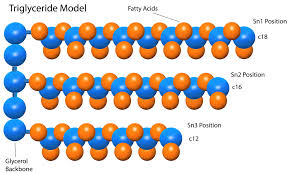
Your daily smoothie is sweet, because you put ‘healthy’ fruits in it. The sweets in your smoothie are causing you harm in the future, as the insulin you secrete to process todays smoothie wears out your ability to process the carbs into fats in the future. Eating your morning smoothie not only causes a problem with increased insulin both long and short term, but the increased insulin stimulates your liver to produce triglycerides, which are combinations of fat molecules that are too big to fit into fat cells. Triglyceride is the form of fat that is in fat cells, but it must be broken down for the fats to get back into the blood for use as energy. Triglycerides in circulation in the blood are a tell-tale for the risk of heart and artery disease in your future. Triglycerides in the blood are not normal, they are a warning sign. If you eat carbohydrates every day in every meal, in every sip of your sweetened drinks or beers, you will have elevated triglycerides in your blood.

When I speak face-to-face with people about the foods they eat, just about to a man they claim to be eating healthier than ever. We are all eating fruits and vegetables, cutting down on fats and meats, maybe cutting way back on sugar. The thing they don’t realize is that fruits are sugar. Honey is sugar. There is not a healthy sugar that you can eat. Sugar in the raw is not health food. Eating orange juice is not health food. No carbohydrate is any different than the sugar in your coffee, the only difference is in degrees of speed by which they become fat and triglyceride. Eventually, every single molecule of fruit sugar (fructose) you eat will become either fat or triglyceride. Every molecule of table sugar is 45% fructose and 55% glucose. The glucose will be turned into fat by insulin secreted to deal with it, the insulin will stimulate triglyceride production. It is machinery, it is inevitable if you eat carbohydrate of any kind these same reactions occur.

Unknown-1

Eventually your body stops responding to the normal amounts of insulin so even more insulin is secreted to deal with a constant amount of blood sugar. Triglycerides rise too, as a function of your liver. Heart disease risk rises in direct proportion to triglyceride. Metabolic syndrome is the term used to describe the disease at this point. As soon as the pancreas cannot secrete enough insulin to keep blood sugar in bounds the person is now diabetic. Now his diabetologist will recommend low fat and high carb diets. The very thing that got him sick. Supplemental insulin will be prescribed to keep blood sugar in check. Insulin levels in this person are already abnormally high, but more insulin is administered, as well as more carbs and less fats. Extra insulin means extra triglycerides will be secreted from the liver. Damage to health and circulatory systems accelerates.

All of these whereases and therefores are contained in this hair-raising chapter of the book I am reading. I cannot shout loudly enough that you must give up the daily consumption of carbohydrate. Your healthy sweets should be treated with the cautious respect they deserve. Fruit can be safely eaten, but eaten whole, the way that nature intended, and in season. Eat peaches for the three weeks or so that they are available on trees in your state and you won’t have a problem. Eat them every day, because somewhere on earth peaches are always getting ripe and you are tempting fate.

Drink Mexican Coke because it contains real sugar instead of high fructose corn sweetener, because it is ‘safer’, and realize that the only difference is the HFCS fructose percent is 55% instead of the real sugar’s 45%. If you drink a quart of Mexican Coke per day, your body won’t notice that small difference. You will be diabetic and overweight by your 40s, just like two thirds of your neighbors.

Eat processed foods that contain carbohydrates, be they sugar or flour, and your body will respond by secreting insulin. There isn’t one kind of insulin for sugar and one kind for flour. There isn’t one kind for candy and one kind for fruit. A slice of rye bread contains 15 grams of carbohydrate, the two slices to make your sandwich are 30 grams total. That equals greater than seven teaspoons of sugar. Your new daily recommended dose of sugar for the day is ten teaspoons. One sandwich and you are done with your carbs for the day.

Nowadays if I eat one sandwich that contains two slices of bread I will suffer immediate symptoms. First my heart will hammer, like I have been given a dose of adrenaline. Next my fingers will swell and I can feel tightness if I clench a fist. Then my face will flush. If you do not get these reactions to eating two pieces of bread it is because you have a tolerance for the drug that sugar is. I hear that people that drink liquor every day don’t feel the effects of it the same way that someone who never drinks does, either. Probably the same kind of thing if you ask me.

Processed foods, especially those that contain health claims on the label (low-fat, gluten-free, etc) will contain something to make it taste good. For eight out of ten products manufactured, that added thing will be carbohydrate. Eating processed foods adds to your health problems despite the Big Font exclamations to the contrary. They can’t add enough vitamins to a breakfast cereal to make it health food.

Health foods exist. They come with no carbs in them, and they are single ingredient foods. Kale, lettuce, celery…steak, pork chops, bacon and eggs are all health foods. The government no longer warns against the cholesterol in your egg. They no longer warn against meat and fat because they are not healthy, but because raising meats leads to increased greenhouse gasses. We have bigger problems right now. One third of us are obese. Two thirds of us are overweight. All of us that eat carbs every day have excessive triglycerides in circulation in our blood. We are all on the way to insulin resistance, metabolic syndrome, maybe diabetes and high blood pressure.

You can jump off the bandwagon any time you want. Eating a low carb diet is the best path to long, heathy, high quality of life living into your eighties. It’s too bad that it has taken so long for dietary scientists to retake the floor in the discussion of what is and is not healthy to eat, but at least it is happening in our lifetimes.


Posted in Health, Living | Tagged , , , , , , , , , | 1 Comment