Welcome To Tomorrow

Tomorrow will be a new year. Even though next year and last year are separated by an imaginary line, people like to start new things in the new year. It is a good way to measure how long you can stay committed to those things you decide need to be changed. For my part, I am once again going zero carb and sugar in the new month. We will see how dedicated I am to that course.

If you are going to go carb free in the new year the time to start is today. If you are serious then you will need to start eating breakfast, starting tomorrow. Your new energy supply will be from protein and fats, so you will want to begin the process of converting your body away from carbs first thing in the morning. Make sure you have breakfast meats for tomorrow. My breakfast will be breakfast meat and two fried eggs. This will supply my with energy from the fat and nutrients from the meat. The fats in my breakfast will carry me without hunger all the way to lunch time.

Lunch on January One will be meat. This first day make sure you have meats to eat for this first day. For me, it may be some venison sausage provided by a bountiful hunting season this year. I may have some cheese to go with it, and it will be washed down with water from the tap. Tap water has no plastics that have bled into the liquid–this is a problem with bottled water. The plastics in your drinks from plastic bottles are actually hormone-like, and they act like estrogen in the human body. Who needs that?

Dinner own January One will be meat. Thaw it out today. Brine it tonight if we need the meats brined. I will have brined pork, chicken or turkey for roasting on this day, and I will eat it. I will save leftover for lunch on January Two. The bones I will pick clean and then boil into a meat stock, you might call it bone broth, and that will be a base for soups and sauces in the coming week.

Being successful at changing one’s diet takes planning and consistency. Planning and consistency is one are of my life that I will be working to improve, and that will coincide nicely with my efforts to correct my diet in the new year.

Posted in Health, Living | Tagged , , | Leave a comment

Long Week?

So, it has been a week now since I have written. I run across articles in my various places where I find food and nutrition news. People are still excited about the debate regarding foods–the good, the bad…

I am losing my excitement about writing about food. I love that I am on the right side of history on this issue. Fats (natural fats from real animals raised on food that they choose to eat) are not harmful, are healthful even. Sugar, especially fructose is very bad to eat at each meal. In small doses it is no more harmful than a cigarette. Nature intended us to get sugar only on special occasions.

I especially like teaching on the subject now. I think it is time that I started to get a formal education on this so that I could have some letters after my name. Then I could wear a white lab coat and people could call me doctors and I could dispense wisdom with authority. Right now, I am little more than your crazy uncle with a wild world view. I am right though.

I will not tell you when I will get my credentials and lab coat. I don’t know. I will tell you that I intend to keep finding news about fats, sugars, processed foods, supplements and I will pass it on with my trademark commentary. We won’t be standing idly by while the New York Times or Washington Post or Mother Jones magazine passes off ‘conventional wisdom’ as proven scientific fact. I will rise to the keyboard on those occasions. In the meantime I will recreate this blog to be pages on topics instead of blog posts.

Blog posts make information hard to find.  I want my opinions to be easy for you to get to, dear reader, not jumbled in amongst a half dozen other topics, where you have to wade thru fifty articles to get to the one you remembered to a friend….

That is my plan. I will be here, and I will be back, better than ever.

Posted in Health, Living | Tagged | 2 Comments

Wonder How This Will Turn Out

I am going to a school that wants me to eat nothing but fruit on the days that we attend class (once a week). The idea is that we follow a routine, that we renounce a little something and as a community do this one thing together all day long. So….I ate three oranges for breakfast, and I am already suffering from hunger pangs at 8AM, when I normally only have them at around 1130 after my bacon and egg breakfast. Fructose sucks.

I know why we have hunger pangs so soon after we eat sweets. Fructose is a form of sugar. The sugar in your sugar canister is half fructose and half glucose. When combined with glucose in the normal proportions this kind of sugar is called sucrose. From Livestrong.com:

One medium-sized navel orange contains 17.56 grams of total carbohydrates, which includes 11.9 grams of natural sugar. Sucrose accounts for half of the total sugar. Another 23 percent of the total comes from glucose, while fructose represents 27 percent of the sugar in an orange. One navel orange has 69 calories. Almost 48 of the total calories come from sugar because each gram of sugar provides 4 calories, according to Iowa State University. – See more at: http://www.livestrong.com/article/267094-natural-sugars-in-oranges/#sthash.lEmbOP3m.dpuf

So the sucrose disaccharide that they say is in the orange is half glucose, and half fructose. The sucrose is broken immediately into its component parts inside of you. The fructose you get eating an orange is 77% of the total monosaccharides contained in it.

Glucose by itself is ‘starch’. Think white rice. When you eat glucose (mashed potatoes) this is what happens:

1. Glucose metabolism is insulin-dependent. Consuming glucose raises the glucose level in the bloodstream, stimulating insulin release, which promotes energy storage into fat cells and causes weight gain.

2. The overwhelming majority of glucose in the liver will be directed toward forming glycogen, or liver starch, which is not harmful to the liver cell. This also will keep the liver from releasing glucose into the blood, preventing diabetes.

3. A small amount of glucose will be metabolized by the liver mitochondria for energy.

4. Any excess glucose in the liver that is not shunted to glycogen and not metabolized by the mitochondria for energy will instead be converted to triglycerides. High triglyceride levels in the blood can promote development of cardiovascular disease.

Lustig, Robert H. (2012-12-27). Fat Chance: Beating the Odds Against Sugar, Processed Food, Obesity, and Disease (pp. 120-121). Penguin Publishing Group. Kindle Edition.

The fructose dose you get eating that orange undergoes a completely different process, and in combination with the glucose you are eating causes different biological effects:

Let’s now consume 120 calories of sucrose (60 of glucose, 60 of fructose)— for example, an 8-ounce glass of orange juice…The 60 calories of glucose do the same 20-80 split, so 12 calories of glucose will enter the liver. But, unlike with glucose, which can be metabolized by all organs, the liver is the primary site of fructose metabolism… Give or take, the whole 60 calories of fructose end up in the liver. So, the liver gets a 72-calorie dose, triple the amount as with glucose alone.

1. Triple the dose means the liver needs triple the energy to metabolize this combo versus glucose alone, depleting the liver cell of adenosine triphosphate (or ATP, the vital chemical that conveys energy within cells). ATP depletion leads to the generation of the waste product uric acid. Uric acid causes gout and increases blood pressure.

2. The fructose does not go to glycogen. It goes straight to the mitochondria. Excess acetyl-CoA is formed, exceeding the mitochondria’s ability to metabolize it.

3. The excess acetyl-CoA leaves the mitochondria and gets metabolized into fat, 9 which can promote heart disease.

4. Fructose activates a liver enzyme, which is the bridge between liver metabolism and inflammation. This inactivates a key messenger of insulin action, leading to liver insulin resistance.

5. The lack of insulin effect in the liver means that there is no method to keep the glucose down, so the blood glucose rises, which can eventually lead to diabetes.

6. The liver insulin resistance means the pancreas has to release extra insulin, which can force extra energy into fat cells, leading to obesity. The fat cells that fill up most are in the visceral fat, the bad kind associated with metabolic disease.

7. The high insulin can also drive the growth of many cancers.

8. The high insulin blocks leptin signaling, giving the hypothalamus the false sense of “starvation,” and causing you to eat more…

Lustig, Robert H. (2012-12-27). Fat Chance: Beating the Odds Against Sugar, Processed Food, Obesity, and Disease (pp. 123-124). Penguin Publishing Group. Kindle Edition.

The hunger I feel already is a function of having eaten fructose. I am not really in need of energy, but my biology is turned on to make me think I am. This fact would make it very difficult for me to turn down a sweet treat. If a vendor would show up now with a box of donuts or Christmas cookies it would take incredible willpower to deny them, the way that I feel right now. Had I eaten my bacon and egg breakfast I wouldn’t be having any problem thinking that I am starving. No fructose in bacon and eggs.

The real problem with the store-bought diet is all of the sugar that is in it these days. They hide it, they call it by different names. It is in eight out of ten processed foods. You wouldn’t play Russian roulette with those kinds of odds, but just about every boxed, bagged or bottled food is going to contain fructose.

I don’t know if I will be able to keep playing with the other kids in my class if they insist that I eat nothing but fruits for one day out of the week. When I eat fructose I want it to be dessert when I am out on a date with my sweetie, not as a symbol of devotion. If they could make the symbol something like ‘eat only single ingredient foods’ then I could advocate for that strongly. The science is behind doing that for the good of your body.


Posted in Health, Living | Tagged , , , , | Leave a comment

Coke, Candy, Chips

I have gained ten pounds in the last couple of months. I know where they came from, they came from fructose. I know where they are, these extra pounds are in and around my liver. I weighed in at 147.5 the other morning. I had my clothes on, but thats only worth about two pounds, so I have put on almost ten pounds by eating and drinking sugar.

For a while there I couldn’t quit eating the sweet stuff. This happens to me when I quit drinking liquor again. In my mind somehow they are linked and when I have been drinking and then quit I crave sugar to a great extent. We have sweet sodas in a little refrigerator and I will drink one with dinner. We have ice cream in the freezer, I will have one before bed. We have candy I will have candy. Christmas-time is Topsy’s Popcorn season at my house.

topsys-popcorn-contest-740x408.jpg

Go ahead and click. It’s Safe.

The reason these things are in my home is that I do not have a moat, drawbridge and customs office to limit the free flow of contraband into my home. I have an adult son that thinks it is funny to buy gigantic candy bars and economy sized ice cream boxes to give to me. He brings in cases of soda, knowing that I will not throw it away, I will use it little by little until it is all gone. He brought us the largest tub of Topsy’s that they sell. I don’t discourage him, as I think that I should be able to decline any momentary craving.

I suppose that we all have that voice in us that says, “you can have it around, you are tougher than that.” I do know that I am tougher than that, as I can easily stay away nine times out of ten. The problem is that a person has about 50,000 thoughts a day. A large percentage of those thoughts are about getting something sweet into the mouth, so there are a lot of opportunities to say ‘yes’… about one percent. If saying yes means going to the store or to an ice cream shop to get it, then there are a lot more chances to turn a ‘yes’ into a ‘later’, which makes eating sweets less likely. My theory is that the voice telling me I can have it around is the same side of my mind that is telling me to have a Coke. I know that having it around makes having it infinitely easier to go ahead and have it the instant I want.

Living a busy life means eating out a few times per week. Eating out is another chance to eat carbs and drink sugars. I could order tea. I could stick with water. Lately (last week) I did do that, stick to water, I mean. It’s harder to not eat the chips they bring out before the entree shows up. Ordering is a snap decision, and saying I will just have water is a conscious deviation from the lifetime normal of “Coke”. Years past it would be “beer”, which is really just as fattening as Coke. Now when the question is asked, I must consciously say “water”. Doing it makes me feel powerful. Taking the old road makes me feel a touch of shame. My wife looks at me and she knows I just lost a little fight, but of course she doesn’t say anything. She fights these same battles each day, as we all do. I feel like I gave up, and I did. I know that it doesn’t mean the war is over, that now I am doomed, but I also know that it means that the war is not over, and that there will be another little battle the next time I have a choice to make.

I am going to make the right choices the rest of December more times than not. If I can keep my sugar consumption to the absolute minimum then my weight will trend down again. I can get back to 137.5 with my clothes on by next year. All I have to do is win more than I lose. If I am not hard on myself, if I trust myself going forward and love that I am even willing to fight “normal” at all, then doing the right thing is not hard. Doing the wrong thing will not leave me with self inflicted extra damage which might make me want to self medicate with liquor or sugar.

We live in a sweet world, don’t we?

Posted in Health, Living | Tagged , , | Leave a comment

Going to Pseudoscience Class

If you wanted to teach that the world was created in seven days in a public school classroom all you would have to do is ask the schools to teach it and provide them with the ‘educational’ materials to present. It’s win-win, because the cash-strapped public school system gets much needed already prepared instructional materials, while the subject matter preparers get to spread their message to pliable little minds–they even get to call it ‘science’. The only fly in the ointment is the Federal court system which won’t allow religion to be taught in public schools. Apparently, because the Bill of Rights does not allow the establishment of religion, calling creation ‘science’ does not convert into something other than religious mythology.

Unfortunately there is nothing in the Bill of Rights that protects science itself. If there were, then there would be a way to keep pseudoscience where food is concerned from being taught as science in our public schools.

This Junk-Food-Funded Elementary School Curriculum Is Bonkers

header_logo.png

“Energy Balance 101” is a course that is being provided nationwide to elementary schools that purports to teach kids how to balance their food eating with a sufficient amount of exercise so that they don’t become an obesity statistic. Food industry gets to spread the ‘fact’ that there is no difference between any kind of food that matters. According to Energy Balance 101, all that matters is calories. No junk food, because you can eat nothing but cookies all day long every day of the week as long as you run and jump and play enough to ‘burn all that energy off’. Its the simple, and simple-minded, concept of calories in, calories out.

Links to this program, if you were to Google them, come from sources as varied as the PTA, “Together Counts“–an industry funded group, Boy Scouts, Girls Scouts, and in hundreds of other places where help for public education may be found.

Mother Jones Magazine details the practice of industry groups providing ‘educational materials’ to help kids and families decide what to eat to combat the obesity epidemic.

Together Counts isn’t the only energy balance campaign supported by junk food companies. Earlier this year, Coca-Cola came under scrutiny after the New York Timesrevealed that the company had provided $1.5 million in seed funding to start the Global Energy Balance Network, a think tank that downplays the role of sodas in causing the obesity epidemic. Just yesterday, GEBN announced it was disbanding “due to resource limitations.” Last week, Coca-Cola science and health officer Rhona Applebaum, who helped establish GEBN, stepped down.

The basic message is that if you eat 21 carrots its no different than a chocolate chip cookie. All of that energy can just be worked off by riding your bike for half an hour. This, of course, is pseudoscience. Look at the expanding waistline of America and shudder at the prospect of another thirty years of fighting it with ‘energy balance’.

A few thoughts:

Kids don’t make diet decisions. We feed them what we think they should eat. They don’t cook, they don’t shop, they don’t even decide when to eat. This curriculum is to train us, the shoppers, cookers, teachers. They want you to think that ‘authorities’ have decided that there is no such thing as junk food. You can go ahead and keep buying sugary breakfast cereals, yogurts, drinks for you kids. All you have to do is make them play outside, make them shoot baskets for half an hour and they will never gain weight. Unfortunately there is a lot of science that says otherwise. Drink two Cokes a day (or full glasses of fruit juice) and there are not enough waking hours to ‘burn’ that energy, if you eat anything else that day. It’s even worse for a sixty pound eight year old.

They want you to think that a calorie is a calorie is a calorie. Except there is such a thing as junk food, and calories are not all the same. Try putting candle wax in your car’s gas tank. Just calories, right? Well, your body treats different chemicals differently also. Glucose is one kind of food energy, it comes from a french fry, for instance. All of your cells can use glucose. Fructose, found in the Coke, fruit juice, or 8 out of 10 processed foods, cannot be processed by anything but your liver, and the fat it makes is stored very near your organs. It is visceral fat, and is the kind that is a symptom of diet related illness like diabetes, heart disease, high blood pressure and non-alcoholic steatohepatitis (NASH). Glucose can be burned in the instant, but if you eat a lot of them then a lot of that must also be converted into fat. Once converted to fat it is not so easy to get back out. A calorie is a calorie, but all foods are not the same. Some are junk and should not be given to kids.

2013 study by Lustig and his colleagues examined data on food availability and diabetes prevalence across the world, and found that while eating an extra 150 calories per day wasn’t associated with an increase in diabetes, eating an extra 150 calories of sugar per day was correlated with an elevenfold increase in diabetes rates. A similar concept applies to fats. Unsaturated fats—the kind in olive oil, fish, and avocado—reduce the risk of heart disease, while saturated fats—like those in burgers and fries—do the opposite.

I’ll point out here that the saturated fats that they call out as related to heart disease are not the same saturated fats that I use in my home kitchen. McDonalds uses man-made fats like Crisco made of soy and when heated up these fats change into trans-fats–the same fats recently banned for their relationship to heart disease. I use natural fats like lard from pork and tallow from beef. These fats are from animals that ate their natural diets, not feed from corn and soy. Eating natural saturated fats, lard, tallow, butter, coconut oil are not related to damaged heart health, but just the opposite. I do have actual scientific proof of these statements, and they can be found all through the history of this blog.

Long story, I know. If you are still here I’d tell that you don’t really need to worry about what you kids are being taught. You do need to watch out for what your kids are trying to teach you, though. Don’t let them convince you that its just fine to eat processed foods because you can work them off. Don’t let them talk you into eating and drinking sugar even more than you always do because a calorie is just a calorie.

If you are a teacher or in the PTA or a scoutmaster don’t take the bait and start teaching this pseudoscience to impressionable minds in your care. Take care to just eat real food, and teach your little charges to just eat real food. It’s natures plan.

Posted in Health, Living | Tagged , , | Leave a comment

Diabetes:Fact, Fiction

Today in the New York Times:

New Diabetes Cases, at Long Last, Begin to Fall in the United States

All I can say is that it must be incredibly difficult to write a factually accurate headline without using too many words. Today on the Front Page of the New York Times, above the fold we find that headline which I have quoted above. A more accurate headline would be “Rate of New Diabetes Cases Lower in the United States.” What has happened is that last year  1,400,000 people found out that they have type 2 (adult onset) diabetes. They compare this to the 1,800,000 people that were given that same bad news in 2008.

Unnamed “experts” temper their joyful exuberance with this caveat, “Experts cautioned that the portion of Americans with diabetes was still more than double what it was in the early 1990s.” The absolute number of americans that have the ‘disease’, the ‘running total’ if you will, is still 200% higher than it was 25 years ago. Yes, I suppose that would ground you a bit if you were looking for a sobering statistic to offset the Good News that “New Diabetes Cases, at Long Last, Begin to Fall.” At this rate, if we change nothing else we are doing, there will be no new cases of Type II Diabetes in the year 2040.

So, what do you suppose they cite as the reasons that the incidence of this metabolic disorder is not affecting as many people as normal?

Experts say they do not know whether efforts to prevent diabetes have finally started to work, or if the disease has simply peaked in the population. But they say the shift tracks with the nascent progress that has been reported recently in the health of Americans.

Isn’t it obvious on the face of it that if diabetes is prevented that it is a form of progress in the health of America? Since it is the precursor of very many very bad things, if you can find a way to prevent diabetes you are de facto improving the health of the nation, right?

So what are the efforts to prevent diabetes that may be working? How does one prevent type 2 diabetes, and you may want to tell the parents of the CHILDREN who are contracting this affliction. This article does not spell it out. It’s as if nobody really knows. There is this, though, where we might find clues as to what the reporter thinks might be contributors:

There is growing evidence that eating habits, after decades of deterioration, have finally begun to improve. The amount of soda Americans drink has declined by about a quarter since the late 1990s, and the average number of daily calories children and adults consume also has fallen. Physical activityhas started to rise, and once-surging rates of obesity, a major driver of Type 2 diabetes, the most common form of the disease, have flattened. Type 1 diabetes, often diagnosed in childhood and adolescence and not usually associated with excess body weight, was also included in the data.

There they are, calories and exercise. “Once-surging rates of obesity, a major driver of Type 2 diabetes” is the best clue we have yet of what the NY Times thinks we should do to curb diabetes. However, I hold that obesity does not drive diabetes. Neither obesity or diabetes are diseases, they are both symptoms of a problem, but they are not causes of each other. Calling diabetes a disease is like calling fever a disease. The difference between obesity and fever is that we can do something about the cause of obesity–and diabetes, and they are the same thing.

Drinking 25% less soda is a help, but why not say what you really mean, Americans need to quit drinking sugar and other sweeteners. Calling soda bad will push people to fizzy waters, which are also sugary, to fruit juices, which are every bit as bad for kids and their parents, but have the glow of ‘healthy and natural’. Sugar is causing both obesity and diabetes. Going on a diet where all of your calories come from a daily Jamba Juice or the Smoothie King concoction of your dreams is still going to be causing you problems, America. Cutting calories is not as beneficial as cutting carbs.

We can’t possibly exercise enough to prevent the damage that you are doing by getting half of your calories from the sugar in your yogurt, ketchup, hamburger buns, apple juice, barbecue sauce or any of the other sugar sweetened health foods that are out there.

Want to prevent Adult Onset diabetes from showing up in your children? Quit feeding them processed foods and drinks. Completely swear off of even ‘healthy’ processed foods because that is an oxymoron. It is not possible to add enough vitamins back into a food to make it as good as the original. I know it takes more time, but not much more, to make your own foods. Eat eggs, eat bacon, eat ham, eat beef…the are all real and they are all way better for you than any man-made recreation of food.

Posted in Health, Living | Tagged , , | 2 Comments

It’s All About Losing

The thing about losing weight is that no one recipe will work for everyone. The absolute truth is that you will not cruise to your natural weight and stay there by changing how you eat for a month or two. You got fat by eating the wrong foods (probably) for most of your life. If you manage to lose it by starving yourself for a while you will go right back to gaining weight the moment you go back to eating like you are used to.

You will not lose weight by “eating healthy” because that (probably) means to you that you are going to read the labels on the boxes, bags and bottles of food that you are enticed by at the grocery. A product that shouts about it’s “Low Fat” contents will not help you in any way. A product that screams “No Calories” is full of something more than water or pure vitamins, and what it is made of is decidedly un-healthy.

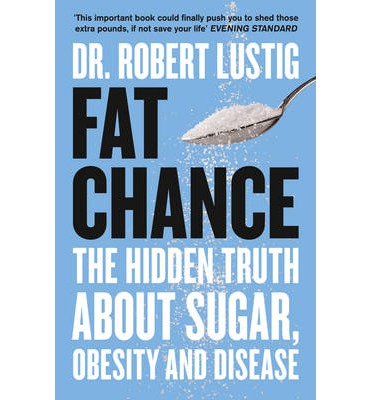
I am reading this book by Robert H. Lustig, M.D., “Fat Chance” where he details how fat is made, the known biochemistry of obesity as a disease, the different ways that chemicals we are in contact with contribute to our obesity as a nation and world. For instance:

Scientists have coined the term obesogen to refer to any endocrine-disrupting chemical (EDC) that promotes weight gain and obesity in people. Obesogens can promote obesity in various ways. Like estrogen, they can increase the number of, or promote fat storage into, existing fat cells. Obesogens can alter energy balance to favor the storage of calories and reduce the amount of calories burned at rest (REE; see chapter 13). They can change the mechanisms through which the body experiences appetite or satiety. In other words, obesogens can insidiously hijack the body’s energy balance system, making energy go places that are detrimental to your metabolic health.

Here are a few common “Obesegens” that you may have heard of. BPA, a plastic component chemical– which leach into our foods and drinks from the linings of cans, the plastics that our drink bottles are made of, our food storage containers are made of, our baby bottles are made of (just the hand me downs, these are banned from baby products these days). Soy contains an obesogen, it acts like estrogen in the body, ladies know this and women in menopause take advantage of it. However, they probably don’t know that estrogens are obesogens and contribute significantly to weight gain…

…genistein, a soy and alfalfa estrogen. Genistein drives fat cell differentiation in rats; exposure at birth predicts increased fat deposition at three and four months. And because it’s in soy, it’s in everything we eat. Even if you’re a carnivore, the meat you consume will be from animals that were fed soy products. If you are a vegetarian, you’ll still be ingesting it in your milk and cheese. And vegans are likely eating lots of soy products anyway (e.g., tofu), so no one is immune.

Lustig, Robert H. (2012-12-27). Fat Chance: Beating the Odds Against Sugar, Processed Food, Obesity, and Disease (p. 161). Penguin Publishing Group. Kindle Edition.

This hormone-like obesogen is passed from your food and food animals to you. If you eat commercially raised meat that is fed soy, you get that passed up the food chain to you. Yay! If you feed your babies from your breast you get to pass that on to them. Yay!

To eat healthy, really healthy, you have to eat much closer to nature. I have read hundreds of pages of the book I am citing and between every line is the idea that natural foods are healthy. Processed foods are poisonous. Not poisonous in the “will kill pests in an instant” kind of poison, but the “if you eat this every day you will die fat and sick” kind of way.

The advice I have given in these pages for more than a year is borne out here, although now I have about 500 more reasons to give it. Quit eating processed foods. If it’s in a box, bag or bottle then it’s processed. The processing changes it, now it’s something that will make you fat. Adding chemicals to keep it “fresh” in your fridge or pantry for a year is not a feature, it is a bug. The chemicals that are not calories that it contains are still chemicals. You are putting chemicals in you that have not been tested for side effects, they are only proven to not kill you the same day.

In a lot of ways eating processed foods is more dangerous than smoking. Someday the food industry will get to pay for it’s sins, but for now it is entirely up to you to protect yourself from them.

Stop buying factory made food. Buy meats from your neighbors. Buy single ingredient foods from the outside walls of your local market when you can’t buy them from your local farmer. Learn to cook and process foods yourself, because you will make things that don’t keep forever, but they won’t make you fat and sick, either.

9780007514144.jpg


Posted in Health | Leave a comment

Congratulations!

You made it through another feast of Thanksgiving. You travelled great distances to be with family, or you went to great expense to host. Every effort was made to feed yourself and your guests the traditional meats, vegetables and sweets of this annual orgy of food. You convinced yourself that whatever damage you did to your diet you would resolve to make up in the few weeks between this holiday and the next one in just a month.

On Thanksgiving we don’t count calories. We let ourselves go for Christmas as well. Both of these holidays involve making merry with those we love and it just seems wrong to stress over one or two days a year.

If you are overweight (two out of three Americans are) then you have been convinced that yesterday you ate more calories than you expended, and you have been told since your earliest years that eating more calories than you expend will lead to an expanding waistline. We (science) now knows that that simple explanation is mostly wrong. A calorie eaten and not ‘burned’ does not always go into fat cells. “Okay, smarty-pants, where does fat in your fat cells come from, and where does it go when I am done with it?” you ask.

In a nutshell, your body fat is your biggest long-term risk for infirmity. Nothing correlates with diabetes, heart disease, and cancer better than your fat. So is your fat your fate? Everyone says, “Lose the fat to extend and improve your life,” but virtually no one can do it. So how do you lose the fat? Better yet, how do you prevent it from arriving in the first place, and preferably leave your muscle mass in place? In order to answer these questions a little more knowledge is required about what causes fat accumulation.

Lustig, Robert H. (2012-12-27). Fat Chance: Beating the Odds Against Sugar, Processed Food, Obesity, and Disease (pp. 75-76). Penguin Publishing Group. Kindle Edition.

Guess what? How fat develops and is consumed by your body is known. As far as how a fat cell is filled, I don’t mean to spoil the surprise, but I will tell you that the number of calories in your foods is not the only factor that decides if you will put it on or take it off after your day of feasting. Fat only gets into a fat cell one way, insulin puts it there.

There are three different ways to increase your insulin:

1. If, in response to a meal, particularly one high in refined carbohydrates, your pancreas makes extra insulin (called insulin hypersecretion), it will drive your fat cells to store energy. This happens when your brain sends a signal to the pancreas through the vagus, or “energy storage,” nerve.

2. If, because of the specific foods you eat you build up fat in your liver, this fat will make the liver sick (called insulin resistance). The pancreas has no choice but to make more insulin in order to force the liver to do its job. This raises insulin levels throughout the body, driving energy into fat cells everywhere, and making other organs sick as well.

3. If your stress hormone cortisol (which comes from your adrenal gland) increases, two things will happen. It will work on the liver and muscle to make them insulin resistant, raising your insulin and driving energy deposition into fat. It may also work on the brain to make you eat more.

Lustig, Robert H. (2012-12-27). Fat Chance: Beating the Odds Against Sugar, Processed Food, Obesity, and Disease (p. 82). Penguin Publishing Group. Kindle Edition.

There you have it, the three ways that fat cells are inflated. If you become resistant to the effects of insulin that means that your organs and muscles do not accept glucose from your blood as easily, and your liver will not accept energy from your blood for processing, forcing it into your fat cells instead.

On the bright side, all fat cells are not equally dangerous to your health. The fat that matters is organ fat, visceral fat, beer-belly fat. If you are a man and you look pregnant, that is the fat that kills. Ladies get it too, but of course the fat that the ladies want to lose is wiggling on their arms, jiggling in their pants or hanging from their jaws. The fat you can see easily is actually not very dangerous to your health. The fat that is deadly is hard to measure, and it can be dangerous way before it is visible.

This fact is borne out in a recent study comparing BMI to percentage body fat by X-ray methods. It appears that many as 50 percent of women and 20 percent of men who are categorized as normal on the basis of their BMI are actually obese based on their carriage of visceral (bad) fat. The study’s author, Dr. Eric Braverman, called BMI the “Baloney-Mass Index,” because it gives a false sense of security to those who follow it. Indeed, Dr. Jimmy Bell of London, using MRI scans of the abdomen, realized that body size is irrelevant; it’s visceral fat that drives disease. He coined the expression “thin on the outside, fat on the inside,” or TOFI. Bottom line, it’s your visceral fat, in particular your liver fat, that counts.

Lustig, Robert H. (2012-12-27). Fat Chance: Beating the Odds Against Sugar, Processed Food, Obesity, and Disease (p. 89). Penguin Publishing Group. Kindle Edition.

How do you know if you have too much visceral fat? You can look at the circumference of your waist. If your waist is 40 inches for a man or 35 inches for a woman, measured at the navel (men will wear the belt below the belly) then you likely have visceral fat. If you want to know if your visceral fat is causing health problems you look for other common signs:

Another simple method for determining your metabolic status is to look at the back of your neck, armpits, and knuckles. What you’re looking for is acanthosis nigricans, or a darkening, thickening, and ridging of the skin. Many people think this is dirt or, in the case of the neck, “ring around the collar,” but it’s actually excess insulin working on the skin (the epidermal growth factor receptor, to be exact). You might also see skin tags in these areas. Both of these are visible signs of insulin resistance and predict future risk for chronic metabolic disease.

Lustig, Robert H. (2012-12-27). Fat Chance: Beating the Odds Against Sugar, Processed Food, Obesity, and Disease (pp. 90-91). Penguin Publishing Group. Kindle Edition.

Losing weight is important for your health if you have visceral fat. Losing that fat, it turns out, happens first. The most important measurement of how you are doing will not be on the scale, though, it will be a measuring tape, checking that waist circumference. To markedly improve your health prospects an obese man or woman need only lose seven to ten percent of their weight, because it all comes from the organs first.

How do you do it? How do you actually go about losing that body fat that you can’t easily see? I will write about that tomorrow…

Posted in Health, Living | Tagged , , | Leave a comment

A Break From All the Happy-Talk

I know, I never have a happy or joyous post, almost. I seem to be stimulated by debate and endless controversy. Here, however, is a poem that I wrote to be a song, perhaps in the key of G. Use this lyric to hum along in your head…

BRING IT, BABY

I’ll bring the love

And you bring the charm.

You’re banter’s attractive to me,


I’ll bring the love

And you bring the beauty.

Our admirers need something to see


So I’ll bring the love

And you bring the rest

I’m sorry that’s just how it must be.


Because my dear I’m not worthy

And some day you’ll see,

There isn’t a thing

For you here in me–

Except for my love ,

My bottomless love,

My endless, tireless, worthless love.


You bring the money

And Ill bring the love.

Were gonna need food to survive.


You bring entertainment

So I can bring love.

Our laughter can keep us alive.


Then you can bring happiness,

While I can bring love,

Cuz without it why even try?


Because my dear Im not worthy,

And soon you must know,

I only bring love, wherever I go–

Only undying love,

This enduring, sustaining, everlasting love


If you brought the love

I know how it’d be.

Im unable to do things like you.


If you brought the love

then I know id fall short.

We wouldn’t make it on things that I do.


If you brought the love

then we just cant last

Just try living on love and were through.


Because my love Im not worthy

to make your love be

as great as the love that you’re getting from me.

It’s just too  much love–

It’s terrific, fantastic, gigantic love.


Posted in Poetry | Tagged | Leave a comment

Trust Me, It’s Related

The dreaded scientific reversal, covered very well in today’s New York Times, is a bane to healthy living on many fronts. The Times is talking about when medical advice is given based on old knowledge, that has to be changed when new data eventually debunks the old notions.

When Medicine Reverses Itself

This is a dreaded moment for doctors: the “medical reversal” discussion…. While the latest guidelines make it clear that most ear infections should not be treated with antibiotics, that’s a big change — and a good example of how seesaw science frustrates doctors and leads to tricky moments in the exam room.

I have written at length about the scientific reversal phenomenon before, in relation to food. You can find samples here, and here, where I discussed the progress of science. Science is never really and truly ‘settled’. Today’s great thought will be constantly tested and retested.

When writing about scientific progress, one of history’s greatest physicists, Max Planck wrote in 1950, “An important scientific innovation rarely makes its way by gradually winning over and converting its opponents. What does happen is that its opponents gradually die out, and that the growing generation is familiarized with the ideas from the beginning.” There is one opponent of scientific innovation that can never die, though. A corporation, that deathless, soulless entity whose only purpose in ‘life’ is to generate and protect it’s profits can be counted on to resist science that would restrict it’s profitability in  perpetuity.

Ages ago it seemed like a great idea to limit the amount of fats that a person eats, so as to prevent those fats from accumulating in the heart arteries of the eaters. A very simple theory was developed that eating fat led to fat in your veins. The theory was based on interviewing people in places where there was not yet a great deal of heart disease. “Do you eat lots of saturated fats?” When lots of heart-disease free people said “Why no, I don’t eat vary much saturated fat” then a hypothesis was formed. Eating saturated fat seems to be related to heart disease, scientist thought. Through years of dedicated politicking, eventually this notion became a foundational part of dietary advice for a huge first-world nation. After years of government advice and food pyramids, the food industry concocted a plethora of food choices based on this notion. The food industry placed its marketing muscle behind selling the new creations. Fat free became conventional wisdom for weight loss, as the public and marketers took advantage of the simplicity of the message, “Eat less fat, be less fat.”

Nobody was concerned that the science, as slip-shod as it was, had NEVER implicated eating fats with weight gain.

Science is more than a collection of theories and notions, though. The testing of the notions and theories, as difficult as it is to do in the real world, continued just as science demands that it does. The implication of dietary fats as having a role in heart disease is on the cusp of being reversed. The theory that artificial fats (trans fats) was a heart healthy alternative has already been reversed–these fats are now banned in most modern societies, and is virtually banned in our own money-driven society.

However, the advice to eat no saturated fats will be given out to heart patients, and be offered as science-based fact in food marketing for many years to come. People will be eating ‘heart healthy’ breakfast candy in the form of cereals–clogging their arteries with the fats created from eating too many carbs, while their doctors tell them to keep doing it. Changing scientific advice is hard.

People resist changes in science because marketers sell every bit of it as fact. Science is not fact, it is a continuum of thought. Even the ‘fact’ that gravity always behaves like it does here on Earth was overturned by the scientific method. The ‘fact’ that light travels in a straight line was overturned by physicists that challenged that perfectly sensible notion. People do not realize that every scientific idea is constantly under scrutiny. A ‘fact’ as non-factual as “eating fat leads to heart disease” was really no challenge at all for the scientific method. It will be a huge challenge for the public though, as we await the death of the scientists who will always believe they are saving lives by giving this bad advice. Science changes one dead scientist at a time. The market will change more quickly, when a significant number of the money-spending lemmings have changed their course to affect the bottom line.

Soon I predict that most people will be living in a post-fat-free world. We will be healthier for it. Government advice will catch up as soon as more money is on the side of science. The only lasting damage will be to the reputation of science, which, in the mind of the public “Was Wrong Again”. Never mind that in reality, science is never ‘right’. It really never claimed to be ‘right’.

Posted in Health, Living | Tagged , , , | Leave a comment