This is the Best Way To Cook That

You can eat pasta again, you just have to prepare it properly, so that all of the starches aren’t absorbed immediately by your body. A few days back I found a story about preparing rice in such a way, and now the theory that I had that it also applied to the other bad starches has been proposed as well. Now there is this report in Mother Jones:

Why Leftover Pasta Might Be Healthier Than Fresh

Researchers from the University of Surrey found that eating cold pasta resulted in smaller spikes in glucose than eating freshly cooked pasta. These results were even more pronounced when the pasta was reheated: The study participants who had the reheated pasta instead of fresh reduced spikes in blood sugar by 50 percent. A previous study in 2009 also showed that freshly cooked legumes, cereals, and tubers had significantly higher levels of resistant starch after multiple cycles of heating and cooling. The resistant starch in peas, which had the most dramatic change, increased by 115 percent. Resistant starch consumption has been linked to improvements in gut functioning,insulin sensitivity,increased satiety and even decrease in fat accumulation.

These things all add up. I really don’t want to forego pasta, rice, potatoes or beans. All of those things are ingredients in thousands of REALLY delicious things. If there is a way to make rice or pasta that cuts in half the bad blood sugar reactions from eating them, I am overjoyed. I can be careful and cook pasta today, put olive oil or butter on it after it’s done, let it cool and reheat it and eat it the following day. That’s easy as can be, if I get the benefit of half the blood sugar spike! I can do the same thing with potatoes, rice, and dried beans.

If you process your food to the minimum extent possible, the idea here is to let your teeth do most of the processing, then that also has an effect on how many calories your system will extract from your foods. A smoothie or puree is like liquid energy, it will all be processed quickly. Whole fruits and vegetables take the entire trip through your bowel to be processed, and it makes a difference to you. Slower processing means less of the energy goes to fat, more is used in muscle and organ. You see, your muscles and organs need energy at the instant it is used. If your food is going instantly into your blood then your blood sugar goes too high, forcing insulin to store it to fat right away, because high blood sugar is not allowed. If the blood sugar doesn’t go too high, if the energy comes into the blood at closer to the rate it is being used by muscle and organ, then less of that energy is converted to fat.

These concepts are all covered in the excellent science book, “Good Calories, Bad Calories” by Gary Taubes. You will understand HDL and LDL cholesterol, triglycerides, glucose, sucrose, and fructose…etc. You will learn how body fat goes up and down over the course of a day. You will learn why some people put more of their carbohydrates into fat stores than other people. You will learn that the only place that fructose can go is into fat, it cannot be converted by muscle or organ.

images

Posted in Health, Living | Tagged , , , , , , | Leave a comment

Muddy Waters

When an octopus wants to avoid a predator it blasts out a screen of ink and darts of at high speed. When an industry wants to keep its gravy train on the rails it does a form of the same thing, it blasts out a ‘scientific’ study that stirs up doubt about the existing science that it hopes is not true. For instance:

Red meat consumption linked to increased risk of total, cardiovascular, and cancer mortality

And then there is this, from the VERY SAME STUDY, interpreted by a different analyst:

Red Meat Is Not the Enemy

Any data that is from surveys of people can be parsed in myriad ways, to say what the analyst wants them to say. If you go into an epidemiological study looking for correlations you can find them. It is why the same data can say these two very different things. It is what the sugar industry uses to make sugar look like a health food, while demonizing red meat.

In very short order I could perform this same comparison for high fat versus low fat diets, high calorie versus low calorie diets, the mediterranean diet versus the western diet, or any other macronutrient, really. There is no definitive science on this issue of diet and health yet, because the damage is over such a very long time span, and because it’s not easy to control the diet of the test subjects, unless you have 24-7 access to them.

A sugar-industry spokesman can argue for more time for the science to figure out whether or not his product is dangerous, knowing full well that that definitive science may never materialize, and when it does, his industry only has to present another study showing ambiguous results to keep anything from being done at the government level to slow down his gravy train.

Yesterday I read an article that made my blood boil.

The Weight of the Evidence:It’s time to stop telling fat people to become thin. 

I have a theory that there are certain highly influential groups in this nation that are working overtime to get us all accustomed to the notion that it’s perfectly natural for us to all be obese in our old age, and that there is nothing we can do about it, so just relax and enjoy your dessert. Articles like this one, written by a person who has also written a book on the same topic, only strengthen my feelings.

If you’re one of the 45 million Americans who plan to go on a diet this year, I’ve got one word of advice for you: Don’t.

That is the lead sentence in this article of two thousand words. I give similar advice, but this author literally means “It won’t work anyway, so why bother”. I at least give you advice to take action, to avoid a fate of western diet diseases. I just don’t call it a diet, I call it “the way you should be eating”.

This isn’t breaking news; doctors know the holy trinity of obesity treatments—diet, exercise, and medication—don’t work. They know yo-yo dieting is linked to heart disease, insulin resistance, higher blood pressure, inflammation, and, ironically, long-term weight gain. Still, they push the same ineffective treatments, insisting they’ll make you not just thinner but healthier.

This is a classic case of mixing symptoms with primary causes. Sometimes the first cause is hard to find, especially in a condition that may take a lifetime to occur (although frequently these days its happening in grade school). To say that ‘yo yo dieting’ is linked to western diet diseases is way off the beaten path. Who on Earth blames the disease on the diet? Yo Yo dieters all have far more in common with one another than just the fact that they have tried to lose weight many times. Another thing they have in common is that the diet they predominately try is a reduced calorie ‘balanced’ diet. Even though doctors keep pushing the same treatment, they generally attribute the failure to the patient not living up to the plan, they don’t blame the plan. This is the first time I heard someone saying that the obese are just fine exactly as they are.

Studies from the Centers for Disease Control and Prevention repeatedly find the lowest mortality rates among people whose body mass index puts them in the “overweight” and “mildly obese” categories. And recent research suggests that losing weight doesn’t actually improve health biomarkers such as blood pressure, fasting glucose, or triglyceride levels for most people.

It never occurs to the author that if studies show that losing weight doesn’t improve biomarkers, that perhaps pounds on your frame are not as critical to your blood chemistry as WHAT YOU EAT. It might just be possible to eat fewer calories, but because your balanced diet still contains carbohydrates, which are going to be converted to fat as a normal course of natural biochemistry, they are going to have that same effect on biomarkers even if you are eating fewer of them than when not on a diet.

Debra Sapp-Yarwood, a fiftysomething from Kansas City, Missouri, who’s studying to be a hospital chaplain, is one of the three percenters, the select few who have lost a chunk of weight and kept it off. She dropped 55 pounds 11 years ago, and maintains her new weight with a diet and exercise routine most people would find unsustainable: She eats 1,800 calories a day—no more than 200 in carbs—and has learned to put up with what she describes as “intrusive thoughts and food preoccupations.”

I agree that the problem with semi-starvation diets is the constant hunger. I contend that the source of constant hunger is that 200 calories of carbs she is eating each day. When I ate nothing but meat I only experienced hunger when I went for longer than seven hours without food during the day, and never experienced hunger when sleeping. I did not wake up hungry, either. The problem is not how much dieters eat, it is what they eat. Not being on the right diet is no excuse for condemning all efforts to control weight.

People who easily gain weight eating normal amounts of the most popular foods, or even who gain weight when trying to ‘eat healthy’, meaning fruits and vegetables, balanced by low-fat meats and dairy, should not continue to diet. They should get off the yo yo plans. Their bodies do not respond well to eating carbohydrates. However, they are damaging their bodies and risking their future quality of life by continuing as though nothing is wrong. It is not their fault that all of the dietary advice they have been given has been wrong, but that is not a reason to just put up with the bad outcomes if they just continuing on the same course.

If you want to see where I got the confidence to tell you that you don’t need carbohydrates to live–that no ill effects come from eating 90 percent protein and fat, read the book “Why We Get Fat” by Gary Taubes. It’s not a diet book. It’s a science book that goes into all of the competing science and analyzes what is currently known about human physiology and biochemistry. There is still a lot more to learn about how fat is produced and consumed in the normal course of a human day, but enough is known that I can safely say that you are risking nothing by forgoing carbohydrates as a NECESSARY component of your daily menu. It’s not required for life or health, and for some people is putting their chances to lose weight in jeopardy.

Posted in Health, Living | Tagged , , , , , , | Leave a comment

Ain’t Democracy Great?

Most of the time it doesn’t matter in the slightest what you or I, as individuals, think about an issue. Sometimes an issue comes along that proves that it doesn’t even matter if we all agree on an issue, it still doesn’t matter what we all think. Genetically modified foods are a perfect example of this. From this morning’s Washington Post:

E IGHTY-EIGHT percent of scientists polled by the Pew Research Center in January said genetically modified food is generally safe to eat. Only 37 percent of the public shared that view. The movement to require genetically modified food products to be labeled both reflects and exploits this divergence between informed opinion and popular anxiety.

37 percent of the public don’t see a problem with eating genetically modified foods, which, if you do the math slightly different means that 63 percent of us DO feel that eating genetically modified foods is not safe.

At issue is not whether GM crops should be planted and developed, but whether or not they should be labeled as GM crops at your grocery store. The fight here is over whether or not you should be informed, so that you can make a selection. Sellers of GM crops rightly suspect that if given a side by side choice they will have reduced sales of GM crops if we know which is which. Normally, when this happens they entice you into purchasing the less desirable variety by LOWERING THE PRICE. People will eat foods that aren’t even foods if the price is low enough. So, they don’t want to lower the price, so instead they want to hide which is which from you. The Washington Post says “Let them”, because

1. People have been inducing genetic mutations in crops all sorts of other ways for a long time — by, for example, bathing plants in chemicals or exposing them to radiation. There is also all sorts of genetic turbulence in traditional selective plant breeding and constant natural genetic variation.

This is true, that people have been selectively breeding crops and animals for traits that are desirable. You don’t have to be a scientist to know that selective breeding is different than gene-splicing. Bathing plants in chemicals does not change the plant, while modifying it to resist a deadly chemical that kills every other living plant in the same field is a basic distinction that cannot be glossed over by saying “its just the same old plant science”.

2. If they were threatening, one would expect experts to have identified unique harms to human health in the past two decades of GM-crop consumption. They haven’t. Unsurprisingly, institutions such as the National Academy of Sciences and the World Health Organization have concluded that GM food is no riskier than other food.

As I have said in the past, when talking about processed foods and food additives, one of the problems with the approval process is that additives get approved and then pulled away when they prove to be harmful. This is actually what WaPo is advocating here, in so many words. “It’s not poisonous, ergo, it’s not harmful.” is their actual argument. Could anything be farther from the truth than this? It may not be harmful, but I want to know which is which, so I can let WaPo editors eat one kind while I eat the other kind and they can experiment with their own family’s health. I actually don’t fear eating GM foods, myself, and would eat them if the choice were GM or processed foods. However, the debate here is whether you should get the option at the market, or if you should trust your grocer to be the only one that knows. Once again, they could sell just as much GM food if they cut the price marginally compared to ‘natural’ foods. We aren’t talking about banning GM here.

3. Instead of demanding that food companies add an unnecessary label, people who distrust the assurances that GM food is safe can buy food voluntarily labeled as organic or non-GM.

See the little logical slight of hand, here? The label you demand is unnecessary, because if you want ‘Natural’ food you can pay MORE for the one labeled ‘organic or Non-GM”. Why is organic worth more? Because there is a higher demand for it. Its worth more for the same reason that the GM foods are worth less. They are worth so much less that some of them are not even shippable out of the country. Bad thing is that some of the GM crops are so ubiquitous that farmers can’t keep GM pollen from infecting the non GM crops. The non-GM label will come to mean not intentionally modified, but it will take a DNA test to prove this label wrong. What good will a non-GM label be if we can’t keep science fiction pollen away from our natural plants?

4. If GM food becomes an economic nonstarter for growers and food companies, the world’s poorest will pay the highest price. GM crops that flourish in challenging environments without the aid of expensive pesticides or equipment can play an important role in alleviating hunger and food stress in the developing world — if researchers in developed countries are allowed to continue advancing the field.

Just like with drug research that is vital to the world, but isn’t going to make the Pfizers of the world billions of dollars, important food science is done in the agriculture research centers of major universities. Most of the research that is actually useful, instead of ‘profitable’ will continue to be done where it always has been done–in government sponsored colleges. Does the WaPo editorial board really expect me to believe that Monsanto cares whether peasants in Sri Lanka can grow crops that their poor can afford to eat? If GM crops were properly labeled, and sold for what the market is willing to pay  for them then the poor in Sri Lanka could afford our current GM crops.

The dumbest thing about this whole argument is that they don’t even really discuss why these crops are GM in the first place. Corn and Soy have been genetically modified so that they can grow them in such close proximity that entire States in the US can be bathed in Roundup herbicide that used to kill everything in the field except for the corn and soy. It’s not 100% true anymore, as weeds are modifying their own genes to resist Roundup, requiring doses of additional chemicals to keep the weeds down, but thats another story. The point I am headed to is that the purpose of Roundup is to keep the price of commodity grains down to the point that we can feed it to our food animals and BURN IT IN OUR CARS. We make kitty litter out of corn. While they starve in poor countries, our food crops are so cheap we pile them in huge exposed piles outside of silos, where the weather and vermin can get at it. This is why we genetically modify our foods. We genetically modified potatoes so they won’t brown when you cut them. We did apples the same way. Whatever the risks are to the world, no matter how small, can it be smaller than the benefit to the world of an apple you can slice and it doesn’t brown?

We are not talking about banning GM crops. We are talking about being brave and honest and labeling them proudly as not natural. We are talking about subsidizing genetically modified foods by keeping you ignorant that you are buying them. We are talking about keeping the value up by forcing you to pay more for a food that IS labeled honestly.

I won’t even get into the arguments against the Congress writing laws that forbid the states from writing more restrictive law than the federal law. If your State wants to require extra things on fool labelling why would the Congress step in and say no? It would be because Monsanto can buy the support it needs to get a Federal law it likes, while not being able to pull the same shenanigans in all of the State legislatures. Central bribery is cheaper.

This fight is actually easier to conduct for us at the Federal level, too. If you want to help get GM foods labeled honestly, write to your Senators–you have two. If we can get forty Democrats to hate the idea of hiding the identity of GM foods we can keep the law from passing. It’s worth a shot.

Posted in Health, Living, Politics | Tagged , , , , , , , | 2 Comments

Selling Convenience

More than half of the problem with the foods we eat in the US stem from the market’s attempts to make everything convenient for us. Convenience is a way to add value to foods, value meaning profit in this case. Do not confuse that with value to you, as a food.

To you, as a living organism, the most valuable food is one that is available when you need nourishment and provides the most essential nutrients in their correct proportions, and are capable of feeding you and the beneficial microbes that live within you. Food at the grocery store fails that test on almost every level. Processed foods that come in bags and boxes have virtually no natural ingredients in them. Every component is chosen for it’s ability to re-add flavor and selected nourishing vitamins so that you will pick it over the other choices available on the shelf. It contains ingredients that will allow it to be edible even if it has to wait six months on the shelf before you buy it. The nutrients it does contain are not in the correct natural proportions, because nobody yet knows which of the thousand ingredients in natural foods are important, or what the natural interactions are between the ingredients in real food and the processes and microbes in your body. That science is still in it’s infancy. The only thing we can say for certain is that processed foods are less than real foods.

Real foods have also been modified for your convenience and so that the most profit can be wrung from the product of nature. Adding pesticides makes sense, because pests compete with us for the fruit and the leaf of the plant, but it may be the case that pests on a plant add something to the leaf and the fruit that we do actually need. Plants have a way to defend themselves naturally from pests, obviously, because there have not always been people to defend them. The fact that there are plants means that plants don’t need pesticides. It may be the case that eating plants that have never been defended from pests is better for us, because those plants will contain something that the treated plants don’t, natural pesticide produced by the plant.

Plants that are treated with fertilizer are different in many ways, too. They grow faster than they are meant to by nature. They can outrun their water supply, they don’t have time to develop natural defense from pests and diseases, so they must be supplemented in those ways, too. Natural foods take longer to produce, they don’t grow as big, they are hardier. The interaction between natural foods and the soil that they grow in is not understood, but amending the soil with fertilizer is known to change it. Nitrogen fertilizer can even kill the soil. Dead soil will not produce plants of any kind. Nobody knows what the really important interactions are between soil microbes, fungi, and the plant’s roots are. We are naive to think that adding significant amounts of chemicals, fungicides and herbicides to the soil are not having a significant impact on this ecosystem.

The market would have you believe that the only way that enough food can be produced and delivered to the grocer to meet the hunger of the nation is to perform the time and money saving tasks. If you demand cheap food fast then this is true. There is another way.

Today in Kansas City there is a “Eat Local and Organic Expo”.  Today’s event is at the Johnson County Community College. You can go there and see what the alternative to foods whose biggest selling point is convenience. You can find out how to find, purchase and consume foods whose biggest selling point is that they are unmodified from the natural plan. They won’t be least expensive. They won’t last for months in your pantry. They will give you everything you need, in the correct proportion, according to nature’s plan, though.

If you can’t make this Expo, there is another one a couple of weeks later. It will be Saturday, April 11 at Penn Valley Community College.

These events are NO CHARGE. Now that’s value added.

Posted in Health, Living | Tagged , , , , | Leave a comment

It’s the 27th of March and I feel as though I have gotten all of the information that I need out of eating just meat. It is possible to eat just meat three meals a day. It will not kill you to try it, it might do you some good. If you are going to live primarily on fats and proteins then I recommend that you find a high quality source of meats. Since you will be counting on the food chain to deliver the essential nutrients to you, instead of eating the source of those nutrients yourself, then eating meats that are consuming a limited diet of corn and soy will not do that for you. You will be only getting the nutrition in the chemically enhanced soils of the no-till, GMO farms of Iowa. It’s not a recipe for biological balance in your diet.

As a recap, in the first week of just eating meat three meals a day I experienced dehydration symptoms and had difficulty sleeping due to this. Once I figured out how much water I had to drink during the day I found out I was much more comfortable. I didn’t have any problem keeping on task, I didn’t have any hunger, or food anxiety. I ended up looking around for different ways to cook meats, though. While it would be pretty simple to just eat a beef steak every day for dinner, I mixed it up between ground beef, pork chops and roasts, corned beef and sausages. It was a very filling diet, actually. I got to where I wouldn’t even eat my entire two egg and breakfast meat breakfast. I could eat less than a pound of meat at each sitting and not be famished in the morning when I woke up. Its pretty remarkable.

However, if you wait too long to eat it is very difficult to not be tempted to eat something convenient. If there were chips on the counter and dinner was cooking it was almost impossible to not grab some. Sometime I would succeed, sometimes I would give in. I never binged on any carbs, but I did taste some along the way. It was way easier to not have this temptation if I was fed regularly. With my crazy work schedule, though it was easy to go eight hours between lunch and dinner, and that is just too long to safely make it without hunger.

So now, I will move forward on my diet journey. I will go back to eating a ‘balanced’ diet that includes fruits and vegetables. The real reason to go back to eating like the rest of the family is to be able to share in what they are eating. Just eating meat all by yourself is a bit of a lonely journey. If I needed to do it in order to break a carb addiction, or if I gained an inordinate amount of weight when I ate carbs, then I would easily and confidently do it again. I only lost about five pounds, but I wasn’t overweight to begin with. I hardly ate any carbs on a daily basis, so going from next to none to none didn’t have much effect on my weight.

I checked my urine a few times for ketones and the most it ever got to was ‘moderate’. I am certain that all my tissues were living entirely on the fats that I ate and the fats that are stores in various places on my body. One of the first places I show fat is in my face and under my chin, and those parts are visibly thinner.

Now I will go forward. I am looking forward to trying to eat rice that is cooked with fats and then cooled, and reheated at meal time. This method of cooking it fundamentally changes the starches in the rice. This excites me, and I look forward to reincorporating rice into my meal rotation. Actually, I look forward to every new day, as I learn and grow in the eating adventure I am on.

Posted in Health, Living | Tagged , , , , , , | Leave a comment

Everything Matters

Unknown

When you eat there is no detail that is unimportant. Your food is a combination of whatever your food consumed to reach the point where it was harvested, it’s genetic lineage, the state of it’s decay or the microbes that are on it when eaten, the processing it underwent to get it ready for the stove or table, the changes that take place to it during cooking, and the decay or microbes that inhabit it during storage before it is eaten. We think a lot about spoilage before and after cooking and what that does to food, but very seldom do we think about what our processing does to the foods we eat.

A while back I wrote that a carrot is one kind of food if eaten whole, another kind of food if eaten pureed, and yet a third kind of food if juiced and drank without any of it’s solid components. It’s obvious that drinking carrot juice is not going to be the same as eating a carrot. It is not so obvious that eating a puree of carrot is also not the same as eating a whole carrot. When you eat whole roasted nuts have you ever noticed that the next day there are some chunks of roasted nuts coming out in your waste? When you chew something you generally swallow the mouthful of food in different states of mastication. Your teeth don’t uniformly pulverize your foods. Your blender does uniformly pulverize your food.

When you eat highly processed real foods you change the amount of calories that are available to your body. You will get closer to all of them. Those nuts in your stool are energy that was not processed in the time available in your bowels. Eating peanut butter yields higher amounts of easily accessible energy than eating an identical weight of peanuts. Eating an orange will not give you the same insulin response that eating only the juice of that orange does.

There are ways to prepare some things, like starches, that delay the absorption of the energy into your body.

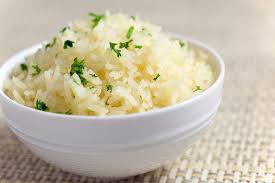
Scientists have discovered a simple way to cook rice that dramatically cuts the calories

That is a dramatic headline from the Washington Post yesterday and the gist of the article is that if you toast rice in butter or coconut oil before you cook it, or if you put butter in it after cooking it, the fats in the starches keep your body from processing the starches immediately. One of the problems with eating rice is that the immediate introduction of glucose from simple starch causes a high insulin reaction, which puts most of that glucose into fat, so as to keep your blood sugar within normal limits. Finding out a way to eat rice and not cause the wild oscillations in blood sugar and insulin reactions is actually very good news.

An undergraduate student at the College of Chemical Sciences in Sri Lanka and his mentor have been tinkering with a new way to cook rice that can reduce its calories by as much as 50 percent and even offer a few other added health benefits. The ingenious method, which at its core is just a simple manipulation of chemistry, involves only a couple easy steps in practice.

By easy, they mean that you only have to cook it like you do sometimes anyway. Here in the US, sometimes, a recipe calls for you to melt a tablespoon of butter, sauté your rice in butter, then cook it normally. That’s the discovery. When you do that, you have processed this starchy food in such a way as to limit the starch hit that your system will take eating rice.

If this works this way, then it also undoubtedly works for other starchy foods. When I boil pasta I put oil in the water. After I drain the pasta I put oil on it to keep the noodles from fusing together. This oil should moderate the uptake of the starches just like it would for rice.

There is one distinction, though…you let the starch cool with the oil:

 by adding a lipid (coconut oil in this case, because it’s widely used in Sri Lanka) ahead of cooking the rice, and then cooling the rice immediately after it was done, they were able to drastically change its composition—and for the better.

“The oil interacts with the starch in rice and changes its architecture,” said James. “Chilling the rice then helps foster the conversion of starches. The result is a healthier serving, even when you heat it back up.”

I love this news. I want to be able to eat starchy foods and knowing that there is a way to limit its effects on my body chemistry. I will cook my rice in my rice cooker with butter, or with coconut oil, or with bacon grease…as long as there is a fat in there to help it out, I will let it cool and reheat it at mealtime. It’s a small change, it makes a big difference.

Also note that this change only occurs in the presence of fats. This is yet another implication of the negative effects of lowering the amount of fats in your diet. Not only do you force yourself to eat more carbs so that you get the energy that your body needs, but without the moderating effects of fats your body uptakes those carbs quicker, to a negative degree!

EVERYTHING MATTERS.

Posted in Health, Living | Tagged , , , , , | Leave a comment

Pay The Minimum

Living in a dirt-floored hut with no running water or toilet facilities…no bed to sleep on…no pay for months until the boss says the job is done…necessities for sale a the company store for many times their street value to keep workers in debt. This sounds like turn of the century labor practices at coal mines or factories in US industries. I am actually describing modern-day conditions for migrant farmers who work the fruit and vegetable fields in Baja California, 200 miles south of California. Now they are on strike.

In addition to the work stoppage, striking workers shut down 55 miles of the Trans-Peninsular Highway, a key thoroughfare for moving goods from Baja California to points north, the Mexico City newspaper La Jornada (in Spanish) reported after the strike started on March 17.

Produce is rotting in the warehouses and fields. Trucks are being waylaid and commerce is suffering. The price for US consumers for ‘fresh’ vegetables from foods that originate a half continent away may rise, there may be shortages of produce. Fact is the ranchers and plantation owners of these Mexican companies will do whatever is required of them by the US buyer. If we insist on fair pay and conditions for workers that produce our foods then it will be provided. If, instead, we insist that this produce be cheaper than humanly possible, then the conditions will be inhumane. If the only thing we consider is price and profit margins then you end up with babies in the fields, near-slavery and economic imprisonment. One thing that I know for certain. If I go to the farmer’s market on the weekend and buy produce from the farmer, I am not supporting any of these conditions. I may pay more for what I purchase, even though it wasn’t freighted three thousand miles to reach me, but the food and the farmer have benefited from my attention. If you want to know more about this issue, you can rent or purchase this documentary,  “Food Chains”. If you are just starting to move away from eating processed foods, sweets and fast foods, it’s still better to get your vegetables at the store than to not get vegetables because the conditions under which they are produced are immoral. The important thing, if you are just changing one small thing at a time is to successfully change before you move on to the next small change. By all means eat fruits and vegetables from your grocer instead of boxed, bagged, and bottled artificial foods. When you are ready, join us at the farmer’s market to get even better vegetables and meats.

Posted in Health, Living | Tagged , , , , , , , | Leave a comment

Profit Motivates

Before 2013 obesity was a description. In 2013 the AMA voted to consider it a disease instead. The reason that they did it, of course, is that thirty percent of Americans are obese and doctors across the nation wanted to be able to bill your insurance for talking about it. Now that it’s a disease, it’s a new revenue stream. Why should only the Dean Ornishes of the world get to cash in on the ballooning waistline of the US?

Back in 1997 the AMA also voted to lower the cutoff for people being overweight from a BMI of 28 to 25 . This made a whole lot more people overweight. A very large number of new customers.

This would actually be good news, if the doctors of America had something new to add to the fight against fat, but, alas, they do not. They are going to get busy dreaming up better ways to make your stomach smaller, or ways to wire your mouth shut, or pills that will make your food pass through you without dissolving. Who knows what kinds of methods they will come up with to let you keep eating exactly what you are eating right now. The idea for US medicine tends towards maintaining your illness rather than curing it, especially for things like diabetes, obesity, high blood pressure and ‘cholesterol’.

The basis for the advice the average doctor is going to give you will be based on ‘energy in, energy out’, which is not really why people gain weight. It is possible to lose weight if you starve yourself, but you cannot live your whole life starving yourself. A person never really gets used to that. Once you start eating like you used to you are going to gain weight like you used to. The problem is not how much, but what.

Until the medical community regains it’s senses and starts to advise that people who gain weight when they eat carbs to stop eating carbs, like they used to, the business of dispensing treatments for obesity will be the ATM that never stops dispensing. Until science definitively  figures out why some people can eat a thing and not gain weight, while another person can eat the same thing and put on pounds, we are going to be stuck on a continuous loop of fasting and gaining. Until the medical community gets the stones to speak up against the food industry and blame processed foods for food illnesses we will just be treating and managing symptoms of the problem. The cause is the food, the solution is to stop eating it.

If we take the profit out of processed foods they will quit making them for us. If we eat real local foods they will quit shipping imitation foods. If we stop participating in the failed system, the system will change to be what we want and need. If your doctor says ‘eat less’ get a new doctor. If your doctor says ‘get surgery’, get a new doctor. If your doctor doesn’t advise you that eating sweets and starches is making you fatter then he doesn’t know as much as he should. You should look around for a more informed medical professional, or just begin treating yourself.

Stop eating processed foods–nothing from a box, bag or bottle. Drink water, unsweetened tea and coffee only. Eat real meat that comes from a real farm, nothing that was confined and just fed whatever feed was cheapest. You will cure yourself without pills, surgery, or starvation. Thank me later.

Posted in Health, Living | Tagged , , , , | Leave a comment

“Doctor”

“Doctor” Dean Ornish. Today in the New York Times he said over and over that the way that I go about losing weight, not gaining weight and staying out of the roles of the obese and unhealthy is completely wrong. Who is Dean Ornish and why does he get to write an op-ed in the NYT?

Although Ornish is an internist with no research training, he became famous because in the 1990s, he was one of the first people ever to publish evidence apparently demonstrating the benefits of a diet low in fat. Ornish’s studies have been among the most highly cited papers in nutrition history , and he claims that his program, which involves not just diet, but also aerobic exercise, yoga, and meditation, is the only one ever to demonstrate an actual reversal of heart disease. Teicholz, Nina (2014-05-13). The Big Fat Surprise: Why Butter, Meat and Cheese Belong in a Healthy Diet (Kindle Locations 2478-2482). Simon & Schuster. Kindle Edition.

As a general rule, performing a scientific study that is the ‘only one ever’ do do a thing is impressive. Impressive that is, if the results can be independently verified. In the last 20 years has that happened for the Ornish diet?

Yet Ornish’s study, like so many in nutrition research, is troublesome. Twenty-one patients is not a lot, nor did all of them make it through the full five years of follow-up. V And importantly, Ornish’s study has never been successfully replicated by independent researchers, the hallmark of credibility in “hard” sciences. Teicholz, Nina (2014-05-13). The Big Fat Surprise: Why Butter, Meat and Cheese Belong in a Healthy Diet (Kindle Locations 2493-2496). Simon & Schuster. Kindle Edition.

The ‘hallmark study’ included 21 heart patients. Not all of them completed the five year follow-through. The studies findings have not been duplicated in the subsequent twenty five years. Impressive indeed. Ornish is still banging that drum, though, or should I say playing that pipe, as in Pied Piper. Back then he cited the effects of the Ornish diet for heart patients as yielding improvement of ‘two and a half times less’ cardiac events in the five year followup. Given that his study was of 21 people, that could have meant two cardiac events in the study group compared to five in the control. While it’s a significant percentage, it’s hardly anything significant in actual practice, and could hardly be used to launch a series of popular diet books. However, it did launch a series of diet books in the 80s. It launched a low-fat craze that we are still suffering through. Despite the best efforts of the food industry to meet the demand for low fat foods, despite everyone’s best effort to eat more fruits and vegetables, we are at the peak of a tsunami of overweight, obese and diet related illness waves. Here is what he says about his un-reproduceable study (singular) in the op-ed:

We showed in randomized, controlled trials that these diet and lifestyle changes can reverse the progression of even severe coronary heart disease. Episodes of chest pain decreased by 91 percent after only a few weeks. After five years there were 2.5 times fewer cardiac events. Blood flow to the heart improved by over 300 percent.

The study showed that heart health improved if the patient did yoga, ate vegetables, reduced fat intake. Since then (1983) the benefit claims morphed into weight control claims, as well. Dr Ornish would like to see us redouble our efforts to eat even less fat, eat even more vegetables, we would all lose weight IF WE ONLY TRIED HARDER. It’s all of our fault that we can’t sufficiently follow his perfectly sound advice. He knows it works because it ought to work, it worked for him, one time, for 21 heart patients in California. It has never worked since for anyone else, but that can be blamed on the people being studied. They did not believe hard enough,  they did not try hard enough, they cheated and were lazy and we not convinced that it would work. It can’t have been the advice, because it worked once. Here is his advice:

The more people adhered to these recommendations (including reducing the amount of fat and cholesterol they consumed), the more improvement we measured — at any age. But for reversing disease, a whole-foods, plant-based diet seems to be necessary.

I can accept the advice to eat real food. I can accept the advice to live a more stress-free life. I just cannot accept the admonition that two out of three Americans are currently over weight because we eat too much fat, still. To me it makes perfect sense that we are fat because we eat carbs. I was fat. I stopped drinking beer, drinking soda and eating processed foods and now I am not fat. This last month I quit eating ANYTHING BUT MEAT. I lived to tell the tale. Not only have I survived, I have thrived. Had I needed to lose weight I am certain that I would have this month…why am I certain? Because the last time I went from eating a high percentage of carbs to practically none I lost a lot of weight. This time, I went from eating next to no carbs to eating no carbs. I am not recommending that anyone out there reading my words go right out and do what I have done. I do recommend that you stop eating sugar, stop eating processed foods and start eating real foods. I also recommend that a person that is selling books, and his name has “doctor” prominently displayed should be treated just as you would treat a health claim on a food label.

Posted in Health | 1 Comment

The Problem Is Not In Your Jeans

Unknown-2

Not a Poor Man

Lots of people have diabetes and are just finding out about it, thanks to the new health care insurance law taking effect. I guess that is a good thing, if you have it you should know about it. It’s a shame that what they will get is some good advice “lose weight”, but the advice they get about how to lose weight “exercise and eat less calories” will only work for one out of ten people who get that advice. Todays NY Times has an article about the increase in diagnosis of type 2 diabetes in States that have expanded their Medicaid roles in accordance with the Affordable Care Act:

The number of new diabetes cases identified among poor Americans has surged in states that have embraced the Affordable Care Act, but not in those that have not, a new study has found, suggesting that the health care law may be helping thousands of people get earlier treatment for one of this country’s costliest medical conditions.

It has long been estimated that a great number of Americans has type 2 diabetes and doesn’t yet realize it. Two thirds of us are overweight, and being overweight is a symptom of diabetes. Being obese is almost a one hundred percent certainty that diabetes is also present.

One in 10 Americans have diabetes, and nearly a third of cases have not been diagnosed. The disease takes a toll if it is caught too late, eventually causing heart attacks, blindnesskidney failure and leg and foot amputations. The Centers for Disease Control and Prevention estimates that the disease accounts for $176 billion in medical costs annually. The poor and minorities are disproportionately affected.

Being poor is a precursor to diabetes, it seems, but it’s not a prerequisite for it. That is likely to be because the poor get most of their calories every day from highly processed foods. Inexpensive foods tend to be made from inexpensive ingredients. Inexpensive ingredients are those that are produced with the help of farming subsidies–corn, soy, and wheat. Corn and soy are typically genetically modified so that they can resist the poisonous effects of Monsanto’s Roundup herbicide. This herbicide kills every living thing on the field except for the GMO crops. Some of the things it kills in the soil may be responsible for the nutritional value of the crops. We don’t know. They don’t know either. You are what you eat, you are what your food ate, which included plants. The food chain doesn’t start with plants, they have to eat, too. Eating sugar and starches for most of your calories keeps your blood sugar and insulin levels unnaturally elevated. High insulin leads to insulin resistance, which requires more insulin to do the same work. Eventually your body can’t produce enough insulin for the sugar in your blood–this is diabetes.

The number of Americans with diabetes more than tripled from 1990 to 2010, according to federal data. Nearly all the increase came from Type 2 diabetes, which is often related to obesity and is the more common form of the disease.

We are well on the way to “one out of three Americans has type 2 diabetes.” I predict that headline in the New York Times in my lifetime, unless something changes. What will have to change is the dietary advice found in places like the NY Times. Right now, this is the kind of thing we read when they discuss the explosion of type 2 diabetes in the US:

Dr. David M. Nathan, director of the Diabetes Center at Massachusetts General Hospital, said earlier detection — particularly among the poor, who are more likely to have the disease without knowing it — is the first step in preventing some of the most severe long-term consequences and saving dollars and lives.

“The first step” is earlier detection of diabetes. The actual first step to prevent diabetes related health complications is effective diet advice to prevent diabetes in the first place. Advise people to eat enough to not get hungry, but don’t eat anything that makes them fat:carbs. The best first step would be to prevent the overweight condition in a manner that actually has a chance to do it. A doctor that tells an obese patient that they should lose some weight, perhaps they should eat less or exercise more, is an idiot. What person can give that kind of advice to another human being, as though it had never occurred to the obese to diet or exercise more. Do they hope that a white lab coat has the power to impose willpower on the slothful and corpulent patient? Why does it not occur to the doctor that perhaps the fault is not in the patient, but in the advice? How on Earth could an educated professional give the same advice over and over, only to see it fail each and every time and then always blame the victim!

I have, for the last three weeks eaten nothing but meat, except for one day where that just wasn’t possible for me–yesterday.  In all that time, as you can read in all of my March 2015 entries, I have had minimal adjustment symptoms. I had a couple of days that required that I adjust my fluid intake to match the requirements of a ketone-based energy usage system for my brain and muscles. I had a couple of sleepless nights due to dehydration. I never once felt like my mind was bogged down due to lack of energy. Bear in mind that the beef I eat are not fed the GMO corn grown for the express purpose of feeding cattle cheaply. The pork I eat was not grown in confinement and fed corn and soy to save money. The chicken I eat was not fed corn and dead chickens, sub-therapeutic doses of antibiotics, and growth hormones. Even so, despite the extra expense of my choice of food, my diet compares favorably in expense to the cheapest and easiest fare available to the average consumer. The fact is that I just don’t eat as much food as the person eating the Western diet. I am not hungry as often as you are. Two eggs and a slice of ham in the morning. Eight ounces of meat for lunch. A pound of meat at dinner, at most, but typically not. Nothing but water and morning coffee to drink all day. It’s a very inexpensive way to live, even though I spare no expense on the choice of meat.

I pay five dollars per pound for pastured pork. I pay less than that for grass fed beef. Knowing that and just assuming five dollars per pound for all meats that I eat, I spend fifty cents on breakfast. I spend 2.50 on lunch and five dollars on dinner. That is eight dollars per day to feed a grown man every day. That is as expensive as it gets. That is eating beef steak for dinner. A poor person could easily eat less expensive meat, so as to lose weight for a period of weeks or months and pay one third what I am paying, or just five or six dollars per day. The damaging effects of sweets and carbs and the elevated insulin that they cause would be far worse over time than any imaginable effects of eating mostly meat. The average overweight person could expect to lose a great deal of weight eating like I did this month.

I am not losing weight at any quick rate, but I don’t need to lose weight anyway. I am already at a good weight for my size. My intention for just eating meat was never to lose weight. I intend to show that just eating meat is not dangerous. My intention is to show YOU that there is a safer, easier way to lose weight. Avoid hunger.

Posted in Health | Tagged , , , , , , | Leave a comment