Local Beef Bottleneck

I love eating meat that lived well and died happy. In my opinion, the most critical thing in my diet is my quality supply of meat. If food animals live on the diet that they prefer, not the diet that is controlled by the price of grain, soy this week, corn next, depending on which is cheaper, then their meat is more nutritious than the alternative, grain finished. More and more people are jumping on my bandwagon.

band-wagon

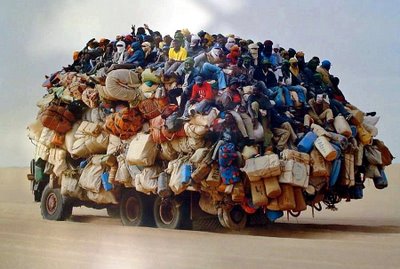
Unfortunately the more crowded the bandwagon gets, the more apparent the bottleneck will be, the processing of small-farm meats. If I order a hog from my farmer-friends, they have to get an appointment with the meat locker to process it, and that can be two or three months in the future due to the limited capacity to slaughter and process the growing number of animals. Can the market respond? According to the New York Times:

Slaughter has long been a bottleneck for the tiny grass-fed beef business, which accounts for about half a percent of the retail beef sold, according to data compiled by the National Cattlemen’s Beef Association.

“The grass-fed industry is growing so fast, but it’s still just so young,” said Nina Biensen, who writes the grass-fed beef market report for the Agriculture Department. “And it’s having some very serious growing pains. Slaughter is certainly a big one.”

So grass-fed ranchers sometimes have to ship cattle hundreds of miles, a costly move that is stressful for both the animals and the people who raised them.

I want everyone I know to eat meat from a local farmer, processed at a local processor. I want this business model to kill the one used by Tyson and Cargill. Processing meats leads to a great deal of animal parts that are not your customary food faire. What do you do with all the hides, brains, lungs and other unmentionables? In the not too distant past these items were quickly prepared into sausages and force-meats, cooked quickly because they were difficult to preserve any other way, and too nutritious to just discard.

Preparing food and harvesting animals used to be community work. The labor and rewards were shared, the distance from soil to table was just a few miles at most. The veil that has been drawn between us and our food’s ultimate sources, between us and the harvesting and treatment of our life-sustaining animals has served to allow nefarious practices to take hold in the name of profit. It would serve us well to quit contributing to that system of production. Don’t bother asking them to change, make them change by shopping their most expensive competition. If you prove that money isn’t the most important factor, then it will cease to be the most important factor.

It used to be that the only beer bought was cheap American beer, so it just got cheaper and cheaper to make and buy. When we found out that more expensive beer tasted better, and started paying more for better, then suddenly the big beer makers are interested in giving us better beers. If we had never bought Blue Moon or Guinness, and stuck with ‘value’ beers, all we would have would be horrible ‘value’ beers. If nobody ever bought an iPhone because it cost more, there wouldn’t be a smart phone on the market yet.

If all I cared about was money I wouldn’t tell you all to buy the same kind of meat I do. I would keep it to myself, keep the market little and just as expensive as it is right now. I’m just not that kind of guy. Jump on the bandwagon, it’ll never fill up, it’ll just get bigger and bigger. There is room for all of you.

Posted in Health, Living | Tagged , , , , | Leave a comment

Case Closed on Gluten Sensitivity…perhaps…

Lets go straight to Mother Jones for one of my favorite topics, “gluten sensitivity”… I love picking on gluten sensitivity because despite all the hype and the loads of ‘gluten-free’ foods that have been recently dumped on the shelves everywhere from your neighborhood Quick Trip to your Whole Foods Stores, the chances that you, personally, are “gluten-sensitive” are less than one in one hundred:

…nonceliac wheat sensitivity affects less than 1 percent of people…

That means that there is a REALLY good chance that you don’t have a problem with gluten. It doesn’t mean that you don’t have a problem, but it’s not probably gluten, which then means that your purchase of expensive “gluten-free” products is not going to be a solution to whatever issue you are trying to avoid. What might that issue be?

Wheat allergy, maybe? Probably not, that condition affects two tenths of a percent of people. If you are not tolerating your foods, chances are that the problem you are having is an added ingredient. It may be some of the extra gluten that bread makers put in breads so that they have better texture. It may be some other ‘tweak’ that a processed food maker adds to make his product cheaper or immune to decay on the shelf. Chances are, if you eliminate processed foods from your diet you will get whatever the culprit is out of your menu.

Try making your own bread from flour that you grind yourself from wheat. If that sounds too hard, and it would be time consuming and take quite a bit of prior planning and work, then just quit buying processed foods. Gluten-free foods join the list of “-free” foods that should be avoided because there is no substitute for real. Take a vital component out like fat or sugar and you must put in a mysterious artificial component. Take out gluten and you probably have to put in ten scientific creations to make the product anything like the original. They are finding this out these days about saturated fats. Years ago they replaced animal fats, like lard, with vegetable shortening, a science lab creation. Turns out that shortening contained Trans-Fats (partially hydrogenated vegetable oils) which lead directly to heart disease, so they are now out of the picture. Now food scientists are trying to produce products that you will not notice are different, while containing no saturated fats or partially hydrogenated fats of any kind.

Yet without a hard fat, as we’ve seen, it’s nearly impossible to make most processed food products. When Marie Callender tried using liquid soybean oil in its frozen dinners, for instance, the oil puddled under the roasted potatoes and caused the sauce to slip right off the meat, leaving it barren and dry. “It wasn’t very appealing ,” said Pat Verduin, senior vice president for product quality and development at ConAgra. Hard fats are needed for structure, texture, and longevity. For cooking and baking, a hard fat is essential.

Teicholz, Nina (2014-05-13). The Big Fat Surprise: Why Butter, Meat and Cheese Belong in a Healthy Diet (Kindle Locations 4715-4718). Simon & Schuster. Kindle Edition.

You had better believe that food science is on the case, trying to come up with a solid fat that is not going to be classified as a trans fat, and it will be in your foods until science has time to prove that it is deadly! I just eat good old lard. If I bake, it will be with good old lard. When I cook my eggs, it’s with good old lard. Lard is not dangerous, unless you try to swim in it. Franken-foods are more dangerous than real foods. Not every fake ingredient will be bad for me, personally, but nobody is looking for which ones are bad in the long run.

According to Mother Jones, they are figuring out some of the nutrients in processed foods that are causing many of us problems. One is fructan….

According to the researchers, most of us can tolerate gluten. But we have more trouble with another component of wheat called fructans, assemblages of fructose molecules that typically behave like dietary fiber—they’re “generally beneficial for most individuals by promoting the growth of healthy gut probiotics, improving stool frequency, and adding fecal bulk,” the authors note. But the authors point to emerging research suggesting that fructans are one of a group of carbs called FODMAPs (short for “fermentable oligosaccharides, disaccharides, monosaccharides, and polyols”) that for some people cause “unexplained bloating, belching, distension, gas, abdominal pain, or diarrhea,” as a recent paper by Georgia Regents University researchers put it.

Does “unexplained bloating, belching, distension, gas, abdominal pain, or diarrhea” sound like what you were looking to cure from your “gluten-free” foods? Well, in the future I predict that there will be “fructan-free” foods, just as soon as the health food stores can get them invented. Flock to those when you see them–except there is this….

 “Fructans are also found in 15 percent of all flowering plants, including artichoke, banana, broccoli, garlic, leek bulb, melon, onions, white peach, and rye,” the authors report”

Hmm. Think they can invent a ‘fructan-free’ GMO melon? Or, this could be your issue….

 …fructose malabsorption, which could afflict as much as 38 percent of the population, though the authors note that no large-scale epidemiological studies have been done to firmly establish how common it is. People with fructose malabsorption can’t absorb the free fructose present in the digestive tract, and the “unabsorbed fructose undergoes bacterial fermentation and induces abdominal symptoms, such as pain, bloating, and altered bowel habit,” the authors report. They note that irritable bowel syndrome, fructose malabsorption, and nonceliac wheat sensitivity “share a broad array of symptoms” and that “misdiagnosis is common” among them.

The BEST solution to all of these problems is to get over the idea that you need to eat something with carbohydrate in it every day. You do not. You also don’t need to eat fruit or vegetable every day, not to get some special nutrient contained in it. If your meat supply is from a naturally raised source, if your meats eat their preferred diet, you will get all of their good nutrition passed up the food chain to you. My meats have no fructans in them. My meats contain not artificial ingredients. My meats are sugar free, gluten free, fructose free. The only thing they are not is fat-free, but the fats they contain are mostly the same fat that is in olive oil and saturated fat, but the most healthful kind known to man.

Now for the daily Journal update….Feeling much better this morning. In case you were wondering, the fix for what ailed me the last couple of nights was more water during the day to prevent dehydration. When you quit eating carbs to the level that I have, approximately zero, your body casts off a great deal of water that it no longer needs that it used to carry glucose around in your blood. All of that water can carry off nutrients, it can cause cramping and discomfort. That is what I was experiencing, and it wasn’t so noticeable during the day as it was in the quiet of bed. Last night I fell fast asleep right away and slept comfortably for the night. I needed that.

Yesterday I also ate more food, just to be on the safe side. I ate cheeses between breakfast and lunch and between lunch and dinner. At dinner I ate some spinach with my shrimp, so that my bowels would have something to play with. I am not stopped up but I don’t want to be, either. I feel as if I have rounded the corner of the transition to this diet, and now I can just start tallying the positives.

Posted in Health, Living | Tagged , , , , , , , , | Leave a comment

Gotta Eat It All

If you are contemplating eating only meat for a living, you have to come to terms with the fact that you will be eating from the entire animal, not just the pieces you are used to eating. Primary muscles may or may not have enough fat in them for your nutritional needs. Different parts of the animal have essential nutrients that you need also, so you will be eating things that you are not used to even looking for at the store.

Ever heard of offal? Here is the Wikipedia definition, “Offal /ˈɒfəl/,[1] also called variety meats or organ meats, refers to the internal organs and entrails of a butchered animal. The word does not refer to a particular list of edible organs, which varies by culture and region, but includes most internal organs excluding muscle and bone. As an English mass noun, the term “offal” has no plural form. Some cultures shy away from offal as food, while others use it as everyday food, or in delicacies.”

Unknown-1

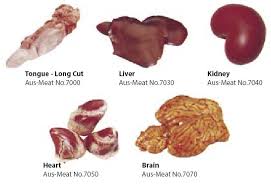
Brains, heart, tongue, liver, kidneys, intestines are all offal. Hardly ever discarded in ancient times, these parts were eaten immediately after slaughter, because they do not preserve well. Meat can be salted or cured. Slaughtering and then cooking the sausages and treats from the animal’s blood and internal organs were community events, ensuring that nothing was wasted before the age of refrigeration.

I am conducting an experiment that only allows me to eat meats for the entire month of March. So far in this effort I have proven to myself that hunger is not a problem, no matter how little you eat, measured in calories. I also have determined that a person must drink a quart of liquid in order to keep the excess ketones that are produced flowing out of the body. Don’t want those ketones to accumulate, or an acid is formed if the concentration gets too high.

The issue I have now is how does one know that they are starving their body without periodic hunger to tell you when to eat? If I eat a small breakfast and a small lunch then how large does my dinner have to be to make sure that I have eaten enough for the day? The fact is that I really have no idea yet if I am eating enough. I also fear that the variety of meat sources is not high enough. I have a pound of braunschweiger that I purchased at the meat locker. Braunschweiger is made of pork liver, typically, and is a gateway meat to eating offal. I think that eating offal from time to time will be required to ensure that I am getting the nutrients passed on to me that are stored all over a living body.

For the last two nights I have experienced a feeling like strained muscles in bed. I guess that I feel it right now too, but since I am up and active its not a distraction. Laying in bed at night its a feeling of discomfort, and I toss and turn. I took tylenol and drank a big glass of water and after doing so I felt better and slept comfortably. It’s still on my mind though and this morning I was all over the internet looking for things that describe what I am feeling. I think I found it on wikipedia.

A diet very low in starches and sugars induces several adaptive responses. Low blood glucose causes the pancreas to produce glucagon, which stimulates the liver to convert stored glycogen into glucose and release it into the blood. When liver glycogen stores are exhausted, the body starts using fatty acids instead of glucose…By using fatty acids and ketones as energy sources, supplemented by conversion of proteins to glucose (gluconeogenesis), the body can maintain normal levels of blood glucose without dietary carbohydrates…In the first week or two of a low-carbohydrate diet, much of the weight loss comes from eliminating water retained in the body. The presence of insulin in the blood fosters the formation of glycogen stores in the body, and glycogen is bound with water, which is released when insulin and blood sugar drop. A ketogenic diet is known to cause dehydration as an early, temporary side-effect.

I am still in the body chemistry transition period. My aches are due to water release at the beginning of the diet, which can temporarily lower the nutrients contained in me. I am once again convinced that I am not putting myself in danger of permanent injury, but I have to redouble my dedication to drink enough water during the day, and I have to make sure that I eat enough food, now that I do not have the prompt to eat that hunger provides. Being able to eat less without constant hunger sounds good on paper, and its true that you can eat very little food and not suffer constant hunger. The downside to this is that without hunger to tell you how much to eat, it’s possible to not eat enough. Today I am going to eat ‘enough’, and I am going to be sure that I eat enough. Tomorrow I am going to start eating ‘offal’, in the form of braunschweiger, so that I am certain that I am getting all of the nutrients available in my food animals.

Last night I was a little bit anxious, today I am reassured. I promised to keep a truthful journal so that you will know what to expect if you go on an all-meat diet. I am also keeping this journal so that I can look back on in and refresh my memory down the road. In the coming weeks we will keep learning together. In the meantime, you should quit eating processed foods. Drink no more sweetened drinks, diet or sugar. If you are ready stop eating so many carbs, and don’t juice your fruits and vegetables, since that changes the speed at which your body takes up the sugars in them.

Posted in Health, Living | Tagged , , , , , , , , , | Leave a comment

Ribs, Ribs, Ribs

PKDU

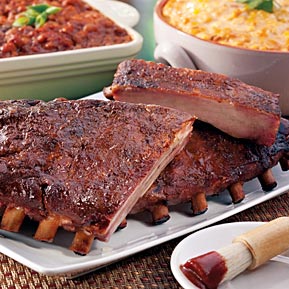
Nothing is better than a daily diet that includes pork ribs. Kansas City has a couple of the best rib joints in the world. Conveniently for me the best rib joint in a thousand miles is close by, Jack Stack. Yesterday I had a couple of extra hours off work and we decided to go out and eat. Being on a meat only regimen for March it makes selecting someplace a bit of a challenge. I had to choose between ribs or steak. What a choice, right? The steak place we would have went to was Anton’s where the beef is all grass fed and the cuts are huge. A bone-in ribeye there will feed two adult diners two times.

Ribs are a great choice for a meal because they come with a lot of flavor, and a lot of lip-smacking good fats. Jack Stack ribs come with just the right amount of salt, and the barbecue sauce is on the side. That means no added sugars. I ate more than my fill, my sweetie ate her fill, and there is enough left over for a lunch or two for me at work. It cost way more than my normal $3.50 per day for nourishment, but it’s not about the money, its about getting quality meats, done right.

I am feeling pretty doggone good this morning. My body is really adjusting to the new fuel supply. Yesterday my hands and legs were tingling and I had a bit of restless leg going on, I jiggled all day long. I was a bit run-down, yawning a lot. I made sure to drink lots of water, and I urinated quite a bit. This morning I was down another half a pound. It’s all water. Remember, I am not trying to lose weight, I am trying to see if a person can eat meats and fewer calories than normal and not feel nagging hunger all day. That is already proven true, and I am doing it for a month to see if there are any issues with doing it longer-term.

The thing is, that I already know what I am doing is possible, and that there won’t be any ill effects. I have read enough in the last few months to know that what everyone else is eating is way more of a problem than what I am eating. However, there is a big difference between reading about someone else’s experience and finding out for yourself what works and what doesn’t.

I don’t even know if what I am doing would work for you. From what I read, some of the obese are difficult to get onto a carb-free diet because their addictive cravings for carbs are much stronger than mine were. You see, just like with cigarettes, there are two different things going on with carbs. One addiction is to the chemical, carbohydrate, and the other addiction is one of physical habit, like the cigarette after dinner. You actually have to break both habits at once. There are so many triggers, like dinner is over and you are watching TV, now is the time you would go get an ice cream sandwich. You will still get that thought when the trigger is right. The popcorn at the movies will call to you, not because of a craving, but because of a trigger.

I have no trouble setting in a room with people eating chips, drinking soda pop, and having sweet desserts. That is not a trigger for me any more. However, I do look at this box of Girl Scout cookies on my desk and look forward to the moment when I can have one. See, that is a trigger. I know that I will eat carbs again, next month. I am not a high priest of no-carb that thinks that eating a bite of something is going to be a sin. There is no sin in food. Eating carbs next month won’t be dangerous. Carbs are a poison, but only a poison of accumulation. The dose I get of carbohydrate is an accumulation of exposures over time. Right now I am cleaning my body of their effects, so that when I do eat them my body does not overreact to them, storing more fat than necessary at every dose.

As of right now, I think it is very possible to live on a meat only diet, if the meats are of sufficient quality to pass on the good nutritional habits of the animal on to me. There is plenty of meat available to satisfy my hunger, since it doesn’t take much meat to do that. I miss side dishes because of the variety of flavors more than anything, but if I can find some great old recipes for meats then maybe I can have all the variety that my mind thinks I need without having to resort to eating the foods that my food eats. Only time will tell, and of course when time tells me, I will tell you.

Posted in Health | Tagged , , , , , , , , | 3 Comments

Things Are Getting Better All The Time

Nestle and Hershey are going to quit using artificial ingredients in their chocolates. Read about that here. Processed food makers are reporting slowing or negative growth, perhaps because people are eating more and more real food. I hope it’s not because people don’t have enough money to eat. California is calling for warning labels on sweetened drinks. Minimum wages are going up across the country, without any help from the Federal government, which will help people be able to purchase higher quality food and escape from processed foods. School districts are demanding chicken grown without using antibiotics, joining McDonalds in this demand. Kellogg is having a whale of a time adapting to the changing times.

The current experiment I am conducting, eating nothing but meat for the month of March, will not allow me to eat any cereals, grains, vegetables or fruits. This will be my fifth day doing it. But I have no desire to do anything different. By that, I mean that even when I am around other people that are eating starches, like spaghetti, or treats, like ice cream cones, I don’t find myself wishing I were doing something else.

Yesterday when I got home for dinner we had guests over to eat with us. We served spaghetti and meatballs, garlic toast, and basil pesto to dip the toast in. The pesto is the only reason I wished I could eat some toast. I didn’t miss the bread at all except as a pesto delivery vehicle. I ate meatballs on a bed of spinach, which was really very satisfying. After dinner there was an ice cream snack that I watched the kids eat, but I had no desire to have one myself.

We talked about diet and carbohydrates, we talked about the books I have been reading. There were questions about eating a lot of red meat, whether that is bad for your health, (its not), about vitamins and getting enough nutrients without vegetables (its possible), we talked about whether other people less fortunate than I am can afford to eat just meats.

If people knew how little meat and fat you can eat and have that satisfy your hunger, they would know that it doesn’t take much to live. I literally eat two eggs, a slice of ham, a half pound of breakfast sausage and, on my expensive day, a twelve ounce KC Strip steak, and that is food for a grown man for a day. I am not dying of hunger all day and night doing this. I only feel hunger after about six hours between meals, during the day, nothing like that at night. That’s 25 cents worth of eggs, 25 cents worth of ham, one dollar for the sausage and three dollars for the steak. Four dollars and fifty cents per day is all I am spending on food, worst case. Yesterday’s meatballs cost a lot less than the three dollars for a steak. But if you assume the worst case and assumed that I ate it for thirty days (and I just might) then one person costs $135 to feed. Can a person really eat for less than that at Quick Trip? If they do, what must they be getting, instead of food?

One thing that comes up all of the time in discussions of ‘radical’ diets like the experimental one that I am on this month, is sustainability. Since it is hard to find a restaurant where you can be sure the meat is up to the high quality standards demanded by having meat be the only source of nutrients for an extended period of time, your opportunities to dine out become very limited. If you want variety in your diet, you have to do a lot of research to find out how people ate way way back in the day. I have found a couple of places where people wrote down what they cooked and how, but it is like reading a foreign language. Lots of old kitchen words didn’t make it to modern english. They did eat mostly meats, though, because back then you only got vegetables when they were fresh, in season. Without world-wide commerce and refrigeration it would be difficult to get lettuce year round.

I guess if I made processed food or artificial ingredients I would not think things were getting better, but maybe those companies and people can sell those things to poor countries to keep their jobs, like the cigarette companies did. I am glad my friends and neighbors are waking up to the difference between local quality and inexpensive low quality foods. It may drive my price per month up if more people start eating like I do, but two times $135 is still not a ridiculous number. I never thought I would be able to afford four dollar a gallon gas, but I did when I had to.

By the way, I have lost one pound of weight, as of this morning. I won’t lose the five pounds per month that someone else might, because I was not a heavy Carb eater before, so the difference will not be so stark. I am not doing this to lose weight, I am doing it to see if I can eat significantly less calories and not be hungry for it. I think I can say that, since I am eating 1350 calories per day, instead of my usual 2000, which is over a 30% reduction in calories, and I am only hungry if I go for more than six hours between meals, that it’s true that if you just eat quality meats you will not experience nagging hunger. It is possible to lose weight on an all meat diet without suffering the entire time. I am going to continue the experiment to see if I have any other negative effects, but I don’t expect scurvy because you have to be eating carbohydrates to get scurvy. I won’t get any other deficiency diseases because I am getting all of those vitamins in the meats I am eating.

I am happy that I was old enough when the first calls to reduce fats and cholesterol were made. I used to eat without regard for these things. Now that the shrill warnings about them are beginning to be reversed I have no problem trusting that I will be just fine eating all the red meat and saturated fat that I want. That is an advantage over a younger person that was raised at the height of the scare. If you have only heard that eating red meat is BAD and eating fat makes you fat, then you are going to need some convincing that what you have always been told was never proven to be true. These things happen. I don’t have any trouble believing that, through the best of intentions, great harm has been done to the national health in the effort to help the national health. We were the subjects of a huge dietary beta test. Now we know that it’s time for Diet 3.0 because Diet 2.0 is too buggy to save.

images

Posted in Health, Living | Tagged , , , , , , , , | Leave a comment

Ketosis

Every night, if you eat dinner at around 6 and you sleep until about 6, your body utilizes all of the carbohydrates and glucose that are in your bloodstream and it begins to draw down the stored energy in your adipose tissues (body fat). This state is named ketosis and a person whose metabolism is normal will experience this daily, and his or her weight will not go up or down. Here is how Wikipedia describes it:

During the usual overnight fast the body’s metabolism naturally switches into ketosis, and will switch back to glycolysis after a carbohydrate-rich meal. Longer-term ketosis may result from fasting or staying on a low-carbohydrate diet, and deliberately induced ketosis serves as a medical intervention for intractable epilepsy.[6] In glycolysis higher levels of insulin promote storage of body fat and block release of fat from adipose tissues, while in ketosis fat reserves are readily released and consumed.[5][7] For this reason ketosis is sometimes referred to as the body’s “fat burning” mode.[8][9]

ketosis-1

For some people it doesn’t work this way all of the time. Their body chemistry is slightly different and when they eat a meal that includes carbohydrate their insulin response is higher, their pancreas secretes more than required to deal with the carbs (glucose and fructose) that result from eating. Their muscles don’t respond to the signal to accept glucose for energy as quickly as their adipose tissues do to the signal to begin storing glucose as fat. Their blood sugar stays high, their insulin level never quite drops off, they don’t go into ketosis at night. More of their food energy goes into storage sooner, so they get hungry more often, sometimes even in the middle of the night. They gain weight instead of staying at the same weight. Gaining weight in this way has nothing to do with how much you eat or how hard you work, its just basic biochemistry.

I am at the time in my life where if I eat carbs I will ever so slowly gain weight. I am working no harder or easier than I ever have, nothing has changed in the kinds of foods I eat. If I eat carbs I ever so slowly gain weight. I know what to do about it though. I need to put myself in ketosis intentionally, and all day long. The road to ketosis starts at breakfast. Two eggs and a slice of fatty ham are my normal faire. Lunch is a half pound of breakfast sausage, the fatter the better. Dinner is a twelve ounce ribeye steak with a red wine reduction sauce on it. No vegetables, no starches, no sweet drinks are invited to the party. After three days of this I am in ketosis and I know this by using “Ketostix” from Bayer, that I found in the diabetic section of the drug store. It takes three days of no carbs to really see a response in the Ketostix.

In ketosis life is only a little bit different. I don’t really get hungry. I don’t ever experience flatulence or burp. Apparently the microbes in my guts that help me digest meat and fats don’t get flatulence or burp either. There is a slight humming sensation in my hands, when I need to eat something I get a little bit antsy. If I overdo fasting sessions between meals I get hungry sensations but they aren’t like the cravings you get when you are eating carb meals. Those cravings are more like the ones you get when you need a cigarette. You know you don’t really need to eat anything because you just ate an hour ago, but you are ‘hungry’. I don’t get any of that. I also can be around carbs when I am in ketosis and get no desire to eat ‘just one’, which is way different than when I am eating carbs.

Another feature of ketosis is that I can immediately tell if something I eat contains carbohydrate. Yesterday I ate a can of smoked oysters between lunch and coming home. I eat lunch at 11:30 and don’t get home until 6:30 PM, which means dinner is at around 7:30, eight hours after lunch. If lunch is only a half pound of breakfast sausage then I need something to tide me over energy-wise for that long. Yesterday it was oysters, and it never occurred to me to check the label on what I assumed was seafood in a can. As soon as I was done eating them my heart began to pound a little bit, a sign of eating carbs. Having already thrown the box away I couldn’t check, and I didn’t suspect. I thought maybe I was starving myself a little too hard, even though the foods I am eating contain sufficient calories to keep me from starving. I have miscalculated calories before, as I documented in the “21 Day Sugar Detox Journal”, but I checked my foods in the “MyFitnessPal” app and I appeared to be good on calories. I couldn’t figure out why I was feeling poorly.

Last night I went to the grocery to stock up on canned meats and I checked the label of the smoked oysters I had eaten and lo and behold, there are nine grams of carbs in a can of oysters. What! That is two teaspoons of sugar, no wonder I had my sugar reaction, so I wasn’t starving, I was carb’ing. They were not enough carbs to knock me out of ketosis (I checked) but they were enough to give me premature hunger pangs and to make me feel like I had a shot of adrenaline. Weird, right? So today I feel much better, back on the ketosis wagon. Today we are going to be having pizza at work, and I put money in the pot. When I get my slices I will just eat the toppings, no breads. If there are carbs in the sauce I will be eating a small amount of that, because it can’t be helped. I am going to go ahead and eat pizza because the men that I work with will see that I am not living this weird monk-like existence subjecting myself to enforced isolation from a ‘normal’ diet. When they see that just eating meats does not cause any debilitating illness, does not cause any distress, doesn’t make me seem too different, they may follow my example to turn around their age-related weight gain. That is one of my hopes.

Tonight we are having guests and serving spaghetti squash and home made meatballs. I will serve myself like everyone else and just eat the meatballs in sauce. I will have about twelve ounces of them, so that I am sure to get enough fat and protein to meet my needs. I won’t make a fuss about it, I want my guests to feel comfortable and to never question my comfort with dinner. If anyone asks me about it I will share what I am doing and thinking like the good evangelist that I am.

For now I can tell you, after a whole three days without eating anything but meat that I don’t feel any ill effects at all. I have not weighed myself since day one, and if I have lost any weight is from the process of my body chemistry changing to the process of using ketones for energy over glucose. Losing weight through ketosis is a slow steady thing, and would continue until I hit my natural weight and no more. So far what I have read is true; eating just meat and fats has really pretty much stopped any hunger pains of starvation, and put an end to carb food cravings. The carb food cravings might be worse for some people than others, though, so your mileage may vary.

Posted in Health, Living | Tagged , , , , , , , | 2 Comments

GRAS

Someone should be paying attention. You sort of just assume that someone is watching what goes into our foods. Artificial ingredients perform lots of different duties in your processed foods, they would be inedible without them, but are they safe?

images

I am the last person that you will ever hear say that something is unsafe until it has been proven to be safe. My understanding of safety is probably a little bit more nuanced than the average reporter in your big-city newsroom. I learned about safety in the United States Navy, where they taught us that safety wasn’t a yes or no thing, but it was a relative thing. You take radiation for instance, if you expose a shipload of sailors to radiation, and the level of exposure is low, it is relatively safe. It will not be harmless to all of them. One out of a thousand may get affected by it, but the benefit of the service the Navy is performing outweighs the risk that the individual is taking. Increase the exposure and the equation changes. At a point along the scale of possibility more people have a chance of being affected than is worth the service provided. The flip side of this is that you limit the exposure of the population by limiting the number of people exposed.

This is where food safety is different than nuclear safety. When a food additive manufacturer tests his products for safety and doesn’t do so on a large number of test subjects looking for any side effects, then the actual food safety testing is being done when the product is declared safe and the entire population is exposed to it. Like I said, you can’t call all food additives unsafe because their testing is not as thorough as the ideal safety testing program would be. However, you also can’t call them safe without this level of testing in humans. Testing additives like drugs would be expensive, but so is health care when there are side effects. Plus, it is very difficult for the average general practitioner to determine what is causing the average patient trouble, because he would have to examine your entire diet to determine if it is a food interaction.

I can guarantee you that if you eat nothing but processed foods, you are probably having reactions to something in one or more of them. For instance, it is now suspected that a person that drinks diet soft drinks is having a reaction to the artificial sweetener. They interact with the microbes in the gut and cause an insulin resistance reaction, meaning that because of the sweetener, more of the energy in their foods are put into fat storage than normal. This kind of interaction may have been caught if food additives were tested for anything other than acute problems. Artificial sweeteners are not an immediate hazard to life or health, but it turns out that they are a long term hazard. Getting them pulled out of foods will be difficult.

I learned about the holes in the food additive approval system reading “Pandora’s Lunchbox: How Processed Food Took Over the American Meal” by Melanie Warner. If you want to see a video discussing the issue, check out this link...it’s Marion Nestle answering questions in a two minute video that lays out the problems.

When it is all said and done, you are responsible for your own food safety. I am confident in mine, because I only eat real, single-ingredient foods, cooked by me or my wife. There are no artificial ingredients in my pasture raised beef or pork. If you are eating boxed foods, if you are eating fast food, if you are eating stuff out of the refrigerator at Quick Trip, then you are giving the job of keeping you safe to the government, and the kind hearts of the food industry. Go ahead, not me.

Now to change the subject a little bit, yesterday’s meals were meat, meat and more meat. Breakfast was the normal eggs and ham, lunch was a half pound of breakfast sausage, and dinner was a ten ounce Kansas City Strip steak, fried in bacon grease and covered with a red wine reduction. It was very good, and only a little bit before dinner did I feel any hunger, and that is because of the seven hours between lunch and dinner. Overnight I felt no hunger, and not even really as I was cooking my breakfast this morning. I checked my urine for ketones using Ketostix and I am at the low level of ketones, which means that I am using fats for energy, but not excessively so. Tomorrow I expect that level to go up, but during this first week on meats I will lose a lot of water because carbohydrates require water in their conversion to energy, whereas fats do not. So far this test is working very well, I haven’t felt any negative effects yet.

Posted in Health, Living | Tagged , , , , , , , | Leave a comment

Day One Done

So day before yesterday, March 3, I decided that I would only eat meat, eggs and cheese for the rest of the month. Today is the beginning of day two on this ‘unbalanced’ diet. I weighed myself this morning and noted that my weight is 140.2 pounds. I will try and remember to weigh myself at least one time per week, so that we can keep track of any changes there, in case there are any.

I posted about this on Facebook and friends wanted to know what it was all about. I am reading a very good book on the science of obesity, insulin, and biochemistry associated with weight gain and diabetes. The book is Gary Taubes’ very informative “Good Calories, Bad Calories”. There is a chapter that describes the various studies and experiments performed over the year concerning carbohydrate restricted diets. In one report, explorers lived for extended periods with the Inuit indians up in the great white north…

The Inuit paid little attention to the plants in their environment “because they added nothing to their food supply,” noted the Canadian anthropologist Diamond Jenness, who spent the years 1914– 16 living in the Coronation Gulf region of Canada’s Arctic coast. Jenness described their typical diet during one three-month stretch as “no fruit, no vegetables; morning and night nothing but seal meat washed down with ice-cold water or hot broth.” (The ability to thrive on such a vegetable-and fruit-free diet was also noted by the lawyer and abolitionist Richard Henry Dana, Jr., in his 1840 memoirs of life on a sailing ship, Two Years Before the Mast. For sixteen months, Dana wrote, “we lived upon almost nothing but fresh beef; fried beefsteaks, three times a day…[ in] perfect health, and without ailings and failings.”

Taubes, Gary (2007-09-25). Good Calories, Bad Calories (Kindle Locations 6510-6516). Knopf Doubleday Publishing Group. Kindle Edition.

Interesting, I thought. Of course the Eskimos eat no vegetables, where would they get them? After reading further, and paying attention to what is known about diseases of vitamin deficiency, it is known that eating meats provide all of the necessary elements that our bodies and constitutions require. This makes sense, if our meats are fed the diet that their nature requires, then they pass those nutrients up the food chain to us.

What the nutritionists of the 1920s and 1930s didn’t then know is that animal foods contain all of the essential amino acids (the basic structural building blocks of proteins), and they do so in the ratios that maximize their utility to humans. They also contain twelve of the thirteen essential vitamins in large quantities. Meat is a particularly concentrated source of vitamins A, E, and the entire complex of B vitamins. Vitamins D and B12 are found only in animal products (although we can usually get sufficient vitamin D from the effect of sunlight on our skin).

Taubes, Gary (2007-09-25). Good Calories, Bad Calories (Kindle Locations 6545-6549). Knopf Doubleday Publishing Group. Kindle Edition.

Apparently, it has always been known that eating carbohydrate leads to hunger. People can eat thousands of calories worth of food per day and if it includes carbohydrate they will experience hunger, even if they are eating way more calories than they need. Carbohydrate causes blood sugar and insulin levels to rise. When they drop again there is hunger, as we all know if we eat a lot of rice at an oriental restaurant. This happens no matter how much you eat, or how often. The studies of low carbohydrate diets have discovered that even if you eat a low number of calories, say 1500 instead of your normal 2000, you will not experience the torture of constant hunger that you would if you lower your normal diet, that includes carbohydrate, by the same percentage. A feature of the normal low-calorie dieting that we Americans subject ourselves to is constant nagging hunger. Nobody should expect a person who easily puts on weight while eating their normal diet to go through their entire life semi-starved on a low-calorie diet. This is especially true if they can lose weight by not eating carbohydrate, not experience constant hunger or be in danger of vitamin-deficiency because of it.

After reading all of these facts I determined that I need to try the all-meat route to see if you actually can do it without experiencing hunger or any other adverse symptoms. I am going to do this and relate daily my actual experiences, starting with yesterday.

I had my normal breakfast of ham slice and two eggs, fried in bacon grease. As normal, I experienced no hunger all the way until my lunch break at work, which I took at 11:30 (5 hours). I wasn’t hungry when I heated up my lunch of two cups of ham chunks. I washed the ham down with bottled water. I ate a dinner of meatloaf, about two or three cups worth, at 6:30 PM, seven hours later. I did experience some hunger pangs before I ate the meatloaf, but seven hours between small meals seems like a long time. I was not surprised that I experienced hunger after such a long spell of fasting.

This morning, after 12 hours since I had eaten, I did not wake up famished. I did wake up thirsty, but I was extremely well rested, after a very good night’s sleep. This morning I ate my normal breakfast of ham and eggs. I am full of vigor this morning, and feel like hitting it hard today. Watch out, world!

Posted in Health | Tagged , , , , , , , | Leave a comment

Love Your Food, Even Before It’s Food

It is possible to treat your food with love and respect while it is still living. When taking a life for your food, there is a right way and a wrong way to do it. True animal husbands know the difference and practice the art of agriculture with the thought for the wellbeing of the animal all the way to the table. I love doing things myself, but in the case of that actual killing and slaughter of my food animals, I think I will always leave that to the skilled tradesmen in this field.

However, as I am always curious, I have found a site that will educate you on the taking of life for the support of life. Farmstead Meatsmith is a place where you can go to see the craft of taking life and making meat. Here is a link to web videos of the harvesting of meat. It will make you uncomfortable, but this is a necessary part of life–because life feeds on life. My modern sensibility is offended by the sight of my meat being prepared for me, but if I were a do-it-yourself man then I would be used to this. As a boy I often prepared meats that my Dad had taken while hunting. I have skinned rabbits and squirrels, cleaned fish and fowl. What makes these larger animals different then? For me it is their largeness, their familiar construction. When they are opened up to remove their organs the big organs look like what I think my own look like.

These animals are here on the Earth, fed and protected by us, for this one thing. They exist to feed something, someday. If they were wild it would be the wild predator. If they were lucky and never fell prey to a big cat or wolf then they would die and provide food for scavengers and flies. Everything feeds something. If they are well cared for, live their lives without stress, and die without terror, then we have done all we could to make what they do for us not be a burden on them.

I cannot say this about the poor cattle and hogs that spend their lives, or the last months of their lives confined by the thousands, huddled in filth, slaughtered in terror. The last six months for beef is spent eating unnatural foods, taking antibiotics to increase the weight gain and defend against epidemic, eating grains that sicken them almost to death. From there they are crowded into the slaughterhouse where they are tortured if they are barely able to stand. Hogs spend their entire lives, from the suckling piglet to the slaughterhouse in horrifying tight confinement. No person would want this for them if they were forced to watch it. The people raising them this way are ‘just doing their jobs’. Like Hannah Arendt said, it is the “banality of evil”. Our industrial food animals are only treated this way for one reason, profit.

I was thinking about finding some youtube videos of animal treatment in the industrial system so that you could compare that to the way it is done by an animal husband, but I decided in the end not to do that. The videos are horrible to watch, the animals are obviously terrified, and I would hope that my just describing it that way would be enough to make my point. My point is that cheap meat is not worth raising and killing animals in horror. This is yet another argument for you to find a farmer to raise your food animals right up until they are processed into meat for you.

Watch the videos on the meat smith site to see how it can be done. It is a shame that life must feed on life, but whether it’s plant or animal, something must die for us to live.

I love the philosophy, love and craft that is evident in this twenty minute video. I recommend that you watch it, to see how much care is put into processing food the right way, so that you can continue the respectfulness shown to your food all the way to your dinner table. I am not a praying man, but I can see where one would thank his food animals for their gifts to us at the beginning of every meal.

Posted in Health, Living | Tagged , , , , , , , | 3 Comments

The Answer is YES, Maybe!

charlies-page

Should Pregnant Women Eat More Tuna?

That’s the New York Times’ headline this morning. Should pregnant women be advised to eat more tuna? There are, apparently, trace amounts of mercury in tuna, or there were, or something. Ages ago it was advised that people eat less tuna due to this heavy metal which is not easily eliminated from the body, and because it is implicated in nerve damage if the concentration gets high enough.

This article is an absolute blast to deconstruct, because of all of the fun statistics in play.

“Tuna is responsible for nearly seven times more mercury exposure than the four high-mercury fish that the Federal Food and Drug Administration advises pregnant women not to eat”

That little math problem falls immediately after this variable is set a paragraph earlier;

“They (the Dietary Guidelines Advisory Committee) noted that even when women ate double the recommended weekly amount of tuna, the benefits far outweighed the risks. “All evidence was in favor of net benefits for infant development and (cardiovascular disease) risk reduction”

The four high-mercury fish are tilefish, shark, swordfish and king mackerel. Here is my exposure in the listed order: Never heard of it, never ate it, never tried it, saw cans at the store, but might just be peasant mackerel, not king. Tuna is responsible for all of my exposure to mercury from high-mercury fish. That equals an infinite number of times my exposure from the other four, since it would be a divide-by-zero kind of equation. I am actually surprised that tuna is only responsible for seven times more exposure. See, the way it’s worded, calling out “exposure”, means that they are combining the mercury dose with the number of times you consume that dose per person, per year. That would be your exposure. In any case, your exposure from all sources is going to be a very low number. When the Committee noted that even if you double your tuna-mercury dose the benefits far outweigh the risk, it is because the dose is so low in tuna.

Later in the article there are REAL numbers, not percentages:

The benefits of fish consumption on a developing fetus are clear. In a Harvard study of 135 mothers and infants, researchers tracked fish consumption during pregnancy and tested the mother’s hair to measure her mercury exposure. They found that for each weekly serving of fish the mother ate while pregnant, her baby’s score on visual recognition memory tests increased an average of four points. At the same time, a baby’s score dropped by 7.5 points for every one part per million increase in mercury found in the mother’s hair sample. The babies who scored highest on the memory tests were those whose mothers had consumed two or more servings of fish each week during their pregnancy, but were tested to have very low mercury levels.

Apparently the omega 3 essential oil that is contained in fish are passed up the food chain to the mother, who passes it on to the fetus, who uses this essential oil to develop a superior brain. Mercury exposure would detract from that, but apparently the net effect is up, because the mercury dose is so low, and the exposure period of nine months, tops, is so short that the low dose ends up being a low exposure. The net recommendation is that its better for you child that you eat tuna during your pregnancy. It’s also probably better for you, as the mercury scare is one of those things where the dire warning is actually a bit shrill compared to the actual risk involved.

The omega 3 oil in predator fish is there because they eat foods that graze on algae and other grass-like foods in the water. I would like to point out, expectant mothers, that there is another way to get omega 3 oils that does not involve any mercury exposure. Eat grass fed and pastured meat animals from a local farm. These meats are also a known good source of omega 3 oils. You can take little capsules or eat flax seeds, but if you drink milk from a natural cow, eat eggs from a natural chicken, eat bacon from a natural pig or eat steaks from a natural steer you are going to get a natural amount of omega 3 oil in exactly the proportions that nature and evolution have programmed your body to receive.

This fall Consumer Reports issued a lengthy paper on fish and mercury exposure, noting the special concerns about canned tuna due to its popularity. Six ounces of canned tuna contains 60 micrograms of mercury compared to just 4 micrograms of mercury in a six-ounce serving of salmon, according to Consumer Reports. (A six-ounce serving of swordfish contains 170 micrograms, the magazine said. )

So, there are 60 micrograms of mercury in a six ounce can of tuna. If you eat two cans of tuna per week for the next twenty years, and each one contained exactly that much mercury, then you would have exposed yourself to just over 1/10th of a gram of mercury. That much mercury would barely be visible. To put it in perspective, there are about three grams of mercury in a thermometer, or about twenty times more mercury than you would get by eating two cans per week for twenty years. See! Fun with numbers!

I am not going to say that eating tuna is safe, but I am going to say, without reservation that eating tuna in the can is safer than eating low-fat yogurt. Eating tuna is safer than eating processed foods. Getting all excited about sixty micrograms of mercury is pretty bold when you won’t raise an eyebrow to added sugars and their dangers. Diabetes is a real danger to our children if you feed them and drink them with the crap that is advertised every morning on their little kid programs, and it doesn’t take a lifetime to happen, its pretty much right away. Want to improve the lives of little kids, don’t recommend shunning tuna, recommend shunning processed foods, industrial meats, artificial ingredients, added sugar.

Posted in Health, Living | Tagged , , , , , | Leave a comment