A Supper For January, 1764 style

Reading a cook-book from 250 years ago is like jumping out of a time machine. You can’t really trust your mental dictionary, because every word may mean something else back then. Read the following recipes from an ebook I found about ‘housewifery’ and you will see what I mean. I may actually try some of the dishes that I have found in there, but probably not these yet. Yesterday I posted a January Supper, and these are a couple of the interesting items on it, as described in the housewifery book. I am going to look through each of the 500 recipes the book contains and put some more of the more common ones, that seem to be easily understood by the modern mind.

Plumb Gruel at the top of the table:
tpc-m-gb-barley-gruel-1

To make PLUMB GRUEL. Take half a pound of pearl barley, set it on to cree (simmer); put to it three quarts of water; when it has boiled a while, shift it into another fresh water, and put to it three or four blades of mace, a little lemon-peel cut in long pieces, so let it boil whilst the barley be very soft; if it be too thick you may add a little more water; take half a pound of currans, wash them well and plump them, and put to them your barley, half a pound of raisins and stone them; let them boil in the gruel whilst they are plump, when they are enough put to them a little white wine, a little juice of lemon, grate in half a nutmeg, and sweeten it to your taste, so serve them up.

Elizabeth Moxon. English Housewifery / Exemplified in above Four Hundred and Fifty Receipts Giving Directions / for most Parts of Cookery (Kindle Locations 1204-1208).

The the bottom a dish of Scotch Collops:

tpc-m-gb-scotch-collops-2

To make SCOTCH COLLOPS. Take a leg of veal, take off the thick part and cut in thin slices for collops, beat them with a paste-pin ’till they be very thin; season them with mace, pepper and salt; fry them over a quick fire, not over brown; when they are fried put them into a stew-pan with a little gravy, two or three spoonfuls of white wine, two spoonfuls of oyster-pickle if you have it, and a little lemon-peel; then shake them over a stove in a stew-pan, but don’t let them boil over much, it only hardens your collops; take the fat part of your veal, stuff it with forc’d-meat, and boil it; when it is boiled lay it in the middle of your dish with the collops; lay about your collops slices of crisp bacon, and forc’d-meat-balls. Garnish your dish with slices of lemon and oysters, or mushrooms.

Elizabeth Moxon. English Housewifery / Exemplified in above Four Hundred and Fifty Receipts Giving Directions / for most Parts of Cookery (Kindle Locations 172-177).

Solomon-Gundy at one corner:

SOLOMAN GUNDY another Way. Take the white part of a turkey, or other fowl, if you have neither, take a little white veal and mince it pretty small; take a little hang beef or tongues, scrape them very fine, a few shred capers, and the yolks of four or five eggs shred small; take a delf dish and lie a delf plate in the dish with the wrong side up, so lie on your meat and other ingredients, all single in quarters, one to answer another; set in the middle a large lemon or mango, so lie round your dish anchovies in lumps, picked oysters or cockles, and a few pickled mushrooms, slices of lemon and capers; so serve it up. This is proper for a side-dish either at noon or night.

Elizabeth Moxon. English Housewifery / Exemplified in above Four Hundred and Fifty Receipts Giving Directions / for most Parts of Cookery (Kindle Locations 966-970).

This is probably a phonetic spelling of salmagundi, which is a salad, and the one above looks like a mixed meat tray. Here is the wikipedia entry for salmagundi.

Here is some modern-day Solomon-Gundy. Looks like the name may be the only thing that is the same.
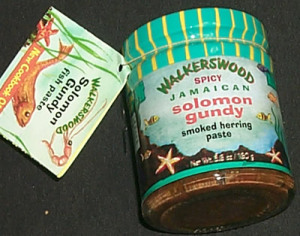
solomon_gundy

Posted in Health, Living | Tagged , , , , , , | 1 Comment

Inspirational Resources (gotta love history)

If there is a drawback to being at the forefront of a revolution, it is that there are less places you can turn for ideas about how to proceed than are available for those who want to keep living like the herd. The revolution I am talking about is going forward without eating carbs in any significant quantity. For my entire life people have been eating breads, my Dad never ate a meal without sliced white bread to eat as a side dish. For my entire life I have drank sweetened drinks with every meal, from Kool Aid as a kid to Coke as an adult. For my entire life every meat entree was accompanied by some form of starch, be it potatoes, pasta, rice or gravy. Learning how to live without these things can come off as a form of denial.

Finding out how to live without is easier if you don’t think of it as living without. On April 1 of last year we went cold turkey off of sugar, and we stayed that way for a month. The abstention period was very helpful, because once your body resets from the sugar cycle you can then tell when you have eaten too much sugar, from physical symptoms. Deciding to go that route for the rest of carbs has only come recently. After reading “Why We Get Fat” and “The Big Fat Surprise” I am now armed with enough knowledge to know that a healthy diet does not have to include ANY carbs. That puts all carbohydrate energy in the “tasty but unnecessary” category of foods. For us now eating any starches is an option that we choose to take. That makes not eating carbs more than just a diet denying them to us. They become luxuries like dessert, almost. We eat dessert, we eat sugar, but we pick when we do so.

There is still the wonder though, every night, every meal actually, what do we eat for dinner? That is where the search for other resources comes in. I was on the Atkins diet once, around 2003 or so. I was on the ‘diet’ for quite a while and it ended when I went on a four night caribbean cruise. Back then I was very interested in what I could eat, and a great deal of the Atkins recipes that were out there were trying to replace the carbs on your plate with carb-like dishes. “Miss mashed potatoes? Try mashed cauliflower, it’s practically the same!” Except that it isn’t and trying to make bread without using flour is a practice in searching for boxed mixes that substitute the known for the science-fiction. I no longer eat boxed foods with artificial ingredients. What is different this time is I am making no effort to ‘replace’ carb dishes and side dishes with something to make the loss bearable. I am not missing the carb dishes.

Yet I ask again..what’s for dinner? Now we go back to the future. In the not-s0-distant culinary past of the US people didn’t eat carbs in every other bite of food. Need proof? Look in an old-time cookbook. Look at the menus from the bygone days. I have a copy of the Fanny Farmer cookbook dated 1896 from the Boston School of Cooking. In there are many dozens of recipes that do not call for a huge helping of carbs to round out the meal, or especially to be a feature player in the meal.

In my searches for foods we used to eat, I found a free ebook, provided by the Gutenberg project. It is a book for cooks in the VERY old tradition, entitled :

“Project Gutenberg’s English Housewifery Exemplified, by Elizabeth Moxon

Elizabeth Moxon. English Housewifery / Exemplified in above Four Hundred and Fifty Receipts Giving Directions / for most Parts of Cookery (Kindle Location 1).”

In above FOUR HUNDRED AND FIFTY RECEIPTS, Giving DIRECTIONS in most PARTS of COOKERY; And how to prepare various SORTS of     SOOPS, CAKES,     MADE-DISHES, CREAMS,     PASTES, JELLIES,     PICKLES, MADE-WINES, &c.

Elizabeth Moxon. English Housewifery / Exemplified in above Four Hundred and Fifty Receipts Giving Directions / for most Parts of Cookery (Kindle Locations 7-9).

My idea is that I go back and look at the old knowledge, accumulated through eons of cooking practice to a time before the potato and rice were readily available to us to eat. These things are written down, they are understandable still, though there are words that they used for ingredients that still have yet to identify. This particular cookbook has recipes separated by month! Why would they be by month? Likely because the foods you can get in January in the past are very different than those available in January in the modern US.

A SUPPER For JANUARY.     At the Top a Dish of Plumb Gruel.     Remove, boil’d Fowls.     At the Bottom a Dish of Scotch Collops.     In the Middle Jellies.         For the four Corners.     Lobster, Solomon-Gundie, Custard, Tarts.

Elizabeth Moxon. English Housewifery / Exemplified in above Four Hundred and Fifty Receipts Giving Directions / for most Parts of Cookery (Kindle Locations 2219-2221).

See? No carbs other than those in the fruits. Of course, gruel may actually be a kind of grain dish, maybe corn or oats but I don’t know just yet. Their idea of jellies might be something very different that what comes to my mind when I read jelly. The point here is that our menus with a significant number of calories represented from the carbohydrate groups of foods is a new development. Because I grew up when I did, I wrongly think that meals have always been this way and to eat a different set of foods feels new and revolutionary–but it’s not. It’s old and probably the way we should still be eating.

I go on and on about why us eating the way we do is crazy. There are so many things that eating carbs and sugar cause that are just plain unnecessary. Tooth decay, indigestion, flatulence, fatness, diabetes, liver disease, maybe cancer and depression, MS, fibromyalgia…I could literally go to the next hundred words listing things that are being associated with food issues. These things are actually being related in labs all over the world with our diet. I know that ancient people died young, but it wasn’t from what they ate. They didn’t have vaccines, so measles, whooping cough, TB, flu, were things that killed you, and no one died died from what they ate. We are healthier in one way, and sicker in another.

I will keep poring through my ancient cookery books. I will post the great things I find by going back to the future. We will all benefit from ancient wisdoms and ways, because this day and age, the best resources for living without carbs are not trying to replace the things we eat with things we should eat, but replacing them with new kinds of old foods. I feel that the best no carb recipes will be found in places where carbs were not yet readily available. Check back and see how I am doing.

Posted in Health, Living | Tagged , , , , , | 3 Comments

Salmon en Croute

This is how to eat carbs if you are going to!

cewinta's avatarTwinDays

Done salmon 1

An elegant dish: Salmon stuffed Puff Pastry.

Sea food is so delicious plus they say that eating fish twice a week is good for your health! Fish are a lean, healthy source with high level of proteins and nutrients (B-12 and iron). The omega 3 fatty acids in fish has so much benefit for your health such as reducing the risk of heart disease,  lower blood pressure and to strengthen the immune system and so on and on.  Fatty fish such as Tuna, Salmon, Oysters, Sardines, herring and Mackerel are considered as the most healthy fish. And you can do so much with it. Salad with fish or making soup etc.

We saw so many fish recipes in one of the magazine and we love to get inspired and couldn’t wait to make/bake it our self. So a couple days ago we made a” Salmon en croute”.

Ingredients: 

Salmon
Juice…

View original post 137 more words

Posted in Health | Leave a comment

Preschool Foie Gras…

A rePOST of one of THE MOST IMPORTANT POSTS FROM LAST YEAR.

dcarmack's avatarOne Small Change at a Time

…As in paté. The main ingredient in Foie Gras is duck liver, and the liver must contain lots of liver-fat. In order to find a duck with a fatty liver, in France they force-feed corn to the ducks. In nature you cannot find a duck with a fatty liver. One other place you can find liver-fat though is in the livers of the children of the richest country in the world.

Yesterday’s New York Times contained the most frightening article I have read in a very long time concerning the health of our nation. 

In Los Angeles, liver disease is diagnosed in one out of two obese Hispanic children, and it is a leading cause of premature death in Hispanic adults.

Think there is something special about LA or Hispanics? Don’t. Liver Disease caused by accumulated fat is now nicknamed NASH (nonalcoholic steatohepatitis). It leads to liver scarring and cirrhosis. We should…

View original post 471 more words

Posted in Health | Leave a comment

Makin’ Bacon

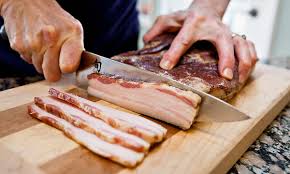
Hand slicing home made bacon

Hand slicing home made bacon

I don’t know anyone that doesn’t salivate like Pavlov’s dogs at the smell of frying bacon. These days a bacon breakfast is a meal fit for a king, as the price of industrially produced bacon hovers between eight and ten dollars per pound. I avoid buying it at the market price, occasionally my favorite brands will go on sale and I stock up then…or at least I used to.

Now I am making my own bacon. Back in December I purchased a whole hog and had it processed at a local meat locker. Getting meat processed in the late autumn like that takes planning because most processors are very busy processing deer during the deer hunting season. I set my appointed date and the rancher took my hog in and it was my job to call the processor with my cutting order. I knew that I wanted to make my own bacon so I ordered that the processor brine and smoke one half of the belly meat, but to leave the other half raw so that I could try doing it myself. The locker brined bacon was good, but it was far sweeter than what I like.

I had already purchase the great book “Charcuterie:The Craft of Salting, Smoking, and Curing” by Michael Ruhlman & Brian Polcyn. Reading the section on bacon gave me the idea that there is nothing magic about making bacon, that it was something that I had more than enough skill to do. This isn’t surprising, because just about everything we buy at the store is really easy to make yourself.

There are only a couple of things that you will have to get that you probably don’t already have in your pantry. The most important ingredient is “pink salt”. You have seen a pink salt in the spices section of the store, BUT THAT IS NOT THE RIGHT ONE. That one is just salt, himalayan salt. I don’t know why it’s pink but it’s not a meat cure.

Curing meat requires that you use a form of potassium nitrite. The street name for potassium nitrite is “saltpeter”. You can find saltpeter at the pharmacy, or in some of the better health food stores. You don’t have to buy saltpeter, but if you do, a bottle will last you a very long time. What you do need to buy is “pink salt” or Prague Cure #1. With your pink salt in hand, mix up a dry cure. One pound of kosher salt, eight ounces of sugar, and two ounces of pink salt and blend the dry ingredients together. This recipe makes quite a bit and you won’t use it all. It keeps forever in your pantry. Morton sells a product called ‘quick cure’ that may also work in this application, but I would recommend you look it up on the internet to see what they recommend for curing bacon with Morton’s.

Another thing you are going to need is the belly meat. If you have a butcher that you like you can order the belly meat from there. You might be able to find a grocer that can get it for you, but the best way to come up with it is to get it from your local meat locker. The meat you get from there will be more ‘expensive’ measured in dollars, but it will be less expensive because the meat won’t be from a confinement operation, where the hogs spend their entire lives living cheek to jowl, being fed only grains and antibiotics so that they will get to market weight unnaturally fast.

Finally, get a two gallon plastic zip top bag to do the curing in.

Now you are ready you cover the pork side in dry cure. You measure the amount of cure out based on the weight of the meat. It is important that you get the right amount of potassium nitrite on the meats..as this is the ‘cure’ that gives it it’s pink color and distinctive bacon flavor, and keeps the meat from spoiling rapidly in the fridge. For a five pound side of meat it takes about a quarter cup of your dry cure mixture. Put the meat in the bag, pour in the dry cure, seal and shake to distribute the cure onto the meat (shake and bake style) and put the bag in the fridge. Every day you turn the bag over, and you will notice that water is coming out of the meat. Turning the meat every day makes sure that the whole thing is incorporating the cure. After about ten days to two weeks, (longer is not a problem) feel the meat and it should be firmer than the raw meat was. This is due to the curing and the loss of the water. Once the meat has cured long enough you remove it from the bag and rinse the salt off the outside. If you have time you can put it back in the fridge uncovered for a day to dry. This causes a sticky layer to coat the meat and then when you smoke it the smoke adheres better. I did not do this this time. If you are not going to smoke the meat you don’t have to do this either. By the way, it’s at this point that cured meats are dried. You can take cured meats and hang them in a cool dry place and they keep basically forever. That’s another article, maybe I will try that with my next pork side.

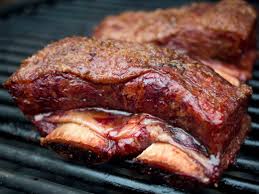
Smoking the bacon is entirely optional. I don’t know why you wouldn’t do it if you have a smoker. The normal wood that we smoke meat with is hickory. Of course I didn’t use hickory. My favorite smoking wood before this batch of bacon was oak. I have three big old oak trees in my yard and they are constantly dropping hundreds of pounds of free smoking wood for me to use. This time, though I used pecan shells. Earlier this year I bought a huge quantity of Missouri pecans from a roadside stand selling nuts and wood from pecan trees. I have a new favorite smoking wood. If you like hickory, both oak and pecan give a much more subtle flavor. Hickory has a sharp bite in my opinion. It is great for smoking ribs and pork shoulders and I keep hickory on hand for those meals. I use oak for poultry. I am going to use pecan for bacon. It is OMG delicious.

So when you smoke the bacon you aren’t going to smoke it until it is ‘cooked’, but only until the bacon gets to 150 degrees in the middle. This is done enough for the smoke to permeate the outside quarter inch or so of the meat, enough to carry the smoky flavor into your kitchen and recipes. After smoking, wrap the side in plastic wrap and put in in the fridge for another day (or so).

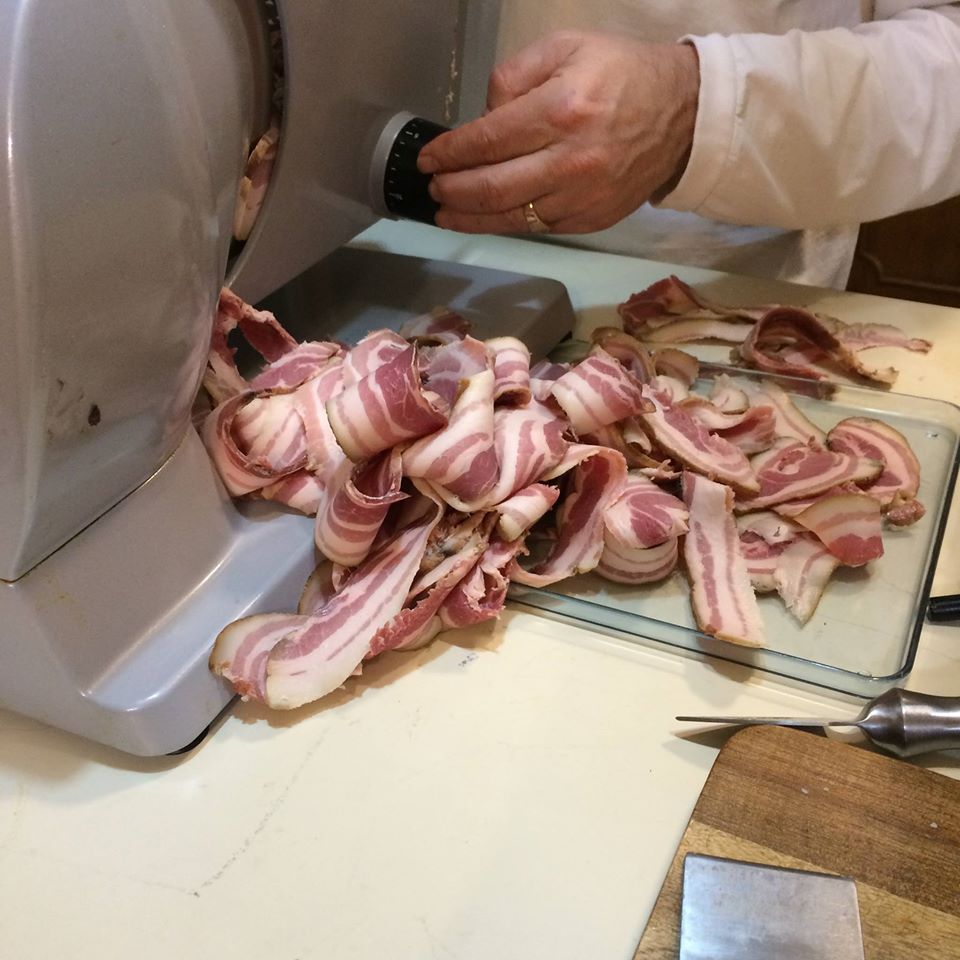
I have a slicer, but this is optional. You can slice off bacon as you need it from your side. You can also leave some of the bacon in big chunks, because bacon does not have to be consumed in strips. You can cook shoestrings of bacon and you can use bacon in these ‘shoestrings’ (google lardons) also called lardons. Lardons are a great way to add flavor to tasteless meats like turkey breast instead of injecting brine into them.

Bacon coming off the slicer

Bacon coming off the slicer

images

What bacon looks like before slicing

Believe me when I tell you that the bacon you make yourself is far and away better than the industrial meat you get from your grocer. Corners are cut making that bacon in every possible way so that they can sell it to you for the ‘cheap’ price of ten dollars per pound. there has never been a time that screamed ‘do-it-yourself’ like the present. Charging lordly prices for a mediocre product makes home made bacon a deal. Most of the work is done by time as you wait for the cure to do it’s thing. Try doing this and thank me later.


Posted in Health, Living | Tagged , , , , , | Leave a comment

Think Your Problems Are Big?

Rare second post for today. Just trying to help you keep your biggest problems in perspective…

Think this is the only place in the universe that developed life? The odds are slim.

Posted in Living | Tagged , | Leave a comment

Love Your Addict

OverEaters Anonymous For Food Addicts


One of the great things about having this blog to put things that I find that are relevant to food, nutrition, addiction and breaking habits is that my electronic friends out there on the internet will send me links to great new stories and research being done in these fields. I look for myself every morning, but the network of eyes and ears that pass things on to me is so much wider that I often hear of great new things second-hand. Keep up the good work, netizens.

This morning I had a great article sent to me concerning drug addiction.

The Likely Cause of Addiction Has Been Discovered, and It Is Not What You Think

I happen to think that the cause of addiction is the excitement that crime brings with it. If a person can be ‘addicted’ to gambling, and I think we can all agree that people can get addicted to gambling, then obviously external chemicals are not needed to form an addiction. That is the gist of the article I linked to above. A person that is addicted to sneaking sweets, right under the noses of the people that love and care for him, is getting a rush when he sneaks. People that are addicted to dangerous pursuits are also hooked on the excitement. Lots of things are dangerous, and therefore exciting. Excitement is addicting.

A couple of weeks ago I wrote that sugar has the same effects on the brain as cocaine the inference being that that would be why sugar is addictive. New research though shows that addicts that are integrated into a community are not likely to continue a destructive addiction. Punishing someone that is overeating or taking too many prescription pills tends to force that person into hiding. Hiding a behavior leads it to be a kind of exciting criminal act. The act does not have to be against the law for it to feel like a criminal act.

There are chemical issues with sugar and carbohydrates that cause cravings. It may be that the microbes in our guts have figured out how to make us eat things that they want. Some research has shown that a healthy gut micro biome leads to healthy eating habits, so that may be where the cravings come from. Wherever they are from though, the cravings are real. Succumbing to cravings and having to hide them leads to a different kind of craving–the craving for the adrenaline rush of misbehaving.

That is where lab rat similarities to humans in experiments on addictions break down. As far as I know lab rats can’t get hooked on danger. We are unique as far as I know to the animal kingdom in that we will seek out dangerous things to do to give us a rush of excitement. Gazelle don’t get hooked on seeing just how close they can get to a cheetah and still get away by running for their lives.

In the article that I linked to above, the author proposes decriminalizing drugs and instead trying to welcome addicts back into loving society, to take the crappy living conditions out of their lives, which might be one incentive to self-medicate with illegal drugs. Maybe. Maybe though, decriminalizing would do two things, it would remove one reason to hide the behavior, and decriminalizing would also remove one source of excitement in the seeking, buying and using of illegal drugs. Lots of things that are exciting are addictive, but we don’t all become addicted in one attempt. Probably nobody becomes addicted in one attempt.

Food addictions though are probably addictions to doing something in hiding. Permission to eat anything would go a long way toward eliminating sneak eating’s hooks. The other things that would help a sneak-eater is to eat a bacon and egg breakfast in the morning, and then eating zero carb foods anytime he or she gets hungry between meals. A person will only eat what they need, the system is somewhat self-regulating once you get carbs out of the equation. By that I mean that a person that is living in a reduced carb world will not get that carb craving after about a week or so. Between not having the cravings and having the ability to eat as much and as often as one wants from the kind of foods that are left makes it where you won’t have to help watch the eating of your overeater (or yourself). Not having to monitor for overeating will make everyone’s life a lot easier.

Posted in Health, Living | Tagged , , , , , | 1 Comment

Know Your Farmer

poster227x227

More Than Honey


When I tell people that they should purchase foods from the farmer at the farmer’s market, or from a friend who farms, sometimes I get the argument “we all can’t eat local foods, there just aren’t enough local farmers to feed everyone.” Of course, this is true, but it is also beside the point. I am not arguing for ‘everyone’ to buy local, and it certainly would not work if, suddenly, we all had to get our food from local farmers. Nothing like that is about to happen, though, and I am only recommending that MY readers buy local foods.

When you put your money into your local economy it acts like fertilizer for that local economy. Buying from your friends will keep your friends farming. Lots of farmers would like to grow foods that we all want to eat, but with so many people buying their foods trucked and shipped from around the world, at subsidized prices, it’s no wonder they don’t buck that system. There are enough local farmers in the Kansas City farmer’s markets to keep me stocked up in fresh, wholesome meats and vegetables in season to keep my larder packed. There are also enough for you in your local market.

Buying foods from around the world is a risky business. In China they produce ‘honey’, and since Chinese ‘honey’ is adulterated with dangerous pesticides. China is restricted from selling honey into the US market because it was dumping it on us at low prices, so there is a high tariff on it. To get around this, the Chinese sell their honey to places like Malaysia, where it is then called Malaysian honey and then sold to us. Some of this Chinese ‘honey’ isn’t really even honey, but is syrup with a trace of honey for flavor. Catching the Chinese at this game is the job of a small government lab, and their job is difficult to accomplish. Today in the NYT

Around 2006, unscrupulous importers appeared to be cutting honey with high-fructose rice syrup or disguising cheap, pure honey as an artificial blend. (At the time, the import duty applied to artificial blends that were more than 50 percent honey by weight.)

In 2011, the government accused three companies of importing millions of dollars’ worth of rice fructose blend that in fact was mostly taxable honey. The importers said the product was less than 50 percent honey.

I had heard about this before, that most of the honey that is on store shelves is actually honey from China, that has been snuck into this country to avoid paying duties, and to avoid close scrutiny by the government for safety. Think about the waste of energy to purchase honey from China, that has been freighted literally half way around the world to avoid a few cents per sale of taxes. Honey is not so expensive that it would be worth it to purchase honey from a local apiary, where they actually harvest honey from their bees. You know for sure that this honey is pure honey and not just rice syrup and honey blend, or honey that is full of pesticides that are banned in the US.

Lots of foods are this way. You have no idea what the chemicals are in your processed foods. You just trust that some branch of the government has tested them. Well, the government doesn’t test artificial ingredients in your foods, they count on the makers of those ingredients to do the testing, and then our government takes their word for it. Only when something makes people sick right away will they pull an ingredient off the shelf.

They are going to start selling GMO potatoes that don’t brown when you cut them open. They aren’t going to be labeled as genetically modified organisms. You will know they are there when you see pre-cut and bagged potatoes in the vegetable case at the grocery store. You won’t know that they are a man made creation, or if they are safe, or what the effects will be on you or on the non-gmo crops that are growing just on the other side of the fence from them. None of that matters to big industry. All they care about is money, and since you are not money, and the world is not money, they don’t matter.

The only way that you and me can fight the race to profit that is all that matters to the big farmer, the foreign farmer, the food corporation, is to put your money in your neighbor’s hands. Buy your honey from a farmer at the farmer’s market or at a local apiary. Buy no processed foods. Buy vegetables from your friends and at the local market, not from a big box store or chain grocer. Get meats and dairy from ranchers and farmers that you know. You can buy local. There is enough capacity in this tiny segment of the market to feed you and your family. Let the world worry about itself for now. As more and more people start eating this way, the market will remake itself to give us what we want.


Posted in Health, Living | Tagged , , , , | Leave a comment

Scientific Wild-A** Guess

What is the ultimate source of change for a human desiring change? If change is happening in your life, where does the ability to cope with the change come from, and is there anything you can do to make that change easier to adapt to? Science has the answer, of course, or at least a suggestion for something that you can do to make the changes more smoothly.

Today in the New York Times there is a report describing the power of writing to help students and married couples that are going through changes:

… Stanford researchers focused on African-American students who were struggling to adjust to college. Some of the students were asked to create an essay or video talking about college life to be seen by future students. The study found that the students who took part in the writing or video received better grades in the ensuing months than those in a control group.

Another writing study asked married couples to write about a conflict as a neutral observer. Among 120 couples, those who explored their problems through writing showed greater improvement in marital happiness than those who did not write about their problems.

I have found that since April 1, 2014, when I began to write my journal about the 21 Day Sugar detox experience, that writing about nutrition, diet and the food production system has helped me immensely to obtain the goals that I really wanted when I began last year. My own scientific wild-a** guess as to why this works is that the act of creation, in my case articles, cements in my mind not only the outcomes that I want to realize, but the feelings that I get in my moment-to-moment struggle to obtain them.

If you read from the beginning last year you can see the growth as it happened. Writing my plans, writing down what worked and what happened when it didn’t work strengthens my mind. Knowing that I will be writing about my successes or failures strengthen’s my resolve and makes me commit my feelings to memory so that I might better relay them to you, and to my future self when I re-read my articles later on.

However, I don’t think there is anything special about prose. If your creative outlet is color, then you could get the same results (in my own un-scientific opinion) by painting or drawing. Maybe your creative outlet is something else entirely. I think that the act of creating to describe or strengthen is what is going on in the brain. What we are doing when we create with a goal in mind is we are cleaning the debris from the paths that new neural connections take to make a practice a habit, and then to make it a way of life.

Sometime back I wrote about standing in the concession line at the theater, and making a decision to drink tea instead of Coke. Getting a Coke with popcorn was a habit at the theater. Getting something else was a change, and I wrote about it back then. Writing about it gave me a chance to analyze the trigger, analyze the motivation to change, describe and reinforce the feeling of changing. Writing about it made it easier to not get a Coke the next time at the movies, made establishing a new practice easier. Creation helped to make life easier, because I knew what I wanted and how to avoid missing my targets.

That’s one example of where writing about change has helped me immensely. The changes in my diet have made all changes in my live easier to cope with, because all of the changes are related, because they are all occurring in the same mind. I can see the patterns repeat themselves over and over, throughout my life. Writing about the patterns has helped me, I hope it will help you, too.

You should consider creating something, music, drawings, poems, prose, to help you examine your future the way that you want it. If you can imagine it, then maybe you can obtain it. Knowing that there are people in your audience who need to hear that change is possible, if you care about them, then share your creations. Reading or seeing what you have made might help the people that seek you out. In my case it helps me to adhere to the high road knowing that my successes may lead to your successes. The act of writing helps me, and the thought of you reading helps me. Thanks for your support!

Posted in Health, Living | Tagged , , , , , , , , | Leave a comment

Through the Ceiling

I have successfully navigated though the shoals of carb withdrawals and am now into the smooth sailing portion of the journey. Here is how I know by physical conditions when I am into the fat-burning phases. First, my hands do not feel puffy and ‘hot’. Hot hands is a symptom I get right away when I eat something like a sweet dessert or have a Coke. Once my hot hands feel normal again then I am in very good shape. Second I can be in close proximity to sweets and not get the urge to consume them. Yesterday at the checkout line in the grocery store I noticed that there was a sale on big candy bars and peanut butter cups. A few days ago it would have been tough to wait in that line without buying one or two of those “for the future”, which might have turned out to be “in the car on the way home”. Yesterday I managed to just look at them and smile and make a mental note to tell everybody about it, and what it means to my carb cravings and addictions.

I looked up Vietnamese Pho soup recipes and found out that my soup probably did have sugar in it, since a few of the online recipes called for tablespoons of sugar. I would say my soup had about a tablespoon of sugar in it, judging by the taste. I ate some of that for lunch yesterday, but not enough to keep me in carb suspense, because today I am feeling at one hundred percent.

images

Vietnamese Pho

Pho is a VERY tasty broth and fresh vegetables are delivered along side it. I want to make some of this just for the broth–it would make a very good coffee substitute. Coffee can dehydrate me, and I think that broth will do the opposite, and Karen tells me that my neck pains are likely caused by dehydration drying out the fascia around the tendons in my neck and back. Sounds good to me! The fix is pretty easy, too, massage and hydration with broth. Here is a recipe that I am likely to try (no sugar, no noodles):Print Beef Pho Recipe – Food.com – 92313. That is a PDF of the recipe–first time I have ever tried this in WordPress, don’t know how well that will work out.

I joined a gym! We have decided that a local fitness center is close enough that it’s proximity might mean that I will make use of it. I hope to go there to increase my endurance and the deepness of my breathing. Right now light work can lead to muscle soreness the next day. By light work I mean that if I do something like cut down a small tree with a bow saw, do any overhead work where I have to hold my arms above my head for a while, run up and down the steps several times in a day. Perhaps I can increase my endurance by getting some personal training and spend some time on a treadmill or bike. I even have access to a reimbursement program at work that will defray part of the expense of this. Lots of incentive to do it, so all that is left is for me to do it.

Exercise and physical activity will increase my appetite, but it will increase only by the amount of extra work that I do. I don’t worry that if I were to bulk up muscle that later on if I stop working out then the muscle will turn to fat. I was actually taught that as a kid, but it’s a myth that does not prove out in scientific studies. Fat stores in excess of what your body needs for normal operation come from eating more carbohydrates that a very minimal amount. I will continue to avoid eating carbohydrate and start working my body to build my endurance and cardio-vascular system. Years of neglect are leaving me with more aches and pains than I want to feel day-to-day. I think I will also rehab my bicycle for the spring. Maybe we will get a bike carrier for the Buick, take them someplace fun later on this year–the Katy Trail State Park is nearby to us.

Don’t miss the novella that my little sister posted in this blog. I invited her to share her eating experiences in a second world country during her overseas tour in the USN. Here is the link, but it is just a couple of articles down right here in this blog. If you go to the home at dcarmack.com and just scroll down you will find it. It’s long and really fun to read.

Posted in Health, Living | Tagged , , , , , , , , , | 1 Comment