Mardi GRAS

images-2

“Safe” is one of those words. It means different things in different contexts. You are driving down the interstate highway at seventy-five miles per hour. You feel safe, even though you are doing one of the most dangerous things, statistically, that you routinely do. You are climbing a ladder to clean the fall leaves out of your gutters and you are being careful, so you feel safe. Unsafe is also something with a sliding scale. You relaxing in the bathtub is safe, but your toddler unattended in the bathtub is not, yet bathing is ‘generally recognized as safe’.

Eating and drinking are also safe activities. We don’t live in a country where just anyone can sell you anything and claim that it is safe. Our meat packers perform their work under the watchful eye of the US Department of Agriculture. Very small amounts of our meats are escaping the system tainted by bacteria which, because the UDSA is watching, are quickly pulled from shelves for our safety. Occasionally people are sickened by meats and dairy, but the numbers are still in the ‘safe’ range.

Processed foods are, likewise, watched and regulated by our ever-vigilant Food and Drug Administration. Processed foods and food additives are subjected to tight scrutiny so that only safe ingredients are used. The FDA is mostly known for the scientific rigor that all drugs for human use are subjected to. FDA approval is an expensive thing to get for all drugs, and the test results are the reason for all of those really long, fast-talking disclaimers found for the last thirty seconds of every pharmaceutical commercial that states every possible side effect and reaction. You just know that if you take a pill approved by the FDA that it’s effects are well documented.

Surely, you probably think, food additives are the same way. You are mistaken.

From the FDA:

In enacting the 1958 Food Additives Amendment, Congress recognized that many substances intentionally used in a manner whereby they are added to food would not require a formal premarket review by FDA to assure their safety, either because their safety had been established by a long history of use in food or by virtue of the nature of the substances, their customary or projected conditions of use, and the information generally available to scientists about the substances.

In 1958 the idea of ‘generally recognized as safe’ (GRAS) was born to allow things that we have been eating for eons to not be required to be proven ‘safe’ because everyone knew that they were safe. This makes perfect sense. In 1969 the FDA was directed by the President to review the items on the GRAS list because new scientific information was available and new methods of testing possible for the items that were given a pass in 1958.

At the time, in 1969 there were 235 items deemed to be GRAS that needed to be reevaluated. The number was big enough and the process took long enough that in had to be subcontracted out. Eventually, the FDA decided that it was too much work for them to approve these food additives, since more were joining the line every month for GRAS approval. In 1998 the FDA went away from ‘affirming’ the safety of GRAS and went to an interim rule that allows instead for the FDA to be ‘notified’ of the GRAS status of additives to foods. There are 115 additives that were ‘affirmed’ to be safe by the FDA between 1972 and 1980 that equal 370 GRAS when added to the original 1958 GRAS ingredients. There are now 539 additional ingredients that were not ‘affirmed’ by the FDA, but that they have been ‘notified’ that they are GRAS by the ingredient maker. Here is the database:

GRAS Notice Inventory

A study by the Pew Charitable Trusts estimates that there are 5,000 artificial ingredients added to our foods. THE FDA DOESN’T KEEP TRACK.

You would be forgiven for just assuming that the artificial ingredients that are listed on every label of every processed food on your grocery store shelves has been affirmatively approved by your FDA. It is not common knowledge that they merely accept ‘notices’ concerning food chemical safety. In the case of drugs they look for long term effects, side effects, do animal trials and human trials. The process takes years and years, and it is this way because it didn’t used to be this way and drugs were being used that were not safe, like opium, cocaine, thalidomide. We learned the hard way that only a neutral third party could umpire between the maker of a drug and the drug using public and properly balance ‘safety’ and ‘profit’.

One would think that you could eat any processed food product on any grocery shelf in the US and you would be ‘safe’. You would be right–none of those foods are going to kill you before you wake up in the morning. However, you would be wrong to assume that all of those food ingredients are safe in the larger meaning of the word. Eating sugar in every bite of food is poisoning us, it is crippling our youngest generation, yet sugar was on the GRAS list in 1958. Artificial sweeteners are now known to cause insulin resistance and type two diabetes just like sugar, yet they are approved substances. Artificial ‘fiber’ for your foods is also ‘safe’ but data are beginning to show that when used in a human body they react differently, depending on the microbes in the human gut.

Human trials are needed on food additives, just as though they were drugs, before we put a ‘safe’ label on them. Simply allowing the maker to claim they are safe is letting the fox watch the chicken coop. We don’t allow airplane makers to claim their planes are safe, we make them prove it to our government. Nobody wants to live in a country where the nuclear power plants get to ‘notify’ us that they are operating their plants safely. We have the government on-site all of the time, making them prove it to us. Same with our meat safety. You know that the meat packers would bring in illegal aliens to do the meat inspections for 7.25 per hour the second that the meat inspection process were turned over to the meat packers, asking them to ‘notify’ us that our meats are produced safely.

Recall that in 1998 the FDA issued an ‘interim’ rule that allowed them to forego affirming food additive safety and instead just accept notices. It’s 2014, 18 years later and there still is not a ‘permanent’ rule that lays out the process.

Go ahead and wait for the FDA to start affirming the safety of your processed foods. It might be another 18 years before they do. It might never happen. You may be perfectly happy with the current system. All of the autoimmune diseases, increase in blood pressure, diabetes, fatty liver disease, heart disease, autism, and every other chronic ailment that has sprung up in the last twenty years may not be related to foods at all. You may feel SAFE. You would be right in the same way that someone who smokes two packs of cigarettes a day is safe.

If all of this makes you a bit uneasy though, like it does me, then maybe you will join me. Join me in banning processed foods from your pantry. Never buy another Lunchable for your kids. Make real meals out of real foods. Stop using sugar or any other sweetener in your drinks. Don’t eat anything that comes in a box or bag. The health claims on the labels are only there to attract you. Don’t fall for the bait. These things are not safe, and by safe I mean that if you eat them, they will make you sick–not today sick, but sick tomorrow.

Posted in Health, Living | Tagged , , , , , , | Leave a comment

Be Your Strength

You are emotionally attached to food. We all are. We are intimately associated with the things we eat and even if you think that your dining decisions are automatic, I guarantee you that they are not. Three out of four people that eat more food than their body needs on a daily basis are doing so because of emotional attachment to food. Food is a reward, food calms their nerves, food gives them something else to think about. People eat when they are bored, happy, sad. Sometimes people eat when they are hungry. People eat sometimes just because it is time to eat and then they eat again when they feel like eating for some other emotional reason.

If you have come to the point in your life that you are trying to change the things you eat, and perhaps how many times you eat each day, you now have a need to understand how change is manifested in your life. You have to dive into your thought process to see what trigger has called you to the table or the candy machine, and then you have to figure out what to do with that trigger in order to interrupt the cycle of emotional eating (or really any other subconscious behavior).

So whatever the reason is that you have decided that you need to eat less, and to eat better you now are living in the world of change. In your recent past the cycle went like this–something triggers you to think about eating, besides hunger. You go to your habit-worn path to your food supply, select your comfort food of choice, you eat. Eating causes all of the natural reactions to food in your brain, dopamine, serotonin, glucose, insulin, as required by the food. After eating you might feel guilty about what you ate, or how much you ate. You might scold yourself for not being better at resisting. You berate and belittle the person in you that can eat without thinking or can eat without consideration of the future. Perhaps someone in your life is ‘helping’ watch what you eat. You try not to eat around that person, so as not to cause them distress. You plan on doing what they want, but for some reason, right now that doesn’t matter, what they don’t know won’t hurt. You do what you want to, you regret it, you promise not to do it again.

Promising yourself you won’t do it again is very simple to do moments after you have that cigarette, have that drink, eat that donut. Inside of your brain you have already gotten the machinery of reward going. The enzymes and proteins are released, the guilt is just setting in. It’s so easy to be hard on yourself when your reward centers are all lit up like Christmas. Your self-punishment has no effect on your eating, but does affect your brain. Negative thoughts cause a negative self image, they reinitiate the process of the cycle.

The way out of the loop is to, at any point in the loop, become mindful. When I was quitting smoking some years back I would always look longingly at coworkers that were happily smoking and I would wish to myself that I could just have one cigarette, that just one cigarette would not make me a smoker again. Eventually watching these men smoke would lead me to ask someone for a cigarette, then it would be every day, then I would buy a pack so that I wasn’t always bumming. Before you know it you are sneaking them at home again, then finally admitting to yourself and the world that you are still a smoker.

When I finally quit I hit on a radical strategy. My trigger was watching the men that I would see smoking on break at work. I would approach someone and instead of asking for a cigarette I would say “I thought you were going to quit smoking” (because all smokers are somewhere in the process) and then listen as he would tell me where he was in the process. Most guys just buy their smokes a pack at a time, because right after this pack… Asking that question and listening to that answer gave me time to not think about why I couldn’t smoke, but instead think about why he couldn’t quit. It gave me just a moment to pop out of the addiction loop. Finding a way to interrupt your cycle of emotional attachment to food will be like this.

For me, my food cycle is interrupted at the grocery store. I don’t do very well at not eating things that are already in my home and paid for. I know that it would be better to throw things that I don’t want to eat out, but I tend to eat them instead. I used to go to the store and walk down every aisle in order. This presented me with the temptations that I intended to resist, but had trouble resisting in the moment. When I started not going down every aisle finally I was able to quit buying foods on grocery day that would tempt me for the rest of the week. I would not make a special trip to the store just to buy ice cream when I craved ice cream while watching TV after dinner, but I might buy ice cream if I walk by it at the store. I broke my food cycle by breaking the little bitty habit of walking every aisle at the store.

When you do eat foods that you intend to avoid, another thing to do is be gentle with yourself. I know that there are constant temptations in our western society to eat the abundant foods that make up the Western Diet. Eating some of these foods does not mean that you have failed to change. Eating things you don’t want to eat is a chance to feel. Actually feel the changes that occur in your body and mind as the foods take their effect. In my case if I have a sugary soda I can actually feel it, like a chemical as it makes my heart beat harder. I can detect ways that my personality changes, I become more critical of both me and those around me.  At that point, I remind myself why I want to change. I don’t call myself names, think myself weak. I don’t call off the struggle. I am not an emotional eater, I am an eater, no different than anyone else. I am not weaker than you, you are not weaker than me, we are just at different places in our different cycles. When I eat desert, it is because I want desert. I know that eating it when I eat right all of the rest of the week does not mean anything bad about me. I am deciding to eat and I have no reason to regret it.

If you spend much time in a day feeling bad about yourself or cussing yourself out because you haven’t changed, stop for a moment when you are doing it and really ask yourself what good you are doing for you or for change. Calling yourself names has never worked yet, has it? It will not work now. What is really going on is your brain is setting you up again to continue the habit. Don’t call yourself those names and instead spend that time feeling how having just given in to temptation makes you feel. How does it actually make you feel. You are standing at the table games in the casino, you just made a fifty dollar bet, take inventory right now of the places where you feel that. Just stop and think. Just stop and feel. Look around and feel around yourself emotionally as you wipe the sugar from your chin. Don’t say “I Can’t” “I Don’t” “I Always”. Think for a moment. Use these memories as you come up to the moment in the cycle where you break out of it. “If I don’t go down that aisle I won’t have to feel like that.” If I just go home instead of the casino I won’t have to feel like that.

When you do let yourself down, make the most of it. Remember what it feels like–put it in your memory. Sometimes we can be so hard on ourselves all of the time that we don’t realize what we are doing to our internal chemistry. It’s possible to be so used to seeing something that a woman can be seventy five pounds and about to die of heart failure from not eating and still see something imaginary in the mirror, a fat woman. If you look in the mirror and see a weak person you have to know that it’s imaginary too. You are not a weak person, because there is no such thing. You are as powerful as anyone alive, but you are in the habit of letting yourself do what you want by calling yourself weak. You must beat the urge to punish yourself like that when it does nothing to the habit except provide you a tag that allows you to continue it. Tell yourself how strong you are every day and you will be that. Tell yourself you are a weak and despicable gambler and you are that, too. Tell yourself you are fat like you mean it and you will starve yourself to death.

Now read this…”8 Tips for Loving Yourself to Great Health” by Louise Hay.

Posted in Health, Living | Tagged , , , , , , | 3 Comments

There Is Just No Way of Knowing Why, Right?

According to the New York Times this morning:

Colon Cancer Rates Rising in Young Adults

According to the actual abstract of the Journal of the American Medical Association study:

Based on current trends, in 2030, the incidence rates for colon and rectal cancers will increase by 90.0% and 124.2%, respectively, for patients 20 to 34 years and by 27.7% and 46.0%, respectively, for patients 35 to 49 years.

Very quickly, in 2030 there will be about 100% more 20 year olds with colorectal cancer, presented at a more advanced stage than the elderly people who currently are contracting this type of cancer. THOSE PEOPLE ARE FIVE YEARS OLD NOW.

I wonder what could be causing all of that extra cancer in school children. Of course the article and the study only indicate that there is this huge spike in the number of our babies that are getting colon cancer.

Back to the article in the Times:

The study draws no conclusions about whether screening should begin at a younger age. “There are always risks and unintended consequences of screening tests,” said the senior author, Dr. George J. Chang, an associate professor of surgery and health services research at the University of Texas.

For now, he said, “We have to pay attention to symptoms with which our patients present, and work them up by including colorectal cancer as a part of the differential diagnosis.”

Of course we should be smart enough now to know what is causing these cancers in our children and grandchildren. Someday in the distant future they will figure out which bacteria in our guts is being fed some poison in our processed foods and producing for us a toxin that leads, over years and years of exposure, to cancer. It is going to take a very long time to prove  beyond a shadow of scientific doubt what it is, and then find a pill that can be taken to break the process and prevent it.

In the mean time, say it with me…stop eating processed food! Don’t feed your kids artificial ingredients! It truly is a matter of life and death. Death, or perhaps just life from age 20 with a colostomy bag tied to your most prized possession. Stop eating so much sugar or diet sweetened food. Make your own food, buy real things, single ingredient things.

Yesterday in the Washington Post, Michael Pollan and Mark Bittman joined forces to call on the Obama Administration to do something about our lack of a National Food Policy. They want him to unilaterally call for some kind of coherent cooperation between the different branches of government that are operating for the benefit of constituencies that currently operate against one another.

Because of unhealthy diets, 100 years of progress in improving public health and extending lifespan has been reversed. Today’s children are expected to live shorter lives than their parents. In large part, this is because a third of these children will develop Type 2 diabetes, formerly rare in children and a preventable disease that reduces life expectancy by several years. At the same time, our fossil-fuel-dependent food and agriculture system is responsible for more greenhouse gas emissions than any other sector of the economy but energy. And the exploitative labor practices of the farming and fast-food industries are responsible for much of the rise in income inequality in America.

We find ourselves in this situation because government policy in these areas is made piecemeal. Diet-related chronic disease, food safety, marketing to children, labor conditions, wages for farm and food-chain workers, immigration, water and air quality, greenhouse gas emissions, and support for farmers: These issues are all connected to the food system. Yet they are overseen by eight federal agencies. Amid this incoherence, special interests thrive and the public good suffers.

They combine their voices and that of the Washington Post to call for a laundry-list of good ideas for doing something to improve our food production system. Great stuff, and entirely impossible to actually implement. After the election last week, does anyone in their right mind think that this President and his new Congress will get any of these things done? Personally I feel that if someone is not going to get rich from the changes, or if the changes will limit anyone’s gravy train that nothing will be done for us to protect us from our food makers. Ever. In a Million Years.

We are on our own, and we CAN do something about the foods that are made for us that are unhealthy in myriad different ways. Quit buying imitation foods. Quit buying industrially sweetened foods. Start eating real foods. Send your kids to school carrying real foods until lunch rooms once again quit feeding them pizza for breakfast and pizza for lunch. Take control of your fuel supply. Realize that you are putting yourself in great danger if you keep eating what you are eating.

And now, for my sweet Mom, here is a breakfast she can eat that does not have any added sugar, no eggs, and will get them off to a great start on their busy schedules:

Scrambled Tofu and Spinach breakfast.

FNK_Vegan-Tofu-Spinach-Scramble_s4x3.jpg.rend.sni18col

Try it out, instead of candied cereal, bread or pancakes or any other hyper-sweetened chronic poison source. No eggs in case you really can’t eat them yet.

Posted in Health, Living | Tagged , , , , , , | Leave a comment

You Gotta Have Fuel

If a person where to take all of the cautionary advice on the internet to heart he or she would not eat fats, carbohydrates or meats. In other words, starve–to death. A person absolutely must find sources of dietary energy that are least damaging or even healthy. Today in Washington Post there is an article that summarizes the known information on dietary fats. Some of them are no longer on the ‘do-not’ list that used to be. Some of them are on the ‘danger’ list that used to be the healthy recommendation.

Here is the link to today’s short article.

The bullet that you need to read, if no other from the article:

● Total fat (the percentage of fat in your diet) does not seem to be an issue when it comes to health; it is the type of fat that you eat that has the impact on your health.

All fats are not bad for us, the ones that are bad for us are man-made. The ones that are good for us come from fish or meats that are raised on grass. Lard is no worse for you than butter, butter is not bad for you, and is even good for you if it comes from cattle that are fed grass. Margarine is a deadly poison that over time will cause heart disease.

Sugar and simple carbohydrates are bad for you. The energy you get is too concentrated and causes ‘fatty liver’ disease and eventually cirrhosis. The disease is nicknamed NASH. Please click that link to read all about it. CHILDREN ARE COMING DOWN WITH IT. Sugar, while not a poison when used moderately (one fourth as much as the typical US citizen uses it), is a poison a lot like tobacco. It will not kill you right away, but it will give you diseases like obesity and diabetes over time.

Like fats, though, there are carbohydrates that are good for you. You need them to live. It turns out that the carbs you should be eating are the ones that come packaged with the good sugars that you should be eating. Fruits and vegetables have their sugars and fiber all packaged in precisely the correct proportion for the fiber to dampen the uptake of the sugar, allowing it to progress farther into your digestive system where it can safely be dealt with by the microbes in your intestines. Doing this prevents you from getting insulin shock, sugar high, and the carb crash.

Drinking orange juice is fundamentally different to your body than eating an orange. It is different because when you drink just the juice you are not getting the fiber and other essential elements of the orange that were put there by nature with your digestion in mind. You will be doing as much harm to yourself drinking orange juice as you would be eating a big bowl of Count Chocula cereal. The sugar immediately is taken up, as there is nothing to dampen that process. You cannot eat enough oranges to get a sugar high, you will fill up first.

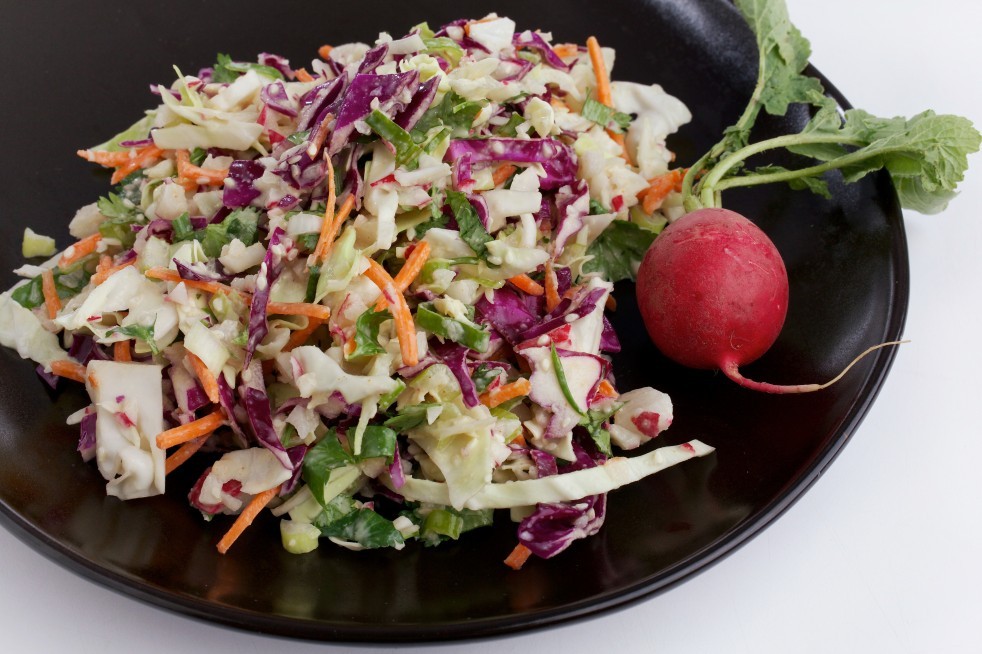
If you want a perfectly good breakfast or lunch, one that will carry easily try making this mayonnaise free cole slaw. It’s not mayonnaise free because we don’t want fats. It is so that we don’t have to worry about bacteria growing on the eggs in the mayo. You can eat this slaw after a few hours in your lunch box and not worry about bad eggs. Tahini in the recipe is a sesame seed paste that you can find in the oriental section of your store or at a foreign foods store. You can leave the agave nectar out if you are detoxing from sugar and it will be really great that way.

food081403141467

If you want a dinner that will be really good eating and good for your health, try something like this stew. It is shown in the picture over brown rice which is much better for you than polished white rice. It uses quinoa and lentils–ingredients that most boxed-food-eating Americans may not be familiar with, but these grains and beans don’t take long to cook, which is an advantage if you aren’t the kind of cook that will plan ahead for tomorrow’s meals.

food091386795792

These dishes include the fuel that you need to live. You can’t cut out fats unless you replace them with carbs or proteins. You can’t cut out carbs unless you replace them with fats or protein.  You have to eat energetic nutrients. You should not be eating man-made nutrients, packaged in dead foods. Your foods should be alive and packaged in the wrapper that nature has been delivering them in for all of evolutionary history. You cannot go wrong trusting the planet to care for you, just as it always has done.

Posted in Health, Living | Tagged , , , , , , , | Leave a comment

Modern Day Cassandras

If you are like me, amazed that it was so easy to change your health, your weight, your lifestyle, you probably are just as amazed at how hard it is to spread the good news. Today I want to write about spreading the message to your loved ones.

I was forced yesterday to think hard about how to help someone that really needs it when my mother called me and said that what she wanted for Christmas was for me to create for her a cookbook of things that were safe for her to eat. Her health is suffering like everyone else that eats the western diet. When she went in with one problem, six months later she is taking six or seven medications, one to treat the original complaint, the other five or six are to combat the problems that each one of the subsequent medicines create. I really want her to succeed. I really didn’t feel like she should be waiting for this help until Christmas.

I think that a collection of recipes is a component of the help that I can provide, but by no means is it the only thing, or the most important thing. First I immediately gave her a list of things to change in her day to day life that will get the ball rolling for her.

First, I said, give up sweetened drinks. Best choice for a drink at mealtime is water. If you must have something in your water it should be coffee or tea–no sweeteners in it, sugar or diet. This would be the easiest advice to take if it were easy to give up sugar, but sugar is an addictive drug, as addictive as cocaine. When you are standing in line at the theater it is not all that easy to get a drink that is unsweetened. Ordering a water at Hardee’s is not all that easy either. Still, quitting the sweetened drinks is the easiest part of quitting your bad eating habits.

Second, I asked her what she eats for breakfast, and she says she is sensitive to eggs. Chances are that she is sensitive to something she has been eating in or with her eggs, but even if the eggs are the problem, these days science is figuring out that food allergies are actually caused by the Western Diet. Someday soon, my mom might figure out that she CAN eat eggs without trouble. For now, though, we have to find her a breakfast with no sugar in it (for the first three weeks) that doesn’t have eggs as a big part of it. My thought then was to get some help from Mark Bittman. I ordered his book, VB6, which details the reasons for and the ways to get out of the Western Diet. The nice thing about VB6 is that it comes with directions on what to have in your pantry, how to prepare these things and store them, and a sample monthly menu.

When we got to talking about lunch, it was obvious to me what her eating problem is. They are seniors that go all the time. Hardly ever is she home at lunchtime to eat or to cook for herself. She has been eating fast foot, diner, or buffet food every day at lunch. I don’t live like that, and every day at work I eat leftovers of home cooked dinners. My lunches are in my control. I recommended, as a first thought, that in the future she brown-bag lunches for them and I recommended salads as something easy to carry and easy to prepare wherever they might be at mealtime. As far as I am concerned it would be worth the trouble to me, but what does she think of doing that? I don’t know, and lunch really worries me for her. She has got to quit eating processed foods and none of the food at McDonald’s is real, it is all processed and highly industrialized food.

Dinner should be something that she cooks. If only I could convince her that it is worth everything to her. This is how you cure diabetes, taking your medicine only makes it livable, while causing other problems.

I told her to not eat foods that come in boxes or bags. I told her to eat real foods and to stop eating sweeteners. I told her that low-fat is a sign that the foods labeled like that should not be eaten. Will any of my advice be used? I hope so, because she should live healthily until she is very old. If she keeps on her current path she will get sicker and sicker. It will be harder and harder for her to get around as she gains more and more weight. Her diabetes will get out of hand and her high blood pressure medicine will cause all of the problems that they are known to cause. All the while her and her doctors will toil away to get just the right combination of chemicals to cause her the least trouble. Thousands upon thousands of dollars will be spent, her health will continue to go slowly downhill. I would hate to see that happen when all she needs to do is start eating real foods.

Wish me luck.

Posted in Health, Living | Tagged , , , , | 1 Comment

Weird Foods

images-1

Cooking is an acquired talent. Planning to cook is something that you have time for but think that you don’t. Eating real food is an essential part of staying healthy and kicking the added sugar addiction that we all have.

The Washington Post has an article this morning on what to do with Butternut Squash. This is one of those things that you walk past every week in your local grocery. You might notice it and think, “Wonder how you use that”. The article made me think about how much information is available on the internet to help us make use of whatever might be available in the store that is in season. Eating foods in season is good for us, but it is also good for farmers in our neighborhood. Corn and Soybean farmers don’t need our help, they have the assistance of the Federal government in the form of subsidies. It doesn’t matter to them whether or not the price of their product goes up or down, it could go all the way to zero and they would make the same amount of money per acre. Your squash farmer though needs you. If he sells to the grocer or to you at the farmer’s market, he relies only on the money he gets from the market. You need your squash farmer.

Butternut squash:

• Offers 354 percent of the recommended dietary allowance of vitamin A, a powerful antioxidant that promotes healthy skin, eyes and mucous membranes.

• Delivers loads of B vitamins, especially folate for heart health and B6 for the immune and nervous systems.

• Provides iron, zinc, calcium, potassium, copper and phosphorous.

• Includes half of the daily recommended amount of vitamin C, which helps boost the immune system.

• Is free of saturated fats and cholesterol, and high in fiber.

If Butternut Squash had a label it would say, “A full day’s supply of Vitamin A, and other vital nutrients” or “Gluten-Free, Fat-Free, Sugar-Free”. Squash doesn’t need a label, though, because it is a single ingredient food. It also doesn’t come with instructions on what to do with it, so here are some:

From the Washington Post:

Basic cooking methods

• Halved, then roasted or grilled with the skin on or off.

• Sliced and roasted, with the skin on or off.

• Cubed and boiled in a soup, roasted, steamed or sauteed.

Ways to eat butternut squash

• Roasted with olive oil or coconut oil and sea salt, and served as a side dish or in a salad.

• Steamed, then pureed into a soup with stock and spices.

• Cubed and thrown into a stew or sauteed with oil, sea salt and spices.

• Steamed or roasted, mashed, then used in risotto or ravioli, or blended into a dip.

• Steamed, pureed and baked into any muffin or bread recipe that calls for pumpkin puree.

• Roasted, pureed and whipped into a creme brulee.

• Sliced into thin strips and then baked into chips.

• And don’t forget to roast the seeds!

Here is a video from YouTube of what to do with it.

Here is a recipe from Whole Foods on how to roast a squash.

They keep for months, which is why they are historically a winter food. Back in the day when you didn’t have refrigeration there was a vital need for foods that you could lay up and eat as needed until springtime foods became available again. They are vital for us, because we need foods that we can buy, keep until we have the time to cook them, and that are real, single ingredient foods that contain no artificial ingredients.

Posted in Health, Living | Tagged , , , , | Leave a comment

Type III Diabetes Is Preventable

images

Eat Right And Prosper

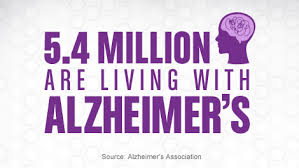
You have heard me say in these pages before that Alzheimer’s disease, that ultimately fatal debilitation of the brain, is referred to commonly by physicians as type three diabetes. This relationship between insulin resistance and AD has been confirmed by the National Institute of Health. Read more below…

Now, researchers in England have submitted study results that show using common diabetes drugs improving memory and reversing damage caused by Alzheimer’s disease. More from “The Telegraph” article:

“We believe that the concept of drug repurposing, where drugs already licensed for one condition may be beneficial for dementia, has enormous potential and could deliver new treatments faster and cheaper than producing a new drug from scratch. By speeding up the research process we hope to deliver a new dementia treatment within five to 10 years.”

I believe that diet repurposing may also be a dementia preventer. If only there were a way to keep from getting adult onset diabetes…Oh there is! It’s not a pill that you take of course. What you do to keep from getting type two diabetes is:

1. Quit drinking sweetened drinks, any of them, sugar or diet. Try drinking unsweetened tea or water.

2. Quit eating processed starches like bread, crackers, pasta, gravy, toast, breakfast cereal.

3. Quit eating ‘low fat’ foods because they have added sugars in them.

4. Quit eating foods with sugar added to them, which is most processed foods, I am afraid to say.

5. Replace all these things you can’t eat with fresh fruits and vegetables, real fats like lard and butter, and real dairy products like farm eggs and whole milk (if you must drink milk, don’t drink low fat).

Eating like this will make you feel ten times better than you do now, even if you don’t think you feel too bad. You feel tired after eating lunch or dinner because your body is trying to process the crap you just ate. This does not happen to a person that doesn’t eat starch or sugar. It is a warning signal from your body, just like acid reflux, indigestion, flatulence. People that don’t eat foods that cause diabetes, alzheimer’s or heart disease don’t have these problems, either. Your mind will clear up after a month and you will actually be able to taste what white bread tastes like again. It is awful, tasting more like cake than bread.

Posted in Health, Living | Tagged , , , , | Leave a comment

Bottles of Milk

Unknown-1

Clockwork Orange Milk

It comes in a bottle. If it did not, you would never drink it–milk. I, for one, have always thought that human beings drinking the product of another species mammary glands as a beverage was an unnatural act. This act is so unnatural I always wonder how in the world we ever got started doing it. As far as I know there has never been a movement toward storing the product of our own species’ mammary glands for use as a beverage. The mind actually recoils from the thought for some reason, but there is not the same reaction to drinking from cows or goats.

Once drinking milk turned into a profession, of course, it became something that was worth putting health claims on. Milk found it’s way onto the food pyramid, found itself being called a health food. It became common knowledge that milk does a body good. Not giving your children milk would even make a person feel like somehow you were depriving your kids the jumpstart in life that daily doses of milk would give their peers.

Lately, the idea that milk health claims should get a pass from scientific scrutiny has been taking some hits. Today in Salon.com I read this:

Recently published research suggests that milk may actually make bones brittle and might lead to earlier mortality.

This information comes to us from the British Medical Journal. They did a long term study, and long story short:

High milk intake was associated with higher mortality in one cohort of women and in another cohort of men, and with higher fracture incidence in women. Given the observational study designs with the inherent possibility of residual confounding and reverse causation phenomena, a cautious interpretation of the results is recommended.

They give us the standard caveats that correlation does not equal causation. Randomized study would have to be performed to ‘prove’ that drinking milk actually causes the problems that it is being touted as preventing. There is speculation at the method that milk consumption actually causes bones to become brittle instead of strengthening them with extra calcium. Lots of times if it seems to good to be true, it probably is. Now, however, the science will have to combat the money to get the word out.

Just like science against sugar is fighting a long struggle against science for sugar money, the pro-milk industry is sure to develop competing science to bolster the health claims on every milk bottle and carton.

I gave up drinking milk as a beverage as soon as I started making my own drinking decisions. I didn’t necessarily replace it with something better for me, but I never liked the way milk left my mouth feeling slimy, made my saliva thick. Lots of guys on the submarines I was on dreaded the day that all of the fresh milk was exhausted, while I wished that they could replace the milk machine for another soda fountain. Like I said, my replacement wasn’t any better.

At any rate, the science will be out on the health effects of milk for probably about fifty years, so you will have to make up your own mind whether or not you want to get your children hooked on the idea of drinking milk every day. Do yourself a favor though, if they won’t drink white milk, please don’t replace it with chocolate milk. You might as well feed your babies candy bars for breakfast as give them chocolate milk.

Posted in Health, Living | Tagged , , , , , | Leave a comment

Relapse, Again

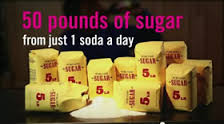
Fifty pounds of temptation

Fifty pounds of temptation

Some things never get old, like getting off of sugar and simple starch. I am gonna quit eating sugar every day, starting today. I know this sounds a lot like what I said I was planning to do just last Monday, because it is pretty much exactly what I said I would do last Monday. I thought as soon as the baseball season was over I would just march into the sunset, leaving my renewed sugar cravings behind me. All I had to do was quit drinking near-beer and that would remove the hook to sugar that was in me.

Nope.

I kept on hitting the sugar just a little bit at a time all week long. A donut here, a can of root beer there. Potatoes with just about every meal (except breakfast, the one meal I kept pure–when I ate it!) Halloween was last week, too, so there was a bunch of candy that I bought to give away. We gave away about thirty percent of that, leaving about ten dollars worth of Reeses Peanut Butter Cups and Reeses Pieces. I took them all to work to poison the guys above me on the seniority list, and I ended up hitting the candy myself, too. No advantage there!

I have finally ate all of the pizza that was left over from last week. That temptation is now gone. Maybe the tumblers are all lined up for me now so that I can sail into sugar-free bliss like I thought I could last week. This stuff is hard! Between not having anything like a normal work schedule where I can go home and do my part to keep the foods pure and sugar free on the days when my significant other is busy too, and the incidental temptations of life putting foods I don’t intend to eat right in front of my face on the days when I didn’t eat breakfast or have just recently took a hit of sugar, I have not had great success so far. This week will be different! I will it to be so! Are you listening universe? Just a little help here, please.

Posted in Health | 1 Comment

Money, A Poor Measure of Value

I have said before that what something costs is rarely a good indication of what it is worth to the world. The ‘free’ market is a place where you can sell something like oil, that when used is forever lost, for seventy dollars per fifty-five gallon drum, but something like a diamond, that will never go away until the Earth is consumed by the failing sun is worth one thousand dollars for a tiny chip. Oil is used to produce food in the quantities that we need to survive, diamonds are used to make lifeless things twinkle.

The food commodities market is another place where the ‘free’ market can get it all wrong. Instead of farmers selling their products to consumers, they sell to the exchange, where all of the produce of the years efforts are hitting the market at the same time. Naturally, if it is a very good year for plants, it is a horrible year for prices. Corn isn’t worth what it costs to farm it. To make up the difference, and keep people interested in playing this losing game, we have subsidies. You see, we actually need corn and soy to keep the processed food industry stocked with raw materials. If it weren’t for the subsidies, no farmer would make it past the first season in the existing system. There would be a lot less corn planted after that year, the supply would tighten, the price would go up to attract more people to farming. If farming were a job like sacking groceries this would be a great way to operate. Farming is not like sacking groceries, and you can’t just decide tomorrow that you will try your hand at it. Running experienced farmers off their land would lead to food system chaos.

Think you have it tough at work? Consider the plight of the Midwest’s corn and soybean farmers. They churn out the basic raw materials of our food system: the stuff that gets turned into animal feed, sweetener, cooking fat, and even a substantial amount of our car fuel. What do they get for their trouble? According to a stunning analysis (PDF) by Iowa State ag economist Chad Hart, crop prices have fallen so low (a bumper crop has driven down corn prices to their lowest level since 2006), and input costs (think seeds, fertilizers, pesticides) have gotten so high, that they’re losing $225 per acre of corn and $100 per acre of soybeans.  So if you’re an Iowa farmer with a 2,000-acre farm, and you planted it half and half in these two dominant crops, you stand to lose $325,000 on this year’s harvest.

Two thousand acres would lose the farmer 325,000 dollars. According to the USDA in 2011, “Around 80 million acres of land are planted to corn, with the majority of the crop grown in the Heartland region.” If we divide 80 million by 2,000 we get 40000. If we multiply 40000 times 325,000, we get 13 billion dollars. If we divide 13 billion by three hundred million you get 43 dollars. That is the share of money that every man woman and child pays into the system to keep farmers on their land, farming all year long and making zero dollars for their effort. Truth is they get more than enough money to break even. Our share will be more than that. Corn doesn’t cost what it’s worth.

It didn’t used to work that way.

From Michael Pollan’s “The Omnivore’s Dilemma”

For storable commodities such as corn, the government established a target price based on the cost of production, and whenever the market price dropped below that target, the farmer was given a choice. Instead of dumping corn onto a weak market (thereby weakening it further), the farmer could take out a loan from the government—using his crop as collateral—that allowed him to store his grain until prices recovered. At that point, he sold the corn and paid back the loan; if corn prices stayed low, he could elect to keep the money he’d borrowed and, in repayment, give the government his corn, which would then go into something that came to be called, rather quaintly, the “Ever-Normal Granary.” Other New Deal programs, such as those administered by the Soil Conservation Service, sought to avert overproduction (and soil erosion) by encouraging farmers to idle their most environmentally sensitive land.

Pollan, Michael (2006-04-11). The Omnivore’s Dilemma: A Natural History of Four Meals (Kindle Locations 924-930). Penguin Group. Kindle Edition.

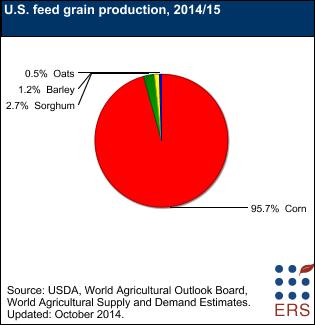
The difference is that before, the government provided a way that farmers could bring the crop to market not all at once. Now, the government encourages maxed out production, which keeps the price depressed. Depressed prices mean that it’s economically feasible to feed corn to animals. Corn is not their natural food, and it causes them to have health problems, so the farmers also feed them drugs to counter those problems. Corn in cattle diets cause them to develop e-colli infections and that spreads to other foods, leading to problems with meat and vegetable recalls…the cascade of problems is long. Suffice it to say that most of the problems with our food system, with the explosion of sugar in our diets, with the epidemic of obesity goes directly back to cheap corn. Money is the source of our troubles. Corn should cost more than it does. Corn sweetener should cost more than it does. But, they don’t.

We, in the end, control the market with our wallets. You and I, when we elect to buy our vegetables in their real forms, control what farmers will plant. The day that the only demand for corn is cattle that can’t be sold because they are grain fed is the day that farmers will quit feeding us nothing but corn. Look at this chart of crops planted in the US.

ImageGen.ashx

About six million acres were planted with fresh vegetables. You know, real food for people. Most of those vegetables went into production for canning, not for sale at the vegetable aisle of your grocery. Ninety Million Acres were planted in corn. Seventy Eight Million Acres were planted with corn’s doppelganger, soybeans. That’s 178 million acres of cropland for two crops. Thirty times more than all of the real food you see at the grocery. It doesn’t matter to the farmer, he gets paid to produce, no matter what the price does. The incentive is to plant more and more acres, because that’s the only way to get more money in this system. In fact, we are making even more corn that the system can handle. What do they do with the corn that we don’t need?

Unknown

That is a mountain of corn on the ground. This view can be found all over the midwest. Corn is worth–really–even less than the market is paying. It’s worth way less than the subsidized price to you and I. This is the equivalent of tickets to a game where there are fifty thousand empty seats and extra tickets laying on the ground outside the stadium. This is wasted energy, time, and effort. This is a broken system that is wasting non-renewable resources and making us fat and sick to boot.

Stop buying processed foods. Stop buying grain fed meats. You owe it to yourself to vote with your wallet for a better food system.

Posted in Health, Living | Tagged , , , , | 1 Comment