Stevia Wonder

141002092042-pepsi-coke-natural-620xa

These new sweet drink concoctions from Pepsi and Coca Cola are partially sweetened with stevia. You might ask, “Is stevia better or worse for me than sugar?” You ought to wonder that. The big drink manufacturers are putting stevia into their drinks because more and more of us are turning away from soda of any kind. In order to lure us back, this is the latest enticement. Stevia is not in these drinks because it’s good for you.

Stevia is found in an herb from South America. As an herb, the plant is not approved for use in foods, and FDA approval is not on the horizon. However, the sweetener is approved in it’s extracted and highly processed form. It contains ‘no’ calories, but as a chemical, of course, it is processed in your digestive tract and comes out the other end as something else. However, for now at least, it seems that stevia does not cause the blood sugar effects that other artificial sweeteners do. Worth noting, stevia is not recommended for people taking these medicines, as it may interact:

But there are some health concerns surrounding the stevia plant. Stevia may cause low blood pressure, which would be of concern to some taking blood pressure medications.

“Caution is advised when using medications that may also lower blood sugar. People taking insulin or drugs for diabetes by mouth should be monitored closely by a qualified health care professional, including a pharmacist,” Ulbricht said.

Stevia may also interact with anti-fungals, anti-inflammatories, anti-microbials, anti-cancer drugs, anti-virals, appetite suppressants, calcium channel blockers, cholesterol-lowering drugs, drugs that increase urination, fertility agents and other medications, Ulbricht said. People should talk with their doctor before deciding to take stevia in large amounts, she said.

The cola products that are coming out are not just stevia, though. They are stevia and sugar. They will have ‘less’ calories than high fructose corn sweetener flavored sodas. The idea is not to produce a safe soft drink, but a soft drink that you will buy because it is ‘better for you.

Stevia is ‘natural’ and will have the glow of healthiness that natural products bring with them. 

While much of stevia’s appeal is that it’s natural, some critics note that most products include more corn sugar and bulking agents than the stevia plant itself and that the term “natural” is tricky territory for food companies.

In 2013, Cargill agreed to pay $5 million to settle a class-action lawsuit in a Minnesota state court that claimed its Truvia brand should not be marketed as “natural” because it is highly processed and uses genetically modified ingredients.

Stevia has another problem. By itself, it leaves a licorice flavored aftertaste. Leave it to the food-additive industry to come up with solutions:

Several companies are working on the problem. Comax Flavors this week announced that it was releasing a natural masking flavor to cover up stevia’s unpleasant aftertastes. And last month, Givaudan Flavours said it had discovered the bitter taste receptors that stevia sweeteners trigger, and applied for patents related to these discoveries. Meanwhile, Blue California, along with other companies, has suggested that if you only use purer stevia extracts, like they do, everything will taste fine.

If your artificial flavor leaves a bad taste in your mouth, then add another artificial flavor to hide that fact. So we end up eating not one new thing, but several in combination. Lots of unnatural ingredients to shower our microbe helpers with. New variables in our diet to wonder about ten years from now.

OR, you could forego the sweetened drink all together. Water is a perfectly good substitute for colas. Unsweetened tea is a very popular drink around the globe and might catch on here, if we all decide tomorrow that we don’t want to be food industry lab rats. Water has the advantage of being delivered right to our taps, being a tightly regulated utility that is reliable and inexpensive. It has a neutral effect on our digestive systems. There is no mystery surrounding water, or scientifically discovered problems with it that are going to be announced in the next few years.

Posted in Health, Living | Tagged , , , , , , | Leave a comment

It Is How It Is

One never knows, when he reads something on the internet, whether it is actual news or an amplification of some real news, or even downright misinformation. I read that sugar is more addictive than cocaine. Actually, I have read it more than once on the internet. Today I looked it up a little bit more in detail. I came up with this, from the US NIH:

Overall, this research has revealed that sugar and sweet reward can not only substitute to addictive drugs, like cocaine, but can even be more rewarding and attractive. At the neurobiological level, the neural substrates of sugar and sweet reward appear to be more robust than those of cocaine

Cocaine ain’t got nothing on sugar. Now, I am not the kind of person that wants new prohibitions put on consensual acts. If cocaine is not as bad as sugar, then maybe it’s time to let all the cocaine addicts out of our jails. On the other hand, lots of people are not currently putting cocaine on their breakfast cereal like they might otherwise be if it were perfectly legal.

When I say that I am addicted to sugar, I don’t mean that in an artistic, poetic kind of way. I mean that when I consume enough sugar to get the ball rolling, I tend to binge on it. There are some things that I eat or drink that I believe may have sugar in them that get that cycle started. They don’t have to list ingredients on alcohol or beer here. I think that my near-beer from Coors or Miller that I like, since I gave up real beer a few years back, is getting me high on sugar. Seems like after I have had a six pack of them I find myself wanting the donuts at work a lot more than otherwise.

Since the Royals here in Kansas City are doing so well in post-season baseball I have been getting near-beer to drink while I watch the games. Since I started doing that I have been unable to turn away from donuts, cookies, pop, white bread and candy at work, and even a couple of times for dinner at home. Why that is, is kind of a mystery of how the brain functions. Normally, I could look at one of these foods and just not have a feeling, be neutral to it. When I am in the sugar loop I just have got to try some.

I know that now that I have consciously made the decision to get back on track vis-a-vis sugar I am in for the withdrawal symptoms that I journaled about in the 21 Day Sugar Detox link found at the top of my WordPress page. Hot hands, perpetual hunger, sweating at night are all in my future. This is like almost quitting smoking, but letting yourself have just that one cigarette in the morning with the guys at work. Soon it’s one at break, one at lunch, one before home. Before you know it you are sneaking out to the shed to puff one quickly all the time, hating yourself and finally admitting that you are still smoking. The only difference this time is that I am not ashamed that I am a sugar junkie. I admit it, and I know what it takes to make that change. Every now and then these days I can smoke a cigar with a friend. I am not a smoker. I can consciously eat a wonderful desert, because I can control my sugar intake that way. I can’t drink near beer, though, because that is too much over a period of time and changes the way I look at sweet foods. It starts my craving. Back to the drawing board I go, to draw up my new boundaries of my new relationship to cocaine, I mean sugar.

Posted in Health, Living | Tagged , , , , , | Leave a comment

I Am An Addict

Unknown

It’s not my fault that I am a sugar addict. Nobody really studied sugar addiction until recently, and because sugar is not illegal and contraband, it doesn’t really cost all that much money to be hooked on sugar. While sugar’s negative effects are devastating, using sugar does not leave one a drooling mess when you are ‘high’ on it.

I am addicted, though. When I take sugar, I get a rush and my heart hammers. I sweat a cold sweat. Using sugar makes me hungry, too. I am much more prone to eat other things that are not good for me, like bread, pasta, potatoes, if I have used sugar recently. Call sugar a gateway food–it leads to the harder stuff.

Because our schedules are so screwed up, I am working seven days a week, ten hours a day, we went out to eat hamburgers and fries for dinner a couple of days ago. Of course I was hungry soon after I ate, a common side effect of both white bread and sugar. Sugar because I got a Pepsi to eat with my burger and onion rings.

The next day we had smoked ribs in a pot luck style dinner at work. Someone thoughtfully brought canned sodas. Guess what? I could not resist a twelve ounce Coke for lunch. See where this is heading? My sweetie made a really great lightly sweetened desert for this potluck. It was the kind of desert that normally would satisfy the desire for desert without throwing one into a sugar spiral. However, I was already in a sugar spiral. The next day I ate about ten pieces of this desert total. They were small pieces.

Now I need some dedicated sugar detox time. No pasta, no potatoes, no sugar, no bread. I may even need to limit my fruits until I get back into the swing of no sugar. I am addicted. I need to be careful how close I let my temptations get to me.

I will always be a sugar junkie in some stage of recovery. It is the price I pay for being born in the US during the last half of the twentieth century. Anyone born here is liable to be a junkie just like I am. We are clueless to our condition, we are getting fat, we are getting sick. These days it is harder and harder to not know that your problem is sugar. The news is spreading far and wide. Someday there will be label information telling you what percentage of your recommended daily allowance of sugar is contained in your foods, but for now they are all ‘too much’. For now, I have to avoid all of the processed foods. For now I can’t be fooled into eating low-fat versions of anything, because they have been enhanced with sugars.

This week, I have to be good and go cold turkey off the sugar.

Posted in Health, Living | Tagged , , , | 1 Comment

Eat Like a Foreigner

One of the best things about living in the US is that it is a melting-pot of cultures, to this day. Since we are all immigrants from somewhere else, there are foods here and ways of cooking that come from all the way around the world. The western diet that has grown organically here out of the industrial society incentives to make profit is a disaster. It is one alternative diet though, among many to choose from in this country.

One does not have to go very far in any city in the States to find examples of the best foods found in any other city in the world. If you want to cook it yourself, just about every city has markets where ingredients for that cuisine are imported. Here in Kansas City we can get oriental foods and vegetables in several different places around town. There is Huong Vuong at the River Market, and right across the street, another one. Both are huge groceries.

If you want Mediterranean foods more Italian in nature, you can go to Carollo’s Deli in the River Market. Here you can find those tough to find ingredients, like mortadella sausage, for your muffuletta sandwich. On weekends they even cook outside the store, and the food smells and tastes great. There is quite a line at this deli every weekend. Take a number!

Like German food? I sure do, and this grocery in Mission Kansas is worth the drive. Werner’s has great sandwiches and sausages, too, that they cook up fresh on the weekends. If you have to eat out, you can’t beat fresh foods cooked right there where you can watch. If you are looking for special European ingredients, they have a fine selection.

Another fine place to get real unprocessed foods is at the Al Habashi Mart in the River Market. They have every spice you could want, and in addition, they have Eastern Mediterranean foods like canned Ghee, which is clarified butter, from pastured cows. This is a prime source for your Omega 3 oil needs. Get a big can and cook with it, for great fried potatoes, and sautéed vegetables. They have goat cheeses, frozen lamb, shiny polished almonds. This place is not somewhere you want to come hungry. If you do though, right next door they have a kebab restaurant that is open for lunches. We have never eaten anything there that wasn’t wonderful, so take a chance, even if you can’t pronounce it!

Greek, Indian, African foods can all be found. Of course how to cook them can also all be found online. I have been enjoying a great wordpress blog lately, Healthy Kitchen, where every day there are two new healthy recipes posted. I have tried a couple, time permitting, and have been collecting the ones that look most interesting to me. Using the internet we can all find easy, tasty and new things to fix. Cooking doesn’t have to be mysterious any more. This year I have discovered how to make my own sausages–its easy, ferment my own fresh vegetables–ridiculously easy, pressure can veggies and meats–easy if you have the equipment, shell and roast my own local nuts. If I wanted to I could think of a bunch more things I learned off of the internet this year, but I am sure you have too!

Well, being as it’s Saturday and a beautiful day at that, grab your significant other, grab your reusable shopping bags, and head out into the world. Bring home the great and interesting things that are available at these great businesses I have pointed out. Point out your own favorites, no matter where in the world they are. I love learning, and someday I may be in your neighborhood, and I would love to find your favorite spot to pick out exotic other-world ingredients.

Posted in Health, Living | Tagged , , , , | Leave a comment

Numbers Matter, But Units Matter More

Numbers matter, but without units, they are meaningless. It is hard to keep track of big numbers, or to turn scientific numbers into a value that means something to us in our lives. Sometimes they try to help us by converting a big number into something we can relate to. The national debt is 14 trillion dollars, for instance. That number is too big to mean anything. If you stacked up 14 trillion dollar bills, it would stretch to the moon and back two times. Well, that value is meaningless, too. I have no idea how far away the moon is. Even if you tell me the moon is 250,000 miles away, that’s too big a number for me to relate to.

So I turn to the calorie. Who here knows what a calorie is? This is the first problem with measuring foods in calories, the unit itself is something we don’t understand. Food calories are determined by BURNING a food in a calorimeter. A calorimeter will give a calorie content for anything that will burn. A pound of hardwood, for instance, has a calorie content of approximately 2 million calories. That is because a calorie is how much the temperature of the water in the calorimeter rises when the sample is completely burned. Now we sort of understand the unit.

So, when you eat a food, there is no furnace inside of you. The fact that a twelve ounce Coke has 140 calories is really a number that is doubly meaningless. For one thing, the unit is really kilocalories, which is 1000 calories. Meaning a Coke has 140,000 calories in it. If that number were determined just by burning the component ingredients in the Coke recipe, it obviously would be a number that relates to nothing, and thankfully, that is not where that number comes from. An exact description with links can be found here, and I excerpt the relevant parts:

The Nutrition Labeling and Education Act of 1990 (NLEA) currently dictates what information is presented on food labels. The NLEA requires that the Calorie level placed on a packaged food be calculated from food components. According to the National Data Lab (NDL), most of the calorie values in the USDA and industry food tables are based on an indirect calorie estimation made using the so-called Atwater system. In this system, calories are not determined directly by burning the foods. Instead, the total caloric value is calculated by adding up the calories provided by the energy-containing nutrients: protein, carbohydrate, fat and alcohol. Because carbohydrates contain some fiber that is not digested and utilized by the body, the fiber component is usually subtracted from the total carbohydrate before calculating the calories.

The Atwater system uses the average values of 4 Kcal/g for protein, 4 Kcal/g for carbohydrate, and 9 Kcal/g for fat. Alcohol is calculated at 7 Kcal/g. (These numbers were originally determined by burning and then averaging.) Thus the label on an energy bar that contains 10 g of protein, 20 g of carbohydrate and 9 g of fat would read 201 kcals or Calories. A complete discussion of this subject and the calories contained in more than 6,000 foods may be found on the National Data Lab web site at http://www.nal.usda.gov/fnic/foodcomp/. At this site you can also download the food database to a handheld computer. Another online tool that allows the user to total the calorie content of several foods is the Nutrition Analysis Tool at http://www.nat.uiuc.edu.

In a way then they do calculate it based on the pieces that are contained in the food. Now we know that your Coke has 140,000 calories based on burning the sugar that it contains. A Coke with no calories means that it’s sweetener doesn’t burn. When you drink a diet Coke though, it’s not going into a furnace. It is going into a chemical reaction chamber, combined with a biological digester. Even if your drink contains no ‘calories’ it reacts with your digestive chemicals and is consumed by the microbes in your digestive tract. Whatever it turns into after that process is absorbed by your body. Anything not absorbed passes out of you to feed the flies and other creatures that eat our wastes. There are definitely ‘calories’ in what passes out of us, which you could prove by putting your crap into a calorimeter. I don’t know if anyone has ever tried that experiment, but I bet they have.

When you hear or read that “A calorie is a calorie”, now you know that that is a BS statement. Technically a calorie is a scientific measurement, and is, therefore, a calorie by definition. Inside of your body, though, a calorie is more than that, and a calorie input may represent way more than a calorie inside of you. Lately, researchers have discovered that artificial sweeteners have a worse fattening effect in your body than natural sugars do. Our focus on calories is actually being used against us. You might buy a zero calorie drink thinking, wrongly, that you can have as many of them as you want, with no more risk than drinking water. The proof is in the results, though. Water is harmless, diet drinks are harmful.

Butter and margarine may have an identical amount of calories, but it is now known that margarine is very harmful to your heart, causes heart disease. Those kinds of fats are more and more being banned in countries that care about the health of their citizens.

So the most important thing to know about your food is not how many ‘calories’ it contains. The most important number to know is how many artificial ingredients it contains. The closer that number is to zero, the better the food is for you. Your body evolved to deal with the components and compounds found within natural foods. Processed foods may last longer on the shelf, but the things in them that make them last that way are food for either you, or the biological creatures within you. The number of people that react badly to these things is greater than zero and less than one hundred percent. Nobody actually tests any artificial ingredient for adverse long term reactions, but just look at the health of our population as a whole and realize that we are getting more and more unhealthy due to the processed foods that we are eating.

In the store, ignore how many calories the label says the food has. It has little or no relation to how good that food is for you. Instead, look to see if it has a label, or if it is packaged in a bag or box. Has it been processed before being sold to you? If it is processed and is labeled then it is not a natural food. Don’t eat these kinds of foods, except in special situations. In fact, don’t look for health claims on your foods, either. Health claims are irrelevant to your health. Processed vitamins added to your foods are not really going to be good for you once you eat them. They are only added to get you to buy the food, not to benefit your diet.

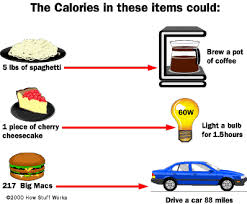
Finally, in The Atlantic this month there is an article about labeling foods with numbers more relevant than ‘calories’. Their idea is that informing you about how many miles you would have to run to burn it off would be more relevant. Perhaps. Knowing that you should not be eating processed foods would be more valuable information.

Counting calories is, as I’ve written before, a terrible approach to eating. As the nutrition mantra goes, “A calorie is not a calorie.” Calories from sugars affect the body differently than do calories from fats or protein. Our bodies are great at taking in and storing calories from food, and terrible at burning them. That’s because of a stubborn insistence on staying alive.

Unknown-1

Posted in Health, Living | Tagged , , , , | 1 Comment

You Gotta Eat

images

Great article in the Washington Post by Debbie Koenig about cookbook cooking and real life cooking got me thinking about actually eating the way that nature intended, struggling against all of the impediments and inducements of our modern-day lifestyle.

Mark Bittman in VB6 advises us to eat only fruits and vegetables until dinner time. The dinner meal is frequently eaten at a restaurant, especially if you are the New York Times’ food writer, so it’s okay to eat meat and deserts after five. He also advises that we keep our pantry stocked with already prepared foods so that eating right is as easy as throwing it together. Get his book that I linked to above if you want a really good idea of how it could work.

Ah, to live in a world where we can bring the food home from the store, break it down, and get it ready for this week’s meals. At my house, I barely have time to keep my batches of kombucha going, and that only takes me about thirty minutes to bottle and prepare. I want to make myself a batch of muesli so that I have cereal to eat every morning. It takes about five minutes to do if I have all of the raw ingredients at hand. Sometimes I don’t have muesli to eat in the morning. Sometimes I don’t have almond milk for my muesli, because I have to think ahead to soak the almonds. I smoked a Canadian bacon over a week ago and I have yet to break out the meat slicer to slice it into bacon that I can use for bacon and eggs on those mornings when I have failed to make either muesli or almond milk.

It is really hard to be ready at all times to do the right thing. Our grocery store is literally one block away. I can’t imagine if I were like lots of you, where the store is miles away. I can go to the store every day on the way home from work. If I had to plan that trip, make it once a week, for instance, my menu would be a mess. I am not ready to actually plan to eat right. I like playing it fast and loose with dinner. I buy my meats in bulk, keep them in a chest freezer, so I have to think yesterday, “what do I need to thaw for tomorrow”, which makes planning pretty care-free. This system only breaks down on the days when we both are working all day and have no time to cook whatever we may have thawed–like yesterday. Yesterday we went to dinner and a rock concert right after work. On a day like that you just gotta eat out.

We are lucky here in Kansas City that there are some really good choices for prepared meals that are going to be really close to what we might have prepared at home. Last night we went to Aladdin’s, which is Middle Eastern cuisine. Gyro, basmati rice, sautéed vegetables, yogurt sauce, lentil soup…I could not have done so well in so short a time in my kitchen. Not a bad choice, absolutely according to plan, and there are many places that we might have picked that would have been just as good for us. We did consider fast food. The words came out of my mouth. At the last instant Karen said we had time for Aladdin’s so we tried it and we did. It was that close. The inducements to eat like ‘everyone else’ and eat foods that we don’t know what they contain are very powerful. It is so easy to say “might as well”.

Your life is absolutely filled with meals that you don’t have time to make, or maybe even don’t have time to eat! The only chance you have to break the cycle is to get your raw ingredients into your home. Get them ready to use if you have time, but at least get them into your home. Get rid of your boxed and processed foods by eating them, but don’t buy more! Fill your pantry and refrigerator with real foods that you can use. Don’t worry if you have never used some of them before. Google and YouTube will show you how to use strange new real-food ingredients. You need spices to make these foods awesome, but they don’t have to be exotic spices. Here is a list of 25 must-have spices. Buy them a few at a time, they last a while. I would only add Cardamom to the list, because it is in my muesli recipe.

I know you can do this. It’s really important for you and your family that you figure it out. It is important to keep in mind that it is a process.  Change is made one small change at a time. Don’t feel guilty if you can’t keep to the straight and narrow path every meal, but do it most of the time. There is no reason to go back to the bad old ways if you miss one time in the good new ways. Give yourself credit all of the time. You deserve it.

Posted in Health, Living | Tagged , , , , | Leave a comment

It’s Not Your Fault

You live in the United States, you work long hours and so does your spouse. Your kids eat breakfast at home, lunch at school and dinner on the way to or from one of their many extracurricular events. You eat a quick dinner on the road or out of the freezer and into the microwave. You’re busy.

We are all busy, but we are doing our best. Our whole lives we have heard that we need to eat low-fat foods, so as we make our choices in the store we look at the label to make sure that the one we are getting is the lowest fat one of the bunch. Lately we have been also picking up things that have fruit juice sweeteners in them, because we are trying to cut down on the sugar we eat. Fruit sweeteners are healthier than sugar, or at least they sound healthier.

If this sounds familiar, you are in the vast majority of Americans. We really want to buy the right things, to read the labels and pick the ones with the most health conscious labeling on them. The only problem is, the advice you were given about what is ‘healthy eating’ has been misguided for practically your entire life. It turns out that all along you should have been eating real foods. By real foods I mean you should have been eating things that are natural. Broccoli, cauliflower, beans, carrots, apples, oranges, cabbage and lettuce are all single ingredient foods. They come packaged in the container that nature expects when it hits your digestive system. They contain ingredients that are vital and have not yet been identified by food scientists. They feed bacteria in you that also have not been identified by biologists, and may never be. Nobody yet knows why eating an apple is so much better than eating a food that contains ‘apple’, like a McDonald’s Hot Apple Pie. In the processing of the apples by industry something essential is lost. No processed food comes as good for you as the real thing, and that is because your body has evolved to make the most of food in that condition.

It’s not your fault that you are gaining weight, that your kids are gaining weight. When you restrict the kids to low fat foods, when you deny them sweets, you think you are doing the right thing. Nobody told you that they replaced the fat in those foods with sweets. Nobody told you that when they took out the fat in that mayo they replaced it with something that causes heart problems. It sounds healthy reading the labels. Why wouldn’t they tell you?

You look at the label on that breakfast cereal and it tells you the percentage of daily recommended allowance contained in a serving for every ingredient in that food…except one. Sugar. If you looked at the daily recommended allowance of sugar in your kids morning yogurt…if they were required to tell you…it would say 125%. No more sugar of any kind right after that container of yogurt. Except that there is sugar in every processed food in your pantry.

It’s not your fault that all of the food you eat on the road contains artificial ingredients, extra sugars, fake fillers, trans fats. Nobody has to tell you what is in your restaurant foods. How are you going to eat on the road and be sure of what you are eating? You aren’t and they aren’t going to volunteer that info for you.

What are you going to do? Keep buying the artificial foods, loaded with artificial ingredients? Will you figure out how to make a quick breakfast for you kids that is made up of real ingredients like bacon, eggs, sausage, oatmeal, grits? Can you make a dinner at home as quick as you can eat at a restaurant?

You can do these things, and they don’t take as long as you think they do. They don’t cost as much as you think they cost. They don’t slowly kill you with diabetes, heart disease, obesity. It’s worth a try. See how I did it, go to dcarmack.com and look at the top menu. Click on the 21 Day Journal link, read the whole month’s entries to see what I had to do to quit eating like everyone else. It was hard and it was easy. I won’t be going back to the old way. Join me.

Posted in Health, Living | Tagged , , , , | Leave a comment

No Respect for Mealtime

The problem with school lunches in the elementary schools of the US is that citizens of this nation have no respect for the food we eat. You may tell your kids ‘eat your vegetables’, but if you don’t do it, it’s like telling them not to smoke as you smoke two packs a day yourself.

We eat junk. When we cook we cook junk. How outraged could we possibly be if our children eat junk at school in the school cafeteria?

If only American kids could eat school lunches like they do in France

In France, lunch menus are prepared two months in advance and sent away to a nutritionist who gives the menu final approval. The nutritionist can make adjustments to the meal, such as suggesting a dessert be swapped for fruit if “she thinks there’s too much sugar that week,” writes Plantier. Not only that, but lunches are prepared on site. There are no “ready made frozen” meals to speak of, no box-cutters excavating fish sticks or fries; instead, school cooks prepare everything by hand.

In the New York Times Magazine there was a long article that detailed the trench warfare going on over school lunch standards. Currently school lunches contribute to the child obesity epidemic. The lunches are processed and fast food junk. The status quo makes big food companies and pizza companies tons of money, plus gets their products into every child’s hands. It is a marketer’s fantasy come true. They have no intention of letting your children eat fresh foods, fruits or vegetables.

There is a very good chance that as you read these words it is the first you heard that anyone is concerned about the state of school lunch programs. You are likely also to have no idea what your kids are offered for lunch every day. Perhaps you have never set foot in the cafeteria where they get fed half of their calories for the day.

Maybe you don’t know that over half of the elementary school children in the US are over weight. Maybe you don’t know that. Maybe if you did know it you would wonder what could be done about it.

Read the article to find out what the fight is about. Here is a sample of what the law is up against.

To ensure that the students’ calories were spread among different food groups, the administration had imposed a weekly cap on grain and protein, allowing no more than 12 ounces of each per week at lunch. Some school-nutrition directors, struggling to implement the caps, shrank the size of popular items like pizza slices or hamburgers. But many students that year were refusing — as they have since roughly the beginning of time — to take the now larger fruit-and-vegetable servings in compensation, meaning they wound up with significantly less food than before. Students were left hungry, and the lunch ladies were put in a tough spot.

As I see it the problem is choice. When my kids come into the house for supper I don’t have healthy and junk food available and then let them pick. When I have a lunch provided for me at work, I don’t get to choose. When did giving the kids the option to eat healthy or not become an option? It’s really easy. You pay for a week’s worth of lunches on Monday. Every day of the week, you go to the lunch room and get what is for lunch that day. No Choices.

Is it really debatable whether or not a middle schooler should eat pizza for lunch five days a week? Is it really debatable whether or not they pick milk or a Coke? Fruit or a slice of cake is not a choice I let my children make at home, why on Earth could anyone make a straight faced argument that it is a choice they should have outside of my supervision?

If you kids are overweight you can do something about it. You can eat right at home. You can feed them a real breakfast of food that is not out of a box or bag. If you do, lunch won’t be just another dietary disaster for the day. If you sufficiently appreciate the food you eat your kids will learn to as well.

Posted in Health, Living | Tagged , , | Leave a comment

It’s Basic Biology

Germs have gotten a bad name, because of the few that are bad actors. They have screwed it up for all the rest of them. We keep reading about good ones lately, though. This morning’s New York Times has a story about getting good germs back into the bowels of someone who has lost their own colony through medication or mismanagement.

Basically, they take the poop of someone whose bowels are healthy, they strain it, take the solids out of it, put a little bit of antifreeze in it, put it in a capsule and freeze it. You take the capsule by mouth. Don’t chew it.

“At first I was kind of grossed out,” said Deirdre, who asked that her last name be withheld because of privacy concerns. But about a week after taking the capsules, which “kind of felt like small ice cubes,” her digestive system began to normalize.

This, obviously, is not rocket science. Biology, however, is the study of natural and living organisms, and as a science it is way behind rocket science. It is far easier to study the farthest stars than it is to study the germs and other living things within your intestines. One of the problems with observation and analysis is that the act of observing changes the system that you are watching. A large proportion of the life inside of us cannot live outside of us. They cannot be harvested as of yet for observation outside of the body. It is very much like trying to catalog life at the very bottom of the deepest ocean. Bring the life to the surface and all you get to examine is what is left after decompression–a dead organism.

We don’t know what all of these germs in us like, but we are beginning to figure out what they do not like–chemicals of other than natural origin. Drink diet pop and promote a bacteria that CAUSES insulin resistance and type two diabetes. Eat trans-fats found in margarine and suffer diarrhea, cramps, bloating…basically all of the symptoms of a wild micro-party in your colon. Eat trans fats long enough and suffer heart disease. Stop eating them and instantly the good germs get the upper hand again, your heart disease is reversed. Can it be this easy?

Biologists are beginning to study soils and roots in this new light. They are looking at the microbiota in the soil as an idea of how our bowels work, in reverse. The microbes are on the outside of the roots doing the same job for plants as ours are on the inside of our ‘roots’. While not super easy to study, it is definitely easier to examine what is happening between soil and root than it is to study what is happening inside of the living human digestive system. If you are really interested, look here.

We have evolved, since the dawn of time, to live in cooperation with every other living thing in our environment. This environment includes viruses, bacteria, mammals, birds, plants and every other living and nonliving thing in our world. We have a place where we cooperate with and promote the things that are good for us, including things we can’t see. Some of these living creatures just need us to keep doing what we have always done–namely eat the same foods. Wild people are far healthier than us civilized ones because they don’t get ‘Western Diseases’ like hypertension, diabetes, alzheimer’s and heart disease. The theory used to be that it was due to their hard lives, but lately the idea is growing that it’s because we eat artificial foods. Even if you don’t believe in Darwin’s theory, perhaps you can imagine that God created a system where you have bacteria in you that he didn’t intend for you to kill by eating junk food.

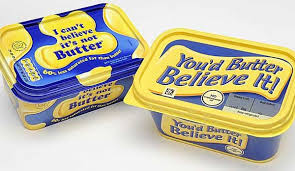
Believe it--It's NOT butter

Believe it–It’s NOT butter

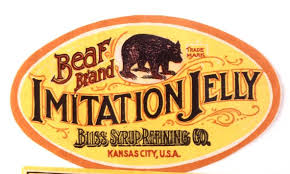
The law used to demand that foods that contained imitations of real ingredients be labeled as ‘imitation’. I can remember margarine being labeled as imitation butter. We should get back to that. We should get back to eating like our grandparents did and quit worrying about how much fat is in food, because eating fat doesn’t make you fat (unless it’s imitation fat, like Crisco). All of these fake foods are killing us and we aren’t doing anything about it, except for taking vitamins (a proven waste of money), taking probiotics and eating living yogurt that is also packed with added sugar and colored with nano particle metals, eating ‘low fat’ foods that are loaded with fake ingredients to make them flavorful, but makes them deadly.

images-1

Foods Used be labeled IMITATION

Wikipedia defines chronic poisoning like this:

Chronic poisoning is long-term repeated or continuous exposure to a poison where symptoms do not occur immediately or after each exposure. The patient gradually becomes ill, or becomes ill after a long latent period.

That sounds like what eating the Western Diet is doing to us. It is creating an environment inside of our bowels where it feeds bacteria that are producing toxins. Those toxins are causing our blood cholesterol to go up, causing plaques on our blood vessel walls, causing us to lose control of our blood sugars. Nobody is studying the ingredients in our foods with an eye to what they will do to us long-term. Something we are eating is making us allergic to real foods, making us allergic to food dyes. Something we are eating is poisoning us–but one thing we know is that whatever it is, its artificial.

Stop eating imitation foods. Do your own non-scientific study, be your own test subject. Gain all of the benefits of the lucky people in the fecal transplant study I referenced above, without the actual fecal transplant. Grow your micro biome by feeding it and caring for it the way that nature (or God) intended. Don’t try to eat like a westerner and make up the difference by taking a supplement or probiotic capsule. Just stop eating fake foods. It’s really Just That Easy!

Posted in Health | Leave a comment

Nutritionism’s Unintended Consequences

There is an emerging devotion to the idea that we can control our dietary outcomes if we can just understand the building blocks of our foods. Ages ago we categorized our foods very simply, we only could fathom the most basic of the components of it. As we have discovered new bits, we assigned them special significance in the overall scheme of what we should eat. Discovering cholesterol and discovering the cholesterol deposits in the veins of heart disease victims created an emphasis on food sciences, and a new need for food scientists. We isolated minerals in foods, called them vitamins and overnight created a new area for food scientists to work, and a new industry for delivering to us those minerals that we would not be getting in our processed foods.

I recall a scene in the B-movie “Barbarella” where in the future you would get all of your nutritional needs from a single vitamin pill. We know now, (and probably knew then, but what does Hollywood care about the facts), that we won’t be getting all of our nutrition from a single pill, or even from all processed foods. However, to the lay-person it seemed like someday the high priests of food science would determine what all of the essential bits were in our foods, and that we would be able to get them without the messiness of getting it from living things.

Nothing could be further from the truth, as it turns out. Our moves away from the natural state of foods to the ultra-industrialized and vitamin fortified foods has created a medical nightmare of allergies, auto-immune diseases, liver diseases, diabetes, and bowel problems. None of the things that food science has created to counteract the devastation of our devotion to nutritionism have worked to that effect. Artificial sweeteners have proven to cause the same disorders as natural sugars. Added ‘vitamins’ have less of the beneficial effects than the minerals delivered in their natural forms. Artificial fats and butters are much more deadly than their natural counterparts like lard and butter.

It seems that the answers to the problems caused by nutritionism are being found by another group of scientists, biologists. Apparently, we don’t live so well in isolation from our environment. Eating one hundred percent processed, one hundred percent dead foods doesn’t give us any of the things we really need from our foods. Eating all of the known beneficial vitamins, artificial sugars and processed starches and shelf-stabilizers is not enough to promote our health. We need to eat living things in our foods. Eating sauerkraut that has the bacteria in it is good for us. Eating pickles that have the bacteria in them is good for us. Eating yogurts and cheese that are as alive as we are is good for us. Eating actual fruit, not foods that ‘contain fruit’ is the way nature intends for us to tend the garden of bacteria that live within us. If we eat artificial sweetener, it promotes a bacteria that CAUSES weight gain and diabetes.

However, even as they discover how important our gut bacterias are, that is creating a new market. That market would have you believe that you can keep eating the poisons and destructive things you are now, and you just need to take a ‘probiotic’ capsule to keep you healthy. Does that really work? Do I want to try it out? How devoted am I to continuing to eat the junk and artificial foods? The food industry wants you to keep buying more and more. Buy low-fat foods, then buy zero calorie drinks, then buy vitamins and supplements, then buy gluten-free, then buy organic, then buy probiotic capsules. Keep getting fatter and sicker while the market sorts out what you should eat.

It would be nice to have the time to wait for this war of food science and nutritionist to play out. It would be nice if they could get together and agree on what is best for the health of the nation. It would be really nice if the corporations cranking out this or that poisonous food would stop doing it, so that we can’t make choices that are bad for the health of ourselves and our families. It would be nice, but I don’t intend to wait. Right now you can turn yourself and your family around and just stop buying manufactured foods. Start buying real food, the single ingredient kind. Lettuce. Butter. Apples. If you have to eat sweets, make your own. Order a desert at your favorite real restaurant and enjoy that moment, don’t spread that moment out all over your food week, by eating a little bit of sugar in every bite of food you take, every sip of soda pop you drink. Drink water for a month.

Make One Small Change at a time. Set back and enjoy the show that the food science debates will set off in the future.

Posted in Health, Living | Tagged , , , , , | 1 Comment