Nina Weighs In

One of my favorite champions of natural fats in our diet, Nina Teicholz, author of one of my favorite books “The Big Fat Surprise,” has offered us her opinion of the new dietary guidelines from the Dietary Guidelines Advisory Committee. This committee convenes every five years to offer some ‘scientific’ advise on what the nation, as a whole, should be eating. This year’s guidance is notable for it’s dropping of guidance for dietary cholesterol and it’s prescription that we eat less meat because of global warming. I am paraphrasing that last bit, but the guidance makes a pass at how much land and farming is done to feed our food animals, which can only be a problem if you are worried about greenhouse gasses from farming and farm animals.

The government has backtracked on the advice to quit eating cholesterol and fats. Long ago, the crusade against these innocent ingredients was begun with the best of intentions. It seemed as if all of the middle aged white men in the country were keeling over right and left from heart attack. A quick look at other countries showed that some countries seemed to not have this problem. A hasty look at the differences showed that these peoples might not eat as much fat as we do here in the US. Once the authorities had a suspect they ignored and silenced any voice that implicated any other suspect. If it sounds like I am describing an over-zealous prosecutor who ‘just knows’ that his suspect committed the crime, it is because that is exactly how it came to pass. The media jumped on board and the railroading of fat and cholesterol was complete.

Finally, cholesterol has had it’s day in court. Clinical trials have long proven that ‘cholesterol’ is a term too big to use in a meaningful way in dietary advice. They have known since the beginning that eating cholesterol didn’t lead to cholesterol in your blood. However, this evidence was disregarded so as not to confuse the message about not eating natural dietary fats. Now cholesterol is no longer considered an accomplice, the poor, innocent saturated fats are now on the hook all alone.

Except they aren’t. Like I said, evidence has been pouring in that exonerates dietary fats from any relationship to weight gain or heart disease. Earlier this year Time magazine ran a lengthy story about the faulty science used to convict lard and butter. No, now dietary fats and meats are warned against because of their role in global warming. Amazing. Cattle that graze on the wide open prairies of the US do not contribute to global warming. Pigs that follow along behind the cattle and eat the bugs and leftover bits found in the pastures and woodlands of America do not lead to climate change. Confinement hogs and feed lot cattle do, though. They are fed corn and soy–because these foods are artificially cheap owing to USDA subsidies that make sure a farmer makes enough money to plant them even if the price drops to zero dollars and zero cents per bushel. Entire US states are covered in blankets of subsidized grains, whose only purpose is to feed to confinement cows, hogs, and chickens. This does lead to excess CO2 emissions. Our poor government is powerless to fight big food on his home turf, though, so they move the fight to our dinner table and the lunch table at the kids’ schools. Eat less meat and fat because of sustainability.

Now the real murderer stands alone, all of the real evidence pointing to guilty carbohydrate. Right now the Committee says cut back on sugar. America shrink your sugar consumption from your current thirty teaspoons of sugar a day to ten. Now they are just blaming sugar for poor health outcomes–it is an easy target. However, carbohydrate, of which sugar is just the red-headed step child of the larger family, stands in the shadows with frosting on its lips. Carbohydrate is the true criminal, and the evidence for this is insurmountable. It’s only defense for the next five years will be to produce lots of confusing ‘reports’ that will implicate other possible suspects. Eventually carbohydrates, like cigarettes before will be convicted by the preponderance of the evidence.

Until then…

Eat no corporate meat. Eat no processed food. Eat no sweetened foods or drinks. Take the fight to the marketplace, if that is the only voice you are given.

Nina says:

Since the very first nutritional guidelines to restrict saturated fat and cholesterol were released by the American Heart Association in 1961, Americans have been the subjects of a vast, uncontrolled diet experiment with disastrous consequences. We have to start looking more skeptically at epidemiological studies and rethinking nutrition policy from the ground up.

Until then, we would be wise to return to what worked better for previous generations: a diet that included fewer grains, less sugar and more animal foods like meat, full-fat dairy and eggs. That would be a decent start.

My friends, the experiment continues. The prosecutor who started this case is long since passed away. We are living now in a world where the motives for keeping the prisoners locked up have become much more mercenary. Big money is riding on the poor pathetic beef and pigs in lockup. Quit eating them, take the money away, and they will all be freed. If we only eat real meat then there will be no sense in running feedlots. We won’t have to worry about antibiotics, or growth hormones, or humane conditions. It would all stop, and we can eat real food and not worry about damaging the planet or our selves.
Here is Nina’s Book.

Posted in Health | Tagged , , , , , , | 1 Comment

Big Baby Step

Change is coming is tiny increments. First, Time magazine came out with the big report exonerating lard and butter–they are now known to not be dangerous to your heart or waist. Then government diet advisory committees came out with new advice that no longer disparaged dietary cholesterol–its now safe to eat eggs, chicken gizzards and livers. Now the Dietary Guidelines Advisory Committee, has come out with their every-five-years advice on what we US citizens should be eating and feeding our children–sugar is now bad…

These guidelines, as they celebrate their 35th year of existence have been a major part of the problem with the American diet, pointing at the wrong nutrients to cut back on:

Since they were first issued in 1980, the guidelines have largely encouraged people to follow a low-fat diet, which prompted an explosion of processed foods stripped of fat and loaded with sugar. Studies show that replacing fat with refined carbohydrates like bread, rice and sugar can actually worsen cardiovascular health, so the guidelines encourage Americans to focus not on the amount of fat they are eating but on the type.

Instead of saying “which prompted an explosion of processed foods…loaded with sugar” it should more accurately say “and since fat, protein and carbohydrate are the only three types of food energy, limiting fats forced people to live on carbohydrate in their place.” It is a fact of life that we must have energy to live. Even if you are a vegetarian you must either get your energy from carbohydrate or fat.

Members of the panel said they wanted Americans to focus less on individual nutrients and more on overall patterns of eating, such as a Mediterranean-style diet, which is associated with lower rates of heart disease and stroke.

Olive oil distributors are going to love that sentence. Just before that in the article, before they advise the Mediterranean diet, there is the advice to not eat so many saturated fats (still the digs on lard, and butter, now exonerated) which means lots of olive oil and other vegetable oils for us. However, none of these oils are as heart healthy as good old animal oils like lard, tallow and butter, especially the oils from animals raised on pasture–they will be full of the proper ratio of the omega 6 and 3 oils. We cannot produce these oils, but must get them from our diet.

Americans consume 22 to 30 teaspoons of added sugar daily, half of which come from soda, juices and other sugary drinks. The panel said sugary drinks should be removed from schools, and it endorsed a rule proposed by the Food and Drug Administration that would require a distinct line for added sugars on food nutrition labels, a change the food and sugar industries have aggressively fought.

The Dietary Advisory Guidelines Committee call for a line on the food label that shows how much sugar is added to every product. The food industry has aggressively fought this small change. What they should really do is put the percentage of the recommended daily amount of sugar that is in a product. Look at any label now and you will see a %RDA number on the label for every line except one…sugar. Sometimes you will see an asterisk there that informs you that the daily advice for sugar “has not been determined.” Well, now it has…10 teaspoons of sugar per day for the average size man. There are two and a half times that much sugar in one COKE. There are four times that much in a Starbucks latte. The RDA % would say 400% for the latte. Plus, if you eat processed foods, eighty percent of them have hidden sugars in them. The label may not even say sugar on the ingredients, they will call it something else.

If only sugar were the only way that peoples heart health were affected, but, alas it is not. Sugar is a very potent carbohydrate. One form of sugar, fructose, can only be metabolized into fat. Fructose is the sugar found in fruit. However, all carbohydrate are turned into fat by insulin if they are not immediately used by muscles and organs. Eating a carbohydrate meal (the typical american meal) leads to a flood of insulin and your body eventually becomes resistant to the effects of insulin, and your pancreas cannot keep up with the demand. High blood sugar is called diabetes, and then you have to take extra insulin. By that time your blood pressure is already high, too, so there is that medicine.

Stop eating carbohydrates in every bite, be it sugar or flour. Get your energy from fats instead of carbs. Fats don’t cause an insulin response. There is more energy in the same weight of fats, too, so you don’t have to eat as much weight to get the same amount of energy. It’s a great thing that our government is starting to listen to the science, instead of the pseudoscience. In the meantime, think about this way of looking at how much sugar is hidden in your processed foods, maybe it will help you decide to quit eating processed foods:

http://www.takepart.com/photos/shocking-sugar-stats/starbucks-caramel-frappuccino?cmpid=organic-share-facebook&fb_ref=Default

Posted in Health, Living | Tagged , , , | Leave a comment

Who Doesn’t Like “-Free Food”

The first hazard sign is right there on the label. If the food has a health claim on the label, if it is sugar-free, gluten-free, fat-free then it is something you should be avoiding. A food that has had a major component removed in processing has been fundamentally changed. After the removing of nutrients is completed the food must be reassembled. In the reassembly the manufacturer will re-add artificial or ‘natural’ flavors, add nutrients to make the food have enough flavor to be edible.

In the case of milk, taking out the fat increases the percentage of carbohydrates in the milk. In the case of gluten-free, they will have to add multiple elements to enable the creation of a product that counts on the mechanical properties of gluten in order to take the shape you expect. Artificial ingredients are not-natural. Is not-natural a bad thing? Well, it would be much more convincing that unnatural ingredients are not harmful if the testing of them were performed by a government agency, like the FDA, but they are not. Will you have any problems from eating gluten-free foods? Only you will be able to tell, and perhaps only after you have eaten these fake foods for a long time.

Fat free foods are in the process of going through another major shift. Now that trans-fats are forbidden and tarred with the hazardous tag, food makers and restaurants now have to find a new not-natural fat to replace the old one. Even though lard, tallow and coconut oil are no longer considered dangerous by many nutrition experts, food makers are reluctant to go back to them yet. In the meantime they will rejigger a recipe, adding six ingredients to create the taste and mouthfeel for products that used to contain trans fats.

I am not saying that artificial ingredients are immediately dangerous to life and health. I am saying that food ingredients don’t go through anything like a drug trial. Because they are not clinically tested on a large test group for the years and years that it might take for a food additive to expose it’s side effects (that would be expensive, and time consuming) they are assumed to be trouble free. There are over ten thousand artificial ingredients on your grocery store shelves. If we are lucky we don’t have any reaction to any of them. If we are lucky, the only thing that will be troublesome will be the gluten they removed, or the fat, or the sugar. If we are lucky none of the hundreds and hundreds of ingredients added into our processed foods will give us any other problems.

Or

You could just eat real foods. You could eat single ingredient foods. You could select foods that don’t even need a label, that are not packaged in bags or boxes. You could let the scientists and nutritionists and food industry wizards worry about whether it is or is not safe for everyone. You can opt out of the system. I have. I try like crazy to not eat fake foods. When I eat processed foods I do it mindfully, I decide that it is OK this one time.

I found another book on the subject. The Food Babe Way. I won’t be buying it because I am already convinced. If you want another book you can try Pandora’s Lunchbox, I really recommend this one. Either one will explain the way that food additives are approved for use. It’s worth your time to read one of these books.

Posted in Health, Living | Tagged , , , , | 1 Comment

Whatever Works, Think About It

I don’t happen to believe that in order to lose weight a person is required to become more physically active. I don’t think that gaining weight is a function of putting in more energy that we are expending. Even though the logic seems ironclad, because people who are starving always seem to be thin. The converse is not true, though. People who have incredibly physical jobs are not always thin. Think about NFL offensive linemen. They work very hard for most of the year, way harder than I ever thought about working, and they are all thickly padded with fat. People that are starving usually have no choice, and given a choice they would eat more and have more energy.

I do, however, want to become more physically active. This morning my New York Times has an article about why some people take readily to physical activity and some (like me) are only physically active if it is a condition of their employment. However, even though I am a bit of a slug, I am not overweight. My body mass index is at the verge of overweight, but by just eating a minimal amount of carbs mixed in with my meats and fats I am ever so gradually losing mass–without exercise.

The Times’ piece theorizes that people who are ‘mindful’ during exercise are more likely to view the experience positively and to want to repeat the practice. I have experience with mindfulness during exercise…my wife teaches yoga and I have attended many classes. The ones that I have enjoyed the most are the ones that I paid the closest mental attention to. When I am trying to appreciate the muscles that hurt, to ‘breathe into them’, when I allow my physical body to do as well as it can without judgement, I enjoy the sessions immensely. When I am critical, frustrated, or disappointed in my performance then I don’t get as much out of it as I know I can. For me, the purpose of exercise is not to get it over with, to get through it. The purpose of exercise is the experience of motion.

I agree that it would be very difficult to quantify the effect of mindfulness on the experience of exercise. This is the kind of thing you have to experience. Take a Kundalini yoga class led by a very good Sikh or experience instructor and you will find everyone participating is only working on themselves, not competing with the other ‘posers’ in the room. Nobody is trying to strike the best pose. The exercises are all as much mental as they are physical.

Running can be the same way. In the Times’ piece there is this line:

Of course, being aware and in the moment during exercise also means experiencing, fully, your twinging muscles, declining pace, hunger, and unbecoming spite when a grandmother passes you on the trail.

See, it is possible to be hyper-critical of oneself even when running solo in the park. You are not being mindful of your experience if you can feel something about a fellow traveller that is on a different path than you are. The idea of mindfulness is one that also applies to your diet. It is easy to become discouraged if you evaluate your results compared to the people around you. It might seem like some people can eat whatever they want, and as much as they want and never gain weight. If you are mindful of the totality of your experience then you will appreciate your journey to healthfulness. Don’t allow yourself to starve, starvation is not necessary to lose weight..you must deny yourself any carbohydrate  for three weeks to a month, but then you can just avoid simple carbs like white rice, white flour, any form of sugar. One month without fruits and then you can eat sweets or starches mindfully. Do all of your eating on purpose. Breakfast meats and eggs in the morning. Green leafy vegetables should be in your diet for bulk so that you have something scrubbing your insides clean. Lunch and dinner should be plenty of meats, fats, and great leafy vegetables. Eat enough so that you enjoy eating. Don’t worry about results and pay attention to the signals your body is sending you. If you are doing it right the signals will be positive messages like increased energy, lack of hunger, good sleeping. If you eat too many carbs the messages will be things like inflamed hands, hammering heart, night sweats. Read a good book like “Good Calories, Bad Calories.”

Enjoy your time on this Earth. Pay attention to everything you are experiencing. Allow yourself to enjoy successes and challenges equally. Learn from all of it. We are on the ride for only so many years and it would be a shame to spend any of it starving, and in my case to spend too much of it setting on my butt.

Posted in Health, Living | Tagged , , , , , | 2 Comments

Think For Yourself…

So the government is going through it’s every-five year kabuki dance of making dietary recommendations for the nation as a whole. According to Mother Jones Magazine this morning, things are changing, and things are staying the same. For the last fifty odd years the nation has giving strikingly bad advice about what foods to eat and what to avoid.

They have advised that we all eat less fats. At first the advice was to not eat saturated fats, and when that advice turned out to not be such good advice, because the fats that they recommended that we eat were worse than what we had been traditionally eaten, they modified the advice to be ‘just eat less fats’. That advice is going to be perpetuated another five years, it looks like. Since we need energy to live, and since fat contains a great deal of energy, not eating fats implies automatically eating more carbohydrates to make up the deficit. I hate carbohydrates. I won’t be following this advice, I will be eating saturated fats instead of carbohydrates.

They are going to finally admit that eating cholesterol does not cause increased blood serum cholesterol. I assumed that cholesterol was not from eating eggs after watching the movie “Lorenzo’s Oil.” In that film, the sick child had a problem with too much of an oil in his body, doctors advised he eat no oils. Eating no oils led to his problem worsening. His father researched and determined that to prevent his body making something harmful he needed to eat MORE oil. I may not have the specifics right, but I learned watching that true story that scientists did not know where things in your blood came from. After watching that movie I never again worried about eating cholesterol. You can find these warnings everywhere still.

We are going to get a modified version of the warning against eating meats. The modification will be that meat animals take up too much room and eat too many vegetables (read that corn and soy), their carbon footprint is too high. I agree that food animals should not be eating corn and soy. In my opinion we should quit eating confinement raised meats, but not because of their carbon footprint. We should stop eating grain fed meats because from our perch at the top of the food chain, we should be eating animals that subsist on things we cannot eat ourselves. It is how we get nutrients that we can get in no other way. Omega 3 oil, is a great example. We need it, and the only good way to get it is to eat grass eating animals or algae eating fish.

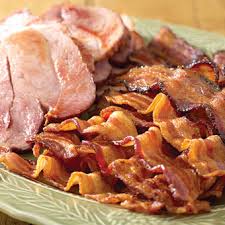
I am going to eat meats, they are going to be meats that eat their natural diets. The fat they will contain will be natural and not harmful–healthful, even. The vitamins and minerals they will contain will be what nature intended and I have evolved to expect in my foods. I won’t worry about cholesterol in the eggs I eat. I will eat my ham and egg breakfast every morning, and I will appreciate the long, hunger free interval it will give me until lunch time.

Posted in Health, Living | Tagged , | Leave a comment

Balance Should Be A Four-Letter Word

The idea of balance is one of the greatest impediments to eating right and losing unhealthy weight. It is hard to feel like you are feeding yourself and your family right if there aren’t ‘healthy’ vegetables and starches on the kids’ plates. As indoctrinated as we all are that fats are bad, that red meats are bad, that raw or room temperature foods are dangerous, it’s no wonder that so many people choose to add processed foods to their meal-time faire.

Not all fats are equal when it comes to bad. Saturated fats like lard, tallow, butter and coconut oil are now on the ‘good for you’ list. Polyunsaturated trans fats are on the forbidden list. These fats are what industry replaced saturated fats with when butter and lard were placed on exile. Fats are good for you to eat because they contain a great deal of dietary energy in a compact package. When you eat fats you get energy without eating lots of weight-containing extras. Think of it like the difference between a train that is powered by steam and fuels it’s boiler with wood, compared to one that is fueled by oil. Since there is a great deal more energy per pound of oil, carrying the same weight in oil will get you a lot more miles. Same thing with foods. While there is a lot of energy in sugar, there is not as much energy per pound as there is in dietary fats. It’s why a breakfast of bacon and eggs (only) can get you all the way to lunch without hunger.

Unknown-1

Eating meat is not considered bad for you any more, either. Recently it was on the caution list because of the saturated fats that it contains. Now that there is nothing wrong with those fats we can go back to eating meats. Meats contain all of the vitamins that a person needs to live. The vitamins in meats come from the vegetables that our meat animals eat. If you eat meats that come from a healthy environment, that healthy environment is passed up the food chain to you. Look at the wolf, it eats most of its diet in the form of meat, and it is strong enough to live off of it’s strength for it’s entire life. All carnivores get their vitamins and minerals from those lower on the the food chain. We can, too. Eskimos in Siberia, Greenland, and Alaska that don’t have access to the Western diet live out their lives eating animals that are in essence bringing the vegetables to them. The whale sails south every year and eats plankton and krill, and it brings those vitamin rich nutrients north for the benefit of the eskimo. Eating meat is as good as eating a salad if your meats are raised naturally.

Rotting foods are, likewise, very healthy for us. The flavor in cheese comes from the carefully controlled process of rotting that is taking place on the milk that it contains. Real sauerkraut is rotting cabbage, but the microbes are controlled by the salty brine that the sauerkraut is placed in. Kombucha and Kefir are beverages that are made effervescent and sweet-sour by the bacteria they are inoculated with by the brewer. Beer is rotting malt, even the industrial beers are the product of natural, controlled rot. Leaving cheese out on the counter is how it is done everywhere but the US. We refrigerate ours because we are now led to believe that natural rot is a source of danger. I only refrigerate my kombucha because there might be enough pressure in a mature bottle to cause it to burst. I stop the rotting process so that I don’t have glass grenades on my counters.

The very most dangerous thing in your pantry is your sugar canister. It contains a product that is relatively new in the history of man. The sucrose in your sugar breaks down into fructose and glucose in your body, and the fructose component will be converted by your liver into fats immediately. The glucose will be converted by insulin into either fat or muscle energy, but if your muscles don’t use it then it must be gotten out of your blood quickly, so insulin will put it away in fat stores to be used to keep you alive for your long periods when you aren’t eating. Gaining weight is a function of eating carbohydrates. There is no insulin reaction to fats and meats. If you ate only fats and meats, if the only carbohydrates you consumed were the small amounts in green leafy vegetables then you would not secrete insulin in response to high blood sugar. Your body would get only the energy that it needed from dietary fats, your accumulated fat stores would be slowly drawn down by your energy needs and you would, over the course of weeks and months and years return to your natural weight.

All of the processed foods in your pantry contain hidden and added sugars. The companies labelling them know you might turn down a product labeled as containing added sugar, so they cleverly call it something else…honey, agave, sugar alcohols, it comes in many forms, and by many names. One thing that they cannot hid though is that carbohydrate number on the label. Every form of sugar is a form of carbohydrates. If your processed food contains carbohydrate then it contains the source of weight gain, adult onset diabetes, and every other disease of the Western Diet. Just avoid processed foods to avoid this hazard.

The next most dangerous item in your pantry is shortening or liquid cooking oils. These fats are not like lard, butter or coconut oil. When they are heated they change into trans fats and other compounds that are unhealthy for your heart. While they have the advantages of compact energy source for your body’s needs, they have the disadvantage of chemistry in that what your body does with these chemicals is bad for you. Use these oils to burn in lamps, to grease your hinges, but not to feed your body.

The hardest thing for you to believe will be that the fruit in your refrigerator or on your counter is something that should be consumed infrequently. This is where the idea of balance is going to be most tested in your mind. While the amount of fructose that is found in fruits is much lower than that in your Coke or chocolate milk, it is still fructose. We evolved around fruits that only appear in season. Here in the US, in the summer berries and peaches, in the autumn apples. In the winter nothing. By nothing I mean, very little food to be had in the winter. Fructose is the sugar in those apples, and by eating them when they were falling off the tree we got to put on fat for that long, cold winter. The availability of fruit year round now, and in such abundance that we can smash them and juice them, eating only the sweet part and discarding the important fibers, pectins, minerals makes fruit a menace to our waistlines and that of our kids. Balance, true balance, would mean eating fruit in season.

It is hard to imagine, for a lot of people, that you could live a healthy life by living off of the balance provided by our food animals. In the morning I eat meat. No bread or juice is allowed on my breakfast table. Lunch and dinner are meats and fats, or meats cooked in fats that come from meats. My vegetables are all selected to be low in their carbohydrate content. The balance is brought to me by the food chain. I let the cow eat the grass, bring the energy of the sun to my table. I let the hog eat the vegetables, the hog can carry the fat around that I need to sustain me. I admit that I am not a purist, that I don’t think that carbohydrates are so dangerous to my health that I avoid them like I avoid the flu. I will eat special occasion sweets, fruits, pasta, breads. They are everywhere and when I go to a hamburger joint I can safely eat a bun, because none of my other meals that day will be loaded up with a ‘balanced’ amount of carbohydrates. At the Valentine’s party I can eat a sweet treat safely because every bite I took yesterday did not contain sugars both hidden and declared. I ate healthy all day yesterday, mostly meats and fats, a little bit of green leafy vegetables to help carry the waste products away. That is balance.

We are at the top of the food chain. If we maintain that chain we can live the strong life that we were meant to live. If we treat our food animals the way that we want to be treated right up until we process them for our uses we have nothing to fear from our nature.

If your ‘balanced’ diet is doing for you what you want it to do, giving you something to look forward to at mealtime, suspending hunger long enough to keep you from finding foods of convenience between meals, not gradually making you heavier and unhealthier then you are doing the right thing for you. If what you are eating requires you to periodically starve yourself or you will gradually get fat then you are not doing the right thing for you. If you eat the currently proscribed diet then you will slowly gain weight, you will slowly get sick, you will not be happy and well fed every day. The idea of balance that forces you to periodically starve, forces you to eat tasteless and unsatisfying foods is SERIOUSLY UNBALANCED. Look back through these posts on this blog. Your body is crying out for a reevaluation of what your idea of a healthy diet looks like. You can find some great evidence here for what you are doing wrong.

Tomorrow morning start by eating a simple breakfast of just meat. It’s one small thing to change.

Posted in Health, Living | Tagged , , , , , , , | 2 Comments

Too Old To Eat

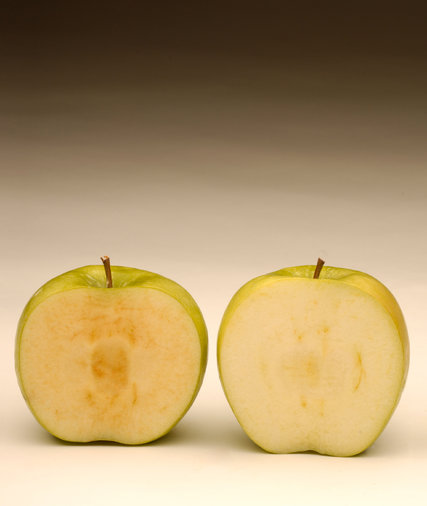
I have done it both ways. I have cut an apple and eaten part of it and when I got back to it the exposed flesh had browned and, because it looked unappealing, I discarded a mostly-fresh apple. Alternatively, I have returned to a similar apple and ate through the bad looking browned part to the perfectly good remainder and ate it anyway. Kids don’t even seem to notice that their apple has browned, most of them will eat apples in this condition.

Apparently the problem of apples browning has drawn the attention of the genetic modification sciences, and the perfect apple is coming out of the seed laboratories of  Okanagan Specialty Fruits. An apple is now approved for planting in the US that will not brown or bruise. At first the trees will only be in small orchards, 20,000 trees on 20 acres. It will be at least two years before these new trees bear fruit. The Department of Agriculture says that these new species of apples will not be a threat to existing species, they pose no danger to other apples or the environment. I am sure the testing was rigorous. The FDA has no opinion on the topic due to the fact that apples are considered GrAS, meaning generally regarded as safe, requiring no FDA approval.

The apple will be named Arctic variety, and the first ones will be like Granny Smith and Golden Delicious apples–no red apples yet.

I hate to be a worry-wart and dismiss a great new thing just because it is new. The problem I have with this is that nobody really knows what the apple will miss when it has lost the ability to bruise. It may be that bruising is a side effect of something that the tree really needs, or the bees, or us as consumers of the fruit. Biology is a very complicated science, and even the smartest biology departments in the world can’t answer a simple question like “if you made an apple that wouldn’t bruise, what would be different about that apple?” They are changing the system of the apple tree without knowing what it is they are changing. The resulting changes to the world are also unknown.

Apples are joining potatoes in their new-found ability to resist browning when cut. Simplot last year created a potato that doesn’t brown, called the “Innate” potato, that you will find already cut up for you on your produce shelf. I wrote about that innovation in this article here at “One Small Change”.

When we create these Frankenfoods, we loose the ability to ship our crops to nations that will not accept GMO foods. Some countries won’t even trust our regular crops if they are grown near GM crops. There are countries in Europe that don’t see the need for the risk. I don’t either. I don’t see how they could be approved for planting or marketing without extensive multiyear testing on the tree and on the environment and on the consumer.

Read the rest of the news flash here, in the New York Times.

14GMO-blog427

Posted in Health | Tagged , , , , , , | Leave a comment

Trust, But Verify

How can you know that when you put a gallon of gasoline in your car that you are really getting as much as you are paying for? There is a division of your state government that randomly checks the pumps and metering. The station operator knows this, so they check themselves periodically so as to avoid any embarrassment or fines.

How do you know that when you buy an herbal supplement that what is in the capsules, tablets, or liquids is really what is claimed on the label? Hmmmm. The State of New York recently came down very hard on GNC, Target, Walgreens and Walmart for having products on sale that contained little to none of the claimed contents. If your state is not now spot checking supplement sellers I would be surprised. If your seller is not attempting to verify what they are selling, I would likewise be surprised. Nobody wants to be caught in fraud, and the culprits in the New York cases can claim ignorance of the problem, but now that the cat is out of the bag nobody else can. Now everyone that sells supplements knows that fraud is being committed by the makers of the supplement pills. To not attempt to verify the producers now would be aiding in their fraud.

In the meantime, also in the New York Times, they have provided us with information on how to make sure that your supplements are good ones now…

…you can look for products that receive a seal of approval from the United States Pharmacopeia, an independent, nonprofit organization of scientists that sets high standards for medicine, food ingredients and dietary supplements. The United States Pharmacopeia has a voluntary program through which supplement companies can have their products and facilities tested and reviewed.

11well_labels3-thumbStandard

Products that have been checked by this organization are allowed to bear this seal of approval. A list of approved supplement brands can be found at the organization’s website. Here is the link.

Another nonprofit group that independently certifies some supplements and their ingredients is NSF International. The group certifies such supplements as fish oil and multivitamins.

well_labels2-thumbStandard

This is the official seal of the NSF certification. This organization has a periodic newsletter that is available. If you sign up for the newsletter they send you information like this, for example…

The problem with supplements, of course, is that where our Federal Government has chosen to insert itself into this market, it has done so on the side of less verification and testing and a ‘freer market’. Their worry is that you might not be able to get the supplements you crave if they are subjected to costly proof that they are what they claim to be. I think that your Senate is thinking that if you want to buy a placebo, then it can really contain anything that isn’t deadly, and you will get all of the benefit from what it says on the label anyway. If you feel like that is true, I am sure you quit reading this article around the end of the second sentence.

However, if you are like me, and you expect that when you select the premium gasoline nozzle at the station, and you expect premium gasoline to be dispensed from it, then you know that you have no way of checking it out. You and I expect our government to keep the seller’s feet to the fire. It would be nice if our government kept these manufacturers honest, but since they aren’t, we can do so ourselves. We must only buy supplements that have subjected their products to one of these organizations, or other organizations that do a similar service. Trust–but verify!

Posted in Health, Living | Tagged , , , , , , , , , | Leave a comment

Media Says “Go Ahead And Skip Breakfast”!

86ca9931925640ed96dec6504453d0f9

Sometimes I just want to holler at my computer when I read ‘news’ that is based on half-truth and conventional wisdom.

Mother Jones online magazine this morning has a prominently placed story that purports to debunk three myths about breakfast. This would be a great time for us to talk about breakfast.

Their first myth is #1, You Have To Eat Breakfast. The way that I always heard this was in the form of the truism “Breakfast is the most important meal of the day.” Until last year I was not a breakfast eating person. I never liked breakfast cereals, oatmeal, waffles, eggs–breakfast food. The other meals I loved, but I never got on the breakfast bandwagon until my 21 Day Sugar Detox on April 1, 2014. From that day until this one I have missed very few breakfasts, and every breakfast I missed I genuinely missed and wished I had eaten it. Here is how   and  put it in Mother Jones:

Much has been made about the importance of a good breakfast to a healthy lifestyle. It gives you energy to start your day, according to conventional wisdom, and scientific studies conducted a decade ago had proclaimed that eating breakfast was the key to maintaining a healthy weight.

I happen to believe this with all my heart. Especially the part where they say that eating breakfast is significant for me to be able to maintain a healthy weight. If they are going to debunk anything, surely it’s not that.

Based on this new research, the bottom line, Newby says, is this: If you’re not hungry in the morning, there’s no harm in skipping breakfast when it comes to weight management. “It’s the what that is more important than the when, when it comes to breakfast,” she says, which also means that grabbing a sugary muffin, doughnut, or other pastry, just to eat something in the morning, is a worse idea than eating nothing at all.

Whew! I can agree with part of this paragraph, and part of it I take issue with. I agree that breakfast is not so terribly important that to satisfy the need to eat breakfast you would feel like you could eat anything that is within reach. Cake and ice cream is not a good breakfast. A similarly bad idea, and for exactly the same reason would be milk and Cocoa Puffs. It’s nutritionally no different than cake and ice cream for breakfast. Where I take issue is the idea that if you are not hungry you can skip breakfast. As a machine, your body typically has been living off of stored energy since dinner the day before. Let’s say you finished that meal at seven. Now it is seven in the morning, a full twelve hours later. Even if you are not suffering from hunger pangs you are in the process of starvation by this point. At work and even on the drive in to work you will be presented with food triggers, be it the Starbucks on every corner, the pastry tray by the coffee machine, the candy machine or the snack cart, it will be a struggle against your self-interest to avoid having something like that before you get to your lunch meal opportunity at noon, a full seventeen hours since you last ate. Personally I know that I couldn’t make it ninety percent of the time. The convenience foods I would eat would all be carbohydrate bombs that would begin the blood sugar and insulin crash cycle for the day. Eating two eggs and breakfast meat keeps any of that from occurring. IMHO that is why breakfast is important to maintaining my weight.

How about Myth #2, It’s Healthier To Just Drink Juice? I do know that most Americans think that drinking orange juice is healthier than drinking Coca Cola, but I don’t know why they think that, really. A serving of Orange Juice™ has 26 grams of carbohydrate (sugar-specifically Fructose) and Coca Cola™ has 29 grams of carbohydrate (High Fructose Corn Sugar). That would be six teaspoons of sugar in juice and seven teaspoons of sugar in Coke. The only thing that would make one determine that there is any difference for your body first thing in the morning would be the vitamin C in the juice, but if Coke put vitamin C in Classic Coke would you think they were the same then and feel free to pick either instead of breakfast? Would you make your children finish their Coke before they ran off to the school bus to burn off all that sugary energy before they begin the school day? I don’t think that juice OR Coke are healthy drinks. I know that fructose can only be metabolized by the liver. I know that the liver turns fructose immediately into fat, and that if there is enough fat already in the body, the liver will store that fat directly in the liver. I know that a fat liver is a disease called “nonalcoholic steatohepatitis” (NASH) and it’s a precursor to cirrhosis. It’s become the primary reason for liver replacement surgery in the US, and even children are getting it–probably because their parents make them finish their juice in the morning. I really want to help Mother Jones debunk this particular myth. Then they had to go and throw this line in there:

And, as Newby points out, we already know what makes a healthy meal at any time of day: Put vegetables at the center of the plate, accompanied by whole grains, beans, nuts, and healthy fats.

Well, I don’t agree with that. We don’t all think that vegetables, whole grains, and beans are health foods. Those foods are all bringing carbs to your breakfast. I happen to think that the only food you eat that will make you fat is carbs. Grains and fruits bring a great deal of carbs to the table and then insulin and fat follow. My advice is just eat meats and fats at breakfast. By far the easiest and fastest breakfast is ham and eggs, because the ham is already cooked and tasty, and eggs take but a couple of minutes to cook, even if you like your yolks hard like I do.

The final Myth, #3 is You Need Coffee When You First Wake Up. This one is not about nutrition or weight, so there is not much to get upset about here, but to say that if all you have for breakfast is coffee on the drive in, or if your “coffee” is a Starbucks Caramel Flan Latte (37 grams of Carbs — TEN TEASPOONS OF SUGAR), then you are better off eating nothing at all and fighting the urge to grab something from the pastry tray. Having a big mug of pure candy and calling it breakfast is doing your system great harm.

Posted in Health, Living | Tagged , , , , , , , | 1 Comment

Studies Show…What!

This is how it is done. Here is the Washington Post headline..

Why you should try chocolate milk after a workout

It doesn’t just taste good. It’s also good for muscle recovery.

Wow! Really? Chocolate milk has as much sugar in it as a Snickers bar, and it’s good for muscle recovery? I gotta see the details in the article.

“I think it’s great. Chocolate milk has a lot of benefits for muscle recovery,” says Ingrid Nelson, a personal trainer in the District. “It helps replenish the muscle tissue and actually gives you a shorter recovery time.”

So, chocolate milk over regular milk? Both are good choices unless they cause digestive issues, says Rebecca Scritchfield, a D.C. nutritionist.

But flavored milk — be it chocolate, strawberry or vanilla — has a more beneficial ratio of carbohydrates to protein for muscle recovery and rebuilding, Scritchfield says.

Ok, the ‘authorities’ here are a personal trainer and a nutritionist. So far the evidence is all anecdotal. Let’s read on to see if there is more authority somewhere in here…

“Milk alone may not be enough carbs or calories, but it can be enhanced to be adequate,” Scritchfield says.

The ratio to aim for is 4 grams of carbohydrates to 1 gram of protein, according to Joel Stager, professor of kinesiology at Indiana University and the author of several research papers on milk as a recovery drink for sports performance.

Ahh, Joel Stager is a professor that has authored research papers. Professor of Kinesiology means he teaches people about human body movement and mechanics. It’s a gym teacher teacher, I believe. Sounds authoritative, lets follow that link>

Several years ago, a high-school swimmer in Bloomington, Ind., handed his coach a sports drink to see what he thought of the beverage. The ingredients looked familiar to Joel Stager, an exercise physiologist at Indiana University Bloomington and director of the Counsilman Center for the Science of Swimming. But it took a trip to the grocery store to find the supplement’s nonsynthetic cousin, chocolate milk.

Soon Stager was handing his swimmers, many of whom struggled with their twice-a-day practices, a glass of chocolate milk after their early morning workouts. The effect was dramatic. Many of their problems disappeared “almost immediately,” he says….

…Stager [Joel Stager, an exercise physiologist at Indiana University Bloomington and director of the Counsilman Center for the Science of Swimming] is surprised by the amount of interest from researchers and practitioners since he first presented his research two years ago at an American College of Sports Medicine conference.

“This isn’t Nobel Prize research. The basic premise was already in the literature in terms of what’s appropriate post-exercise nutrition,” he says. “But nobody ever thought, ‘Gee, here’s something that could work that everyone’s familiar with. It’s easily accessible, tastes good, and sends the right message.'”

This is the authority for today’s Washington Post article–a swimming coach. His ‘research’ (in 2006) was figuring out that chocolate milk had the same energy composition as an energy drink one of his swimmers was using. The Washington Post has recycled this ‘research’ under the glow of the change in term to ‘research papers’ which sounds like something published in a science peer review journal. It’s not.

The WaPo article goes on to shorthand a bunch of caveats into the numbers–the appropriate ratio is 4:1, depends on height, weight, recommended dose of milk, how hard you worked out. In other words, feel free to drink sixteen ounces of chocolate milk within an hour of working out if you want your muscles to recover quickly, whatever the hell that means! Be careful though, you might not have worked out hard enough, or you might already be overweight and don’t need to do it at all, but it’s all based on the research papers from 2006 by a swimming instructor in Indiana.

Here is the truth about carbs and muscles. If you ‘work out’ your muscles will call for more energy, all right. If the carbs you drink are fructose none of that energy will go to your muscles. Only the liver can metabolize it, and it goes straight into fat cells. Is the sugar in your chocolate milk High Fructose Corn Syrup? Well, it probably is, but according the the swim instructor’s research his students problems were solved by drinking it. Can’t argue with success. Never mind that most people don’t work out long enough to need 26 grams of sugar once a day. A collegiate swimmer might, but you don’t after your thirty minutes on the treadmill. You don’t need carbs at all, even if you are a swimmer, if you never eat them. Do you think a swimmer uses more energy in a day than an Eskimo in a kayak hunting seals? And all the Eskimo will eat today will be frozen fish and blubber. Hmmm. No carbs there. Maybe his muscles are going to hurt and keep him from hunting tomorrow–I doubt it.

The point is that you have to read into all of these dietary articles. In this case the research backing the claims was flimsy then fell apart on inspection. The advice to drink “8 to 16 ounces” of chocolate milk after a workout is probably dangerous advice, especially if you already suffer from any of the myriad diseases associated with eating too many carbs. If you are overweight the last thing you need right after a workout is a Snickers bar, and I don’t care how long you worked out.

Posted in Health, Living | Tagged , , , , , , , | Leave a comment