Eat Fruit or Die

Today was a very busy day. Stayed home from work and worked on the home. Ate a good meat only breakfast, got some already cooked baked chicken from the grocery store for lunch. Ate four pieces of chicken. Had a business meeting in the evening and I was STARVING. There was a lot of fruit and ‘healthy’ packaged dips and chips. It was eat fruit or die of hunger, so I ate some fruit. I didn’t eat a lot of fruit, but I ate enough to keep my rumbling stomach from bothering the other meeting attendees. I ate enough fruit to not make me anxious or on edge. So, I ate some fruit.

I am still just going to eat meat until the end of March. That is still the plan, and it doesn’t matter all all to my test that I ate fruit today. At least it doesn’t to me. If just eating meat for a month was going to kill me I think it already would have by now. I kind of like the places that doing so has sent me this month. I have learned a lot about an all meat diet that I would not have found out any other way. I have looked up a lot of ways of getting different parts of the animal into my menu, and heard some really compelling reasons for doing so. I hope to roast a hog head in the near future. I am going to put some liver in my sausages, when I get time to make sausages.

So far, it’s really been an adventure, one that I can recommend to just about anyone. It is certainly not dangerous.

Posted in Health, Living | Tagged , , , , | Leave a comment

Naturally Better

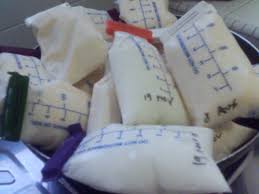
You can’t beat natural. In this case, the topic is human mother’s milk. Today in the New York Times is an article “Breast Milk Becomes a Commodity”. Apparently human milk is something that is unmatchable in it’s ability to help some infants.

The American Academy of Pediatrics says that because of the “potent benefits of human milk,” all premature babies should receive breast milk, preferably from their mothers, but if not, then from donors. But there is not enough donor milk for that, experts say, partly because many women do not know that they can donate or sell excess milk.

images-1

Try as they might, and they have been trying for decades, the benefits of human milk for human infants cannot be duplicated by food scientists. The reason that it cannot be duplicated is that a lot of the time just testing and analyzing something changes it. Finding out what is good for the baby about breast milk involves more than just the milk. There is also the question about what is going on between the baby and the milk, and the microbes in the milk and the baby, and the microbes in the baby and the milk. Lots of nourishment is taking place, and none of it can be duplicated or easily documented in a laboratory.

Industry has figured out a way to profit from the unique qualities of mother’s milk though. It buys it from the needy, processes it in a factory where it is concentrated and pasteurized. Of course the infant needs everything in the milk, or it wouldn’t be there, so killing the microbes put into the milk by the breast is already adulterating it, but we are all scared of other peoples’ germs due to years of sales pitches for hand sanitizers and what all. Still, profiting from needy mothers is now an ‘industry’.

Prolacta processed 2.4 million ounces, or 18,750 gallons, of milk last year and aimed to do 3.4 million this year. That compares to the 3.1 million ounces dispensed in 2013 by all 18 nonprofit milk banks that belong to the Human Milk Banking Association of North America. Those milk banks do not pay women for milk but do charge hospitals a few dollars an ounce to cover the costs of screening donors and pasteurizing the milk.

My thoughts are mixed on this topic. I think it would be wrong to profit on the benefits of milk without giving the supplier a cut. It would also be wrong to take milk that a needy mother should be giving to her own children, but isn’t because selling it makes needed income for her family. That math is for the mother to calculate though. She should definitely be offered a portion of any money to be made selling something she creates herself.

The salient fact here is that something in this natural food cannot be reproduced. This makes me think of all of the processed foods we eat instead of real foods. They all have the same problem. Just putting a sample of the thirteen essential vitamins and minerals into an otherwise dead food is not the same as eating real food containing vitamins and minerals–AND WE DONT KNOW WHY. Food is just as mysterious and uncharted territory as breastmilk. No one has any real concrete notion why it is that some fats are good (the natural ones) and some are bad (the processed ones). What is it in broccoli that aids us that is lost in the process of processing? Why cant we eat bowls of vitamins and minerals and dispense with all that cooking and preparing? Well–we can’t and it’s a mystery what the machinery is that makes that so.

In the meantime, science is scurrying about to duplicate in the lab things that can be isolated in human milk. Maybe they are easy to make and they might be healthful or helpful enough to turn a profit on. Venture Capital companies are all over it:

The next frontier could be the complex sugars in milk. Glycosyn, Jennewein and Glycom, which has worked with Nestlé, are trying to synthesize them to make products that would nurture a healthy gut “microbiome.” Prolacta and Medolac say their ability to collect milk nationally will allow them to extract those sugars from the milk.

Money is now seeing itself in the “micro biome”, probiotics, and complex sugars. Money will find a way to sell you a pill that contains these ‘essential’ nutrients or microbes. Money won’t have any idea whether or not these things work in isolation or why they work, but if a flashy package containing the words “CONTAINS PROBIOTICS” can get you to spend more than you otherwise would on a bottle of tea, then they would be foolish to leave that money on the table. Right?

Or, instead of buying a box, bag, or bottle ‘Containing’ probiotics, you can eat real food prepared by you. Your kombucha would contain probiotics. Your Sauerkraut would contain probiotics. You cheese would contain probiotics. Just about anything real and natural in your pantry will contain probiotics. The milk from your very breast will contain them too, and complex sugars, and every vitamin and mineral in just the right proportion. It cannot be duplicated in a food laboratory, despite what the label says.

Posted in Health, Living | Tagged , , , , , | Leave a comment

Save Yourself

I often hear people say that the reason they eat processed foods is that it’s all they can afford to eat. Ninety eight cents for a box of Kraft Mac and Cheese sounds like a good deal, hard to beat even. In every box of Mac and Cheese you get some bonus items, too. Enriched macaroni product is in there. You notice they don’t call it macaroni? That’s no accident. Macaroni product contains wheat flour, niacin, ferrous sulfate, iron, thiamin mononitrate, riboflavin, and folic acid. If you have ever made your own pasta you know that pasta contains flour and water. I guess all of those other ingredients are in there to increase the nutritional value of macaroni product. The cheese sauce mix if full of stuff too. There is whey, milk fat, milk protein concentrate, sodium tripolyphosphate, citric acid, lactic acid, sodium phosphate, calcium phosphate, yellow 5, yellow 6, enzymes (?) and cheese culture.

There might also be a little bit of metal in there too, just some filings. If you care about extra iron in your Mac and Cheese, then look at the details of this recall (6.5 million boxes affected) and return it to the store.

If all you care about is saving money, then wait and maybe some of the ‘extra iron’ boxes will show up at the flea market or maybe Aldi’s. I don’t know where Aldi’s  get their supplies, but they always manage to sell for less than just about anyone else. Maybe you could get dinner for you and the family for twenty five cents a box. What’s one more artificial ingredient?

BUT, do you really save money buying your mac and cheese in single meal boxes? I can get a pound of macaroni for 99 cents on sale. The Kraft gives you about six ounces of dried pasta, so if I use the same amount of pasta it costs about 37 cents in pasta. I could spend two dollars a pound for pasta and still not get anywhere near the 98 cents that the processed variety costs. To make my own I would add some real cheddar cheese, which would cost around three dollars per pound. I would use about the same amount of cheese as pasta, so around six ounces of cheese. Uh oh, that’s a dollars worth of cheese, and I still have to add milk and a spoonfull of flour to thicken the sauce. So you really do save money buying processed. It looks like you save about a dollar. If I could get cheese for one dollar a pound then I am still saving money making my own.

By saving that dollar you get to feed yourself and your family a macaroni product topped with a cheese food product that is nutritionally equivalent to a bowl of Cheez-its in milk. Hey, I think I just thought of a new dinner for the thrift minded. No cooking required, just fill a cereal bowl with Cheez-its and pour on some milk, just as good as processed Mac and Cheese! Save time and money, because you can get a box of Cheez-its for less than one dollar for seven ounces. If you are already living on stuff like processed Mac and Cheese then it would not make any difference at all to your waist or health to just eat Cheez-its.

If all that matters to a person is money, then I am casting my seeds onto stones. For most people, though, they realize that something is not right with the way we are eating. They know it because no matter how little they eat, they just seem to keep getting bigger and bigger. We are all getting progressively sicker eating the ‘cheap’ foods. Even if it has health claims on the label it turns out to not be good for the waistline. Our kids are allergic to the dyes, we are sensitized to the ‘wheat’, but it’s so affordable.

How can you argue with price? Well, I tried.

Posted in Health, Living | Tagged , , , , , , | Leave a comment

The American Treatment Industry

images

Try to figure out the success rate of a twelve step program for any compulsive disorder, be it drugs, alcohol, sex, gambing, eating. Alcoholics Anonymous, for instance, keeps no records of who is a member, for their privacy of course, therefore it is hard to document the actual rate of backsliding by 12 step program participants. When it has been done, the numbers are not what you might expect. Less than ten percent of participants are successful, the great majority do backslide.

In typical ‘blame the victim’ fashion, all of the failure in a system that generates mostly failure, is put on the shoulders of the patient. When it works, all of the credit will be accrued by the program. Without any scientific reason that the program works or fails, the 12 step programs claim great success. Actually they claim one hundred percent success with all of the patients that “really try”.

Of course my concern here is with eating. Eating is one of the hardest things to ‘control’. It is hard to control because it is perfectly legal to eat, and to eat as often or as much as you want. Triggers for eating are visible in every direction, in your home, on your television, on the radio. You have to do it to live. When someone can’t control their weight, they are blamed for not being able to control their appetite, as though they are one and the same. 12 step meetings for eating feature people blaming themselves for moments of weakness, where they ate instead of continuing to starve. They are supposed to be starving themselves to ‘gain’ normal weight. This is fundamentally different than not drinking or not gambling. All of the impetus to eat is provided by the body, naturally. Not eating is not a natural thing to do. No other animal in the universe (probably) voluntarily starves itself.

What if the problem with controlling your weight actually has zero to do with controlling your appetite? What if not eating enough to stave off hunger is the problem? There is a way to eat enough energy-bearing food to avoid being hungry at all during the day. You just can’t follow the normal eating advice. You can’t eat low fat foods. You have to eat something that contains energy your body needs. There are three kinds:fat, protein, and carbohydrate. If you eat low fat, you must eat either more carbs or more protein. Eating more protein is hard to do without eating more fat, so people are encouraged to eat more carbs. This is really bad advice, because carbs lead to fat production. Sucrose, and fructose in sweet foods are metabolized into fat. The insulin to deal with blood sugar also serves to store the other sources of energy immediately into fat while the blood sugar is high. It makes you hungry soon after eating a meal high in carbohydrates. The sugar crash you get after a starchy meal is followed by hunger. Think of your experience eating a chinese meal, about an hour after you eat, no matter how ‘full’ you got, you will feel hunger pangs.

Hunger pangs are the mortal enemy of appetite control. Everyone gets them, everyone has trouble resisting them. A person in a 12 step eating program though has another thing to think about. Failing to resist hunger for them also has to be ‘confessed’ to in a group of people only looking for successful starvation. When I succumb to my hunger, by eating a handful of potato chips, all I have to do is eat something with zero carbs sooner tomorrow, before my hunger leads me to stray. I don’t have to feel guilty, ashamed, like a failure, too.

The for profit treatment of compulsive behavior is not staffed or run with the idea that you can be ‘cured’. Surely the rehab industry knows that you will be back if you follow their advice. Now that we all have insurance that will pay the bill I expect this industry that thrives by failing to succeed will flourish, just like diabetes ‘treatment’, high blood pressure ‘treatment’ and all of the other treatments of western diet diseases. Your doctor will give you a pill and encourage you to ‘lose weight’, like it never crossed your mind that you would be healthier if you were one hundred pounds lighter. They might even tell you that you should eat less, they might offer to surgically change you so that you have no choice but to eat less. They won’t tell you that it doesn’t matter how much you eat, but what you eat. They might even tell you that eating nothing but fat and protein will harm you. Best just keep eating like you do, just ‘control yourself’ and take this pill.

When it doesn’t work, it’s all your fault–even though two out of every three people you know are overweight. One out of three are obese and ill from eating. Apparently 66 percent of all Americans just don’t know the precise moment when to stop eating. That is just nuts. When I was a kid every other person wasn’t overweight. It’s not because now we all have air conditioning and play inside all the time. Its because of what we eat.

If you can’t starve yourself its not your fault. That is natures plan. Nature just didn’t plan on fruit or fruit juice every day, nature planned on that a couple of months a year. Nature didn’t plan for you to eat foods raised on chemicals, foods devoid of anything natural, concentrated processed sugars.

If you want to read more about the defects of reliance on a twelve step program to get you over the hump on your addictive behavior, read this article in The Atlantic. It describes some alternatives that have been clinically proven to be more successful than AA type programs. I won’t go into them here, because I just want to concentrate on telling you that your inability to control yourself in the face of hunger is the most natural thing in the world. Try a diet that does not require hunger to be a central pillar, because its not required to be hungry to lose weight.

Read up on why people gain weight and how weight is lost. Read “Good Calories, Bad Calories” by Gary Taubes. Read “The Big Fat Surprise” by Nina Teicholz. Read through this blog, looking for articles on carbs.

Give yourself some credit for changing. Change one small thing at a time. This week, give up sweetened drinks and beer. Next week, pick something else to change, headed for the day when you don’t eat processed foods, and are living mostly carbohydrate free. Love yourself. Give yourself a chance to succeed, don’t take the blame for not being able to live half hungry all the time.

Posted in Health, Living | Tagged , , , , , , , , , , , , | Leave a comment

What is Fake?

A while back I determined to stop putting any of my leftovers in hard plastic containers. I had a lot of tupperware-like containers. I had some snap-lock plastic containers–lots of different sizes and shapes. If you looked in my refrigerator about five years ago you would see a plastic pitcher of tea, maybe a plastic bottle of cold water, maybe a dozen plastic containers with leftovers of different ages and mold content. My staple foods were in plastic canisters, my cooking oils were in plastic bottles, my beer might be in aluminum cans lined with plastic.

I learned from somewhere about a chemical referred to as BPA that had been banned in Europe that was an ingredient in hard plastics. The Europeans banned it from use in baby bottles and sippy cups there because it leached into the contents it came in contact with, and if ingested by babies it caused problems, even if it were ingested in very low doses. Your body thinks BPA is a hormone. This is what Wikipedia says about BPA.

BPA exhibits hormone-like properties that raise concern about its suitability in some consumer products and food containers. Since 2008, several governments have investigated its safety, which prompted some retailers to withdraw polycarbonate products. The FDA has ended its authorization of the use of BPA in baby bottles and infant formula packaging, based on market abandonment, not safety.[2] The European Union and Canada have banned BPA use in baby bottles.

This product began being used in commercial products in 1957.

In 1997, adverse effects of low-dose BPA exposure in laboratory animals were first proposed.[23] Modern studies began finding possible connections to health issues caused by exposure to BPA during pregnancy and during development. See US public health regulatory history and Chemical manufacturers reactions to bans. As of 2014, research and debates are ongoing as to whether BPA should be banned or not.

Forty years is how long it took after the public started becoming exposed to this chemical before science noted disturbing lab results. This chemical acts like estrogen. Estrogen is a chemical commonly associated in the public mind with women, since it is the female equivalent hormone to the male testosterone. Estrogen is a hormone that affects the development of the fetus, and being exposed to BPA for children was alarming enough to get the US government to review it, even though the eventually decided to let the market sort it out. No need for an outright ban if everyone ‘voluntarily’ quits using it out of fear of litigation down the road.

So now we are almost twenty years from the first hints of trouble from BPA, and 60 years from it’s commercial introduction. The loss of BPA has forced the chemicals and plastics industry to cast about looking for a substitute that is not BPA. The found BPS and BPF. Totally different plastic ingredients. See, when you change the A to an F or a S you can put this chemical into plastics that come into contact with baby food and pregnant mothers’ foods and not worry about the estrogen-like effects of BPA. Turns out that both BPS and BPF cause estrogen-like effects, too, but they are new. The science is just beginning on them. THEY HAVE 60 YEARS TO GO. Here is a Mother Jones article on them from this morning..

And now a new paper, published on the peer-reviewed Environmental Health Perspectives, examines the science around two common chemicals used in “BPA-Free” packaging: BPS and BPF. The authors looked at 32 studies and concluded that “based on the current literature, BPS and BPF are as hormonally active as BPA, and have endocrine-disrupting effects.” In other words, the cure may be just as bad as the disease.

Yes. Hard clear plastics and thermal receipt paper may contain a chemical that causes hormonal dysfunctions in women and children. It may cause cancer, brain deformities, and birth defects in low doses. It might cause lots of people to blame necessary vaccines on autism. Who knows? Nobody is checking.

Funny thing is that these chemicals need never enter your life. You can use glass. Turns out that using Mason or Ball jars for leftovers is way more economical in the refrigerator. They cost way less to use, they are all tall instead of wide so you can get more of them in the fridge. You can make and store iced tea in glass pitchers, like this one.

21xHRhlFslL._AA160_

Drink your morning coffee in a ceramic or glass cup. Don’t eat food that comes in plastic bottles. Don’t eat food that comes in plastic bags. Don’t eat food that comes in contact with plastic. Don’t wait for the science and the government to protect you from something that is totally unnecessary in your life. You just don’t need plastic. I grew up before the sippy cup. It is possible to give a baby a bottle (a glass one) until they are old enough to figure out drinking out of a glass. They will spill it all over themselves the first time. Thats how long it takes to learn that you don’t just throw back a glass of milk, one time.

I learned this morning that I shouldn’t get paper receipts. Fortunately lots of receipts are now available in an electronic version, I will ask for more of those. Women that work at stores that use thermal receipts should be asking the boss about these issues. It’s a big deal for them, as it is an occupational hazard.

So, in conclusion, there is nothing more fake than plastic. Even though plastic looks permanent, some of it comes loose and gets into your foods when you put them in plastic, especially when the contents are hot. Microwaving food in plastic is guaranteeing contamination. Plastic, it turns out, is an artificial ingredient that YOU add to your foods. If you are trying to avoid artificial ingredients, then stop using plastic containers to store or cook in immediately. Invest in permanent. Invest in glass and ceramic.

Posted in Health, Living | Tagged , , , , , , , , , , | 1 Comment

Getting Heads

Until earlier this month it never occurred to me that I was missing out on anything at mealtime, as far as the main entree was concerned. I know where to get good steaks, chops, ribs, briskets, poultry, etc. I know how to prepare every one of these cuts to get the very most out of what meat brings to the dinner table. There are only a couple of things that will taste better at the fanciest restaurant than from my own kitchen.

As you may or may not know, I am currently eating meat for breakfast, lunch and dinner, with no side dishes. No vegetables, chips, anything that is not meat, cheese, or eggs is to cross my lips until April. I am doing this to test something I read in “Good Calories, Bad Calories” by Gary Taubes. In that book researchers say that just eating meats keeps a person from feeling hunger between meals, and that doing it (if the meat is quality and natural) does not cause any deficiency symptoms, either.

I have been just eating meat for two weeks now. I can safely say that both of these assertions are true in my case. For the first week I had a bit of an adjustment to the complete lack of carbs. I had some difficulty sleeping because I would be thirsty at night, at least part of which is the dry winter air, and my legs would feel like I just had to move them. Those things have subsided, now that I drink enough water during the day so that I no longer have these symptoms of dehydration. I also ate some birthday cake at a birthday party, so purity is not something that I feel is critical to my test, but otherwise I have been pure to my regimen.

Another side effect of just eating meat three meals a day is that I want to eat some different kinds of meat. Yesterday I bought a new book on Kindle: “Odd Bits:How To Cook the Rest of the Animal,” by Jennifer McLagan.

51Vb9EKS+tL._BO2,204,203,200_PIsitb-sticker-v3-big,TopRight,0,-55_SX278_SY278_PIkin4,BottomRight,1,22_AA300_SH20_OU01_

Just look at a sample of these delicacies:Roasted Pig’s Head with Spiced Glaze, Cold Pig’s Ear Salad, Cheese and Just a Little Brain Fritters, Spicy Tongue Tacos, Sweetbreads (Thymus gland) with Orange and Cumin, Roast Suckling Pig, Grilled Liver With Currant Sauce, Beginner’s Tripe (stomach), Sour Lung Soup, Deviled Kidneys and Mushrooms, Testicles with Caramelized Onions. I don’t know about you, but that is the very epitome of variety, right there.

I have already called my butcher and I can get it all from him:sweetbread, whole hog heads, kidneys, livers. I didn’t ask specifically about testicles. The only thing I can’t get from him is blood. I want blood because I have a recipe for blood sausage that I want to try out, and you can’t without fresh blood. I want to try these things because I am sure that if you are going to eat meat you also need to eat the other bits and pieces, so that they are not wasted. Right now these things are ground into pet foods (and probably for feeding back to cows and pigs in feedlots and confinements).

This way of eating is not new, and obviously it’s not trendy. It is as old as cooking and eating are. Here is a recipe for a hog’s head from the 1700’s

105. To roll a PIG’S Head to eat like Brawn (beef cheeks). Take a large pig’s head, cut off the groin ends, crack the bones and put it in water, shift it once or twice, cut off the ears, then boil it so tender that the bones will slip out, nick it with a knife in the thick part of the head, throw over it a pretty large handful of salt; take half a dozen of large neat’s feet (beef), boil them while they be soft, split them, and take out all the bones and black bits; take a strong coarse cloth, and lay the feet with the skin side downwards, with all the loose pieces in the inside; press them with your hand to make them of an equal thickness, lay them at that length that they will reach round the head, and throw over them a handful of salt, then lay the head across, one thick part one way and the other another, that the fat may appear alike at both ends; leave one foot out to lay at the top to make a lantern to reach round, bind it with filleting as you would do brawn, and tie it very close at both ends; you may take it out of the cloth the next day, take off the filleting and wash it, wrap it about again very tight, and keep it in brawn-pickle. This has been often taken for real Brawn.

Elizabeth Moxon. English Housewifery / Exemplified in above Four Hundred and Fifty Receipts Giving Directions / for most Parts of Cookery (Kindle Locations 478-486).

Man! That’s complicated, but it was obviously worth writing down. It’s also obviously not something that was written down just to sell books because of the ‘gross’ factor. The old receipt (recipe) book quoted above is absolutely packed with ways to cook things it would never occur to you to cook. These were things that were fed to kings and queens first, and to the lesser folk if there was some to spare. The menu in yesterday’s post looks like the bill of faire for a feast, with enough food to feed a very large extended family. It probably was.

Here is a recipe from about one hundred years later, in 1841:

27. Sweet Bread, Liver, and Heart. A very good way to cook the sweet bread, is to fry three or four slices of pork till brown, then take them up and put in the sweet bread, and fry it over a moderate fire. When you have taken up the sweet bread, mix a couple of tea-spoonsful of flour with a little water, and stir it into the fat—let it boil, then turn it over the sweet bread. Another way is to parboil them, and let them get cold, then cut them in pieces about an inch thick, dip them in the yelk of an egg, and fine bread crumbs, sprinkle salt, pepper, and sage on them, before dipping them in the egg, fry them a light brown. Make a gravy after you have taken them up, by stirring a little flour and water mixed smooth into the fat, add spices and wine if you like. The liver and heart are good cooked in the same manner, or broiled.

Anonymous. The American Housewife / Containing the Most Valuable and Original Receipts in all / the Various Branches of Cookery; and Written in a Minute / and Methodical Manner (Kindle Locations 635-641).

So, for hundreds of years kings and queens were eating the offal parts of our food animals, relegating the lesser cuts to us commoners. Somewhere along the way everyone forgot about these pieces, and now they are only eaten by Rover and Tabby. I suppose that when we started letting one place do all of the slaughtering, bypassing the local butcher, is when suddenly there was a surplus of offal in one place, and no way to get it out to the market quick enough to avoid it losing quality through time. These pieces do not store or preserve well, they need to be eaten right away. Sometimes you can find some of these cuts in the case at the supermarket. I see tripe, brains, livers from time to time–not knowing how to treat them right in the kitchen always turned me away.

Now I know and I am going to subject my poor captive wife to my first fledgling efforts to cook them properly.  I may just start with a hog head, because pork is so hard to screw up. Next I will probably move on to sweetbread, because it has a cool name that might bring enough coolness with it to get us to eat some. I feel strongly that if we are going to kill animals for food, the very least we could do would be to eat everything we killed. It would only be polite.

Unknown-2

Thymus Glands–Sweetbreads

Posted in Health, Living | Tagged , , , , , , | Leave a comment

Real Food, From the Pages of History

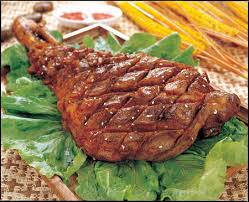
Our language is alive and well. I know this because I am trying to interpret the menus and recipes (receipts) from 1764, and many of the words I can’t even find on the internet, the techniques are lost to the ages through mists of time and generations of human memory.
images

Here is a sample menu for the month of April, early spring. The only vegetable found in this menu is the asparagus, which is an early spring arrival in gardens:

For APRIL.

First Course.     At the Top stew’d Fillet of Veal.     At the Bottom a roast Leg of Mutton.     Two Side-dishes, Salt Fish and Beef-Steaks.     In the Middle a Hunters Pudding.

Second Course.     At the Top roast Chickens and Asparagus.     At the Bottom Ducks.     In the Middle preserv’d Oranges.         For the four Corners.     Damasin Pie, Cream Curds, Lobster, and cold Pot.

Elizabeth Moxon. English Housewifery / Exemplified in above Four Hundred and Fifty Receipts Giving Directions / for most Parts of Cookery (Kindle Locations 2185-2188).

These are all of the recipes that I could find in this ancient cookbook, written before the invention of the dictionary or the editor. I have highlighted the words that I don’t understand, and quite a few of the menu items are not found anywhere else in the cookbook, so they must have been so easy that everyone knew how to cook these things without further help.

31. To stew a FILLET of VEAL. Take a leg of the best whye veal, cut off the dug and the knuckle, cut the rest into two fillets, and take the fat part and cut it in pieces the thickness of your finger; you must stuff the veal with the fat; make the hole with a penknife, draw it thro’ and skewer it round; season it with pepper, salt, nutmeg, and shred parsley; then put it into your stew-pan, with half a pound of butter, (without water) and set it on your stove; let it boil very slow and cover it close up, turning it very often; it will take about two hours in stewing; when it is enough pour the gravy from it, take off the fat, put into the gravy a pint of oysters and a few capers, a little lemon-peel, a spoonful or two of white wine, and a little juice of lemon; thicken it with butter and flour the thickness of cream; lay round it forc’d-meat-balls and oysters fry’d, and so serve it up. Garnish your dish with a few capers and slic’d lemon.

WHITE POTT another Way. A layer of white bread cut thin at the bottom of the dish, a layer of apples cut thin, a layer of marrow or suet, currans, raisins, sugar and nutmeg, then the bread, and so on, as above, till the dish is fill’d up; beat four eggs, and mix them with a pint of good milk, a little sugar and nutmeg, and pour it over the top. This should be made three or four hours before it is baked. Sauce. Wine and butter.

131. A HUNTING PUDDING. Take a pound of fine flour, a pound of beef-suet shred fine, three quarters of a pound of currans well cleaned, a quartern of raisins stoned and shred, five eggs, a little lemon-peel shred fine, half a nutmeg grated, a jill of cream, a little salt, about two spoonfuls of sugar, and a little brandy, so mix all well together, and tie it up right in your cloth; it will take two hours boiling; you must have a little white wine and butter for your sauce.

341. To preserve ORANGES or LEMONS. Take seville oranges, the largest and roughest you can get, clear of spots, chip them very fine, and put them into water for two days, shifting them twice or three times a day, then boil them whilst they are soft: take and cut them into quarters, and take out all the pippens with a penknife, so weigh them, and to every pound of orange, take a pound and half of loaf sugar; put your sugar into a pan, and to every pound of sugar a pint of water, set it over the fire to melt, and when it boils skim it very well, then put in your oranges; if you would have any of them whole, make a little hole at the top, and take out the meat with a tea spoon, set your oranges over a slow fire to boil, and keep them skimming all the while; keep your oranges as much as you can with the skin downwards; you may cover them with a delf-plate, to bear them down in the boiling; let them boil for three quarters of an hour, then put them into a pot or bason, and let them stand two days covered, then boil them again whilst they look clear, and the syrrup be thick, so put them into a pot, and lie close over them a paper dip’d in brandy, and tie a double paper at the top, set them in a cool place, and keep them for use. If you would have your oranges that are whole to look pale and clear, to put in glasses, you must make a syrrup of pippen jelly; then take ten or a dozen pippens, as they are of bigness, pare and slice them, and boil them in as much water as will cover them till they be thoroughly tender, so strain your water from the pippens through a hair sieve, then strain it through a flannel bag; and to every pint of jelly take a pound of double refined sugar, set it over a fire to boil, and skim it, let it boil whilst it be thick, then put it into a pot and cover it, but they will keep best if they be put every one in different pots.

251. To make CREAM CURDS. Take a gallon of water, put to it a quart of new milk, a little salt, a pint of sweet cream and eight eggs, leaving out half the whites and strains, beat them very well, put to them a pint of sour cream, mix them very well together, and when your pan is just at boiling (but is must not boil) put in the sour cream and your eggs, stir it about and keep it from settling to the bottom; let it stand whilst it begins to rise up, then have a little fair water, and as they rise keep putting it in whilst they be well risen, then take them off the fire, and let them stand a little to sadden; have ready a sieve with a clean cloth over it, and take up the curds with a laddle or egg-slicer, whether you have; you must always make them the night before you use them; this quantity will make a large dish if your cream be good; if you think your curds be too thick, mix tho them two or three spoonfuls of good cream, lie them upon a china dish in lumps, so serve them up.

I am fascinated, I have over four hundred of these antiques, and each of them contains its own little bit of mystery. Knowing that the stoves, ovens and tools were all of the very most rudimentary, that there was no refrigeration, that every ingredient they describe was either fresh, salted or pickled, I can’t begin to imagine what one of these meals would taste like.

Posted in Health, Living | Tagged , , , | 4 Comments

Sharing a Lucky Streak

I watched a movie from the 80s in which a habitual gambler gets a sure-thing tip on a horse from a friend, he bets the horse and wins. Thing is he has a gambling problem and shouldn’t be betting but now that he is playing with house money he bets on the next race with all the winnings and wins again. He is on a hot streak, he can’t lose, he keeps betting it all and winning. The movie is hilarious, but one of the best things to come out of it is how people treat his lucky streak. His friends at the dive bar that the down on their luck gamblers go to between races ask what horse he’ll bet on next, but then they all have reasons why they are gonna bet different. He gets into the high-rollers lounge and people there won’t go along with his bets because they all have other ideas. Everyone knows instinctively that a lucky gambler’s past performance is useless in future races, everyone knows what works for them. Picking a winner is like a religion, and everyone trusts their own luck.

MV5BMTc0NDEzNDIzOF5BMl5BanBnXkFtZTcwMjAzMjUyMQ@@._V1_SY317_CR5,0,214,317_AL_

Talking about a successful way to lose weight is like talking about your lucky streak at the track. Most people that need to lose a few pounds or more already know how to do it, or they think they do. They keep trying to do what they have heard works for their whole lives and it might work for a while. When it doesn’t work in the long run they feel like they, personally, didn’t do it right. It doesn’t seem to matter that everyone around them is failing to lose weight in exactly the same way, and always has. Every failed dieter just knows that they did something wrong.

When you find out about a way to lose weight that is easy, so easy, in fact, that you don’t get hungry doing it, you want to let people know how that works. How do you let people know how it works? I can’t just come up to you and say, “I see you are a few pounds over weight, I know how to fix that, just ask me.” How about if I show up and you ask me, “Wow, you look great, how did you lose so much weight?” Sounds like a great time to say “I gave up carbs completely”. The very next thing I hear is “I can’t do without my (potatoes, bread, rice, Coke, beer, pasta, tortilla…)!” I have a proven winner, it will win every time, forever, but my friends are sure that it won’t work long term. They all know that its something I will fail to do from now on, just like what they have experienced trying to cut calories for long term.

How on earth do you convince people that to quit eating carbs is different than cutting calories? There must be a way to get people to see that I am not on a lucky streak, without my having to go a year or two before I have the credibility to say “It’s possible to give up carbs forever.” See, the forever part is the hard part. People want what they want. When I hear men at work talking about counting their calories my heart sinks a little bit. Every time someone starves themselves for a month or two, loses a little weight (or a lot) and then goes back to eating what they need to avoid hunger and the weight comes right back, they lose the will to do it again. Their biggest fear is that they are not strong enough, disciplined enough, and that they will go through a month of hunger only to fail again.

I know they don’t have to fail ever again, but they don’t know what I am saying. They don’t realize how important it is to success that a person need not be hungry to lose weight. Think about it, you eat all you want, you eat every time you are hungry, and you lose weight anyway. You don’t think about food all the time. All you have to do to make it work is look away when you see the candy machine or soda machine at work. As a bonus, it’s not even hard to look away, because you are not hungry anyway. I have come to the point where I eat lunch because it is lunch time and we are all eating, not because I am famished and barely made it to lunch without getting some crackers at the vending machine. There is nothing special about me, this didn’t take some sort of herculean strength of will to achieve. It just works.

This is not the Atkins diet, or South Beach, or Paleo. I don’t have all kinds of recipes to pass on so that you can eat something that resembles pasta, or potatoes, or bread. I don’t need something to resemble any of those foods, and looking for things to stand in would constantly work on me that I am ‘missing’ something. Filling in foods kind of means that you are putting in placeholders until that day when you can once again eat the real thing. It makes you think about “when the diet is over.”

If you think you can eat carbs yesterday and gain weight, eat no carbs for a spell and lose weight, then start eating carbs again…..what do you think will happen? Not eating carbs is not a diet, it really is a way to live. People that will tell me that I can’t give up carbs forever don’t know how it works. I am not giving up carbs forever. I had chocolate cake yesterday at my daughter’s thirtieth birthday. I have given up eating carbs. I don’t need them at every meal for any ‘health’ reasons. My muscles don’t need me to eat carbs to function, nor does my brain. I am two weeks eating meat at every meal, and only meat. Every day I have written in this journal, and my thoughts flow as smoothly as ever, read through them. Do you see any evidence of a mind in decline because it needed glucose in the blood to feed it? I can have something to eat that contains carbs, like a piece of fruit in season, and it will not make me crave them at the next meal. I can go right back to meat only at the very next meal, I can go the whole next day and no carbs will pass my lips. Any time I want I can have a bite of sweet or starch, the thing is I just don’t want to do that. Its way easier than doing cigarettes the same way.

The only thing I seem to need much more of when I eat meat only is water. I used to go all day on a couple of cups of coffee in the morning and a glass of water at dinner. I was probably dehydrated but didn’t know it, because carbohydrate is inflammatory, and I was retaining what little water I would drink. Now I drink water all the time, I am thirsty during the day, and I have to drink water before bed and keep water nearby for the night if I don’t. I also now urinate frequently during the day, which is not how I was when I ate a ‘balanced’ diet of meat, fruit and vegetables.

So I feel like a gambler that figured out how to beat the house every time I walk in the casino. When I tell someone “Bet just like I do” they don’t. I hear all of these failed weight loss strategies being discussed on the news, in the papers, at work and I can’t say “hey hasn’t that been tried and failed?” I can’t say that because everyone thinks that it wasn’t the diet that failed, it was the dieter. Science knows now how fat is formed in the human body. If more fat is being formed than necessary, then carbohydrate is the genesis. This is non-controversial science. It’s just not news.

Posted in Health, Living | Tagged , , , , , , , , , | Leave a comment

Shame and Blame

I was reading the Times this morning and ran across this article, “The Problem With ‘Fat Talk'”.

Is it really such a big deal if you tell everyone how fat you feel? After all, a simple “I’m so fat!” can result in a chorus of empathetic voices, saying, “Me, too!” or “You’re beautiful just the way you are!” And that will help you feel better, and help others feel better, too — right?

Body image is, of course, one of the topics of life. One of the problems with it, though, is that if I person feels too heavy, they also feel like they are to blame. The blame is the problem, where does it lie?

Most important, fat talk is not a harmless social-bonding ritual. According to an analysis of several studies that my colleagues and I published in 2012 in the Psychology of Women Quarterly, fat talk was linked with body shame, body dissatisfaction and eating-disordered behavior. Fat talk does not motivate women to make healthier choices or take care of their bodies; in fact, the feelings of shame it brings about tend to encourage the opposite.

We all feel like we are less than we could be, even the most successful people on the planet have a nagging suspicion that they aren’t worthy of their successes. Body image is like this, because if you have a negative image then you feel compelled to correct it, or you feel guilty that you can’t correct it. Most of the time you can’t correct it because you are being given the wrong advice on how that is done.

Through a comedy of scientific and governmental errors, we have been misled about where excess weight comes from and what to do about it. If you think eating fat makes you fat, you are wrong. I know where you got the idea, but, fat in your diet does not lead to fat on your behind. If you think that the only way to lose weight is to eat less calories than you burn, you would be wrong about that, too. You can’t keep eating like you are and work harder in the gym or at work and lose weight just as slowly as you gained it. While it is possible to lose weight by starving yourself for a few months, you can’t starve yourself forever, hunger is too strong a motivator. Someday you will begin eating what your body is demanding and then you will once again return to your former weight. You don’t lose weight by starving or working.

If you feel that you are overweight, you should not be ashamed, it’s not your fault, you have been misled. You have been given bad advice, and that bad advice is everywhere and constant. Even now government nutritional committees are giving the advice that you should eat less fat, but the reason has changed, “to reduce agriculture’s contribution to global climate change”. You won’t hear that reason, you will just here the same old advice to eat less fat. However, there are only three types of energy in your food, fat, protein, and carbohydrate. If you are to eat less meat and fat, you must eat more carbohydrate. You must eat more carbohydrate, it is a necessity of life that you put energy in your body, and if more of it is carbohydrate you will not lose weight.

Fat comes from carbohydrate. Now you know. Sugar is a carbohydrate. Flour is a carbohydrate. Rice is a carbohydrate. No matter how healthy the box of rice crackers claims to be, it might be gluten free, but it is still rice, it is still carbohydrate, it will still make you fat. Carbohydrate makes you fat, not calories. Just imagine eating beef steak for a month, and only beef steak, let’s say 2000 calories of just steak. Now imagine eating 200o calories a day of just chocolate ice cream. In our mental experiment will the 2000 calories have the same end effect on your body? You know they won’t. The ice cream will cause you to gain weight, and this has been known about sugary foods for hundreds of years. But there is nothing really special about sugar. It is a carbohydrate. In your body carbohydrate is treated the same way whether it is cake or bread.

Don’t be ashamed that you haven’t been able to lose weight, you were given bad advice. Those days are coming to an end, the truth is coming out, finally. But don’t be ashamed, don’t feel guilty. You aren’t heavy because you are lazy, you are heavy because of what you eat. You aren’t heavy because of how much you eat, you are heavy because of what you eat. You eat what you do, because you were told to avoid eating fat, which left you no alternative but to eat carbohydrate. Carbs have made you heavy.

Love yourself, treat yourself right, eat less sweets or carbs and regain your health. Respect yourself and don’t hate. You were led to believe that you were to blame and that just was not the truth.

Here is where I get my facts about what makes us fat, and what we can do about it.

“Why We Get Fat:And What To Do About It”, Gary Taubes

Posted in Health, Living | Tagged , , , , , , , , , | Leave a comment

How To Read A Label

By far, the best way to look at a package of food in your local grocery is in another shopper’s cart. Going down every aisle is an exercise in futility. Trying to decide which highly-processed artificial food is healthier than any competing one is a process that can only end in your buying something that is defective in some fundamental way, as far as your body is concerned.

Today, the New York Times reports that the Academy of Nutrition and Dietetics, the dietician and nutrition professionals trade group, has given it’s newly created ‘seal of approval’ to the packaging for the regular and 2 percent milk versions of Kraft Singles. Kraft Singles are classified as Pasteurized Prepared Cheese Product. It’s not cheese, it’s ‘cheese product’. Way back in the day a thing like this would have been required to bear the label “imitation cheese.” This cheese is as artificial as cheese can get, and it now bears the seal of approval from The Academy of Nutrition and Dietetics. It can wear the new “Kids Eat Right” label. No other cheeses will bear this stamp–not even real ones.

I have mixed emotions about this. First, even though this is not the perfect choice for a “Kids Eat Right” label, it makes more sense that it be put on an unprocessed food. However, who doesn’t realize that imitation cheese isn’t quite the same as cheese? I know the nutritionists realize this, so why give this label to Kraft over any of the other imitation cheeses out there?

But the academy emphatically denied that the label was an endorsement. “The Kids Eat Right logo on Kraft Singles packaging identifies the brand as a proud supporter of Kids Eat Right,” Mary Beth Whalen, the academy’s executive director, said in an email statement. “It also serves to drive broader visibility to KidsEatRight.org, a trusted educational resource for consumers.”

See, “Kids Eat Right” is not an endorsement, it is an ad for the organization. It might look like an endorsement to the uninitiated shopper that has not read this specific NY Times article.

In the article itself I have some issues with some of the things they bring up, besides whether or not the label contains an endorsement or an ad. The author spells out issues that the average consumer is looking for, that Singles don’t have:

Consumers increasingly are taking a minimalist approach to food, seeking out products with only a handful of ingredients that are easy for a lay person to identify. Parents, in particular, are seeking out products with lower levels of salt, sugar and fat and trying to coax their kids to eat whole grains, vegetables and fruits.

This reinforces the idea that grains, vegetables and fruits are somehow more health-promoting than fats and meats. That theory is far from proven, and just because you always hear it or read it in every nutrition article does not prove it. We already get too much of our nutrition from grain, specifically wheat, corn and soy. More grain is not better, especially if it is highly processed grain, like wheat, corn and soy. Fruits contain sugar–not as much as fruit juice, admittedly, but if your child is eating sugar sweetened cereal or another starchy breakfast, then they don’t need more sugar on top of that. We eat too much sugar and you have to count the sugar in fruit, because that sugar counts. Saying that parents are trying to find lower fat foods is true, but the average consumer still doesn’t realize that lower fat foods are going to be higher carbohydrate foods, which is worse than high fat, IF WE ARE TALKING ABOUT NATURAL FATS. Not all fats are created equal.

This is why I say at the top the best place to read a label is in somebody else’s shopping cart. The very best and healthiest policy to adhere to is to not buy processed foods. Buying foods that come in boxes or bags is just asking for trouble. Health claims and product endorsements are eye-candy, but otherwise worthless when helping to make a food buying decision, unless you decide not to buy foods hidden behind labels.

…a study released this week by the Rudd Center for Food Policy and Obesity at the University of Connecticut that found that many parents think fruit drinks, sport drinks and flavored waters, which contain high amounts of added sugar, are “healthy” choices for their children.

Wherever on Earth did these parents get the idea that fruit drinks are healthy?

essentials_opa_210x356

This one contains no high fructose corn sugar. It has 31 grams of sugar in each serving. A teaspoon is four grams, so this has more than almost eight teapspoons of sugar in each cup. Your normal drink glass will hold twelve ounces, so a full glass of this will contain almost a dozen teaspoons of sugar. Sounds Essential to me.

I wrote an article about this group last year, let me see if I can find it…“And Now, For the News”, where I discussed the ties that this trade group has to the food industry. Food manufacturers are paying their bills, sponsoring their conventions, generally being helpful, and now they are advertising for the group right on their food labels. Cozy. Inappropriate? Well, I can’t make that judgement. The proof is in the pudding, so to speak.

Over the last few years, the academy been criticized from some of its members and health advocates over what they contend are its overly cozy ties to industry. Companies like PepsiCo, Kellogg and ConAgra regularly attend the organization’s big annual meeting, where they make presentations to dietitians, hold seminars and parties and provide free samples of their products.

So who can you trust if you can’t trust the dietician’s trade group? Trust your local farmer. Trust your local rancher. Trust your local dairy. Trust me when I say you can’t trust any processed food. Feed yourself real food.

Posted in Health, Living | Tagged , , , , , , , | Leave a comment