Truer Words Were Never Spoken

This headline could have been the tagline for my favorite book concerning dietary science and the history of dietary recommendations in the US, “The Big Fat Surprise”–

Nutritional Science Isn’t Very Scientific

In the online magazine Slate this morning they write that the potato, recently kicked off of the WIC program’s list of approved vegetables that may be purchased with WIC money, has been allowed back on the list. You can look at this news many ways, and Slate decided to look at the science behind both decisions. Guess what? The conclusion is that the science is murky, not pointing to a definite yes or no answer to the question “Is the potato good for you?”

You see, in the world of dietary advice there are lots of ways to answer that very question, but the best answer is another question:”Compared to what?”

If you are at the grocery buying food for your growing family and you can only afford either a ten pound bag of white potatoes or ten Lunchables to feed your babies for lunch, the answer to the question “Is the potato good for you?” is YES, put the lunchables back. Compared to ANY processed food, from anywhere, including Whole Foods or any health food store, the potato is far better food than anything in a box or bag. Processed foods are dead, and they are immune to rot. The fact that they will last almost forever in your refrigerator or in your pantry is not a feature, it is a bug. They are neither good for you, or for the microbes living within you. The potato, on the other hand is good for both. It is alive.

…a report released in February by the Institute of Medicine, an independent nonprofit, shows that white potatoes are an inexpensive source of potassium, fiber, and other needed nutrients, and one that people actually enjoy eating.

Potatoes contain everything that the potato needs, and when we eat them we get all of the nutritional value that an animal can get from eating a potato. This is far different than what you would get eating an exactly equal amount of starch calories from slices of industrial bread or crackers. These processed food examples might contain calories from carbohydrate just like the potato, but they are made from ingredients that have been completely disassembled in factories, then reassembled for the convenience of the grocer. The purpose of many of the ingredients is to make everything uniform and indestructible by time or spoilage. A very small amount of ‘vitamins’ will be added so that the product can bear a claim of ‘nutritious’…”Helps to build strong bodies 12 ways.” Eating a potato, a product of nature, helps to build strong bodies in countless ways.

The ‘science’ that advises us against eating saturated fats, red meats, salt, cholesterol, and the rest of the long list of things that are not ‘good’ for you, is not really very good science as far as science goes. Epidemiological studies that ask subjects to remember what they ate over the last year, then ask them what ails them, are obviously going to suffer from fragile human memory, and the desire of the subject to provide useful information. You can’t beat a study where every ounce of food given to the subject is cataloged and their outcomes are categorized and cataloged as well. Those studies are just now being conducted, and the results are in the future.

Most of our devout beliefs about nutrition have not been subjected to a robust, experimental, controlled clinical trial, the type of study that shows cause and effect, which may be why Americans are pummeled with contradictory and confounding nutritional advice. Nutritional bad guys that have fallen from grace in the national consciousness—white potatoes, eggsnutsiceberg lettuce—have been redeemed years later. Onetime good guys, like margarine and pasta, have been recast as villains. Cholesterol is back in the probably-won’t-kill-you column after being shunned for 40 years, as of the latest nutritional advice from the Dietary Guidelines Advisory Committee in February. (That advice was still too timid, according to Cleveland Clinic cardiologist Steve Nissen, who also wants the nutritional guidelines to admit our best evidence suggests fat isn’t bad for you either). And then there’s salt—don’t eat too little, says the newest research. You could die.

When I was a kid we started getting the advice that eating real butter was bad for you. My mom and dad cried foul and we never took that advice. Now, in my lifetime, I find out that all of you that fell for the advice to eat margarine were harming yourselves. The word is slowly getting out that butter and lard are actually healthy fats. The entire episode gives ‘science’ a black eye, but it shouldn’t. This is how science is supposed to work. It’s too bad they gave us advice before it could all really be studied, but actually, everyone eating carbohydrates instead of fats was one big long term study, and the results are in. Two thirds of Americans are fat and sick, and getting sicker. Those are the results of eating processed carbohydrates and added sugars to replace the fats we used to eat. The experiment should be over, but of course, it’s not. The sugar people are arguing that the science is still out over whether we should be adding their product to eight out of ten foods on store shelves. Let them argue. Eat your potatoes.

Posted in Health, Living | Tagged , , , , , , , | 3 Comments

That’s Not News

I was reading in the Washington Post this morning that the Sugar Lobby is claiming that the science is still unclear concerning whether or not sugary foods are fattening. Not everyone who eats lots of sweet foods gets fat, therefore sugar does not make people fat. See that ironclad logic there? Its the very same logic that was used by Big Tobacco for all of those years…you don’t get health problems right away from smoking, and not everyone gets sick from smoking all their lives, therefore, there are no health problems associated with smoking.

Here is what is purported to be wrong with sugar:

Consider the 2015 Agriculture Department dietary guidelines now being prepared by the Obama administration. A scientific advisory committee is recommending Americans hold calories from added sugars to 10 percent of their diets, because: “strong and consistent evidence” shows they are “associated with excess body weight”; “strong evidence shows” they increase the risk of Type 2 diabetes; “moderate evidence” shows sugars are “consistently associated with increased risk of hypertension, stroke and CHD [coronary heart disease]”; and “moderate consistent evidence” links cavities to sugar intake.

Do you see all of the weasel words that are in quotes? Those quotes allow the sugar industry to say the science is not definitive. They are already saying it…

Enter the sugar lobby’s Andy Briscoe. The head of the Sugar Association wrote to the advisory committee to say there was no “proof of cause and effect” linking “ ‘added sugars’ intake with serious disease,” nor any “significant scientific agreement” to justify telling the American public sugar is “a causal factor in a serious disease outcome.” Added Briscoe: “There is not a preponderance of scientific evidence for conclusion statements that link ‘added sugars’ intake to serious disease or negative health outcomes or for a recommendation to limit ‘added sugars’ intake to less than 10% of energy.”   ….and….

“Obesity is a serious concern in America, but sugar is not the culprit,” he wrote in the Fort Lauderdale Sun Sentinel.

“Sugar has been used safely by our grandmothers and their grandmothers for centuries,” he wrote in the Orlando Sentinel.

He can say that because he is paid well to say that. It also happens to be true that the science is still forming around why sugar is a chronic poison. We can eat sugar without harm, we and our grandparents did so. Sugar is a tasty treat, it is featured after every restaurant meal with it’s own menu. There is nothing wrong with eating sugar in dessert.

That’s not how we eat sugar any more. These days sugar is hidden in eight out of ten processed foods on the store shelves. These days you eat your dessert and also you eat sugar in every bite of food you eat, all day long, every day of the year. When food science took the fat out of foods, they put sugar in so it would taste like something you wanted to eat again, and they don’t have to tell you how much you should be eating.

Just about every ingredient in your food is easy to identify, except for sugar. While they could put sugar on the ingredient list, where it would always be near the top, because the list is in the order of most to least quantity–they will break sugar into a few different kinds of sugar so that each can be further down the list.

When you look at the recommended daily allowance percentages that are shown on some labels, there will be percentages for all of the ingredients except sugar. There is no “Recommended Daily Allowance” number for sugar.

This entire argument is about the label on food. The US government is on the verge of putting a daily allowance for sugar on the label. It is going to be ten grams. That is two and a half teaspoons, not quite a tablespoon of added sugar every day. A Coke has three times that much sugar in each can. Your kid’s GoGurt has more sugar than that by far. If you could see how much sugar was in every food you buy in a box or bag at the grocery you wouldn’t wonder why you and your kids are all gaining weight. It has just been hidden from you by food science and sugar lobbying.

The government may do something about it. I won’t be waiting for that. I have already vowed to not buy foods in boxes or bags. I won’t drink a sweetened drink. I eat local fruits, vegetables and meats. You should too. Alternatively you could wait for the science to become definitive. It only took about thirty years for tobacco, and we have been debating sugar now for about five years. In about twenty five years maybe they will be labelling foods with how much sugar is in them.


Posted in Health, Living | Tagged , , , , | Leave a comment

Good Government Costs Money

Bad Guys

Bad Guys

Way back in 2010 the Congress of the United States got together behind a law that modernized the food safety inspection system. Everyone agreed, in a rare example of bipartisan cooperation, that the rash of food borne illnesses and tainted foods arriving in our stores from our own factories, China, and similar foreign suppliers had to be dealt with. The final vote in the House of Representatives was 215 to 144. That is as close to unanimous as anything these days.

The bill… is meant to change the mission of the F.D.A., focusing it on preventing food-borne illnesses rather than reacting after an outbreak occurs. The overhaul comes after several major outbreaks and food recalls in recent years involving salmonella in eggs and peanuts, and E. coli in spinach and other leafy greens.

Nobody could argue against that mission. Instead of the FDA reacting to close down dirty food makers and growers, the FDA would enlist industry in it’s own monitoring and task them with inspecting themselves. While that doesn’t sound perfect, privatizing food inspection I mean, at least it gave the FDA the power to close down food plants that were having problems and order food recalls, like other agencies of the government can force automobile recalls.

Under the legislation, food manufacturers will be required to examine their processing systems to identify possible ways that food products can become contaminated and to develop detailed plans to keep that from happening. Companies must share those plans with the F.D.A., and provide the agency with records, including product test results, showing how effectively they carry them out.

Unfortunately, even in 2010, you could see that this change was going to cost some money to implement. Back then the New York Times said this about that…

Ultimately, the agency’s ability to carry out and enforce the law will depend on how much money it has available to pay inspectors and maintain or increase its staff. Republicans will gain control of the House next year and have vowed to cut spending on many domestic programs. Deep cuts could hobble the F.D.A. just as it gains the new authority.

These days all of the Congressmen that don’t want to seem heartless can vote on a law that they can’t reasonably argue against. They can pass necessary legislation and they can go home and say they did what they could to make our food system safe. Then, when the industry lobbies against it, they can just not approve the money necessary to enact the law. Do you think I am exaggerating?

Funding Gap Hinders Law for Ensuring Food Safety

This Congress is strangling the fledgling law by not approving any money to implement it.

In its previous five budget requests, the F.D.A. proposed user fees that would cover the bulk of the cost of carrying out the food safety law. Last year, for example, it asked for $263 million for the law, with about $229 million coming from fees on food companies.

But lawmakers soundly rejected those proposals after lobbying by the food industry.

If you expect this Federal Government, as it is currently constituted to enact any law that will hinder the ability of any corporation to cut every corner in the search for profit, you are sadly mistaken. Your risk of listeria, salmonella, e-coli are all minor concerns compared to allowing our food system to operate in direct competition with the quality of our competitors in China. Money rules all.

I am not going to recommend that you write your Congressman, or that you vote the bastards out of office. While those would be good things, they will never protect you and your family from the quest for food industry profits. There is only one thing that guarantees that.

Buy your food from local producers. Buy real grass-fed beed and pork. Buy free-range chickens at the farmer’s market. Never buy any processed foods, or foods that come in boxes or bags.

3 Dead in Blue Bell Listeria Outbreak as Sabra Recalls Hummus Over Same Bug

Soybean Sprouts Recalled for Possible Listeria Contamination

I could go on for 1000 more words just copying links to food recalls for contamination, from THIS MONTH! Many times, like the Ice Cream debacle above, the problem is found when you find it by eating tainted foods. One would think that there is no other way to find unsafe practices at food factories, but there is. Food inspectors from the FDA actually can spot unsafe practices before there are outbreaks of food poisoning.

Unfortunately, good government costs money.

Posted in Health, Living | Tagged , , , , , | Leave a comment

Breakdown!

Some days you just say “What the Heck!” Yesterday was such a day. Started off like all of my other days, breakfast eggs and bacon, lunch was meat. Still working ten hour days, but the difference yesterday was that I wasn’t going home to dinner. Yesterday I had a family function to attend that was twenty miles from home, and we went out to a Mexican restaurant nearby for dinner at about 8:30.

So, nine hours after I ate a small meat lunch I sat down to a bowl of corn chips and salsa. I didn’t even try to resist. When the waiter came to take drink orders I said “Coke”. Yep, I had two cokes, dozens of corn chips, refried beans and spanish rice along with my Carne Asada.

It’s nice to not be on a diet. It’s nice to not have to feel guilty when you take a day off of normal. Today I had two eggs and bacon for breakfast. Lunch today was spicy hand-crafted bologna sausage. Dinner tonight will be pork riblets. Besides coffee today, I will drink only water. From zero to hero in the diet department. I feel free to eat what I want, when I want. Yesterday, I wanted “What the Heck” for dinner. I didn’t go nuts, I ate a normal amount, but it was carbs from front to back. Today it’s meat from beginning to end.

This is why I love not being on a diet, but being in a life. I choose what and where and when it goes into my body. Eating one way yesterday doesn’t say a single thing about what I will do today. Same way that I am an ex-smoker but I can enjoy a fine cigar with a friend while relaxing on the deck. Why say “I can quit any time I want to?” You never have to “quit.” Quitting is for quitters, life is for livers.

I don’t avoid carbohydrates day in and day out because they are dangerous. They are a long-term problem, but definitely not a short term hazard. Eating them at every meal, three meals a day, 365 days a year is a problem that I had. Now I eat them from time to time, relaxing in the company of family and friends. Now that’s living.

Posted in Health, Living | Tagged , , , , | Leave a comment

Forcemeat? Bologna!

I am looking at some recipes to try out when I finally get a day off next month. When I was researching ancient recipes last month I came across dozens of forcemeat receipts. There were no recipes in the ancient receipt books. Since I am no chef, I didn’t recognize the term ‘forcemeat‘.

Unknown-2

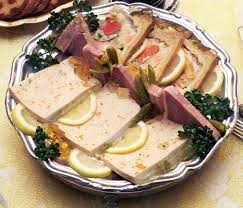
Basically, forcemeats are very finely ground meats, eggs for binder, maybe some soaked bread, and savory spices. It is usually poached but is sometimes baked, and it is cooled in a form. I don’t think I have ever eaten a forcemeat, but the braunschweiger I just finished would be very close in texture.

Here is a recipe from Emeril Lagasse for a veal forcemeat. His is a gratin forcemeat, meaning the main flavor meat is cooked before grinding. The only special tool you need for this version is a food processor. You can grind meats for forcemeat using progressively smaller and smaller grinding disks, or you can use a food processor. This recipe is not cooked again, and there is no pork or pork fat in it.

It is far removed from the forcemeat receipts of days gone by. Here is how they did it in ancient times…they chopped the meats fine by hand…

85. Fish Force Meat Balls. Take a little uncooked fish, chop it fine, together with a little raw salt pork, mix it with one or two raw eggs, a few bread crumbs, and season the whole with pepper and spices. Add a little catsup if you like—do them up into small balls and fry them.

Anonymous. The American Housewife / Containing the Most Valuable and Original Receipts in all / the Various Branches of Cookery; and Written in a Minute / and Methodical Manner (Kindle Locations 934-936).

If you want to put your forcemeat into collagen casings like a sausage, that is common. This recipe is from Europe, where they still remember how to make interesting foods…

Mousseline-Style Forcemeat

This is the quickest forcemeat to make. It is typically used for lean, light meats or fish. Usually only one variety of meat is used (although mixtures work well) and unwhipped heavy cream is used as the source of fat. The cream is used to adjust the consistency as required by the type of meat or fish used. This forcemeat is quite stable during cooking since the fat is already emulsified in the cream. The area of caution comes in making sure you don’t overwork the forcemeat in the food processor once the cream has been added.

  • 1 lb/454 g lean white meat or fish
  • 1 tsp/5 mL kosher salt
  • 1 large egg (per 1 lb/454 g meat)
  • Seasonings, as needed
  • 1 cup/240 mL heavy cream (approx.)

1. Cube the meat or fish. Chill.

2. Grind through a chilled grinder using a coarse plate (3/8 in/9 mm), then a medium plate (1/4 in/6 mm). Chill.

3. Combine the chilled ground meat mixture with the salt, egg(s), and seasonings. Purée in a food processor until smooth.

4. Add the cream slowly and pulse in. An alternative way to do this is to remove the mixture from the food processor and place it in a mixing bowl over an ice bath, slowly working the cream into the meat with a rubber spatula or spoon.

5. Test the mixture for seasoning and consistency; adjust as necessary.

6. Use for the desired preparations.

Fat contributes greatly to the eating quality of forcemeats. It enhances the flavor and the juiciness. Pork fat is preferred because it is softer, it melts at lower temperature, and it is easier to chop or grind, and the preferred pork fat is jowl fat. Fatback is used for forcemeal for terrines, galantines, and pâtés; jowl fat is used predominantly for sausage making. U.S. government regulations limit cooked sausage to 30 percent fat.

Water, in the form of ice, is used to regulate heat generated by machine friction. This helps keep meat and fat from warming excessively during processing.
Salt makes proteins soluble; that is, it draws the water-soluble protein, myosin, from meat to act as the primary binder. In addition, it adds flavor and retards the growth of bacteria. (See “Preserving with Salt,” page 73 of the book.)

Mousseline-Style Forcemeat

Procedure

The formula for mousseline forcemeat is 1 lb/454 g lean white meat or seafood, 1 tsp/5 mL kosher salt, 1 large egg (or egg white for mild-flavored products like fillet of sole or flounder), 1 cup/240 mL heavy cream, and ground pepper as needed.

Slowly add the cream to the mixture and continue processing.

A mousseline should be pressed through a tamis to ensure that it is completely smooth.

To blend the mousseline properly, it is vital to scrape down the bowl periodically as you process.

I am not sure of what kind I will make, but this summer will be the summer of sausages at my house. I have all of the tools and raw materials to make everything from pepperoni to forcemeat…and I will. If a person is going to eat mostly meat, they have to have a good assortment of receipts in their arsenal. I will experiment and report back.

Posted in Health, Living | Tagged , , , , | 1 Comment

How Outrageous Is This?

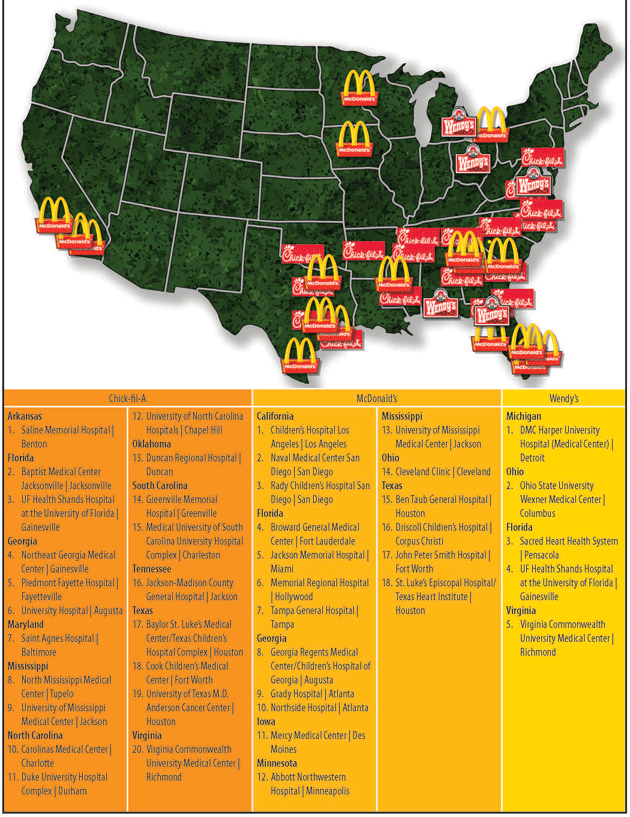
It is possible, in some hospitals across the nation, to order fast food straight to your hospital room from fast food restaurants that are on the hospital campus. You might find your hospital on the list that was compiled by the Physician’s Committee for Responsible Medicine. Children’s Hospital, Los Angeles has a McDonald’s that will feed your sick children, if you so desire.

Hospital-Fast-Food-Graphic-v3-630

But exactly how outrageous is this, really? McDonald’s recently has been getting a black eye for the quality of the meats that it serves. It has long been in the spotlight over the quality of the food, mostly because of the high fat content and the fact that hamburger is red meat. Well, I don’t fear natural saturated fats or red meat either.

As far as I am concerned, the problem with McDonald’s is where they get their meat, from industrial meat producers who feed grain instead of natural forage. The other problem is that most of the calories in a McDonald’s meal are carbohydrates. The sugar in the drink, sucrose or high fructose, makes no difference, they are both fattening. The flour in the hamburger bun is fattening. The potatoes in the french fries or hash browns are fattening. The oil they use these days to fry everything is unproven and untested on it’s effects on heart health.

I am not too happy that hospital food is being replaced by McDonald’s food. However, hospital food is not a lot better. The meal will be low-fat, which means high carbohydrate. The meats will likewise be inexpensive cuts that are from the industrial meat production system. There will be a sweet dessert. The drink will be sweetened. The only difference in the two in my opinion is that one has been approved by an in-house nutritionist. I wouldn’t eat either of these choices, if given a choice. None of the food options on the entire hospital campus are what I would choose, which would be a local salad, along side a local meat entree, washed down with a glass of room temperature water.

It’s fashionable and easy to pick on fast food like Wendy’s, McDonald’s and Chick-Fil-A. Picking on them will have an effect. Fast food in Europe is WAY healthier than it is here, where it was invented. British fast food features organic milk, local meats and vegetables. French McDonald’s menu is unrecognizable–no buns, grass fed beef, real cheese (not pasteurized processed cheese food product). Here is how NPR describes it:

And if you like good meat (who doesn’t?!), then McDonald’s France is clearly superior. In the U.S., McDonald’s says its cattle are mostly corn-fed. While the company doesn’t address on its site whether growth hormones and growth-promoting antibiotics are added to the animal feed consumed by the animals it buys, it’s a reasonable assumption that they are.

French cattle are all grass fed, which many argue makes them tastier. Growth hormones are illegal here and each animal has a passport showing where it was born, raised, and slaughtered, according to McDonald’s France. That’s called traceability, and we don’t yet have such a national system in place.

So, go ahead and complain about McDonalds and other fast foods, but complain about the right things. A healthy hamburger is a possibility, but if we think healthy food is just low-fat, high carb, then fast food will never be anything but fattening, and it won’t matter if its the hospital cafeteria or a fast food restaurant is feeding your family in the hospital, its all fattening and unhealthy.

Posted in Health, Living | Tagged , , , , , , | 1 Comment

Where Does Lost Weight Go?

Ok, so you weigh too much. Somehow by eating like everyone else you know, you have managed, over the years to accumulate a lot of extra mass. It has changed the way you think, the way you eat, the way you move. Your life is different than it was when you were young, because you don’t know how to reverse a lifelong process.

At first you thought you could just do what other people do when they want to lose weight–you diet. As far as you know, to diet means to quit eating so much. Everybody seems to think that if you eat less calories than the amount of calories you burn, the fat will melt off of you like it does off of bacon in the morning skillet. You watch a million different exercise videos and the point of all of them is that you are going to have to ‘melt’ your fat. Burning is required if there is going to be joy at the end of the diet.

So, you burned. You starved. You counted calories eating and exercising. You were miserable and hungry every waking and sleeping moment. You lost some weight, and you figured that you were done when you lost enough of it. After dieting you go back to living normal and the weight comes roaring back, most times way faster than you managed to shed it off.

Next time you decided to ‘eat healthy’. You got a book that described a perfectly balanced regimen that combined nutritious low fat foods, nutritious fruits and vegetables, smoothies, and maybe a supplement or two to make sure that you got enough vital nutrient. Of course the calories were restricted, so there was that hunger thing again. Naturally, in order to lose weight it meant more walking or running or swimming. No way to lose weight without cutting calories and burning calories. Except this time you didn’t lose weight very quickly at all. You figured that you weren’t trying hard enough. You didn’t want it bad enough. You knew you were doing something wrong. This time you quit the diet before you hit a weight goal, and once again what was lost was found again, plus some.

Why can’t you lose weight and keep it off? If the only way to lose weight is to eat so little that you are constantly in pain and to exercise so much every day that you don’t have time to go to work, then how are you ever going to gradually decrease your weight instead of gradually piling it on? Why doesn’t dieting work?

Where does lost weight go?

When you lose body fat it is not burning. In even the process of living your body consumes its stores of energy in the instant that it is needed. Unless you have just eaten, then the energy will come from your stores of fat, but the fat is not converted to energy. That would be a nuclear reaction. No mass is lost to energy–energy weighs nothing. Here is the chemical equation for the conversion of fat.

C55H104O6+78O2 —> 55CO2+52H2O+energy

On one side of the equation is fat and oxygen. The other side the weight is exactly balanced by carbon dioxide and water. The energy weighs nothing, so it has nothing to do with losing weight. Pounds come off in the form of carbon dioxide gas. You learned in school that you breathe in oxygen and breathe out carbon dioxide. Nobody ever told you that the carbon dioxide is carrying off pounds. If you never add to your fat stores then the fat disappears into a cloud of carbon dioxide gas.

If you never add to your fat stores, they will go away. How does one accomplish not adding to fat stores? If you don’t eat carbohydrates you will not add to your fat stores.

See, you don’t lose weight by breathing harder. The fact that you need to breathe harder when you exercise is a clue, but your muscles burn energy every instant of your life, you don’t have to use them more for that to be true. Unfortunately for working harder, a side effect of this is increased hunger. Ever heard of working up an appetite? Have you ever worked up your appetite? If you work more and don’t eat more you will become hungry, you will starve, you will be miserable. This is why regular ‘diet and exercise’ prescriptions are so much work. It’s why people can’t do it for the rest of their lives, which is what it would take to keep weight off by doing it.

You lose weight by not putting food consumed into fat in the first place. For instance, when you eat fruit, the sweetness in it is from the type of sugar “fructose.” Fructose in your bloodstream is unusable in that form by any muscle or organ except the liver. Your liver metabolizes fructose immediately into fat. I figure this is because a natural human living in the wild would come across fruit in the fall, right before winter. You would eat a lot of fruit because it’s easy to get and there is all kinds of it laying around, and it’s sweet. Every bit of that sweetness goes instantly into fat stores, where it will be when times are lean in the winter. There is a lot to say for that theory. But if you want to not store fat, because your modern diet has given you plenty to live on this winter, then you should forego the fruit. You should forego the fruit smoothy, or the fruit juice. That high fructose corn sweetener in your Pepsi is also going straight to fat.

Before you take your first bite of food, just the thought of it causes your pancreas to inject insulin into your blood. That first shot of insulin clears your bloodstream of energy bearing fat molecules, putting any sugars into fat cells and preparing the way for a deluge of blood sugar molecules. When you take that first bite you get another shot of insulin, because your blood sugar levels must be contained in a tight band or the chemistry gets out of whack and you may suffer ill effects immediately. As the sugar hits your system your muscles and organs are ordered by the insulin to take up as much as they can, and any excesses are immediately cleaned out of your blood into fat stores. It’s immediate. You have just put more energy into your blood stream than it can handle, the excess is immediately put into fat stores. This leads, after mealtime, to the insulin crash, where your blood sugar goes too low, you get drowsy–and you get hungry again. It’s the oriental food syndrome, where one hour after eating you’re hungry again. It is not just oriental food though, any high carb meal will leave you craving and starving for more food once the insulin wave has subsided. The point here is that if you eat sugar, rice, bread, potatoes, you are going to experience this instant storage of blood sugar into fat. You are increasing your fat stores, and now all of this fat will have to be eliminated through the process of fat consumption described above.

If you don’t eat carbs, none of this happens. You still get the initial hit of insulin before your first bite, but you don’t get the blood sugar rise, you don’t get the insulin rise, and because there is no blood sugar to store, you also don’t get the increase in fat storage. You don’t get the insulin crash, you don’t get hungry an hour later, you don’t crave carbs, you can avoid snacking to take the edge off your hunger. You get to eat what you want, when you want without having to worry about your fat stores going up. Ever so slowly you will lose the fat in your storage, usually at night, while you sleep. When you eat fat during the day it will gradually be introduced into your bloodstream and only when you go for a very long time overnight without eating, usually around twelve hours between dinner and breakfast, you will have lost a minuscule amount of weight. The system stays finely balanced. You will get hungry when there is an actual deficit of available energy, not because your body chemistry is out of whack oscillating all over the place trying to maintain blood sugar.

Every bit of this is described in excruciating detail in the excellent book “Why We Get Fat” by Gary Taubes. To make a long story short, you gain weight not because of how much you do or don’t eat, but because of what you eat, even if you don’t eat much of it. Your body will put fruits into fats, even if you are starving to death. There are other examples like this in the book. Exercise does not cause weight loss, calories do not cause weight gain. It’s just not that simple. Its all in the book and makes perfect scientific sense.

Your doctor won’t tell you any of this. Your doctor will say “lose weight or else” like that idea had never occurred to you. Sure, now that the doctor said lose weight, I will, I was just waiting on orders. If asked, your doctor might say “eat less than you burn”, but that diet idea works two times out of one hundred. Not eating carbs works 99 percent of the time.

Posted in Health, Living | Tagged , , , , , , , | Leave a comment

Great Problem to Have

I would like to tell you about a problem I’m having that is an symptom of a blessing I am enjoying…I have to get smaller pants. By eating a diet of predominately meat and fat I am slowly losing weight, while not starving myself. By not eating carbohydrates, and especially not eating refined carbohydrates, I am gradually shedding more fat than I put on each day. I am not eating tasteless foods, and I am not eating less food than I want to at a meal. I eat as much as I want to eat, but I just don’t want to eat that much food. Eating protein and fat leads you to satiety more quickly, and puts off hunger longer than an equal number of calories of carbohydrate.

I was never big, but I did get to the point where my size 32 work pants were feeling snug–but that was ages ago. I never had more than three pairs of pants that big. After my high-waist mark I quit drinking beer and went to sweetened tea. I lost a lot of weight at that time, because I was drinking nothing but rich, tasty beers–no lite beers for me. I was able to stay in my size 30 pants (though they were tight and my belt ran an oval below my belly) until now. I am thin enough now that I could drop down another waist size, and I expect that this is as low as I will go, since I was wearing a size 28 pants when I joined the Navy in 1978. I can’t believe that I could conceivably be into clothes that I wore in high school at my age.

IMG_3308

They always lead you to believe that you will fatten as you age. I saw it with my own eyes in regards to my parents and most of the older men that I have always worked around. Guess what? You don’t have to fatten as you age. Your weight has zero to do with how old you are, it has to do with what you eat. By “what you eat” I don’t mean how much you eat, I mean what type food you eat. Fat comes from carbohydrates, and you don’t need to eat them to live, you only need to eat them to be like everyone else. Everyone else is fattening with age.

Your weight has zero to do with genetics. If you had fat parents or one of your parents was always large for their height, you don’t have to be. If you quit eating carbohydrate, totally at first and then bringing back the natural ones, you will lose fat. You will lose a lot of weight at first, and that will all be water. You might lose two gallons of water if your daily carb eating goes down significantly. If you are a snacker or sweet eater, if every meal includes a sandwich, you might drop sixteen pounds in the first two weeks, and it will all be water. You might crave carbs the way an addict craves heroin, but that will not last too long. Soon you will realize that you aren’t hungry, that you can ignore the addict call to sugar. Ignore it for a moment and it’s gone in a moment. It’s not hunger.

If you are on a semi-starvation diet what you feel is hunger, not a craving. Your biology is crying out for more blood sugar to replace the recently stored-in-fat blood sugar from the high-carb meal you just ate. You will be hungry the very first meal that does not include carbohydrate. If you eat enough protein and fat at that meal you need not feel hunger again. Your body will begin going to your stores of fat for your hourly energy needs. The slow process of digesting your lifelong storage of food will have begun.

It’s not fast. If you weigh yourself every day looking for changes, you will see your weight oscillate up and down. It may look like nothing is going on, but I guarantee you that the general trend will be down. After a month you will be down a couple of pounds at least. In the meantime you will not suffer. If you drink enough water you will not dehydrate yourself and suffer any of those symptoms.

If you must, you can eat green vegetables, the leafy ones. They will help your stool stay in the shape you expect, but if you drink enough water you will not become constipated. I did not and I ate nothing but meat for a month.

Try this with me. For breakfast, two eggs any way you like and three slices of bacon or two patties of sausage… Every day for a month eat this breakfast. It is essential that you eat this breakfast, because if you do not you will snack on the donut cart at work before lunch. At lunch eat a half pound of breakfast sausage or any other fatty meat you really enjoy eating. The fat is an important part of this lunch. You are getting the bulk of your energy and satisfaction from the fat in your food. If you try to ‘cut back’ and eat something like skinless chicken breast or low fat hamburger, etc, you will not be getting enough fat to go with the protein in your diet, and this can cause complications. Do not avoid fat, you need it for energy. At dinner eat a nice fat steak, or dinner sausage like bratwurst or kielbasa. Eat just meat for dinner. It tastes awesome, its quick to make, it will last you all the way to breakfast–hunger free.

Posted in Health, Living | Tagged , , , , , , , , | Leave a comment

Supplement, Schmuplement

Guess what, if you take a really great natural nutrient and then process the plant or animal from which it came to get rid of every other component of that plant or animal, what you are left with is not the same thing as what you started with. Does that make sense? Sugar is not the same in our pantry as it is in the beet that it started from. Eating a beet will have different effects on you that eating sugar, and I know that makes sense. I bring this up because…

Fish Oil Claims Not Supported by Research

Unknown-1 In the New York Times yesterday, we found out that the omega 3 essential oil that you can find in fish, which is beneficial to your heart health, among other benefits, is not as healthy for your heart as eating fish. Are you surprised by this? You might be, because if you look at ads for fish oil supplements, the boxes and bottles are emblazoned with health claims. Studies show…that eating fish is good for you. Studies show…that the reason is a nutrient called “omega 3 fatty acid”. Your body cannot create omega 3 fatty acid, even though it is an essential oil for your normal bodily function. You must get omega 3 fatty acid by eating it. Therefore….SCIENCE created a capsule that contains something that resembles a liquid, and it contains some omega 3 fatty acid. Surely supplementing your omega 3 fatty acid deficient diet of processed foods will yield all of the benefits of actually eating real foods that contain this essential oil in the natural concentration, and surrounded by the natural other ingredients that don’t as yet have a scientific name because we do not yet know they are important.

From 2005 to 2012, at least two dozen rigorous studies of fish oil were published in leading medical journals, most of which looked at whether fish oil could prevent cardiovascular events in high-risk populations. These were people who had a history of heart disease or strong risk factors for it, like high cholesterol, hypertension or Type 2 diabetes.

All but two of these studies found that compared with a placebo, fish oil showed no benefit.

In  other words, if you are a person who is living life on the wild side, and your diet, weight and family history show that you are at greater risk of having a ‘cardiac event’ then eating fish oil is no magic shield against your life. Just taking a supplement is not going to fix your problems. Eating foods that contain it naturally might, though.

In theory at least, there are good reasons that fish oil should improve cardiovascular health. Most fish oil supplements are rich in two omega-3 fatty acids — eicosapentaenoic acid (EPA) and docosahexaenoic acid (DHA) — that can have a blood-thinning effect, much like aspirin, that may reduce the likelihood of clots. Omega-3s can also reduce inflammation, which plays a role in atherosclerosis. And the Food and Drug Administration has approved at least three prescription types of fish oil — Vascepa, Lovaza and a generic form — for the treatment of very high triglycerides, a risk factor for heart disease.

Would you look at that, the FDA has approved a ‘prescription strength’ fish oil. LOL. You do know that the FDA does not test drugs for actually doing what they say they are going to do, right? They test to make sure that it will not kill you or screw something else up. Seems that fish oil ‘prescription strength’ capsules are not doing any harm, so….

There are good reasons that fish oil should work, but since it doesn’t there must be good reasons that the benefits of fish oil do not translate into real world, placebo controlled effects. I sat there must be good reasons, because reality should always have some influence on science. When your theory is not supported by the evidence, you should modify your theory. Maybe the working hypothesis going forward should be “there must be an important ingredient in fish that makes eating fish good for you that is missing in omega 3 fish oil supplements.”

Some of the earliest enthusiasm for fish oil goes back to research carried out in the 1970s by the Danish scientists Dr. Hans Olaf Bang and Dr. Jorn Dyerberg, who determined that Inuits living in northern Greenland had remarkably low rates of cardiovascular disease, which they attributed to an omega-3-rich diet consisting mainly of fish, seal and whale blubber.

See where correlation can lead you? Eskimos have low heart disease rates, and eskimos eat mostly fish and blubber, and fish and blubber from whales is chock-a-block full of omega 3 THEREFORE, omega 3 causes low heart disease rates. To say that the only difference between the diet of you and me and Nanook of the North is fish and blubber is a staggering logical leap. You might just as easily contend that the fact that the Nanooks of the world ate ZERO CARBOHYDRATES for their entire life caused a low incidence of heart disease. Wait a minute, I have said that for the last year, non-stop!

Omega 3 fatty acid is essential. Taking it in little capsules or by the spoonful is proven to be a waste of your time and money, but it’s not killing you–so knock yourself out. If in addition to your daily oil eating you also eat meats (pork, beef, and chicken) that are raised naturally on their preferred forage then you are also getting all the omega 3 you need, but from a natural source, one that will give you the essential oil in the expected ratio to omega 6 oil to be beneficial to you. If you eat butter that is from a dairy where the cows eat their preferred forage you will also get a healthy dose of omega 3. If you eat eggs that come from chickens that live along side of healthy cows and pigs, their eggs and meat will contain omega 3. If you eat fish that were wild and ate bugs and other plant eating things they will contain omega 3.

If, on the other hand, you eat meats that lived the miserable last few months of their lives on GMO corn, GMO soy, or gummy bears if gummy bears are cheaper than corn or soy, then you are going to be getting too much omega 6 and not enough omega 3. If you eat a lot of processed foods that are based mostly on grains like wheat or corn you are going to be getting too much omega 6. If you eat like they want you to in the fast food ads and judging by the quantity of processed food at your grocery store, you are not going to get enough omega 3, and you will get too much omega 6. This is known and proven to contribute to heart disease. Taking omega 3 capsules will not correct this situation.

You must quit eating processed foods. You must begin eating real foods, you must find a source of naturally raised meats and fish, if you want to gain the benefits of omega 3 and curb your consumption of omega 6.

Like many cardiologists, Dr. Stein encourages his patients to avoid fish oil supplements and focus instead on eating fatty fish at least twice a week, in line with federal guidelines on safe fish intake, because fish contains a variety of healthful nutrients other than just EPA and DHA. “We don’t recommend fish oil unless someone gets absolutely no fish in their diets,” Dr. Stein said.

I don’t know why they don’t tell you to eat natural meats, too, just fish. It’s probably because the health system is still hung up on the since-debunked theory that red meat or saturated fats are heart-harming. They are not. I don’t know why the prescription is to eat way less carbs, because doing so does not hurt you any more than taking fish oil does. I contend it does not hurt you at all. I just completed a month where I ate nothing but meats, three meals a day. The meats were natural. They contained omega oils, in the correct proportions. Your results may vary.

Posted in Health, Living | Tagged , , , , , , , , , , , , , | 2 Comments

I Probably Care Too Much

images

In the last year I have read a bunch of books on diet and its effects on health. At the beginning of this blogging journey I decided to share what I was learning with everyone that I could reach, in real time. In that year I have become utterly convinced that most advice given to people about what is or is not healthy eating is actually counterproductive. I am certain that the explosion of health issues in the US that are connected to eating are a direct result of that bad advice. I probably care too much.

I went on a sugar detox one year ago, yesterday. Me and the wife went for the entire month of April without eating any sugar in any form. It was also a low-carb month, so it was for all intents and purposes the Atkins inception week. I started blogging so that I could go back and remember the feelings and physical changes in the weeks and months to follow. That journal has a link in the menu of my blog. I lost weight, I felt better, I began to preach. I have always been a very good preacher, and my problem has always been practicing the things that I preach. However, in real healthy eating I found a message that I could both live and espouse.

As time went on I found the best books so far ever written about diet. You notice I said ‘about’ diet, not diet books. These books (three of them) are about food, your body, your body chemistry, fat in your body, and fat in your food. They are about science, and how the art of science was lost in the 70s and 80s, as the cult of personality took over the discourse on dietary recommendations. They document how, as the nation’s waistline expanded as people took bad advice on diet, fortunes began to be made on the diet advice gravy train. They detail how difficult it is now to get the real science finally being conducted, which proves which foods are innocent, and which foods are guilty, into the national consciousness.

I believe with my entire being the things that I have read in “The Big Fat Surprise” by Nina Teicholz, “Good Calories, Bad Calories” and “Why We Get Fat” by Gary Taubes, and “Pandora’s Lunchbox” by Melanie Warner.

A feature of blogging on WordPress is the ability to easily find blogs that also are into the topics that your blog is. I have found some fine blogs on recipes, natural and local food issues, and of course diet and health. I have also read some on the ineffectiveness of the 12 Step method to combat addictions. Yes, if you have read my blog you know that I consider sugar and carbohydrate an addictive substance. I consider food to be something that a person can use when they don’t want to.

Sometimes, when I read fellow bloggers that are giving the same old diet and exercise advice that we have all heard our entire lives, I can’t help but interject the new science that has revealed that weight and health are not related to how much you eat or exercise. The only thing that matters is WHAT you eat. I continue to gradually lose weight. This morning I am at 136 pounds. I am five foot six inches and I haven’t weighed 136 pounds in thirty years. I don’t exercise at all, except for the occasional run up three flights of stairs between offices at work. Most of my work time is spent programming a computer. You might call it sedentary. My wife would. Yesterday I ate an entire 16 ounce ribeye for lunch.

Will what I advise work for you? I bet it would. However, the first thing you have to give up is the idea of balance. It doesn’t take very much carbohydrate to make you crave it. It’s why people kicking heroin don’t try just cutting back. If you are gonna kick, you gotta kick. The next thing you have to give up is the idea that you are only gonna do it for a while. The great thing about just eating meat and green vegetables is that you can easily do it without starving yourself AT ALL. There is no need to be hungry, ever. If you eat snack chips after not having any for a month, you will feel like you ate snack chips. When you do it, you will know what I mean. Carbohydrates actually cause a physical reaction, and I know it, but you don’t because you are living in a constant state of reaction to carbs. I suppose people who drink or smoke pot every hour they are awake also can’t remember what it feels like to be straight.

I really don’t know why it is that I care so much about getting this word out. I have convinced many of the people in my family, and several of my friends at work are proving me right. I think the results are good for me and my immediate circle. Why I care so much when I see a fellow blogger that doesn’t get it yet is kind of a mystery to me. Why I want to always help someone that obviously needs it and is obviously casting about for the right thing to do to lose weight, but that hasn’t specifically looked me up or asked me for my advice, is a mystery. I probably care too much.

Posted in Health, Living | Tagged , , , , , , , , , , , , , , , | 2 Comments